James D. Parker – Författare
Visar alla böcker från författaren James D. Parker. Handla med fri frakt och snabb leverans.
2 produkter
2 produkter
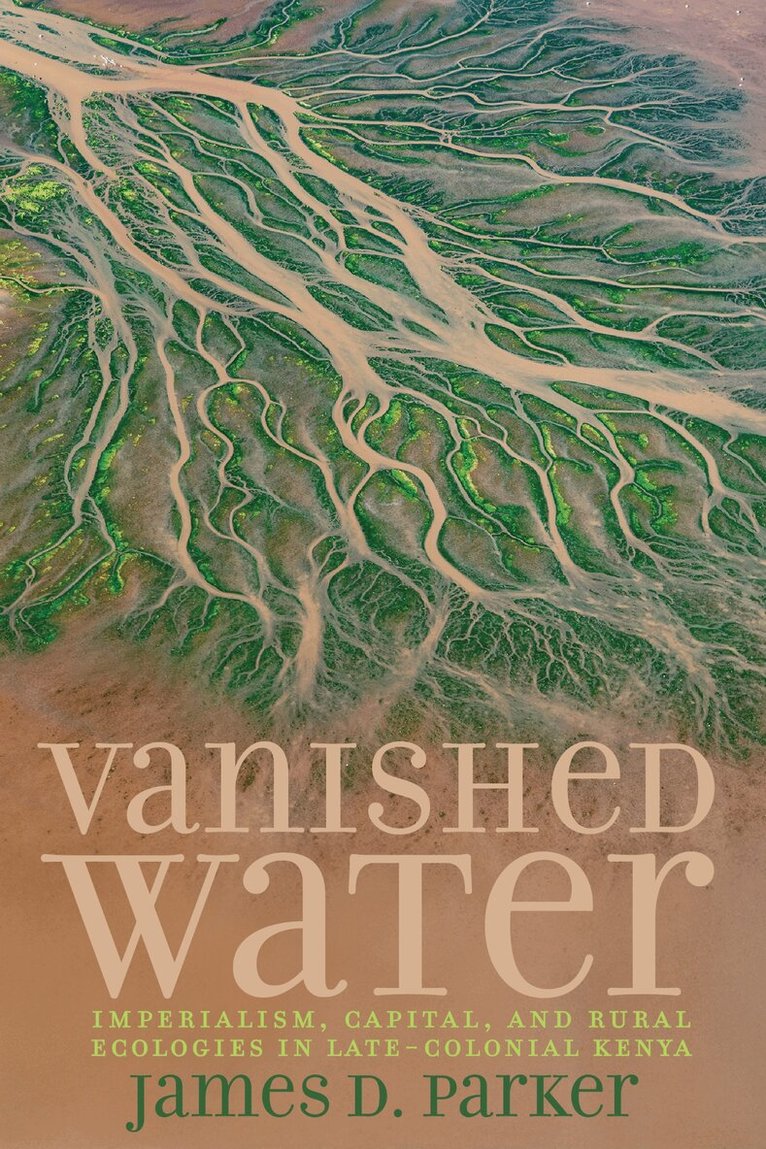
Vanished Water
Imperialism, Capital, and Rural Ecologies in Late-Colonial Kenya
Inbunden, Engelska, 2026
1 890 kr
Skickas inom 3-6 vardagar
The trickle-down effects of empire on the environmentVanished Water examines the ecological and social consequences of British imperial rule—and its inherently extractive aims—on water development in late-colonial Kenya. Examining the arid northern and eastern parts of the country between 1938 and the mid-1960s, James Parker demonstrates how the British colonial state manipulated scant water supplies to drive cash crop production, rerouting critical resources away from the pastoral and riverine communities who relied on them for their existence. In doing so, the state sought to force these communities away from their traditional subsistence economies and into the capitalist economy, a move that fundamentally altered relationships to the land and between ethnic groups themselves. Vanished Water describes how these nefarious programs devastated rural communities, while also showing how they were resisted and manipulated and how Kenyans adapted to these life-altering changes imposed on them from the outside. These developments, as Parker shows, echo into the present, continuing to test the resiliency of arid communities now dealing with climate change.
Vanished Water
Imperialism, Capital, and Rural Ecologies in Late-Colonial Kenya
Häftad, Engelska, 2026
610 kr
Skickas inom 3-6 vardagar
The trickle-down effects of empire on the environmentVanished Water examines the ecological and social consequences of British imperial rule—and its inherently extractive aims—on water development in late-colonial Kenya. Examining the arid northern and eastern parts of the country between 1938 and the mid-1960s, James Parker demonstrates how the British colonial state manipulated scant water supplies to drive cash crop production, rerouting critical resources away from the pastoral and riverine communities who relied on them for their existence. In doing so, the state sought to force these communities away from their traditional subsistence economies and into the capitalist economy, a move that fundamentally altered relationships to the land and between ethnic groups themselves. Vanished Water describes how these nefarious programs devastated rural communities, while also showing how they were resisted and manipulated and how Kenyans adapted to these life-altering changes imposed on them from the outside. These developments, as Parker shows, echo into the present, continuing to test the resiliency of arid communities now dealing with climate change.