James Heilbrun – författare
Visar alla böcker från författaren James Heilbrun. Handla med fri frakt och snabb leverans.
6 produkter
6 produkter
E-bok
PDF, Engelska, 2001613 kr
Läs direkt efter köp
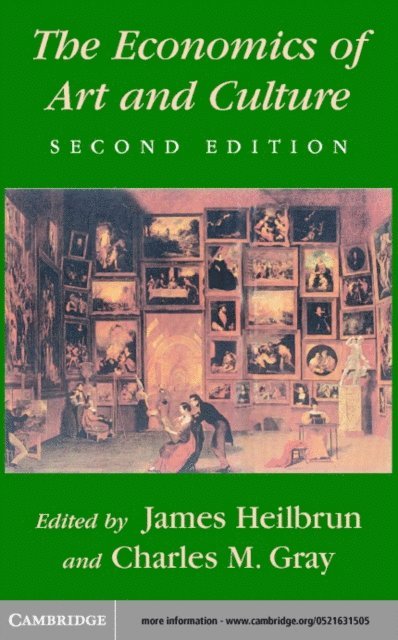
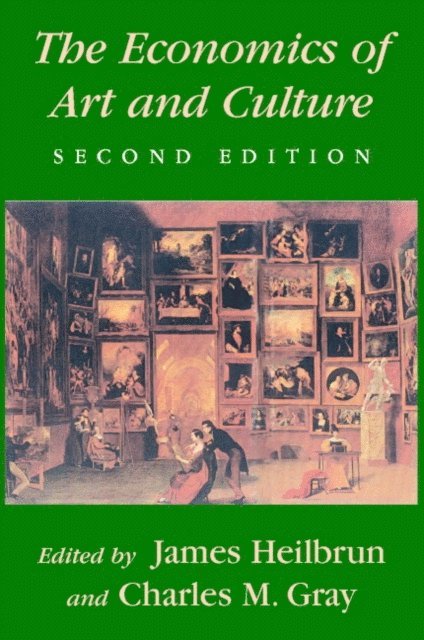
The 2001 second edition of this survey of the economics of - and public policy towards - the fine arts and performing arts covers arts at federal, state, and local levels in the United States as well as the international arts sector. The work will interest academic readers in the field and scholars of the sociology of the arts, as well as general readers seeking a systematic analysis of the arts. Theoretical concepts are developed from scratch so that readers with no background in economics can follow the argument. The authors look at the arts'' historical growth and then examine consumption and production of the live performing arts and the fine arts, the functioning of arts markets, the financial problems of performing arts companies and museums, and the key role of public policy. A final chapter speculates about the future of art and culture in the United States.
Häftad, Engelska, 2023
560 kr
Skickas inom 7-10 vardagar
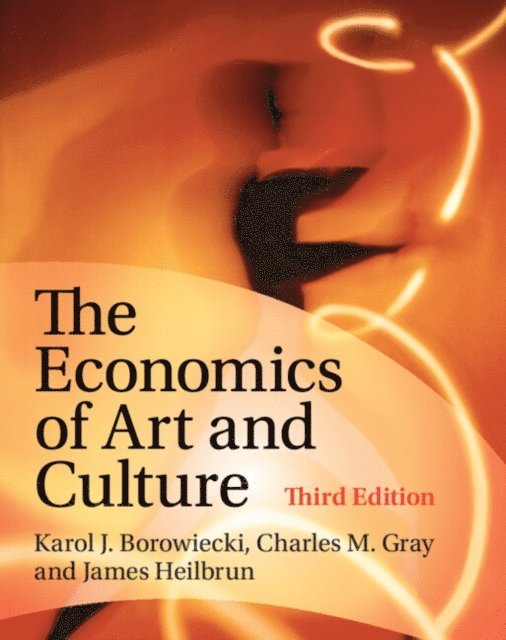
Spanning the economics of the fine arts, performing arts, and public policy, this updated classic is the go-to resource for navigating today's creative industries. Building on real-world data, engaging case studies, and cutting-edge research, it prepares students for careers in the cultural, creative, and public sectors. By avoiding mathematical treatments and explaining theories with examples, this book develops theoretical concepts from scratch, making it accessible to readers with no background in economics. While most of the theory remains timeless, this new edition covers changes in the world's economic landscapes. Updates include new sections on gender representation, cultural districts and tourism, digital broadcasting and streaming, how technology impacts the arts, and arts management and strategy. The authors demonstrate data-driven decision-making using examples and cases from various databases. Students learn to assess academic results and apply the learned material using the discussion questions and problem sets.
Inbunden, Engelska, 2023
1 390 kr
Skickas inom 7-10 vardagar
Spanning the economics of the fine arts, performing arts, and public policy, this updated classic is the go-to resource for navigating today's creative industries. Building on real-world data, engaging case studies, and cutting-edge research, it prepares students for careers in the cultural, creative, and public sectors. By avoiding mathematical treatments and explaining theories with examples, this book develops theoretical concepts from scratch, making it accessible to readers with no background in economics. While most of the theory remains timeless, this new edition covers changes in the world's economic landscapes. Updates include new sections on gender representation, cultural districts and tourism, digital broadcasting and streaming, how technology impacts the arts, and arts management and strategy. The authors demonstrate data-driven decision-making using examples and cases from various databases. Students learn to assess academic results and apply the learned material using the discussion questions and problem sets.
E-bok
PDF, Engelska, 2023661 kr
Läs direkt efter köp
E-bok
Engelska, 2023667 kr
Läs direkt efter köp
E-bok
Engelska, 2001613 kr
Läs direkt efter köp
The 2001 second edition of this survey of the economics of - and public policy towards - the fine arts and performing arts covers arts at federal, state, and local levels in the United States as well as the international arts sector. The work will interest academic readers in the field and scholars of the sociology of the arts, as well as general readers seeking a systematic analysis of the arts. Theoretical concepts are developed from scratch so that readers with no background in economics can follow the argument. The authors look at the arts'' historical growth and then examine consumption and production of the live performing arts and the fine arts, the functioning of arts markets, the financial problems of performing arts companies and museums, and the key role of public policy. A final chapter speculates about the future of art and culture in the United States.