James Hendler – författare
Visar alla böcker från författaren James Hendler. Handla med fri frakt och snabb leverans.
16 produkter
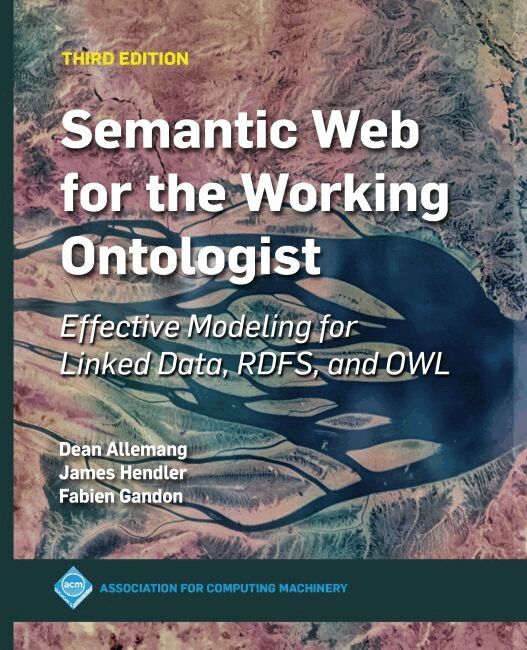
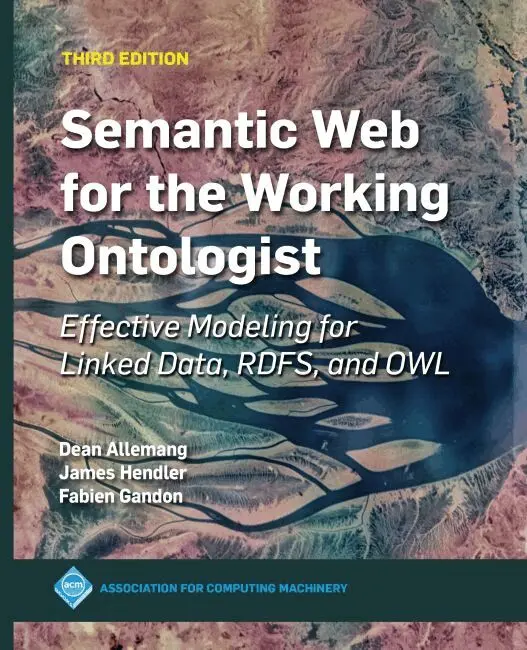
Semantic Web for the Working Ontologist
Effective Modeling for Linked Data, RDFS, and OWL
Av James Hendler, Fabien Gandon m. fl.
Häftad, 2020
5,0 utav 5 stjärnor. Totalt antal röster: (1)
764 kr
Lägg i varukorg
Enterprises have made amazing advances by taking advantage of data about their business to provide predictions and understanding of their customers, markets, and products. But as the world of business becomes more interconnected and global, enterprise data is no long a monolith; it is just a part …
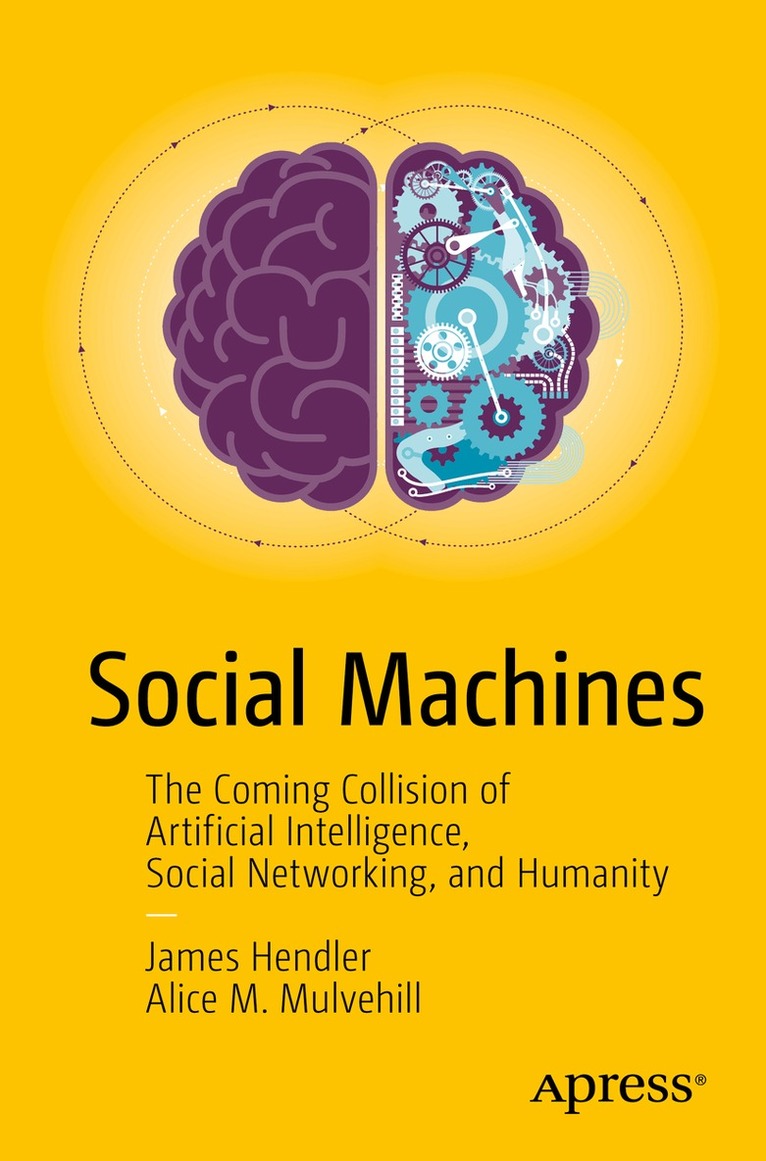
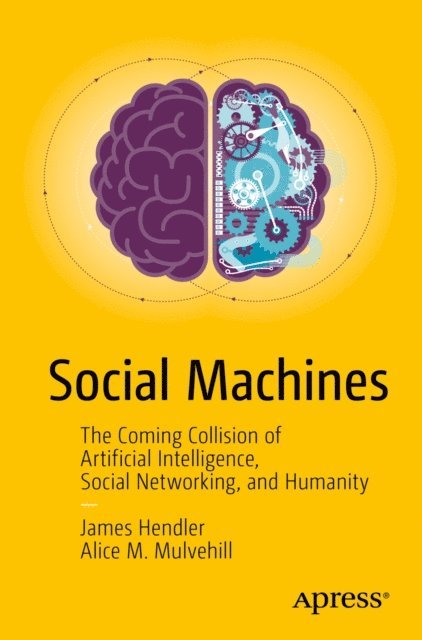
Social Machines
The Coming Collision of Artificial Intelligence, Social Networking, and Humanity
Av James Hendler, Alice M. Mulvehill
Häftad, 2016
347 kr
Lägg i varukorg
Will your next doctor be a human being—or a machine? Will you have a choice? If you do, what should you know before making it?This book introduces the reader to the pitfalls and promises of artificial intelligence (AI) in its modern incarnation and the growing trend of systems to "reach off the …
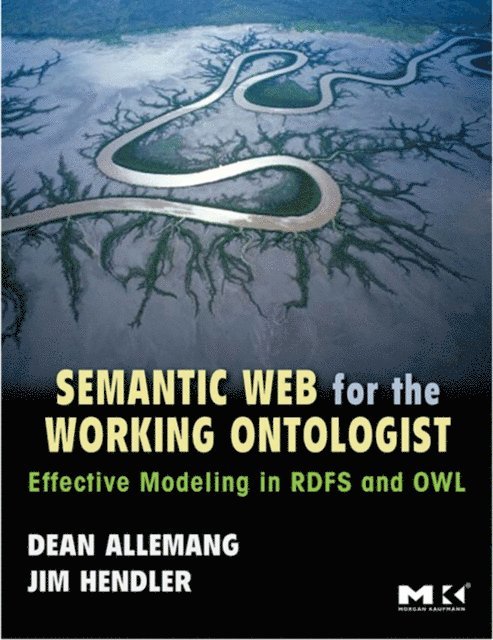
Semantic Web for the Working Ontologist
Effective Modeling in RDFS and OWL
Av Dean Allemang, James Hendler
Häftad, 2011
5,0 utav 5 stjärnor. Totalt antal röster: (1)
615 kr
Lägg i varukorg
Semantic Web for the Working Ontologist: Effective Modeling in RDFS and OWL, Second Edition , discusses the capabilities of Semantic Web modeling languages, such as RDFS (Resource Description Framework Schema) and OWL (Web Ontology Language). Organized into 16 chapters, the book provides examples …
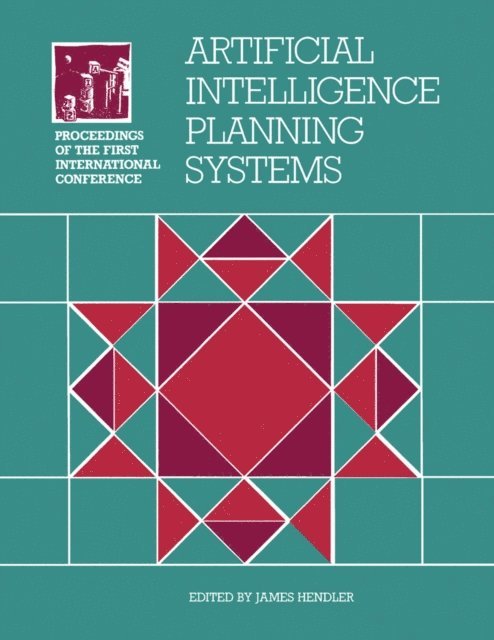
Artificial Intelligence Planning Systems
Proceedings of the First Conference (AIPS 92)
E-bok, 2014
1053 kr
Lägg i varukorg
Artificial Intelligence Planning Systems documents the proceedings of the First International Conference on AI Planning Systems held in College Park, Maryland on June 15-17, 1992. This book discusses the abstract probabilistic modeling of action; building symbolic primitives with continuous control …
Semantic Web for the Working Ontologist
Effective Modeling in RDFS and OWL
Av James Hendler, Dean Allemang
E-bok, 2009
571 kr
Lägg i varukorg
The promise of the Semantic Web to provide a universal medium to exchange data information and knowledge has been well publicized. There are many sources too for basic information on the extensions to the WWW that permit content to be expressed in natural language yet used by software agents to …
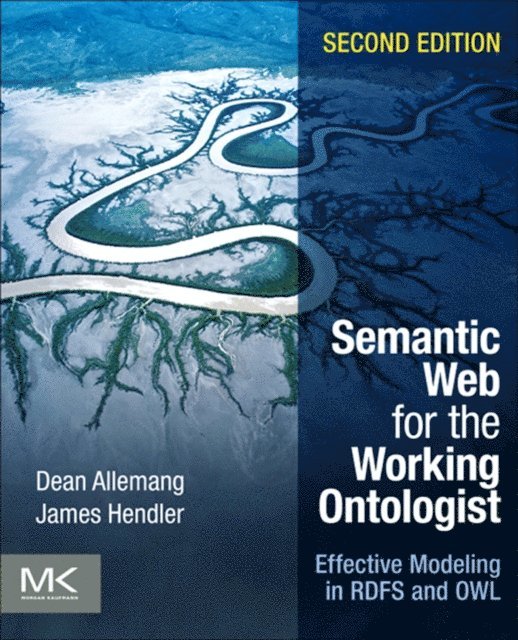
Semantic Web for the Working Ontologist
Effective Modeling in RDFS and OWL
Av James Hendler, Dean Allemang
E-bok, 2011
571 kr
Lägg i varukorg
Semantic Web for the Working Ontologist: Effective Modeling in RDFS and OWL, Second Edition, discusses the capabilities of Semantic Web modeling languages, such as RDFS (Resource Description Framework Schema) and OWL (Web Ontology Language). Organized into 16 chapters, the book provides examples to …
Semantic Web for the Working Ontologist
Effective Modeling for Linked Data, RDFS, and OWL
Av James Hendler, Fabien Gandon m. fl.
Inbunden, 2020
959 kr
Lägg i varukorg
Enterprises have made amazing advances by taking advantage of data about their business to provide predictions and understanding of their customers, markets, and products. But as the world of business becomes more interconnected and global, enterprise data is no long a monolith; it is just a part …
Social Machines
The Coming Collision of Artificial Intelligence, Social Networking, and Humanity
Av Alice M. Mulvehill, James Hendler
E-bok, 2016
470 kr
Lägg i varukorg
Will your next doctor be a human being—or a machine? Will you have a choice? If you do, what should you know before making it? This book introduces the reader to the pitfalls and promises of artificial intelligence (AI) in its modern incarnation and the growing trend of systems to "reach off the …
Web Information Systems and Applications
17th International Conference, WISA 2020, Guangzhou, China, September 23–25, 2020, Proceedings
Av Guojun Wang, Xuemin Lin m. fl.
Häftad, 2020
1127 kr
Lägg i varukorg
This book constitutes the proceedings of the 17th International Conference on Web Information Systems and Applications, WISA 2020, held in Guangzhou, China, in September 2020. The 42 full papers and 16 short papers presented were carefully reviewed and selected from 165 submissions. The papers are …
Web Information Systems and Applications
17th International Conference, WISA 2020, Guangzhou, China, September 23–25, 2020, Proceedings
Av Genggeng Liu, Zhuoming Xu m. fl.
E-bok, 2020
1455 kr
Lägg i varukorg
This book constitutes the proceedings of the 17th International Conference on Web Information Systems and Applications, WISA 2020, held in Guangzhou, China, in September 2020. The 42 full papers and 16 short papers presented were carefully reviewed and selected from 165 submissions. The papers are …
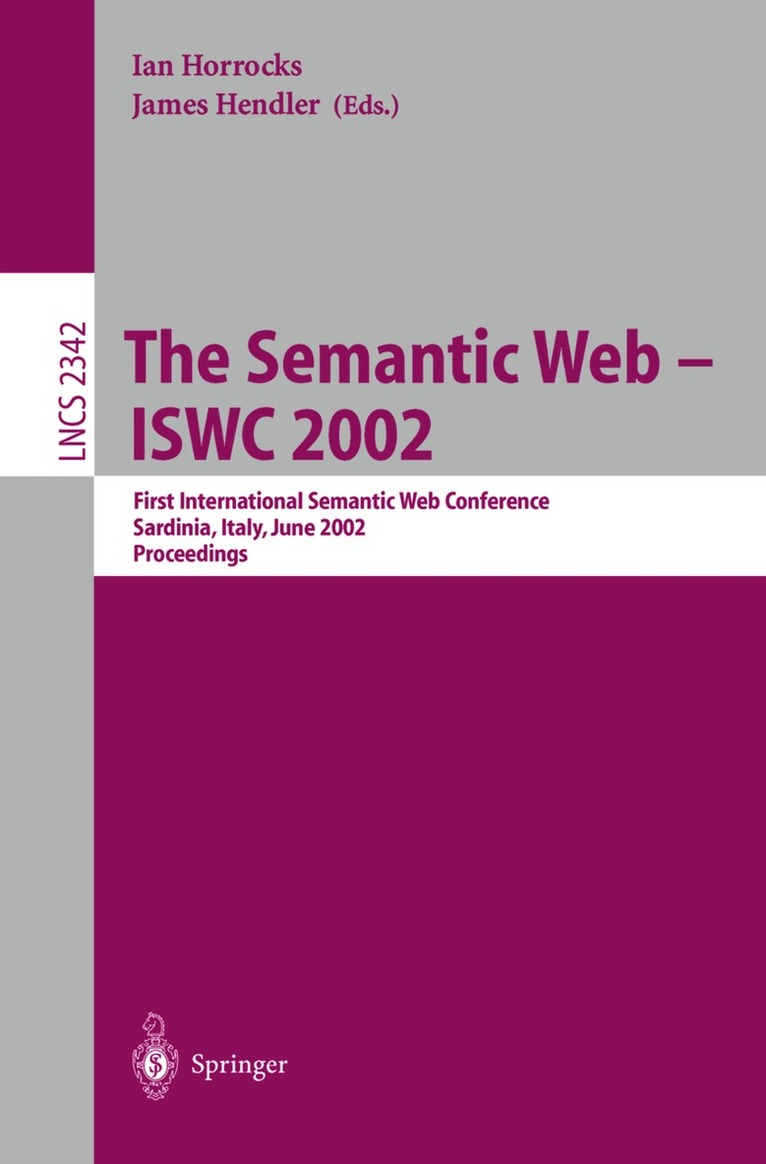
Semantic Web - ISWC 2002
First International Semantic Web Conference, Sardinia, Italy, June 9-12, 2002, Proceedings
Av Ian Horrocks, James Hendler
Häftad, 2002
567 kr
Lägg i varukorg
This volume contains the papers presented at the First International Sem- tic Web Conference (ISWC 2002) held in Sardinia, Italy, 9-12th June, 2002. The conference followed on from the highly successful Semantic Web Working Symposium held at Stanford University, USA in 2001. A total of 133 papers …
Semantic Web - ISWC 2002
First International Semantic Web Conference, Sardinia, Italy, June 9-12, 2002, Proceedings
Av James Hendler, Ian Horrocks
E-bok, 2003
755 kr
Lägg i varukorg
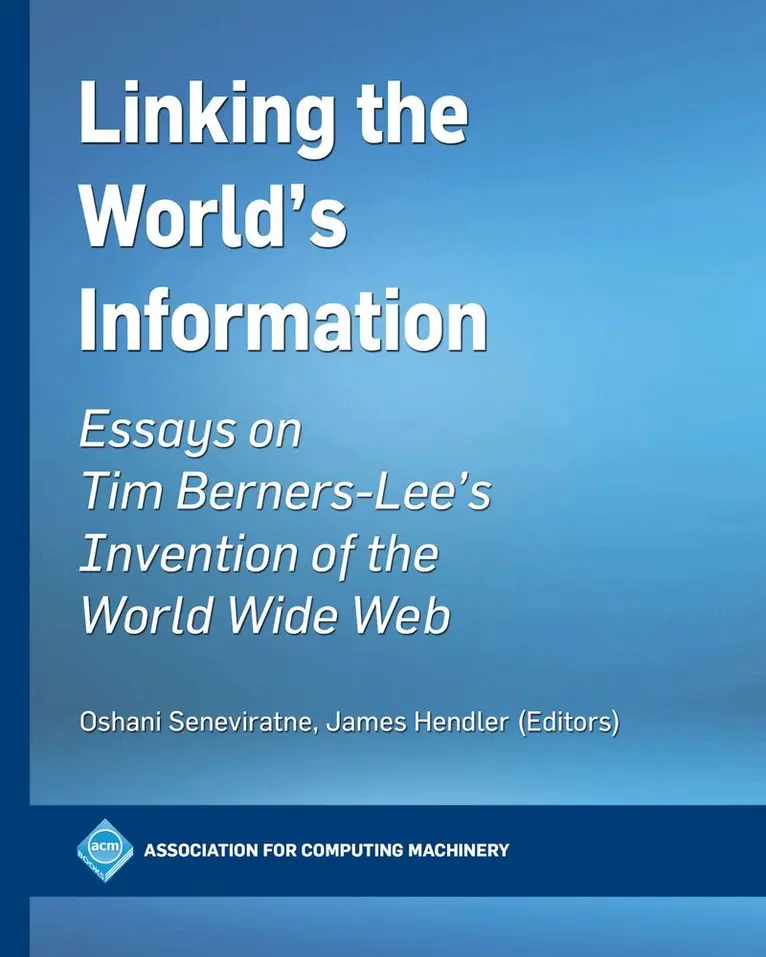
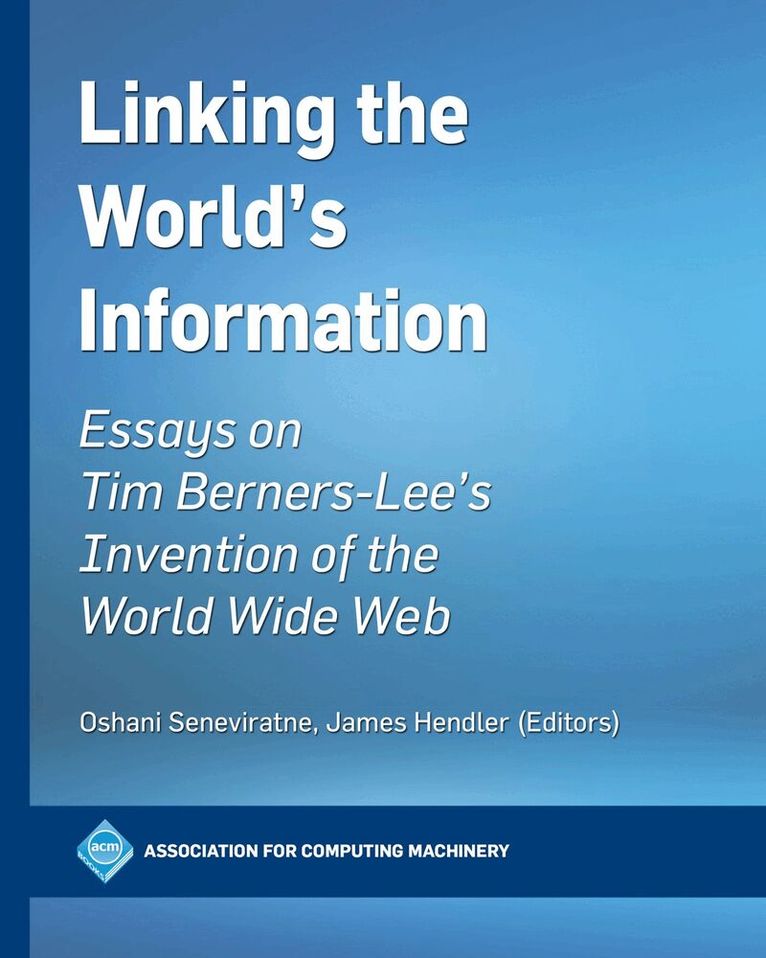
Linking the World's Information
Essays on Tim Berners-Lee's Invention of the World Wide Web
Av Oshani Seneviratne, James Hendler
Häftad, 2023
455 kr
Lägg i varukorg
When Sir Tim Berners-Lee first proposed the foundations of the World Wide Web at CERN in 1989, his manager called it "vague, but exciting." How things have changed since then! Twenty-six years later, Berners-Lee won the ACM Turing Award "for inventing the World Wide Web, the first Web browser, and …
Linking the World's Information
Essays on Tim Berners-Lee''s Invention of the World Wide Web
Av James Hendler, Oshani Seneviratne
E-bok, 2023
374 kr
Lägg i varukorg
When Sir Tim Berners-Lee first proposed the foundations of the World Wide Web at CERN in 1989, his manager called it “vague, but exciting.” How things have changed since then! Twenty-six years later, Berners-Lee won the ACM Turing Award “for inventing the World Wide Web, the first Web browser, and …
Linking the World's Information
Essays on Tim Berners-Lee's Invention of the World Wide Web
Av Oshani Seneviratne, James Hendler
Inbunden, 2023
679 kr
Lägg i varukorg
When Sir Tim Berners-Lee first proposed the foundations of the World Wide Web at CERN in 1989, his manager called it "vague, but exciting." How things have changed since then! Twenty-six years later, Berners-Lee won the ACM Turing Award "for inventing the World Wide Web, the first Web browser, and …
Linking the World's Information
Essays on Tim Berners-Lee''s Invention of the World Wide Web
Av James Hendler, Oshani Seneviratne
E-bok, 2023
374 kr
Lägg i varukorg
When Sir Tim Berners-Lee first proposed the foundations of the World Wide Web at CERN in 1989, his manager called it “vague, but exciting.” How things have changed since then! Twenty-six years later, Berners-Lee won the ACM Turing Award “for inventing the World Wide Web, the first Web browser, and …