James Kuzner - Böcker
Visar alla böcker från författaren James Kuzner. Handla med fri frakt och snabb leverans.
6 produkter
6 produkter
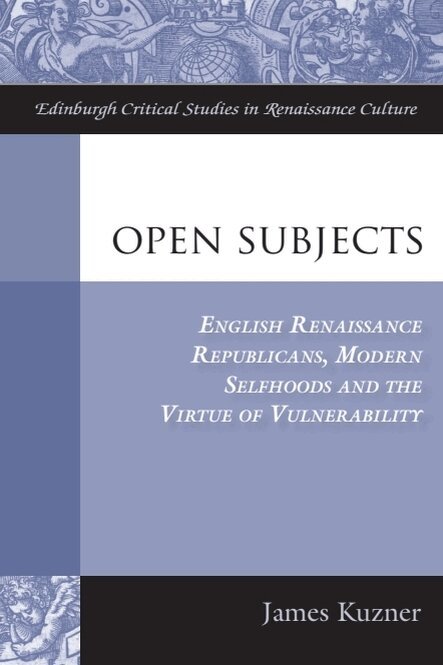
Open Subjects
English Renaissance Republicans, Modern Selfhoods and the Virtue of Vulnerability
Inbunden, Engelska, 2011
1 455 kr
Skickas inom 7-10 vardagar
'This is revelatory work that pries open challenging literary texts to reveal human vulnerability as a central thematic and political element. Kuzner will change our thinking about the early modern subject.'Barbara Correll, Cornell University'Sensitive to ambient changes in social life, Kuzner's heroes of vulnerability, adrift in an unguarded existence where immune defenses have been turned off, hatch scripts for "worlds elsewhere," alternative modernities founded on pleasure, enjoyment, and the forms of openness they incite and sustain.'Julia Reinhard Lupton, author of Thinking with Shakespeare: Essays on Politics and LifeStudies of the republican legacy have proliferated in recent years, always to argue for a polity that cultivates the virtues, protections and entitlements which foster the self's ability to simulate an invulnerable existence. James Kuzner's original new study of writing by Spenser, Shakespeare, Marvell and Milton is the first to present a genealogy for the modern self in which its republican origins can be understood far more radically. In doing so, this study is also the first to draw radical and republican thought into sustained conversation, and to locate a republic for which vulnerability is, unexpectedly, as much what community has to offer as it is what community guards against. At a time when the drive to safeguard citizens has gathered enough momentum to justify almost any state action, Open Subjects questions whether vulnerability is the evil we so often believe it to be.
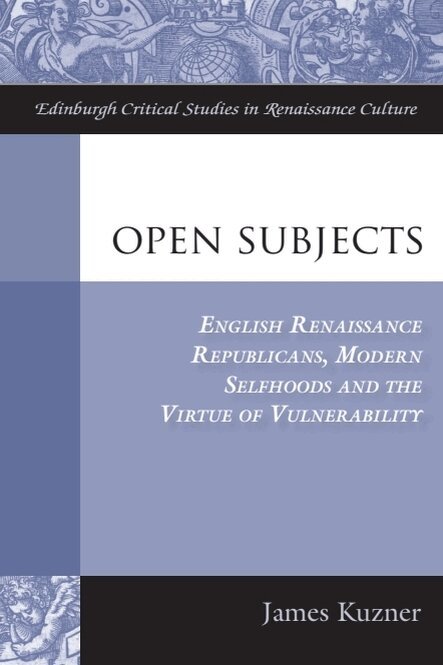
Open Subjects
English Renaissance Republicans, Modern Selfhoods and the Virtue of Vulnerability
Häftad, Engelska, 2012
318 kr
Skickas inom 11-20 vardagar
'This is revelatory work that pries open challenging literary texts to reveal human vulnerability as a central thematic and political element. Kuzner will change our thinking about the early modern subject.'Barbara Correll, Cornell University'Sensitive to ambient changes in social life, Kuzner's heroes of vulnerability, adrift in an unguarded existence where immune defenses have been turned off, hatch scripts for "worlds elsewhere," alternative modernities founded on pleasure, enjoyment, and the forms of openness they incite and sustain.'Julia Reinhard Lupton, author of Thinking with Shakespeare: Essays on Politics and LifeStudies of the republican legacy have proliferated in recent years, always to argue for a polity that cultivates the virtues, protections and entitlements which foster the self's ability to simulate an invulnerable existence. James Kuzner's original new study of writing by Spenser, Shakespeare, Marvell and Milton is the first to present a genealogy for the modern self in which its republican origins can be understood far more radically. In doing so, this study is also the first to draw radical and republican thought into sustained conversation, and to locate a republic for which vulnerability is, unexpectedly, as much what community has to offer as it is what community guards against. At a time when the drive to safeguard citizens has gathered enough momentum to justify almost any state action, Open Subjects questions whether vulnerability is the evil we so often believe it to be.
1 051 kr
Skickas inom 10-15 vardagar
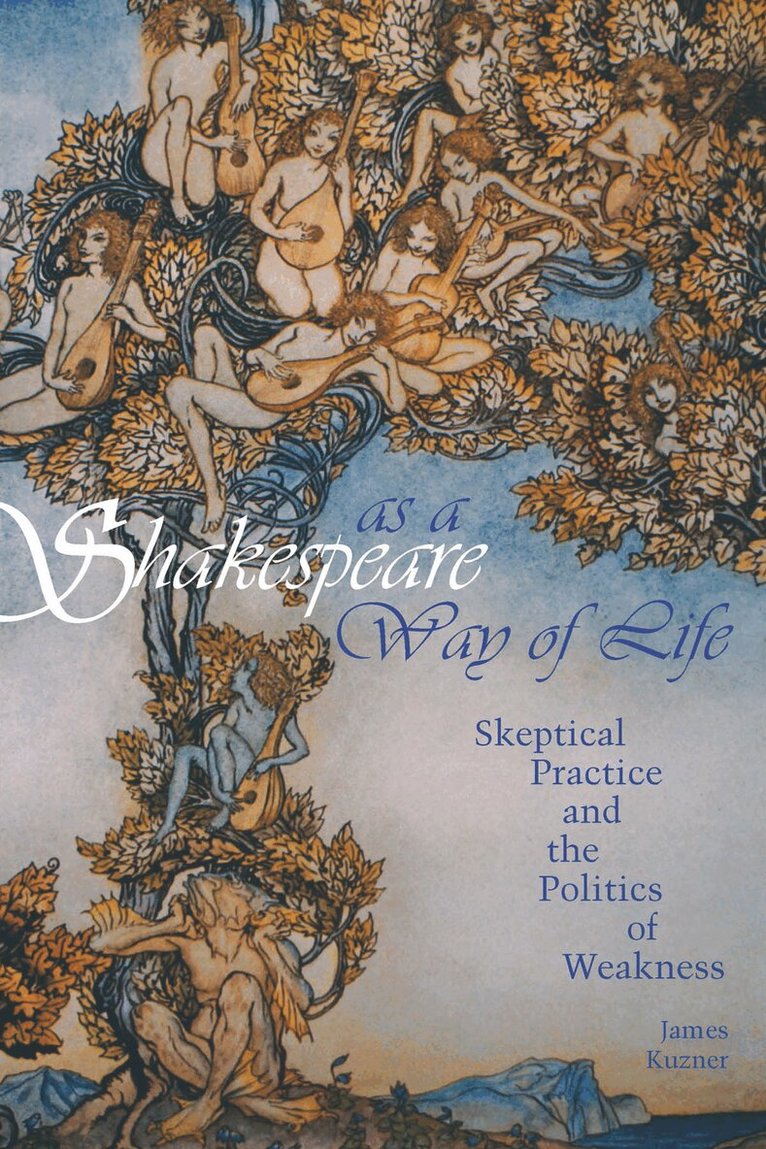
Shakespeare as a Way of Life shows how reading Shakespeare helps us to live with epistemological weakness and even to practice this weakness, to make it a way of life. In a series of close readings, Kuzner shows how Hamlet, Lucrece, Othello, The Winter's Tale, The Tempest, and Timon of Athens, impel us to grapple with basic uncertainties: how we can be free, whether the world is abundant, whether we have met the demands of love and social life.To Kuzner, Shakespeare's skepticism doesn't have the enabling potential of Keats's heroic "negativity capability," but neither is that skepticism the corrosive disease that necessarily issues in tragedy. While sensitive to both possibilities, Kuzner offers a way to keep negative capability negative while making skepticism livable. Rather than light the way to empowered, liberal subjectivity, Shakespeare's works demand lasting disorientation, demand that we practice the impractical so as to reshape the frames by which we view and negotiate the world.The act of reading Shakespeare cannot yield the practical value that cognitive scientists and literary critics attribute to it. His work neither clarifies our sense of ourselves, of others, or of the world; nor heartens us about the human capacity for insight and invention; nor sharpens our ability to appreciate and adjudicate complex problems of ethics and politics. Shakespeare's plays, rather, yield cognitive discomforts, and it is just these discomforts that make them worthwhile.
355 kr
Skickas inom 11-20 vardagar
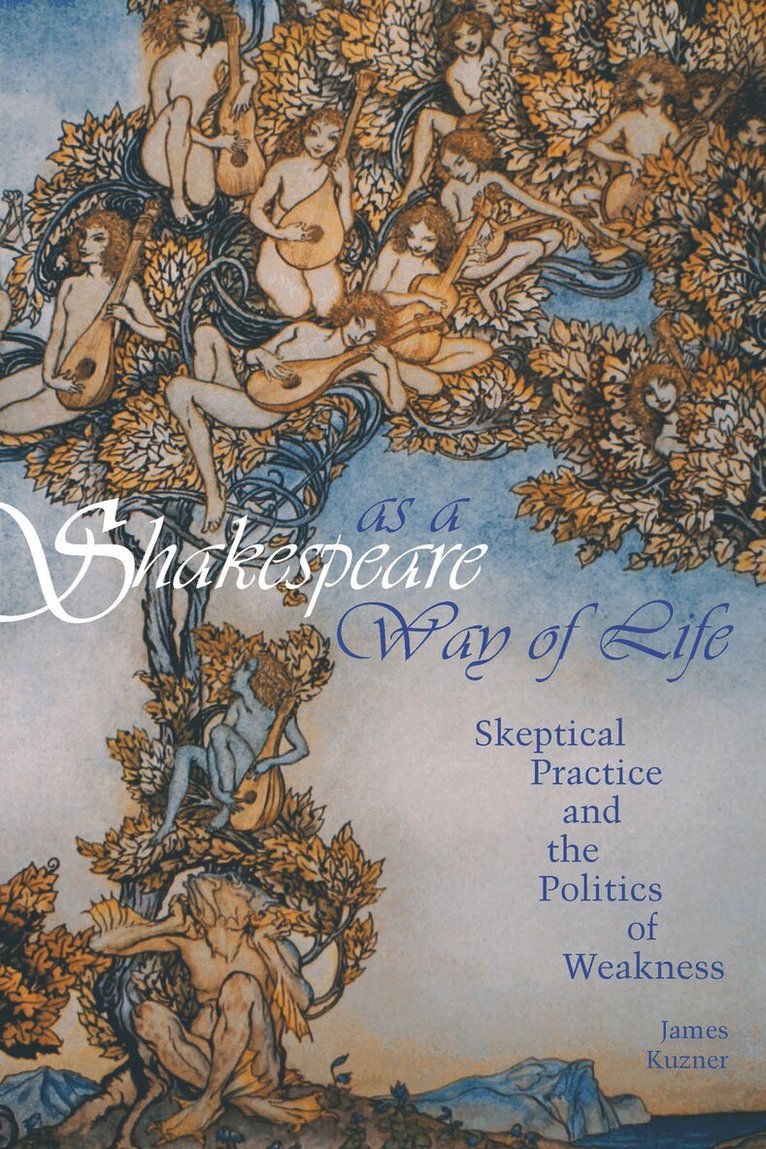
Shakespeare as a Way of Life shows how reading Shakespeare helps us to live with epistemological weakness and even to practice this weakness, to make it a way of life. In a series of close readings, Kuzner shows how Hamlet, Lucrece, Othello, The Winter's Tale, The Tempest, and Timon of Athens, impel us to grapple with basic uncertainties: how we can be free, whether the world is abundant, whether we have met the demands of love and social life.To Kuzner, Shakespeare's skepticism doesn't have the enabling potential of Keats's heroic "negativity capability," but neither is that skepticism the corrosive disease that necessarily issues in tragedy. While sensitive to both possibilities, Kuzner offers a way to keep negative capability negative while making skepticism livable. Rather than light the way to empowered, liberal subjectivity, Shakespeare's works demand lasting disorientation, demand that we practice the impractical so as to reshape the frames by which we view and negotiate the world.The act of reading Shakespeare cannot yield the practical value that cognitive scientists and literary critics attribute to it. His work neither clarifies our sense of ourselves, of others, or of the world; nor heartens us about the human capacity for insight and invention; nor sharpens our ability to appreciate and adjudicate complex problems of ethics and politics. Shakespeare's plays, rather, yield cognitive discomforts, and it is just these discomforts that make them worthwhile.
1 296 kr
Skickas inom 10-15 vardagar
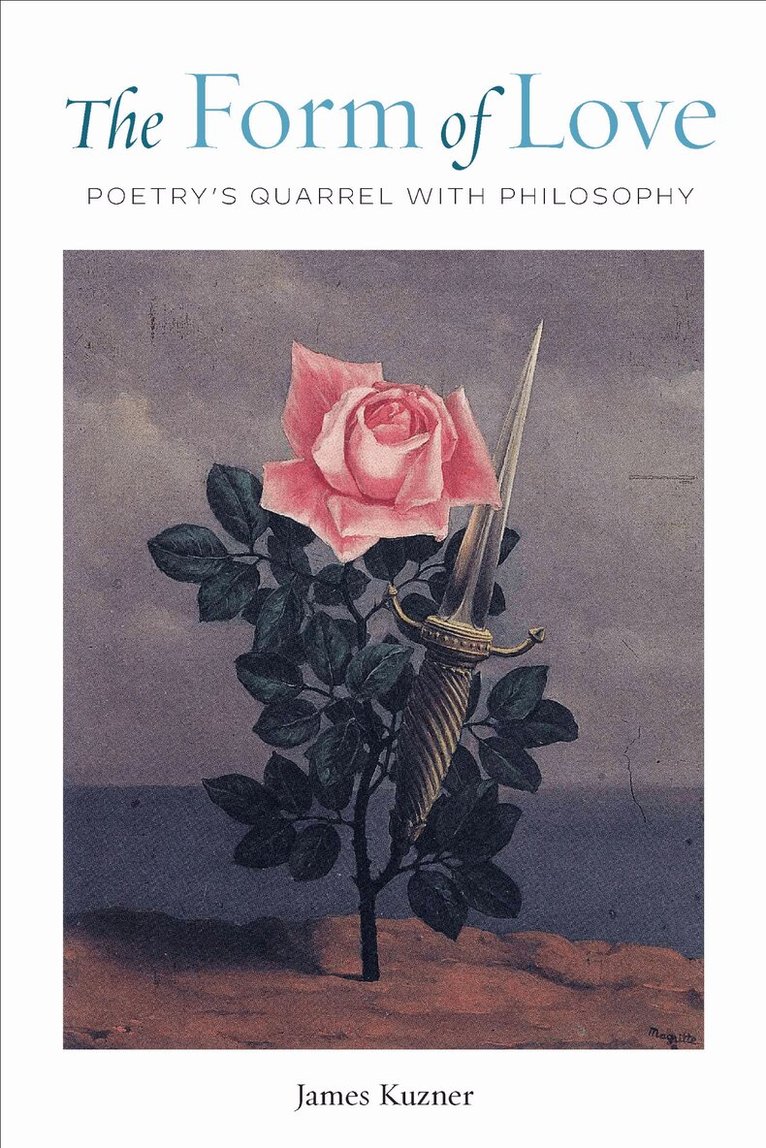
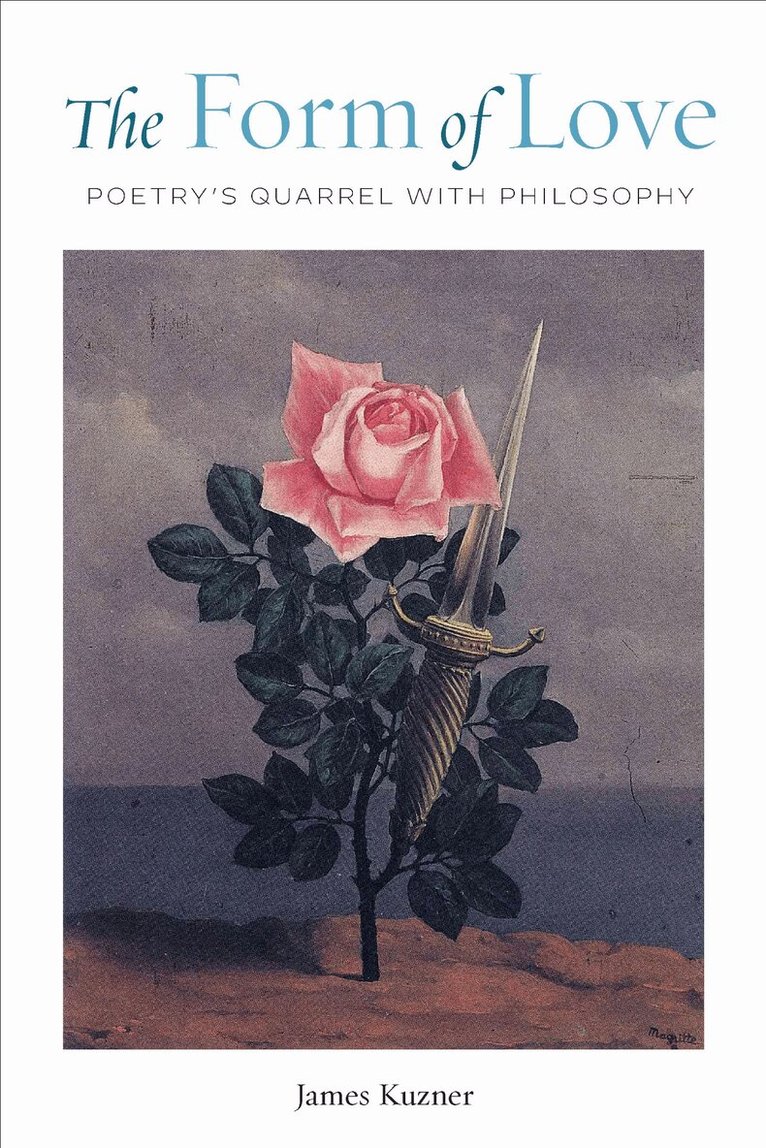
Can poetry articulate something about love that philosophy cannot? The Form of Love argues that it can. In close readings of seven "metaphysical" poems, the book shows how poets of the early modern period and beyond use poetic form to turn philosophy to other ends, in order not to represent the truth about love but to create a virtual experience of love, in all its guises. The Form of Love shows how verse creates love that can't exist without poetry's specific affordances, and how poems can, in their impossibility, prompt love's radical re-imagining. Like the philosophies on which they draw, metaphysical poems imagine love as an intense form of non-sovereignty, of giving up control. They even imagine love as a liberating bondage—to a friend, a beloved, a saint, a God, or a garden. Yet these poems create strange, striking versions of such love, made in, rather than through, the devices, structures, and forces where love appears.Tracing how poems think, Kuzner argues, requires an intimate form of reading: close—even too close—attention to and thinking with the text. Showing how poetry thinks of love otherwise than other fields, the book reveals how poetry and philosophy can nevertheless enter into a relation that is itself like love.
356 kr
Skickas inom 7-10 vardagar
Can poetry articulate something about love that philosophy cannot? The Form of Love argues that it can. In close readings of seven "metaphysical" poems, the book shows how poets of the early modern period and beyond use poetic form to turn philosophy to other ends, in order not to represent the truth about love but to create a virtual experience of love, in all its guises. The Form of Love shows how verse creates love that can't exist without poetry's specific affordances, and how poems can, in their impossibility, prompt love's radical re-imagining. Like the philosophies on which they draw, metaphysical poems imagine love as an intense form of non-sovereignty, of giving up control. They even imagine love as a liberating bondage—to a friend, a beloved, a saint, a God, or a garden. Yet these poems create strange, striking versions of such love, made in, rather than through, the devices, structures, and forces where love appears.Tracing how poems think, Kuzner argues, requires an intimate form of reading: close—even too close—attention to and thinking with the text. Showing how poetry thinks of love otherwise than other fields, the book reveals how poetry and philosophy can nevertheless enter into a relation that is itself like love.