James L. Doti - Böcker
Visar alla böcker från författaren James L. Doti. Handla med fri frakt och snabb leverans.
3 produkter
3 produkter
1 182 kr
Skickas inom 5-8 vardagar
The Market Economy: A Reader outlines the characteristics and philosophical underpinnings of the market economy and its usefulness in the allocation of resources. This anthology offers a comprehensive set of authentic, primary source selections that demonstrate how the tenets of classical economic liberalism provide the foundation for an efficient economic system--while also maximizing individual freedom. The readings also provide a structure for analyzing economic and philosophical issues. The book includes selections from several authors who are not economists but whose work is important in terms of their contribution to economic thought, such as Henry David Throeau and Ayn Rand. It also features classic readings such as Adam Smith's invisible hand from his Wealth of Nations, David Ricardo's original explanation of comparative advantage from Principles of Political Economy and Taxation, and John Stuart Mill's eloquent expression of the limits of government in On Liberty. Latter day proponents of private enterprise include Friedrich Hayek, Ludwig von Mises, and Milton Friedman. These authors and others address how the market economy responds to such topical issues as the environment, income distribution, and free trade.
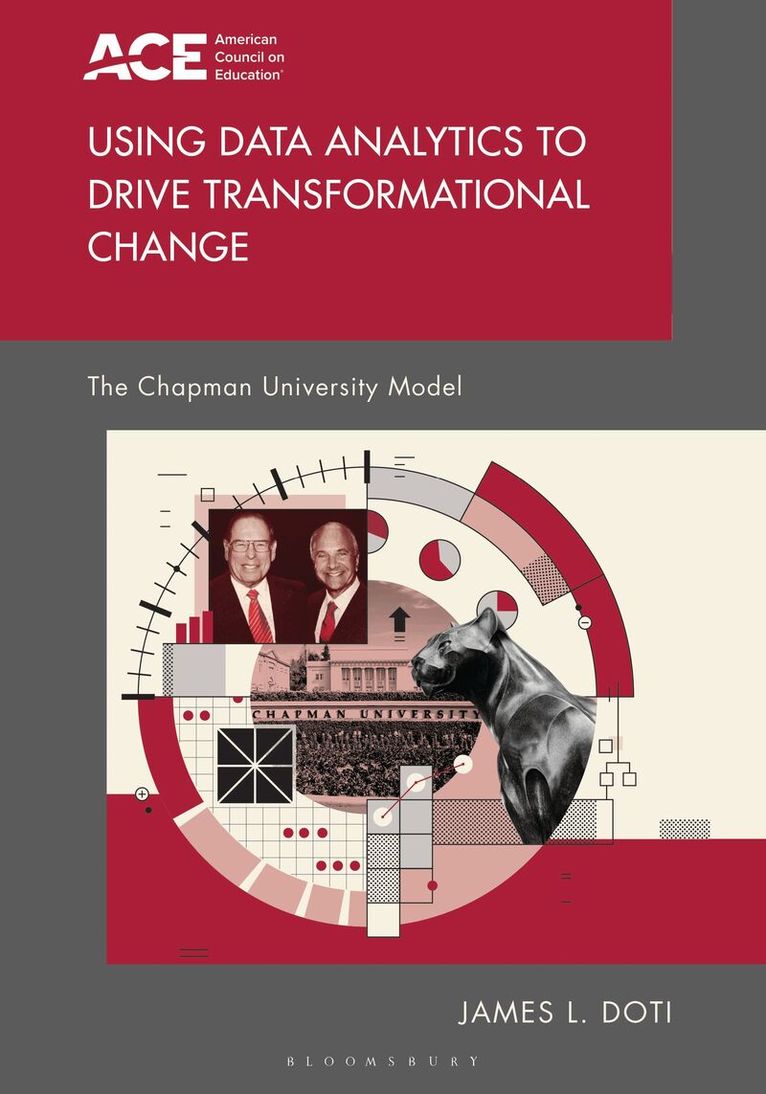
Using Data Analytics to Drive Transformational Change
The Chapman University Model
Inbunden, Engelska, 2025
1 091 kr
Skickas inom 7-10 vardagar
Using Data Analytics to Drive Transformational Change: The Chapman University Model opens with the statement, “Most strategic plans are a waste of time – a drain on precious resources.” An alternative planning approach is described in this book. It represents a paradigm shift in tackling transformational change. Rather than developing all-around strategies, the author presents a planning model that guided Chapman’s transformation that took place during James Doti’s 25-year presidency at Chapman University.Chapter 2 describes how data analytics were used to increase student selectivity by utilizing specific strategies relating to tuition pricing and discounting.Chapter 3 shows how the progress of competing universities can be identified and measured in helping determine the optimal size for a university. The specific strategies relating to establishing a new film school, law school and physical therapy program are presented, as well as when and how to pursue national accreditation for a school’s academic programs.Chapter 4 describes how analytical tools can be used to optimally invest in buildings and land. Putting those tools to work is described in examples related to the construction of a new film studio, library, underground parking, and landscape development.Chapter 5 explains how a unique budgetary system was developed to move Chapman’s faculty salaries into the 95th percentile for all professional ranks. It also presents specific strategies relating to increasing the number of endowed faculty chairs and professorships.Chapter 6 describes how the net income ratio can be used to assess the financial health of the institution as well as increase endowment growth and investments in buildings and land. Specific examples include increasing the number of natural science majors as well as developing a new campus devoted to graduate health science programs. The chapter also presents a unique strategy relating to succession planning
Using Data Analytics to Drive Transformational Change
The Chapman University Model
Häftad, Engelska, 2025
389 kr
Skickas inom 7-10 vardagar
Using Data Analytics to Drive Transformational Change: The Chapman University Model opens with the statement, “Most strategic plans are a waste of time – a drain on precious resources.” An alternative planning approach is described in this book. It represents a paradigm shift in tackling transformational change. Rather than developing all-around strategies, the author presents a planning model that guided Chapman’s transformation that took place during James Doti’s 25-year presidency at Chapman University.Chapter 2 describes how data analytics were used to increase student selectivity by utilizing specific strategies relating to tuition pricing and discounting.Chapter 3 shows how the progress of competing universities can be identified and measured in helping determine the optimal size for a university. The specific strategies relating to establishing a new film school, law school and physical therapy program are presented, as well as when and how to pursue national accreditation for a school’s academic programs.Chapter 4 describes how analytical tools can be used to optimally invest in buildings and land. Putting those tools to work is described in examples related to the construction of a new film studio, library, underground parking, and landscape development.Chapter 5 explains how a unique budgetary system was developed to move Chapman’s faculty salaries into the 95th percentile for all professional ranks. It also presents specific strategies relating to increasing the number of endowed faculty chairs and professorships.Chapter 6 describes how the net income ratio can be used to assess the financial health of the institution as well as increase endowment growth and investments in buildings and land. Specific examples include increasing the number of natural science majors as well as developing a new campus devoted to graduate health science programs. The chapter also presents a unique strategy relating to succession planning