James R. Gibson – författare
Visar alla böcker från författaren James R. Gibson. Handla med fri frakt och snabb leverans.
15 produkter
Otter Skins, Boston Ships, and China Goods
Voices of the Maritime Fur Trade of the Northwest Coast, 1785-1841, Revised Edition
Inbunden, 2024
468 kr
Lägg i varukorg
Before contact with white people, the Indigenous peoples of the Northwest Coast traded amongst themselves and with other Indigenous groups farther inland, but by the end of the 1780s, when Russian coasters had penetrated the Gulf of Alaska and British merchantmen were frequenting Nootka Sound, …
Otter Skins, Boston Ships, and China Goods
Voices of the Maritime Fur Trade of the Northwest Coast, 1785-1841, Revised Edition
E-bok, 2024
541 kr
Lägg i varukorg
Before contact with white people, the Indigenous peoples of the Northwest Coast traded amongst themselves and with other Indigenous groups farther inland, but by the end of the 1780s, when Russian coasters had penetrated the Gulf of Alaska and British merchantmen were frequenting Nootka Sound, …
Otter Skins, Boston Ships, and China Goods
Voices of the Maritime Fur Trade of the Northwest Coast, 1785-1841, Revised Edition
E-bok, 2024
558 kr
Lägg i varukorg
Before contact with white people, the Indigenous peoples of the Northwest Coast traded amongst themselves and with other Indigenous groups farther inland, but by the end of the 1780s, when Russian coasters had penetrated the Gulf of Alaska and British merchantmen were frequenting Nootka Sound, …
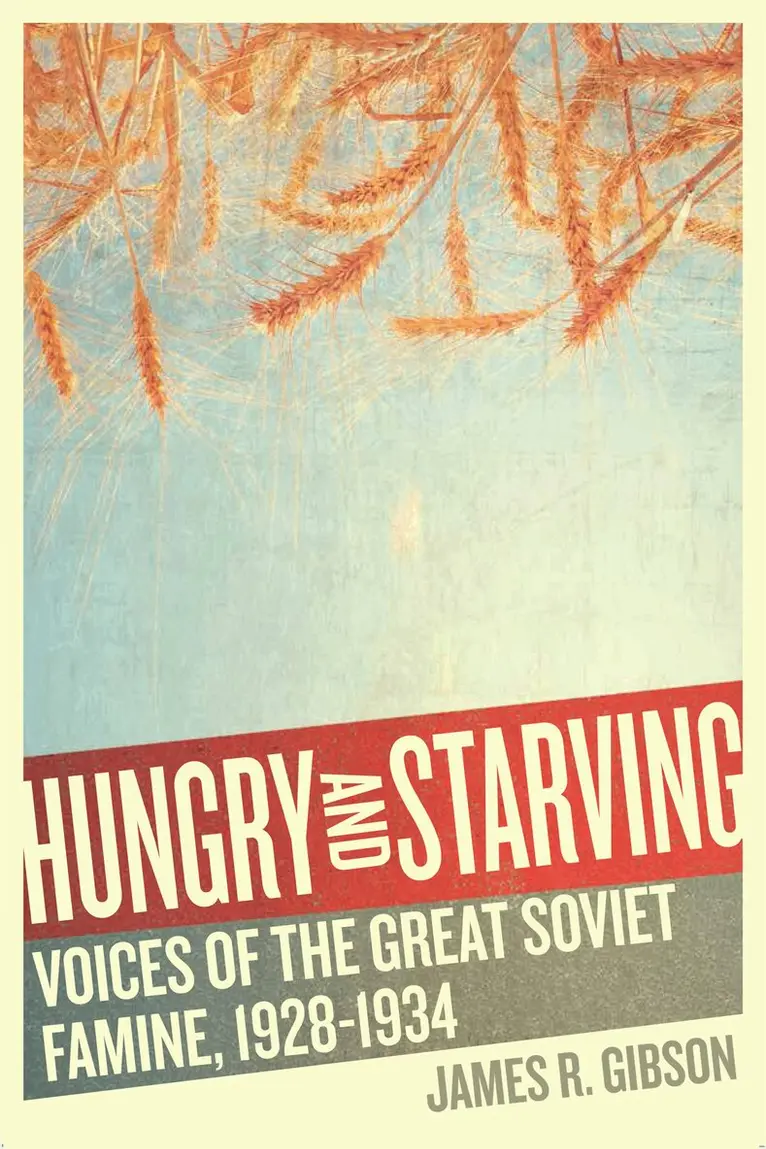
Hungry and Starving
Voices of the Great Soviet Famine, 1928–1934
Inbunden, 2024
583 kr
Lägg i varukorg
In the wake of Vladimir Lenin’s death in 1924, various protagonists grappled to become his successor, but it was not until 1928 that Joseph Stalin emerged as leader of the Russian Marxists’ Bolshevik wing. Surrounded by an increasingly hostile capitalist world, Stalin reasoned that Soviet Russia …
Hungry and Starving
Voices of the Great Soviet Famine, 1928–1934
E-bok, 2024
561 kr
Lägg i varukorg
In the wake of Vladimir Lenin’s death in 1924, various protagonists grappled to become his successor, but it was not until 1928 that Joseph Stalin emerged as leader of the Russian Marxists’ Bolshevik wing. Surrounded by an increasingly hostile capitalist world, Stalin reasoned that Soviet Russia …
Hungry and Starving
Voices of the Great Soviet Famine, 1928–1934
E-bok, 2024
573 kr
Lägg i varukorg
In the wake of Vladimir Lenin’s death in 1924, various protagonists grappled to become his successor, but it was not until 1928 that Joseph Stalin emerged as leader of the Russian Marxists’ Bolshevik wing. Surrounded by an increasingly hostile capitalist world, Stalin reasoned that Soviet Russia …
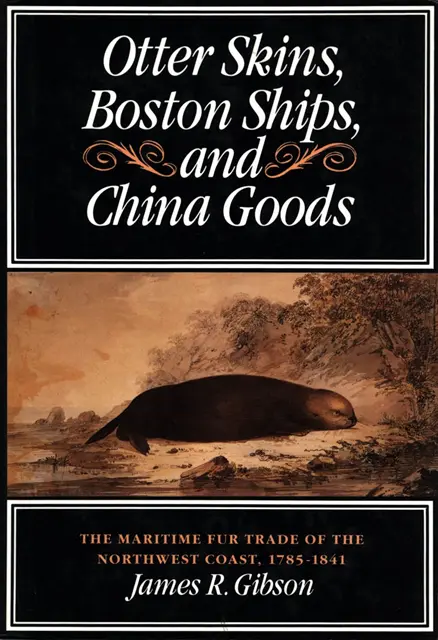
Otter Skins, Boston Ships, and China Goods
The Maritime Fur Trade of the Northwest Coast, 1785-1841
Häftad, 1992
426 kr
Kommande
Otter Skins, Boston Ships, and China Goods
The Maritime Fur Trade of the Northwest Coast, 1785-1841
E-bok, 1992
1072 kr
Lägg i varukorg
Before contact with white people, the Northwest Coast natives had traded amongst themselves and with other indigenous people farther inland, but by the end of the 1780s, when Russian coasters had penetrated the Gulf of Alaska and British merchantmen were frequenting Nootka Sound, trade had become …
Lifeline of the Oregon Country
The Fraser-Columbia Brigade System, 1811-47
Inbunden, 1997
1220 kr
Lägg i varukorg
"Furs is what brings us," remarked an early trader in the Oregon Country, adding, however, that "the difficulty of getting the necessary supplies will continue to operate against it," located as it was, "on the worst side of the Rocky Mountains." Fortunately, the discovery in 1805 by Lewis and …
European Settlement and Development in North America
Häftad, 1978
325 kr
Lägg i varukorg
Andrew Hill Clark (1911-1975) was responsible for much of the recent rise of historical geography in North America. The focus on his research was the opening of New World lands by European peoples, and this North American experience is the subject of this collection of essays written by eight of …
European Settlement and Development in North America
E-bok, 1978
420 kr
Lägg i varukorg
Andrew Hill Clark (1911-1975) was responsible for much of the recent rise of historical geography in North America. The focus on his research was the opening of New World lands by European peoples, and this North American experience is the subject of this collection of essays written by eight of …
European Settlement and Development in North America
E-bok, 1978
420 kr
Lägg i varukorg
Andrew Hill Clark (1911-1975) was responsible for much of the recent rise of historical geography in North America. The focus on his research was the opening of New World lands by European peoples, and this North American experience is the subject of this collection of essays written by eight of …
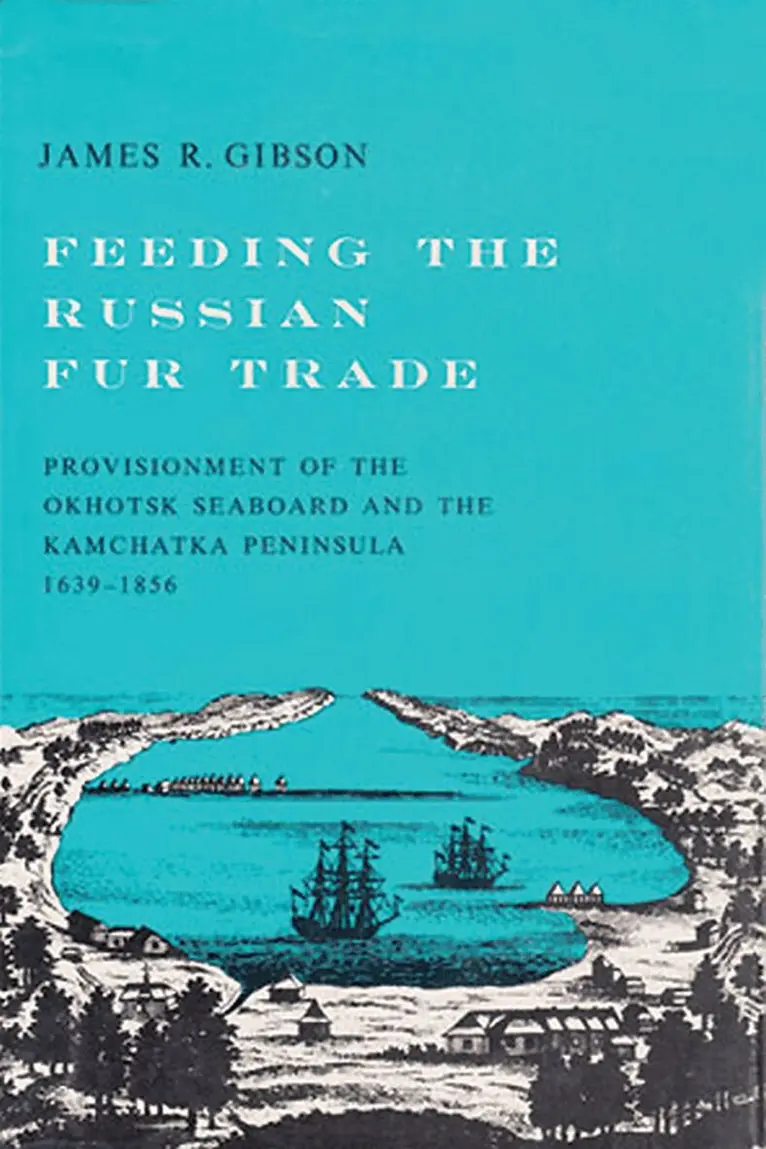
Feeding the Russian Fur Trade
Provisionment of the Okhotsk Seaboard and the Kamchatka Peninsula, 1639-1856
Häftad, 2011
338 kr
Tillfälligt slut
James R. Gibson offers a detailed study that is both an account of this chapter of Russian history and a full examination of the changing geography of the Okhotsk Seaboard and the Kamchatka Peninsula over the course of two centuries.
Lifeline of the Oregon Country
The Fraser-Columbia Brigade System, 1811-47
Häftad, 1998
440 kr
Tillfälligt slut
"Furs is what brings us," remarked an early trader in the Oregon Country, adding, however, that "the difficulty of getting the necessary supplies will continue to operate against it," located as it was, "on the worst side of the Rocky Mountains." Fortunately, the discovery in 1805 by Lewis and …
Russian California, 1806-1860: A History in Documents
Av James R. Gibson, Alexei A. Istomin
Inbunden
1706 kr
Tillfälligt slut