James Stellar - Böcker
Visar alla böcker från författaren James Stellar. Handla med fri frakt och snabb leverans.
5 produkter
5 produkter
538 kr
Skickas inom 10-15 vardagar
This book was conceived many years ago as an abstract goal for a father-son team when the father was working in university administration and the son was just getting into the academic business. Eventually, the father returned to the laboratory, the son began to get his feet on the ground, and the goal became concrete. Now the work is finished, and our book enters the literature as, we hope, a valuable contribution to understanding the terribly complex and subtle problem of the neuro biology of motivated behaviors. We would also like the book to stand as a personal mark of a cooperative relationship between father and son. This special relationship between the authors gave us an extra dimension of pleasure in writing the book, and it would delight us if it gave anyone else an extra dimension of enjoyment from reading it. One thing we hope happens is that anyone or simply considering entering similar considering a similar partnership, of this book as encouragement. Such re fields, will take the existence lationships are highly satisfying if both parties take care to protect the partnership. When we actually sat down to write the book, we were humbled by the immense literature and the smallness of both our conceived space for putting it down and of our brains for processing all the information.
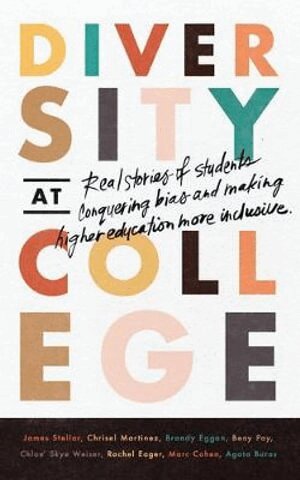
Diversity at College
Real Stories of Students Conquering Bias and Making Higher Education More Inclusive
Häftad, Engelska, 2020
170 kr
Tillfälligt slut
Five Revealing Stories. Real Student Experiences.A roadmap to teaching and learning diversity for the next generation.In this book, five recent undergraduates share their deeply personal struggles as students. From being a Latino at a campus filled with white faculty, to being a female medical student advised to “marry a doctor” – the stories in this book share the relatable struggles of real students, and how they overcame bias, stigma, stereotypes and ignorance to create a college experience that truly prepared them for the world.These genuine stories are all curated by a professor with decades of experience in experimental education and behavioral neuroscience, who explores each experience through the lens of social science principles like implicit bias or stereotype threat. Together, these perspectives offer an actionable roadmap for students, faculty and administrators for genuine learning about diversity in a world that desperately needs it.
170 kr
Skickas inom 5-8 vardagar
Higher education has a long history of transferring knowledge—facts and theories—into students’ minds. However, it has less of a history of providing students with direct experiences, such as internships, that lead to felt knowledge of the field and relevant skills. It is this combination of academic and felt knowledge that fosters the growth students need, which we refer to as “professional wisdom.”This growth state is supported by basic neuroscience. Humans possess a crowning achievement of evolution in the neocortex, allowing us to perform amazing feats of cognitive symbolic logic, such as language and planning. Beneath the neocortex lies an older part of the brain that regulates emotional computation—the limbic system. This system provides a perspective of value, helping us determine whether a plan or activity is beneficial. Interestingly, neuroscience shows that the limbic system reacts most strongly to actual experiences, and it requires reflection to process these experiences into the higher cognitive regions of the brain.When applied to higher education, this insight suggests that combining academic study with hands-on experiences—such as cooperative learning and internships—can lead to a lifelong career where students remain passionate and engaged. A major paired with an enjoyable, real-world experience in college helps students connect knowledge with purpose, fostering long-term satisfaction and success.While some individuals, especially in academic administration, refer to this as “educating the whole student,” we describe it as cognitive-emotional integration, the foundation of professional wisdom. In this book, we explore the current experiences in higher education that foster this development, from cooperative learning to internships and beyond. We also offer two neuroscientists’ perspectives on how cognitive-emotional integration aligns with the brain’s natural processes.With this understanding, we believe colleges and universities have an obligation to their students: to cultivate environments that challenge them both inside and outside the classroom. Without this, we risk graduating learners unprepared for the demands of the modern workforce.
270 kr
Skickas inom 5-8 vardagar
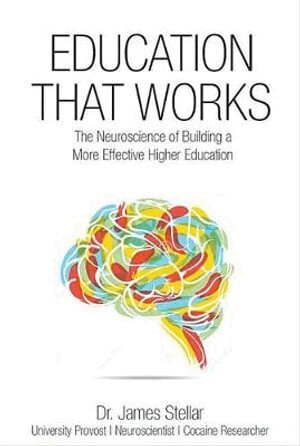
Education That Works
The Neuroscience of Building a More Effective Higher Education
Inbunden, Engelska, 2017
201 kr
Tillfälligt slut
Education That Works addresses the issue of how college and university education can be made more impactful by incorporating a variety of experiential education activities and how this approach is natural given what we know today about how the brain works at multiple levels from modern brain scanners.The key point is that the brain operates on conscious and unconscious decision-making levels and that the latter is under appreciated in higher education but is well-suited to learning from direct experience in complement to the academic curriculum. Classic among these experiential activities is an internship, but also included are study abroad, undergraduate research, service-learning, and other activities that bring the student’s classroom study into a more real-world project or operation in a way that allows them to apply what they are studying to what they might ultimately do with their college learning when they graduate. The book examines experiential activates from this perspective and looks at how they might be implemented in the university setting. For example, key among the programs is the use of reflection to better integrate these two types of decision-making and important among the impacts is an expected increase in retention and job/school placement after college.