James T. Kinard - Böcker
Visar alla böcker från författaren James T. Kinard. Handla med fri frakt och snabb leverans.
2 produkter
2 produkter
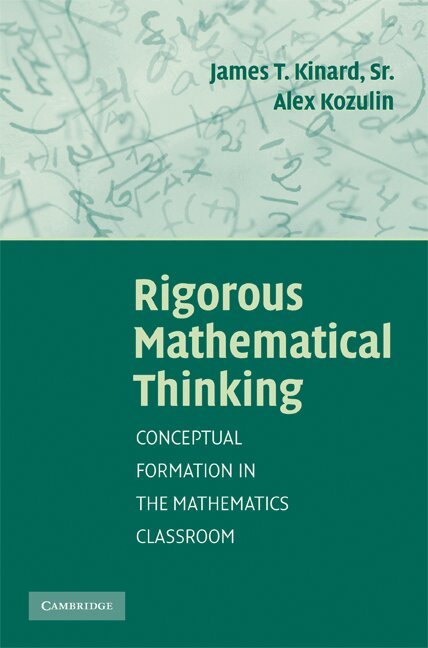
Rigorous Mathematical Thinking
Conceptual Formation in the Mathematics Classroom
Häftad, Engelska, 2008
349 kr
Skickas inom 7-10 vardagar
This book demonstrates how rigorous mathematical thinking can be fostered through the development of students' cognitive tools and operations. This approach seems to be particularly effective with socially disadvantaged and culturally different students. The authors argue that children's cognitive functions cannot be viewed as following a natural maturational path: they should be actively constructed during the educational process. The Rigorous Mathematical Thinking (RMT) model is based on two major theoretical approaches - Vygotsky's theory of psychological tools and Feuerstein's concept of mediated learning experience. The book starts with general cognitive tools that are essential for all types of problem solving and then moves to mathematically specific cognitive tools and methods for utilizing these tools for mathematical conceptual formation. The application of the RMT model in various urban classrooms demonstrates how mathematics education standards can be reached even by the students with a history of educational failure who were considered hopeless underachievers.
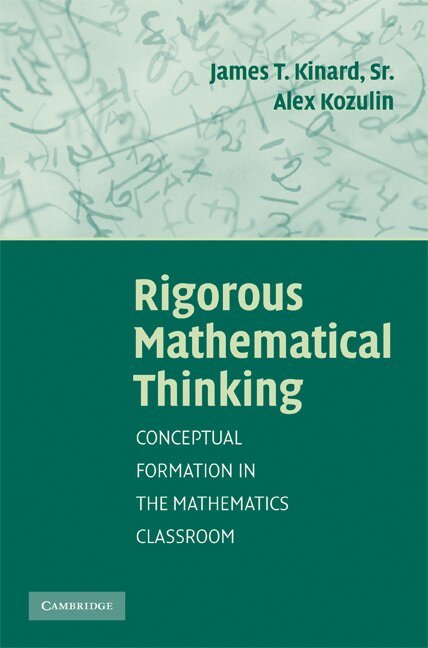
Rigorous Mathematical Thinking
Conceptual Formation in the Mathematics Classroom
Inbunden, Engelska, 2008
685 kr
Skickas inom 7-10 vardagar
This book demonstrates how rigorous mathematical thinking can be fostered through the development of students' cognitive tools and operations. This approach seems to be particularly effective with socially disadvantaged and culturally different students. The authors argue that children's cognitive functions cannot be viewed as following a natural maturational path: they should be actively constructed during the educational process. The Rigorous Mathematical Thinking (RMT) model is based on two major theoretical approaches - Vygotsky's theory of psychological tools and Feuerstein's concept of mediated learning experience. The book starts with general cognitive tools that are essential for all types of problem solving and then moves to mathematically specific cognitive tools and methods for utilizing these tools for mathematical conceptual formation. The application of the RMT model in various urban classrooms demonstrates how mathematics education standards can be reached even by the students with a history of educational failure who were considered hopeless underachievers.