James T. Murphy – författare
861 kr
Skickas inom 10-15 vardagar
396 kr
Läs direkt efter köp
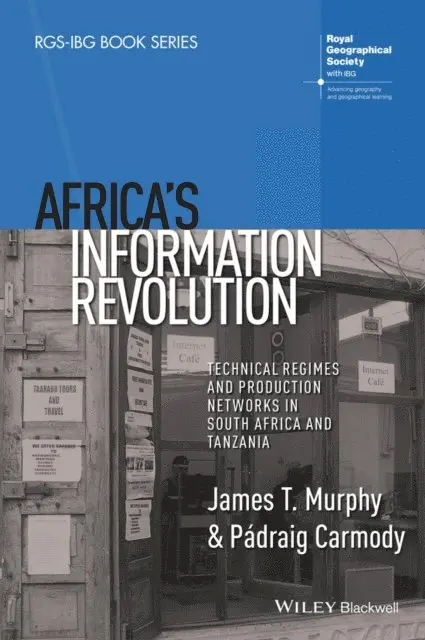
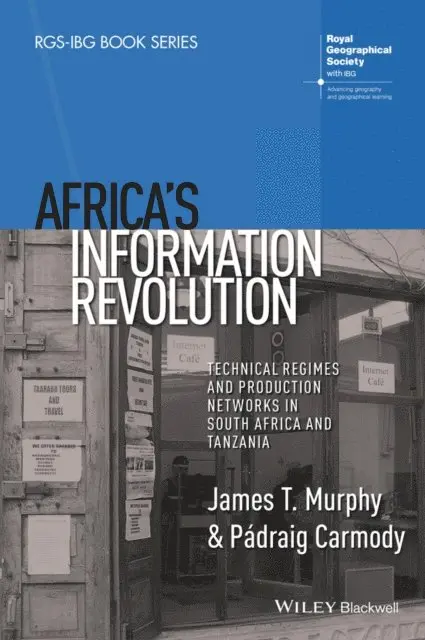
Africa’s Information Revolution was recently announced as the 2016 prizewinner of the Royal Academy for Overseas Sciences - congratulations to the authors James T. Murphy and Padraig Carmody!
Africa’s Information Revolution presents an in-depth examination of the development and economic geographies accompanying the rapid diffusion of new ICTs in Sub-Saharan Africa.
Represents the first book-length comparative case study ICT diffusion in Africa of its kind Confronts current information and communication technologies for development (ICT4D) discourse by providing a counter to largely optimistic mainstream perspectives on Africa’s prospects for m- and e-development Features comparative research based on more than 200 interviews with firms from a manufacturing and service industry in Tanzania and South Africa Raises key insights regarding the structural challenges facing Africa even in the context of the continent’s recent economic growth spurt Combines perspectives from economic and development geography and science and technology studies to demonstrate the power of integrated conceptual-theoretical frameworks Include maps, photos, diagrams and tables to highlight the concepts, field research settings, and key findings916 kr
Läs direkt efter köp
Africa’s Information Revolution was recently announced as the 2016 prizewinner of the Royal Academy for Overseas Sciences - congratulations to the authors James T. Murphy and Padraig Carmody!
Africa’s Information Revolution presents an in-depth examination of the development and economic geographies accompanying the rapid diffusion of new ICTs in Sub-Saharan Africa.
Represents the first book-length comparative case study ICT diffusion in Africa of its kind Confronts current information and communication technologies for development (ICT4D) discourse by providing a counter to largely optimistic mainstream perspectives on Africa’s prospects for m- and e-development Features comparative research based on more than 200 interviews with firms from a manufacturing and service industry in Tanzania and South Africa Raises key insights regarding the structural challenges facing Africa even in the context of the continent’s recent economic growth spurt Combines perspectives from economic and development geography and science and technology studies to demonstrate the power of integrated conceptual-theoretical frameworks Include maps, photos, diagrams and tables to highlight the concepts, field research settings, and key findings825 kr
Skickas inom 5-8 vardagar
353 kr
Skickas inom 11-20 vardagar
825 kr
Skickas inom 5-8 vardagar
348 kr
Skickas inom 5-8 vardagar
382 kr
Läs direkt efter köp
Illuminates the path to more generative urban transitions in Africa''s cities and developing rural areas
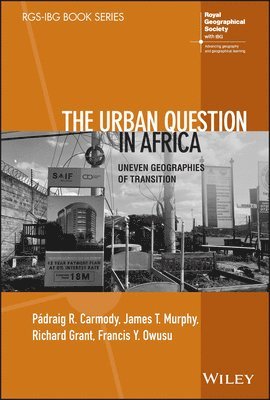
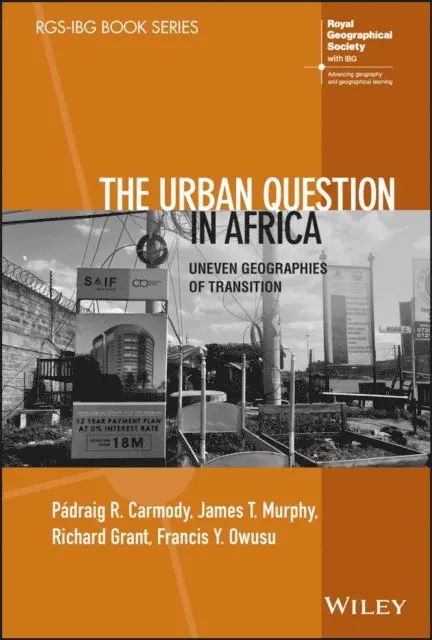
Africa is the world''s most rapidly urbanizing region. The predominantly rural continent is currently undergoing an “urban revolution” unlike any other, generally taking place without industrialization and often characterized by polarization, poverty, and fragmentation. While many cities have experienced construction booms and real estate speculation, others are marked by expanding informal economies and imploding infrastructures.
The Urban Question in Africa: Uneven Geographies of Transition examines the imbalanced and contested nature of the ongoing urban transition of Africa. Edited and authored by leading experts on the subject, this unique volume develops an original theory conceptualizing cities as sociotechnical systems constituted by production, consumption, and infrastructure regimes. Throughout the book, in-depth chapters address the impacts of current meta-trends—global geopolitical shifts, economic changes, the climate crisis, and others—on Africa''s cities and the broader development of the continent.
Presents a novel framework based on extensive fieldwork in multiple countries and regions of the continent Examines geopolitical and socioeconomic topics such as manufacturing in African cities, the green economy in Africa, and the impact of China on urban Africa Discusses the prospects for generative urbanism to produce and sustain long-term development in Africa Features high-quality maps, illustrations, and photographsThe Urban Question in Africa: Uneven Geographies of Transition is essential reading for undergraduate and postgraduate students in geography, urban planning, and African studies, academic researchers, geographers, urban planners, and policymakers.
950 kr
Läs direkt efter köp
Illuminates the path to more generative urban transitions in Africa''s cities and developing rural areas
Africa is the world''s most rapidly urbanizing region. The predominantly rural continent is currently undergoing an “urban revolution” unlike any other, generally taking place without industrialization and often characterized by polarization, poverty, and fragmentation. While many cities have experienced construction booms and real estate speculation, others are marked by expanding informal economies and imploding infrastructures.
The Urban Question in Africa: Uneven Geographies of Transition examines the imbalanced and contested nature of the ongoing urban transition of Africa. Edited and authored by leading experts on the subject, this unique volume develops an original theory conceptualizing cities as sociotechnical systems constituted by production, consumption, and infrastructure regimes. Throughout the book, in-depth chapters address the impacts of current meta-trends—global geopolitical shifts, economic changes, the climate crisis, and others—on Africa''s cities and the broader development of the continent.
Presents a novel framework based on extensive fieldwork in multiple countries and regions of the continent Examines geopolitical and socioeconomic topics such as manufacturing in African cities, the green economy in Africa, and the impact of China on urban Africa Discusses the prospects for generative urbanism to produce and sustain long-term development in Africa Features high-quality maps, illustrations, and photographsThe Urban Question in Africa: Uneven Geographies of Transition is essential reading for undergraduate and postgraduate students in geography, urban planning, and African studies, academic researchers, geographers, urban planners, and policymakers.
538 kr
Läs direkt efter köp
"A comprehensive and highly readable review of the conceptual underpinnings of economic geography. Students and professional scholars alike will find it extremely useful both as a reference manual and as an authoritative guide to the numerous theoretical debates that characterize the field."- Allen J. Scott, University of California
"Guides readers skilfully through the rapidly changing field of economic geography... The key concepts used to structure this narrative range from key actors and processes within global economic change to a discussion of newer areas of research including work on financialisation and consumption. The result is a highly readable synthesis of contemporary debates within economic geography that is also sensitive to the history of the sub-discipline."- Sarah Hall, University of Nottingham"The nice thing about this text is that it is concise but with depth in its coverage. A must have for any library, and a useful desk reference for any serious student of economic geography or political economy."- Adam Dixon, Bristol University
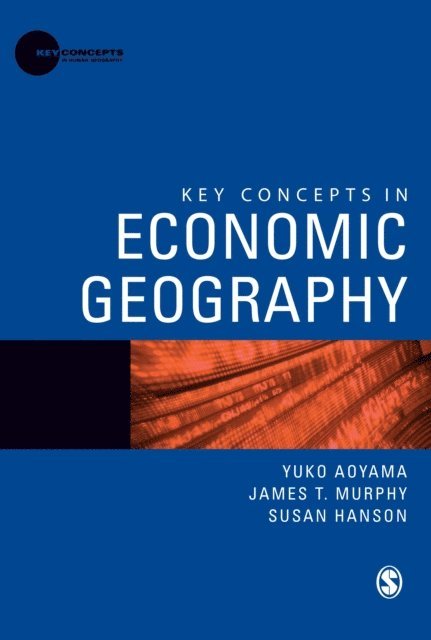
Organized around 20 short essays, Key Concepts in Economic Geography provides a cutting edge introduction to the central concepts that define contemporary research in economic geography. Involving detailed and expansive discussions, the book includes: An introductory chapter providing a succinct overview of the recent developments in the field. Over 20 key concept entries with comprehensive explanations, definitions and evolutions of the subject. Extensive pedagogic features that enhance understanding including figures, diagrams and further reading.An ideal companion text for upper-level undergraduate and postgraduate students in economic geography, the book presents the key concepts in the discipline, demonstrating their historical roots and contemporary applications to fully understand the processes of economic change, regional growth and decline, globalization, and the changing locations of firms and industries. Written by an internationally recognized set of authors, the book is an essential addition to any geography student′s library.
4 401 kr
Skickas inom 5-8 vardagar
880 kr
Läs direkt efter köp
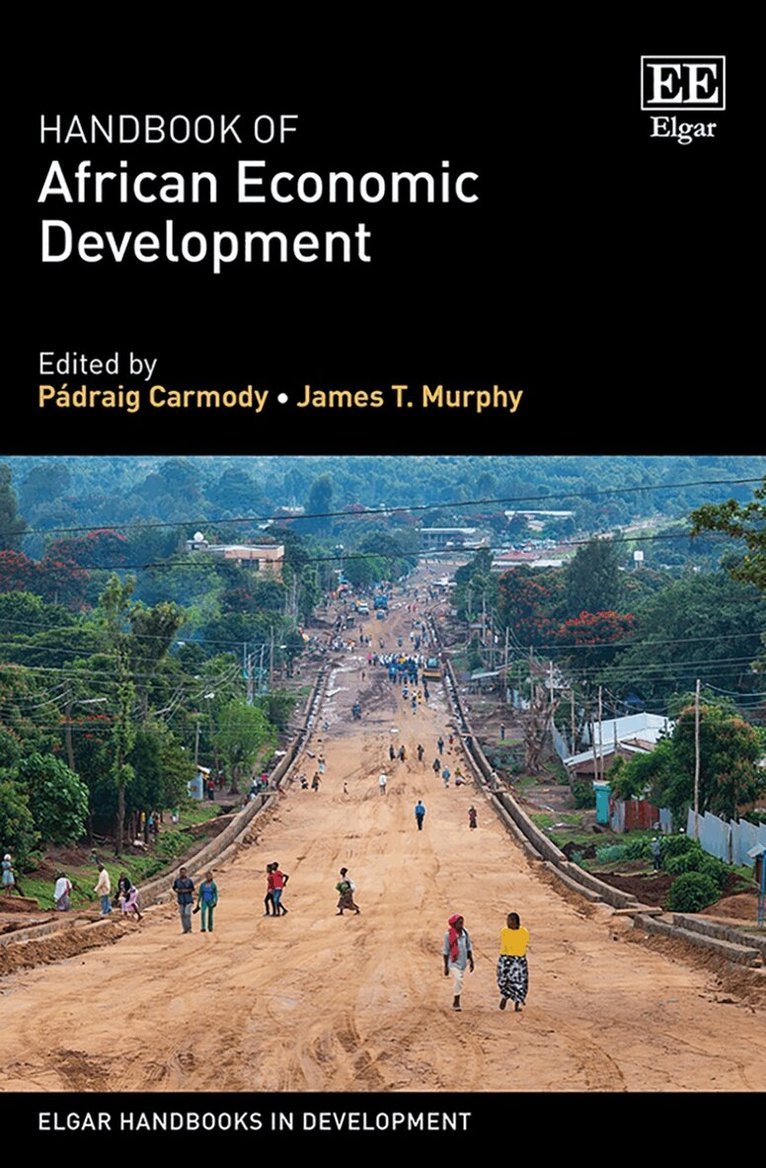
Going beyond traditional metanarratives, this dynamic Handbook provides a historically grounded, data-informed analysis of African economic development, taking into account external pressures and internal structural inequalities. Contributors map out the key debates surrounding the topic before assessing historical contexts, the effect of global networks, current industries and institutions, and both rural and urban developments. The Handbook contends with the future of economic development in Africa, particularly in the context of climate change, continuing decolonisation and Africapitalism.
With a global team of authors providing a range of perspectives, this unique Handbook will prove crucial reading for students and scholars of African studies, development studies, geography and economics. It will also prove to be a fascinating read for anyone interested in non-conventional, postcolonial approaches to these disciplines.
2 746 kr
Skickas inom 3-6 vardagar
"A comprehensive and highly readable review of the conceptual underpinnings of economic geography. Students and professional scholars alike will find it extremely useful both as a reference manual and as an authoritative guide to the numerous theoretical debates that characterize the field."- Allen J. Scott, University of California
"Guides readers skilfully through the rapidly changing field of economic geography... The key concepts used to structure this narrative range from key actors and processes within global economic change to a discussion of newer areas of research including work on financialisation and consumption. The result is a highly readable synthesis of contemporary debates within economic geography that is also sensitive to the history of the sub-discipline."- Sarah Hall, University of Nottingham"The nice thing about this text is that it is concise but with depth in its coverage. A must have for any library, and a useful desk reference for any serious student of economic geography or political economy."- Adam Dixon, Bristol University
Organized around 20 short essays, Key Concepts in Economic Geography provides a cutting edge introduction to the central concepts that define contemporary research in economic geography. Involving detailed and expansive discussions, the book includes:An introductory chapter providing a succinct overview of the recent developments in the field.Over 20 key concept entries with comprehensive explanations, definitions and evolutions of the subject.Extensive pedagogic features that enhance understanding including figures, diagrams and further reading.An ideal companion text for upper-level undergraduate and postgraduate students in economic geography, the book presents the key concepts in the discipline, demonstrating their historical roots and contemporary applications to fully understand the processes of economic change, regional growth and decline, globalization, and the changing locations of firms and industries. Written by an internationally recognized set of authors, the book is an essential addition to any geography student's library.
1 232 kr
Skickas inom 3-6 vardagar
"A comprehensive and highly readable review of the conceptual underpinnings of economic geography. Students and professional scholars alike will find it extremely useful both as a reference manual and as an authoritative guide to the numerous theoretical debates that characterize the field."- Allen J. Scott, University of California
"Guides readers skilfully through the rapidly changing field of economic geography... The key concepts used to structure this narrative range from key actors and processes within global economic change to a discussion of newer areas of research including work on financialisation and consumption. The result is a highly readable synthesis of contemporary debates within economic geography that is also sensitive to the history of the sub-discipline."- Sarah Hall, University of Nottingham"The nice thing about this text is that it is concise but with depth in its coverage. A must have for any library, and a useful desk reference for any serious student of economic geography or political economy."- Adam Dixon, Bristol University
Organized around 20 short essays, Key Concepts in Economic Geography provides a cutting edge introduction to the central concepts that define contemporary research in economic geography. Involving detailed and expansive discussions, the book includes:An introductory chapter providing a succinct overview of the recent developments in the field.Over 20 key concept entries with comprehensive explanations, definitions and evolutions of the subject.Extensive pedagogic features that enhance understanding including figures, diagrams and further reading.An ideal companion text for upper-level undergraduate and postgraduate students in economic geography, the book presents the key concepts in the discipline, demonstrating their historical roots and contemporary applications to fully understand the processes of economic change, regional growth and decline, globalization, and the changing locations of firms and industries. Written by an internationally recognized set of authors, the book is an essential addition to any geography student's library.