James T. Smith – författare
Visar alla böcker från författaren James T. Smith. Handla med fri frakt och snabb leverans.
12 produkter
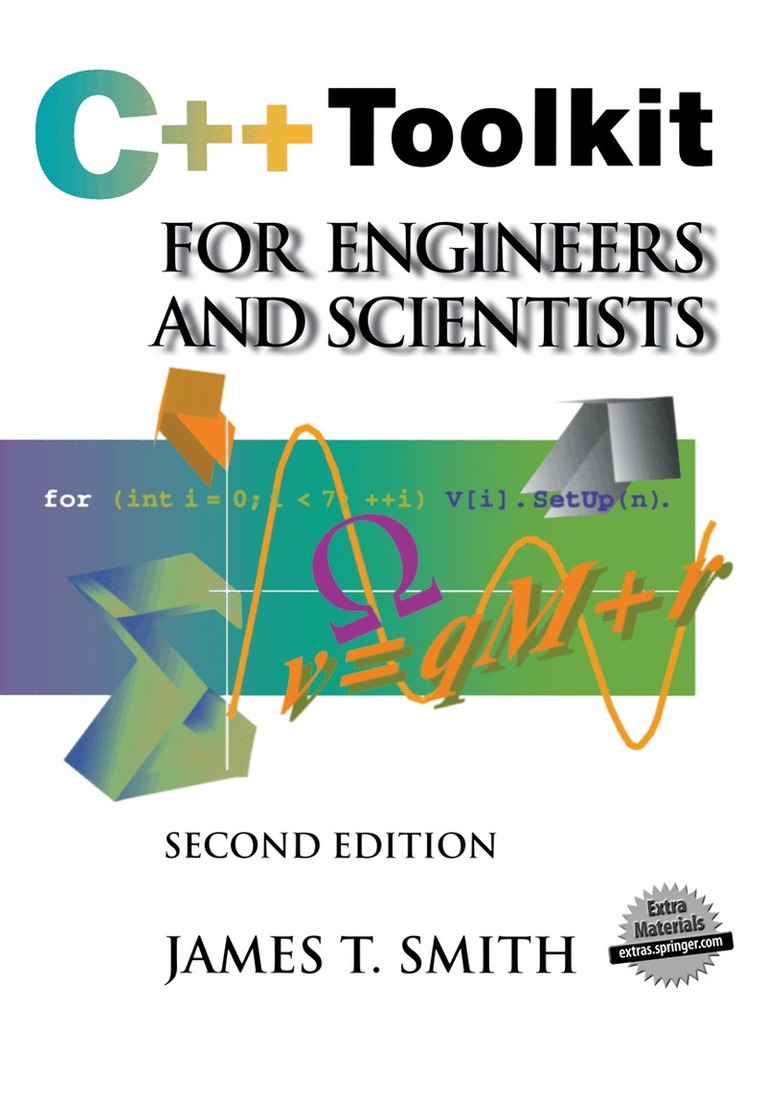
C++ Toolkit for Engineers and Scientists
1999
668 kr
Lägg i varukorg
This book describes the design, construction, and use of a numerical analysis software toolkit. It's written in C+ +, Version 2. 0, and makes essential use of that language's Object-Oriented Programming (OOP) features. Its development environment is the Borland International, Inc. , Borland C++ …
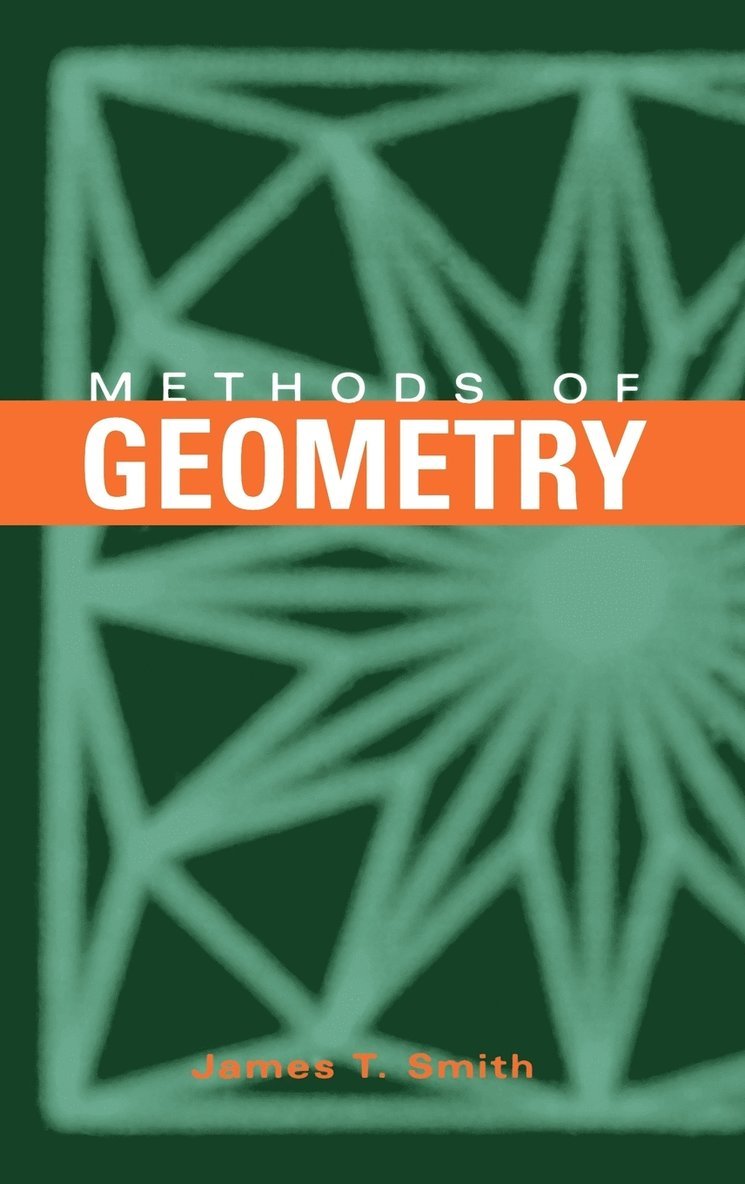
Methods of Geometry
Inbunden, 2000
2274 kr
Lägg i varukorg
A practical, accessible introduction to advanced geometryExceptionally well-written and filled with historical andbibliographic notes, Methods of Geometry presents a practical andproof-oriented approach. The author develops a wide range ofsubject areas at an intermediate level and explains how …
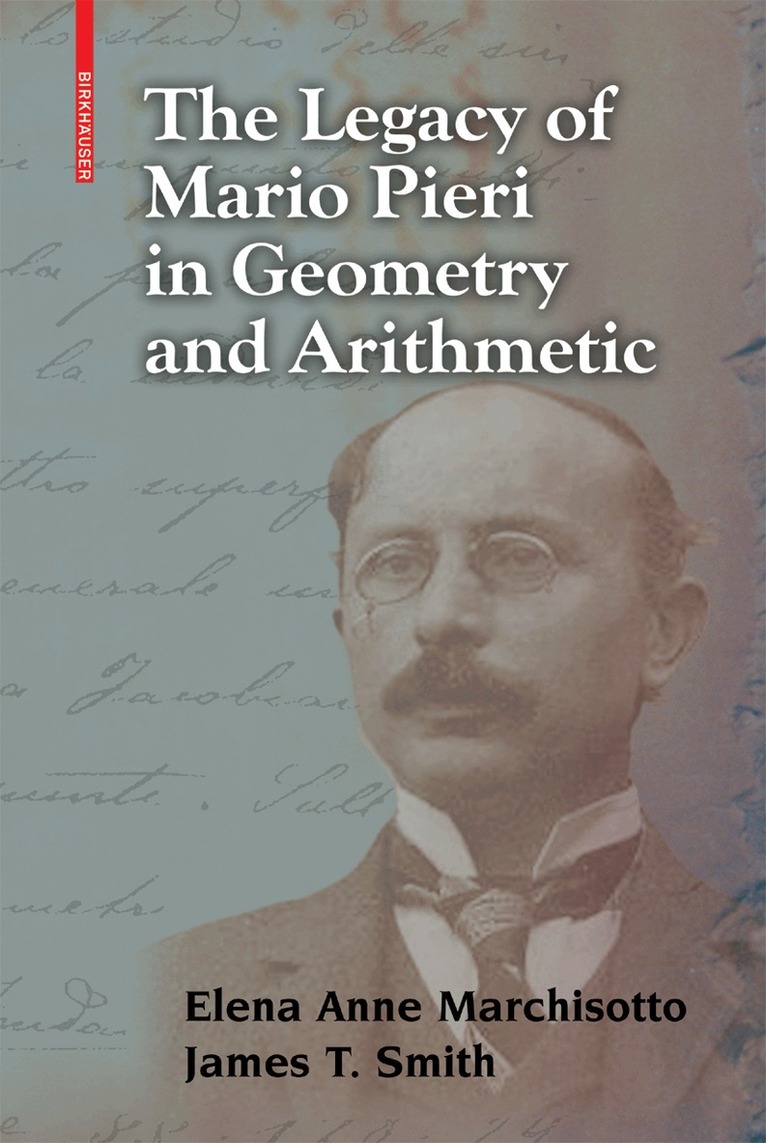
Legacy of Mario Pieri in Geometry and Arithmetic
Av Elena Anne Marchisotto, James T. Smith
Inbunden, 2007
1093 kr
Lägg i varukorg
by Ivor Grattan-Guinness One of the distortions in most kinds of history is an imbalance between the study devoted to major figures and to lesser ones, concerning both achievements and influence: the Great Ones may be studied to death while the others are overly ignored and thereby remain …
Legacy of Mario Pieri in Geometry and Arithmetic
Av James T. Smith, Elena Anne Marchisotto
E-bok, 2007
1459 kr
Lägg i varukorg
by Ivor Grattan-Guinness One of the distortions in most kinds of history is an imbalance between the study devoted to major figures and to lesser ones, concerning both achievements and influence: the Great Ones may be studied to death while the others are overly ignored and thereby remain …
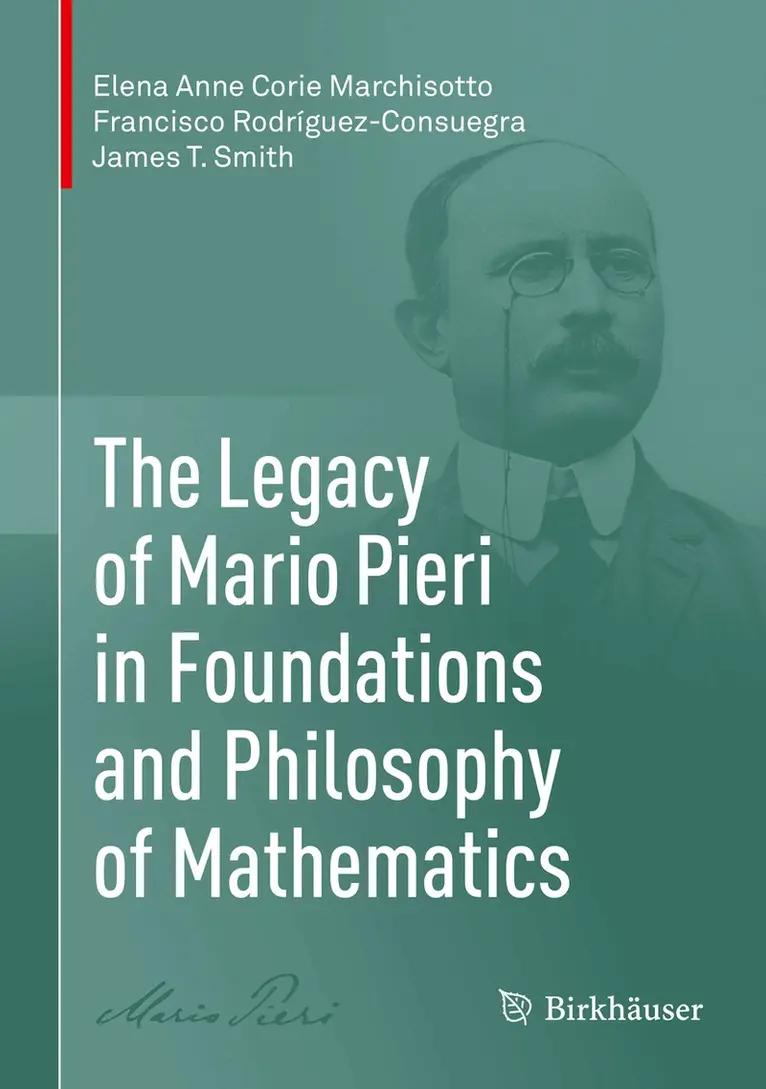
Legacy of Mario Pieri in Foundations and Philosophy of Mathematics
Av Elena Anne Corie Marchisotto, Francisco Rodríguez-Consuegra m. fl.
Inbunden, 2021
1745 kr
Lägg i varukorg
The Italian mathematician Mario Pieri (1860–1913) played a major role in the development of algebraic geometry and foundations of mathematics around the turn of the twentieth century. This volume is the second in a series intended to make Pieri’s research in diverse fields—mathematical logic and …
Legacy of Mario Pieri in Foundations and Philosophy of Mathematics
Av James T. Smith, Francisco Rodriguez-Consuegra m. fl.
E-bok, 2021
2274 kr
Lägg i varukorg
The Italian mathematician Mario Pieri (1860–1913) played a major role in the development of algebraic geometry and foundations of mathematics around the turn of the twentieth century. This volume is the second in a series intended to make Pieri’s research in diverse fields—mathematical logic and …
Methods of Geometry
E-bok, 2011
2582 kr
Lägg i varukorg
A practical, accessible introduction to advanced geometryExceptionally well-written and filled with historical andbibliographic notes, Methods of Geometry presents a practical andproof-oriented approach. The author develops a wide range ofsubject areas at an intermediate level and explains how …
C++ Toolkit for Engineers and Scientists
E-bok, 2013
734 kr
Lägg i varukorg
This book describes the design, construction, and use of a numerical analysis software toolkit. It''s written in C+ +, Version 2. 0, and makes essential use of that language''s Object-Oriented Programming (OOP) features. Its development environment is the Borland International, Inc. , Borland C++ …
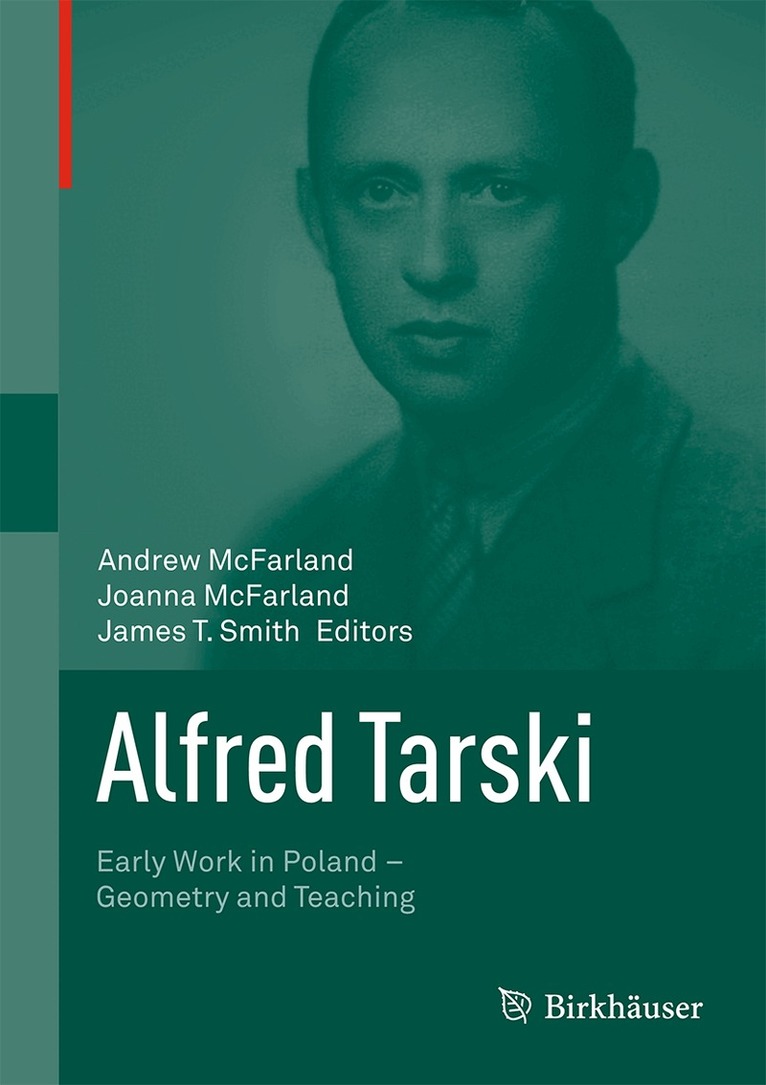
Alfred Tarski
Early Work in Poland—Geometry and Teaching
Av Andrew McFarland, Joanna McFarland m. fl.
Inbunden, 2014
1093 kr
Lägg i varukorg
Alfred Tarski (1901–1983) was a renowned Polish/American mathematician, a giant of the twentieth century, who helped establish the foundations of geometry, set theory, model theory, algebraic logic and universal algebra. Throughout his career, he taught mathematics and logic at universities and …
Alfred Tarski
Early Work in Poland—Geometry and Teaching
Av James T. Smith, Joanna McFarland m. fl.
E-bok, 2014
1416 kr
Lägg i varukorg
Alfred Tarski (1901–1983) was a renowned Polish/American mathematician, a giant of the twentieth century, who helped establish the foundations of geometry, set theory, model theory, algebraic logic and universal algebra. Throughout his career, he taught mathematics and logic at universities and …
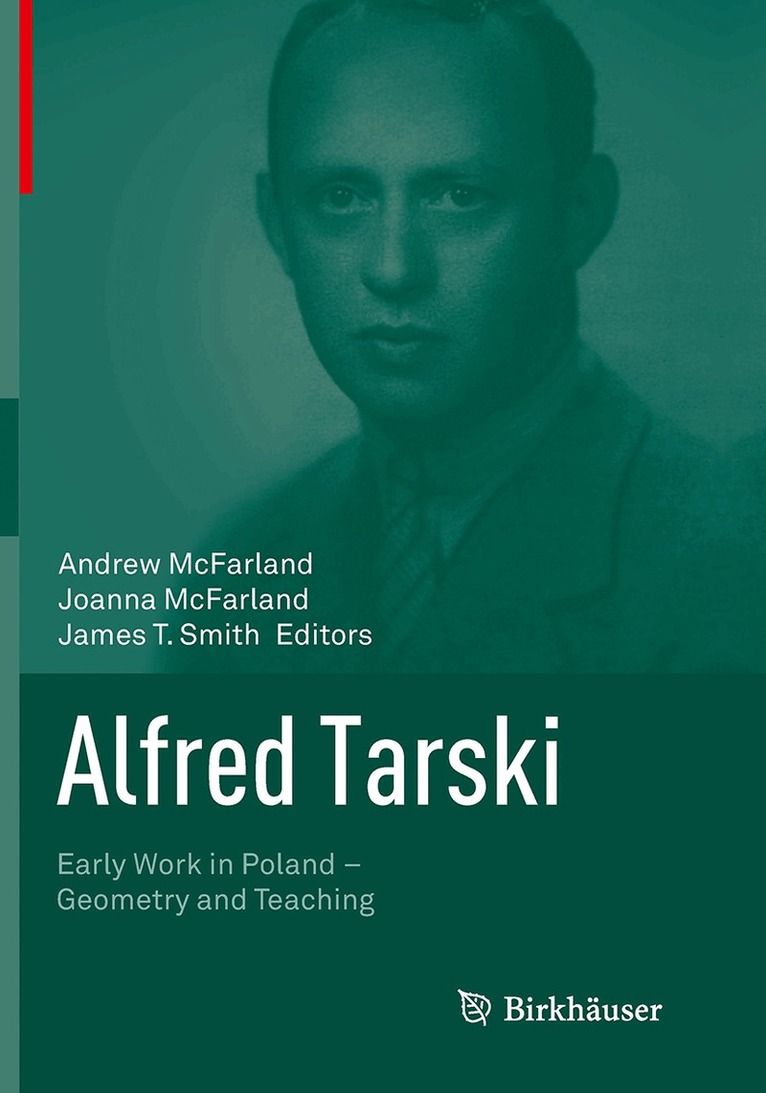
Alfred Tarski
Early Work in Poland—Geometry and Teaching
Av Andrew McFarland, Joanna McFarland m. fl.
Häftad, 2016
1093 kr
Lägg i varukorg
Alfred Tarski (1901–1983) was a renowned Polish/American mathematician, a giant of the twentieth century, who helped establish the foundations of geometry, set theory, model theory, algebraic logic and universal algebra. Throughout his career, he taught mathematics and logic at universities and …