James Tong - Böcker
Visar alla böcker från författaren James Tong. Handla med fri frakt och snabb leverans.
2 produkter
2 produkter
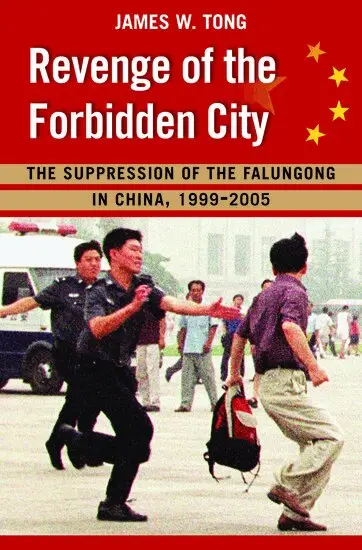
Revenge of the Forbidden City
The Suppression of the Falungong in China, 1999-2008
Inbunden, Engelska, 2009
921 kr
Skickas inom 5-8 vardagar
By 1999, the Falungong religious movement had spread widely and broadly throughout China. While on the surface its ideology of spiritual and physical cultivation did not seem threatening, the Chinese government felt otherwise. That year, the government cracked down hard on the movement, and its successful repression of it over a six year period is a textbook example of how the Chinese state operates in the face of perceived internal threats. Its success in containing the movement speaks volumes about the regime's resilience as well. Revenge of the Forbidden City is the definitive account of China's response to Falungong. As James Tong shows, the episode also tells us a great deal about the Chinese state's political institutions, its media apparatus, and its formidable ability to crush dissent. The result is a book that will be essential for any scholar interested in how the Chinese state actually operates.
262 kr
Skickas inom 7-10 vardagar
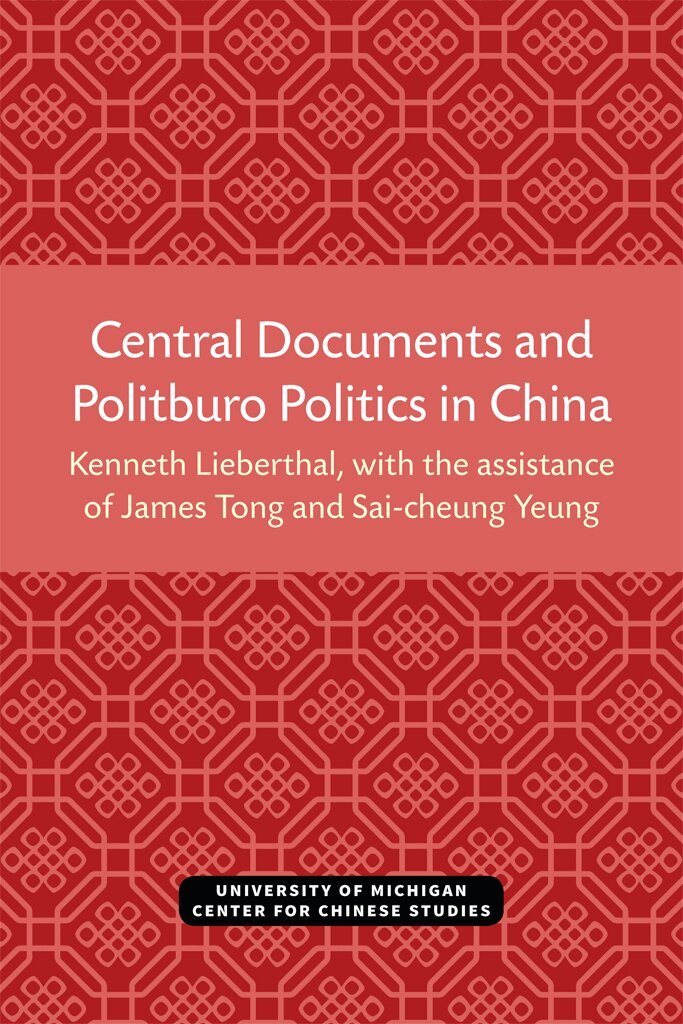
Virtually every analysis of Chinese politics views the Politburo as the nerve center of the system, but questions abound as to how this center governs itself and how it interacts with the system around it. Specifically, how much consultation occurs during the drafting of major Politburo documents, and who is brought into this process? How is information channeled up to this body, and what are the rules that govern the access of the Politburo members themselves to data generated by the bureaucracies? How are the political strategies of individual leaders and political factions attuned to this system of information channeling? What types of decisions are reached by the Politburo? To whom are they communicated? How rigidly must they be followed? How institutionalized is this entire decision making system, and has it become more—or less—institutionalized over the years? How has the factional legacy of the Cultural Revolution affected its mode of operations? Indeed, in the wake of the Cultural Revolution, how much in control of the system has the Politburo itself been? Central Documents in Politburo Politics in China seeks to better understand these questions by analyzing a particular stream of largely bureaucratic communications in the Chinese system: the so-called “Central Documents” (CDs). This is a series of documents through which the top Party leadership directly communicates with the rest of the political system. [1]