James V. Schall – författare
Visar alla böcker från författaren . Handla med fri frakt och snabb leverans.
22 produkter
22 produkter
E-bok
Engelska, 2000649 kr
Läs direkt efter köp
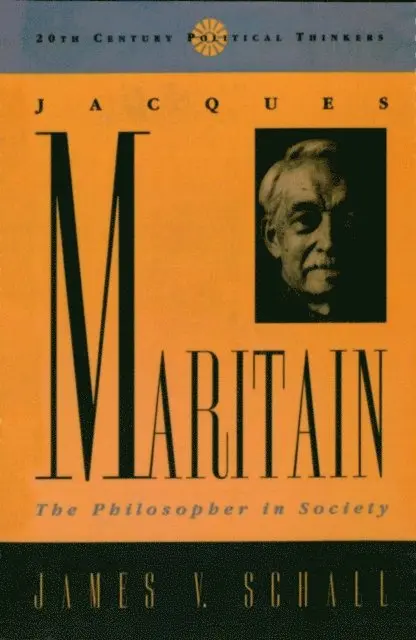
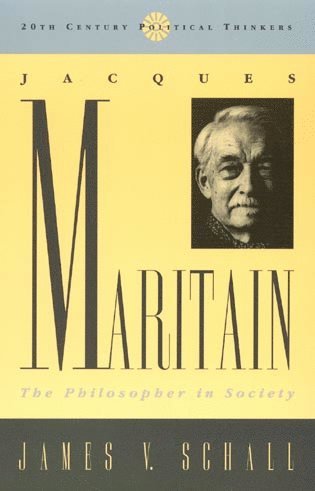
The engaging and inquiring mind of French philosopher Jacques Maritain reflected on subjects as varied as art and ethics, theology and psychology, and history and metaphysics. Maritain''s work on the theoretical groundings of politics arose from his diverse studies. In this book, distinguished theologian and political scientist James V. Schall explores Maritain''s political philosophy, demonstrating that Maritain understood society, state, and government in the tradition of Aristotle and Aquinas, of natural law and human rights and duties. Schall pays particular attention to the ways in which evil appears in political forms, and how this evil can be morally dealt with. Schall''s study will be of great importance to students and scholars of political science, philosophy, and theology.
Häftad, Engelska, 2006
602 kr
Skickas inom 10-15 vardagar
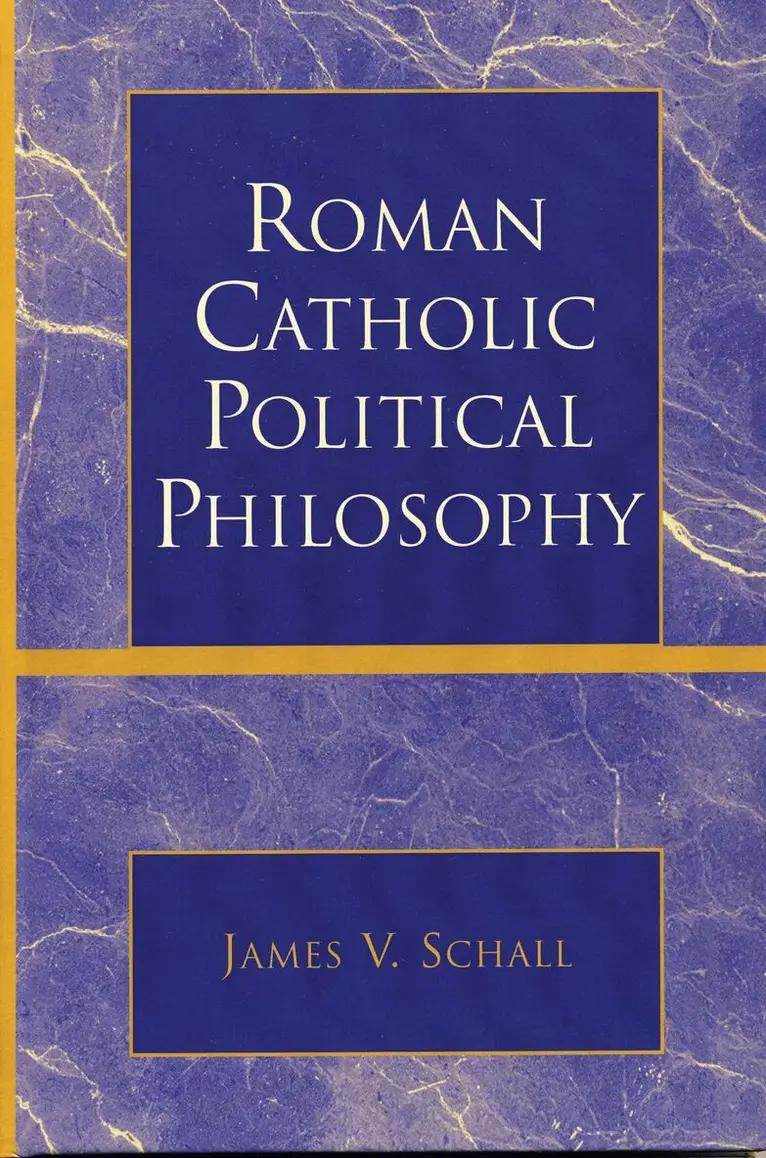
In Roman Catholic Political Philosophy author James V. Schall tries to demonstrate that Roman Catholicism and political philosophy—-revelation and reason—are not contradictory. It is his contention that political philosophy, the primary focus of the book, asks certain questions about human purpose and destiny that it cannot, by itself, answer. Revelation is the natural complement to these important questions about God, human being, and the world. Schall manages to avoid polemicism or triumphalism as he shows that revelation and political thought contribute to a fuller understanding of each other.
Häftad, Engelska, 1998
270 kr
Skickas inom 10-15 vardagar
How do politics and religion point to each other in a way that respects the integrity of both? Why are reason and revelation not in absolute opposition to each other? Political philosophy asks questions such as these that seem to call forth responses that do not come from politics alone. In seeking the answers, James V. Schall presents, in a convincing and articulate manner, the revelational contribution to political philosophy, particularly that which comes out of the Roman Catholic tradition. In At the Limits of Political Philosophy he fills the need for a sustained account of the higher reaches of political philosophy, where questions arising within the discipline bring it to its own limits. In the first section of the book, Schall points out what Leo Strauss called the “brilliant errors” that have arisen in the history of political philosophy and provides sober responses to those errors. He insists that neither the reality of evil nor the possibility of good within the city is completely explained within political philosophy, and he calls on political philosophy to acknowledge and respect its own boundaries.Schall maintains that a noncontradictory unity exists among three aspects of political philosophy - the problem of evil, the problem of virtue, and the problem of contemplation of the highest things. Thus in the second section of his book he moves to a discussion of “imperfect and dire conditions of human existence”: death, evil, suffering, injustice, hell. He espouses a “political realism” that understands them to be permanent realities in this world, realities that cannot be eliminated by human means.The third section treats the death of Socrates, the death of Christ, and the reality and meaning of happiness and of virtue. Schall examines the two deaths to show how ultimate issues arise within particular political instances and how they lead people to ask those questions about happiness and virtue that reveal the higher calling of human life. He maintains that political philosophy cannot be consistent with itself and not think about these higher realities. Finally, Schall addresses science, law, and friendship, which raise questions of truth, good, and love that are not adequately understood if viewed only in their political contexts. These are ideas that point to the deepest meaning of human experience; their uncommon importance requires political philosophy to consider them.
Häftad, Engelska, 2000
342 kr
Skickas inom 10-15 vardagar
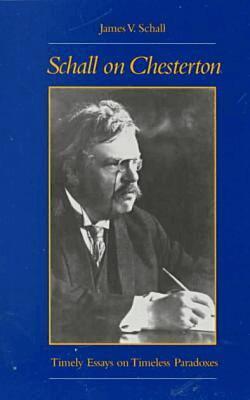
Journalist, essayist, biographer, writer, philosopher and debater, Gilbert Keith Chesterton is regarded by many as one of the most gifted thinkers of the 20th century. In this book Father James V. Schall showcases a witty series of reflective essays prompted by the work of Chesterton.
Häftad, Engelska, 2008
381 kr
Skickas inom 10-15 vardagar
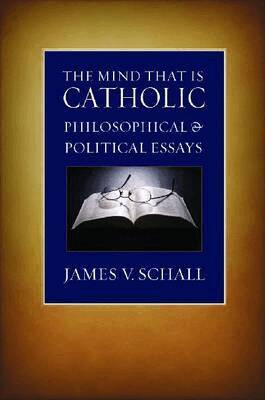
James V. Schall is a treasure of the Catholic intellectual tradition. A prolific author and essayist, Schall readily connects with his readers on sundry topics from war to friendship, philosophy, politics, and to ordinary everyday living. In his newest work, ""The Mind That Is Catholic"", he presents a retrospective collection of his academic and literary essays written in the past fifty years. In each essay, he exemplifies the Catholic mind at its best - seeing the whole, leaving nothing out.The 'Catholic mind' seeks to recognize a consistent and coherent relation between the solid things of reason and the definite facts of revelation. Its thought aims to understand how they belong together in a fruitful manner, each profiting from the other; each being what it is. The Catholic mind is not a confusion of disparate sources. It respects and makes distinctions. It sees where things separate. It is in fact delighted by what is.This delightful book is not polemical, but contemplative in mood. Schall shares with readers a mind that is constantly struck by how things fit together when seen in full light. He brings to his work a lifetime of study in political philosophy, a wide-ranging discipline that, in many ways, is the most immediate context in which reason and revelation meet. ""The Mind That Is Catholic"" respects what can be known by faith alone. But it also considers what is known by faith to be itself intelligible to a mind actively thinking on political and philosophical things. The whole, at the risk of its own contradiction, does not exclude the intelligibility of what is revealed.
Häftad, Engelska, 2018
270 kr
Skickas inom 10-15 vardagar
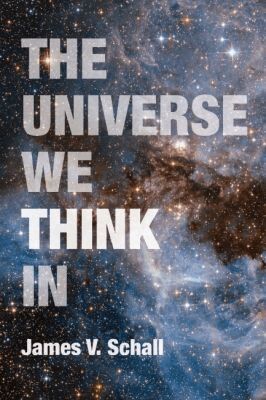
The Universe We Think In arises from a tradition of realism, both philosophical and political, a universe in which the common sense understanding of things is included in our judgement about them. The scope is both vast and narrow – vast because it is aware of the reality of things, narrow because it is the individual person who can and wants to know them. The abiding undercurrent of this book is that the cosmos, the universe, does not look at us human beings, but we look at it, seek to understand it, and do understand much of it. Why is this so? The book seeks to begin with the basic question that we each ought to pose to ourselves; namely: “Why do I exist?” Nothing is more immediate than the relation of what is not ourselves to ourselves.We have the strange experience that we cannot even ‘know ourselves’ unless we know something that is not ourselves. In a sense, we have two related worlds, the one that exists, a universe, as it were, that includes each of us, and the same world that we think about. What is so striking about our personal existence is that we can know what is not ourselves. Indeed, we not only want to know what is not ourselves, but this knowledge of what is not ourselves is also, in part, the reason for our existence in the first place. Our thinking about the world is not unrelated to the world that is. Yet, once we understand what is in the world, both systematically and casually, we find ourselves free in a world of others who also think and communicate with one another. Thus, to know ourselves includes knowing what is not ourselves in its own diversity. Ultimately, we seek to know why it all is rather than is not, why it all belongs together in the same universe.
Häftad, Engelska, 2022
321 kr
Skickas inom 5-8 vardagar
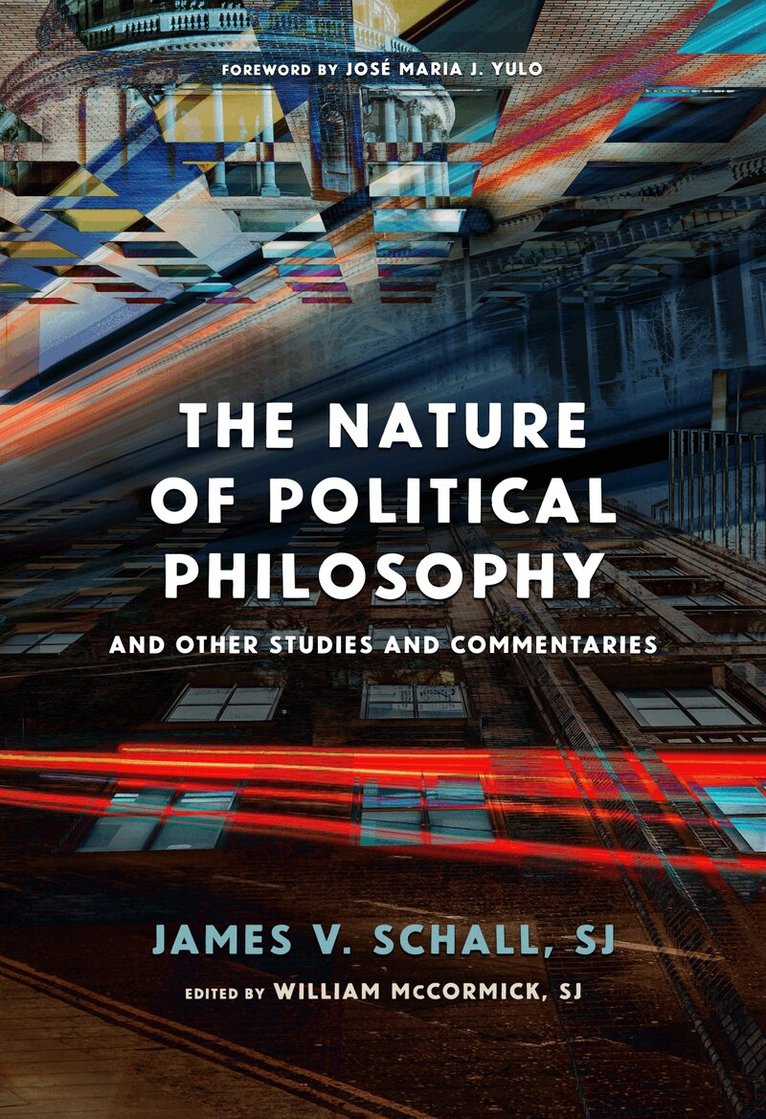
In his final collection of essays, Father Schall explores the life of faith across a dazzling array of subjects, from Martin Luther to bioethics. With his characteristic patience, brilliance, and careful tenacity, Father Schall interrogates profoundly what it means to try to be a citizen of the Kingdom of God in the city of Man. Never shying away from controversy, across 14 articles and 4 book reviews Father Schall investigates the critical themes of his life and scholarship: reason and revelation; the nature of modernity; literature and salvation; metaphysics and politics; and much more.Whether the reader is new to Father Schall or a longtime student, this posthumously-published collection of essays offers a profound meditation on the nature of political philosophy, and particularly what it would mean for Catholicism to offer a political philosophy. From such fundamental considerations, Schall explores ethical, literary and legal themes, displaying his typical breadth and depth of engagement with all that is real.Ultimately, Father Schall leads one on a Socratic enterprise, an education whereby one comes to question for oneself basic assumptions, and to dig deeper into the first principles as they are recalled in the orders of knowledge and being. While Father Schall has passed on to his reward, this collection of essays helps ensure that his lessons continue to guide, challenge and enrich students for generations to come.
Häftad, Engelska, 1998
602 kr
Skickas inom 10-15 vardagar
The engaging and inquiring mind of French philosopher Jacques Maritain reflected on subjects as varied as art and ethics, theology and psychology, and history and metaphysics. Maritain's work on the theoretical groundings of politics arose from his diverse studies. In this book, distinguished theologian and political scientist James V. Schall explores Maritain's political philosophy, demonstrating that Maritain understood society, state, and government in the tradition of Aristotle and Aquinas, of natural law and human rights and duties. Schall pays particular attention to the ways in which evil appears in political forms, and how this evil can be morally dealt with. Schall's study will be of great importance to students and scholars of political science, philosophy, and theology.
Inbunden, Engelska, 2019
252 kr
Skickas inom 5-8 vardagar
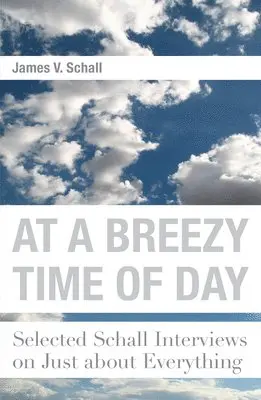
We have books that contain collected essays, verse, and humor. What we see less often are books that contain collected interviews on various topics. Interviews have a certain outside discipline about them. The one interviewed responds to a question someone else asks of him. Often the questions are unexpected, sometimes annoying. Answers have a freshness to them. They can be more personal, frank. The responses in At a Breezy Time of Day are occasioned when someone writes or phones with a request for an interview. There may be a common theme but often side questions come up. We are curious about what someone has to say – about sports, about God, about Plato, about education, about books, about just about anything. Usually central questions occur. The same question can be answered in different ways. We often have more to say on a given topic than we do say on our first being asked about it.These interviews appeared in various on-line and printed sources. Having them collected in one text makes the interview form itself seem more substantial. Interviews too often seem to be passing, ephemeral things, but often we want to hold on to them. There is something more existential about them. Yet there is also something more lightsome about them also. The truth of things seems more bearable when it is spoken, when it has a human voice. So, as the title of this collection intimates, we begin with the very first interview in the Garden of Eden. We touch many places and issues. The interview always has somewhere even in its written form the touch of the human voice. The one who interviews invites us to speak, to tell us what we hold, why we hold it. Interviews are themselves part of that engagement in conversation that defines our kind in its search for a full knowledge of what is. We know that when we have said the last word, much remains to be said. We can rejoice both in what we know, and in what we know that we do not know. I believe it was Socrates who, in an earlier form of interview at the end of The Apology, alerted us to be aware of what we know and to await the many other interviews that we hope to carry on with so many others of our kind in the Isles of the Blessed.
Inbunden, Engelska, 2014
261 kr
Skickas inom 5-8 vardagar
Inbunden, Engelska, 2016
205 kr
Skickas inom 5-8 vardagar
Inbunden, Engelska, 2014
170 kr
Skickas inom 5-8 vardagar
Inbunden, Engelska, 2011
252 kr
Skickas inom 5-8 vardagar
At its beginning, every age has been “modern.” We speak of “pre-” and “post-” modern ages. We are likewise tempted to identify what is most up-to-date with what is true. But to be up-to-date is to be out-of-date. If we find what is really true in any age, it will be true in all ages. This proposition is central to this book. Moreover, what is true will appear in different guises, as will what is false. The “modern age” had often considered itself relativist, or secular, or skeptical. It strove to divest itself of its theological and metaphysical backgrounds, only to find that the central themes from this tradition recur again and again, most often under political or even scientific forms. This book proposes to “see” these classical and revelational roots within their modern forms. But we also find the proposition that what exists is only what we make. We find no “truth” but that of our own confection. When we find only our own “truth,” however, we do not really find or know ourselves. We do not cause what it is to be ourselves in the first place. The central truth that the “modern age” does not acknowledge is that its own existence along with that of the world itself is first a gift. When we see the “modern age” in this light we can again rediscover what we really are. Hopefully, we can choose and rejoice in what we are intended to be in any age as the gift of being is something that transcends all ages even while dwelling within them.
Inbunden, Engelska, 2019
203 kr
Skickas inom 5-8 vardagar
What is real and what is noble, as well as what is deranged and wrong, can often be stated briefly. Nietzsche was famous for his succinct aphorisms and epigrams. Aquinas in one of his responses could manage to state clearly what he held to be true. Ultimately, all of our thought needs to be so refined and concentrated that we can see the point. So these are “brief” essays and they are largely of a philosophical “hue.” They touch on things worth thinking about. Indeed, often they consider things we really need to think about if our lives are to make sense.The advantage of a collection of essays is that it is free to talk about many things. It can speak of them in a learned way or in an amused and humorous way. As Chesterton said, there is no necessary conflict between what is true and what is funny. Oftentimes, the greatest things we learn are through laughter, even laughter at ourselves and our own foibles and faults.So these essays are “brief.” And they are largely of philosophical import. At first sight, taxing beer may seem to have no serious principle, except perhaps for the brewer and the consumer. But wherever there is reality, we can find something to learn.Each of these essays begins with the proposition “on”—this is a classical form of essay in the English language. Belloc, one the essay’s greatest masters, wrote a book simply entitled “ON”—and several other books with that introductory “ON” to begin it. The word has the advantage of focusing our attention on some idea, place, book, person, or reality that we happen to come across and notice, then notice again, then wonder about.These essays are relatively short, often lightsome, hopefully always with a consideration that illumines the world through the mind of the reader. These essays are written in the spirit that the things we encounter provoke us, our minds. We need to come to terms, to understand what we come across in our pathways through this world. Often the best way to know what we observe or confront is to write about it, preferably briefly and with some philosophical insight. This is what we do here.
Inbunden, Engelska, 2011
298 kr
Skickas inom 3-6 vardagar
Häftad, Engelska, 2019
162 kr
Skickas inom 5-8 vardagar
Inbunden, Engelska, 2006
235 kr
Skickas inom 5-8 vardagar
Inbunden, Engelska, 2015
244 kr
Skickas inom 11-20 vardagar
E-bok
Engelska, 2023169 kr
Läs direkt efter köp
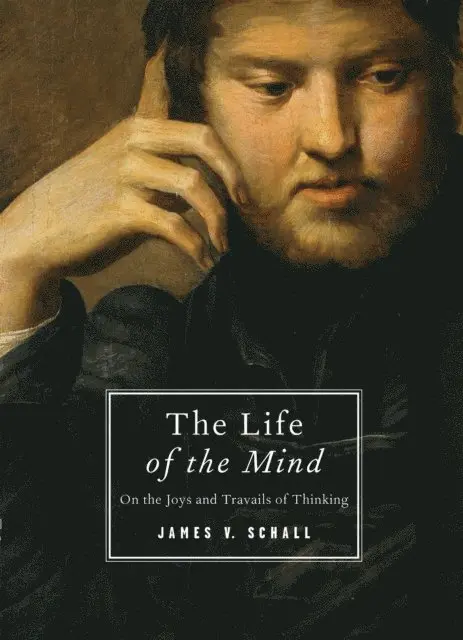
In The Life of the Mind, Georgetown University’s James V. Schall takes up the task of reminding us that, as human beings, we naturally take a special delight and pleasure in simply knowing. Because we have not only bodies but also minds, we are built to know what is.In this volume, Schall, author of On the Unseriousness of Human Affairs, among many other volumes of philosophical and political reflection, discusses the various ways of approaching the delight of thinking and the way that this delight begins in seeing and hearing and even in making and walking. We must be attentive to and cultivate the needs of the mind, argues Schall, for it is through our intellect that all that is not ourselves is finally returned to us, allowing us to live in the light of truth.
E-bok
Engelska, 2023169 kr
Läs direkt efter köp
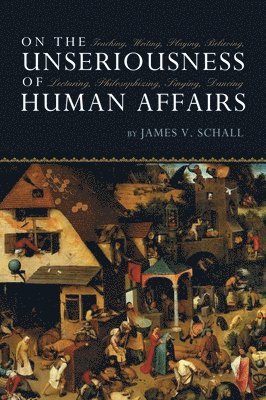
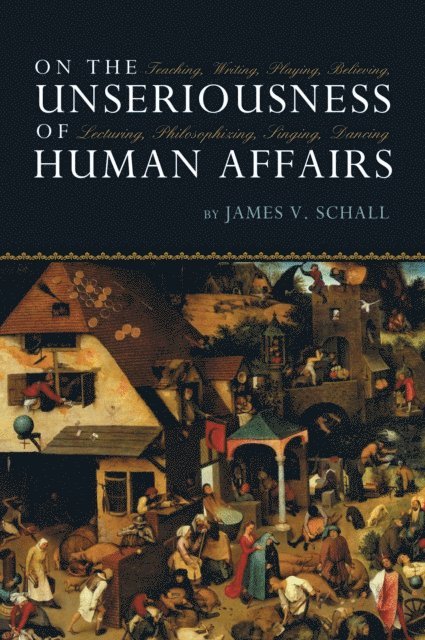
In this wise and witty book, acclaimed author James Schall illuminates a fundamental truth that will shock ceaselessly busy and ambitious Americans: human affairs are unserious. Following Plato, Schall shows why singing, dancing, playing, contemplating, and other "useless" human activities are not merely forms of escape but also indications of the freedom in and for which men and women were created. The joy that accompanies leisure, festivity, and conviviality, he demonstrates, gives us a glimpse of the eternal. On the Unseriousness of Human Affairs offers a vital message that is truly countercultural.
Häftad, Engelska, 1984
267 kr
Tillfälligt slut
This collection of eight essays by leading scholars addresses the various aspects of the intricate and manifold relationship between Christianity and the political thought and movements of our time. Co-published with the Intercollegiate Studies Institute.
Häftad, Engelska, 1986
380 kr
Tillfälligt slut
A collection of ten articles analyzing the shifting relationship between religion and politics from a historical perspective. Contributors include George W. Carey, Paul Seabury, Donald W. Brandon, John W. Cooper, James V. Schall, S.J., Burton M. Leiser, David F. Forte, Richard G. Stevens, Edwin D. Johnston, and Jerome J. Hanus. The articles are controversial, but united in their viewpoint that antagonism between government and religion is neither new nor necessary.