James V. Zidek - Böcker
Visar alla böcker från författaren James V. Zidek. Handla med fri frakt och snabb leverans.
4 produkter
4 produkter
1 632 kr
Skickas inom 10-15 vardagar
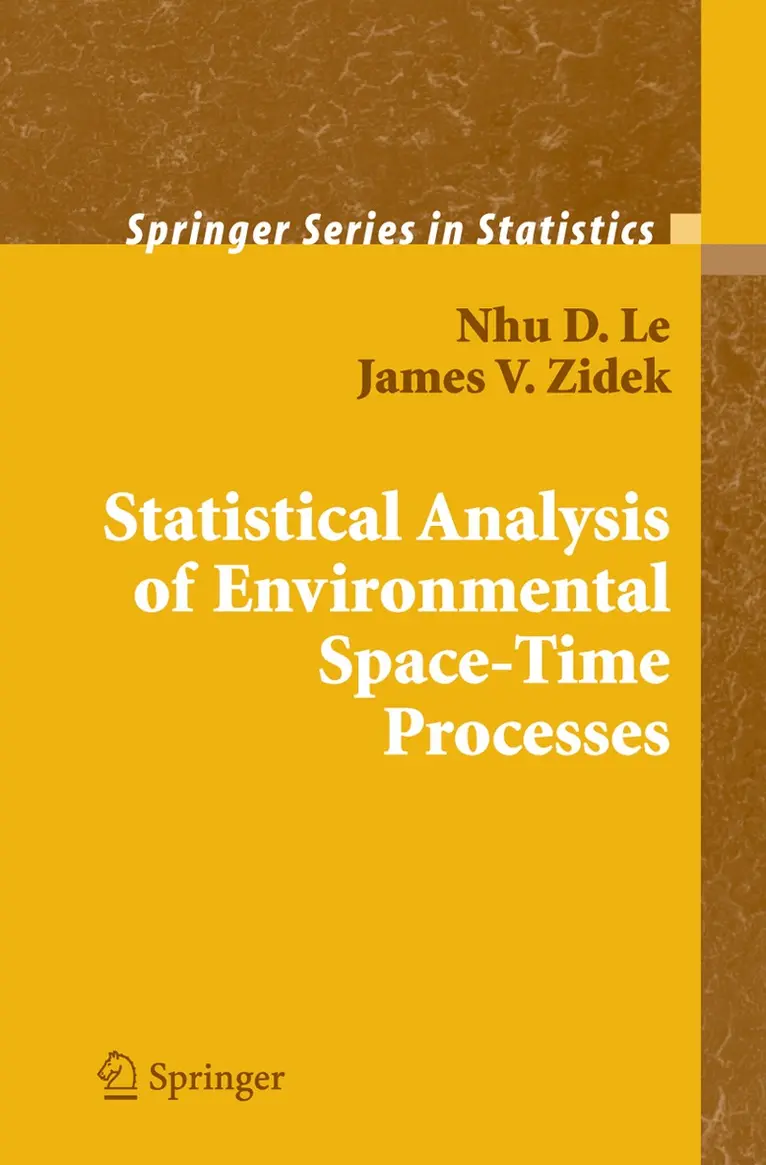
This book presents knowledge gained by the authors along with methods they developed, over more than 30 years of experience measuring, mod- ing, and mapping environmental space–time ?elds. That experience embraces both large (continentwide) spatial domains and small. In part it comes from their research, working with students as well as coinvestigators. But much was gained from all sorts of interactions with many individuals who have had to contend with the challenges these ?elds present. They include statistical as well as subject area scientists, in areas as diverse as analytical chemistry, airsampling,atmosphericscience,environmentalepidemiology,environmental risk management, and occupational health among others. We have colla- rated and consulted with government scientists as well as policy-makers, in all,alargegroupofindividualsfromwhomwehavelearnedalotandtowhom we are indebted. We hope all in these diverse groups will ?nd something of value in this book. We believe it will also bene?t graduate students, both in statistics and subject areas who must deal with the analysis of environmental ?elds. In fact we have given a successful statistics graduate course based on it. The book (and course) re?ect our conviction about the need for statistical scientiststolearnaboutthephenomenatheypurporttoexplain. Totheextent feasible, we have covered important nonstatistical issues involved in dealing with environmental processes. Thus in writing the book we have tried to strike a balance between important qualitative and quantitative aspects of the subject. Much of the most technical statistical-mathematical material has been placed in the starred sections, chapters, and appendices.
1 465 kr
Skickas inom 10-15 vardagar
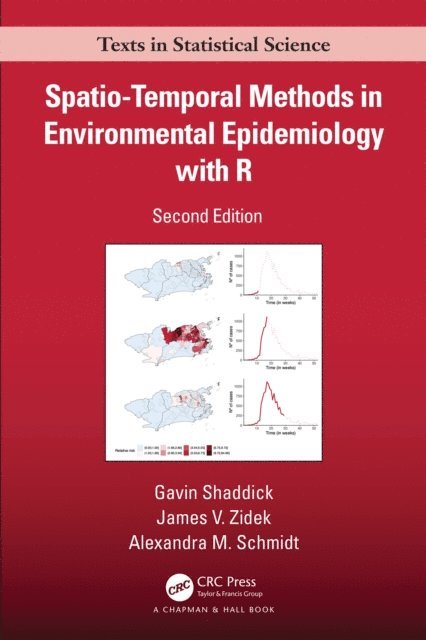
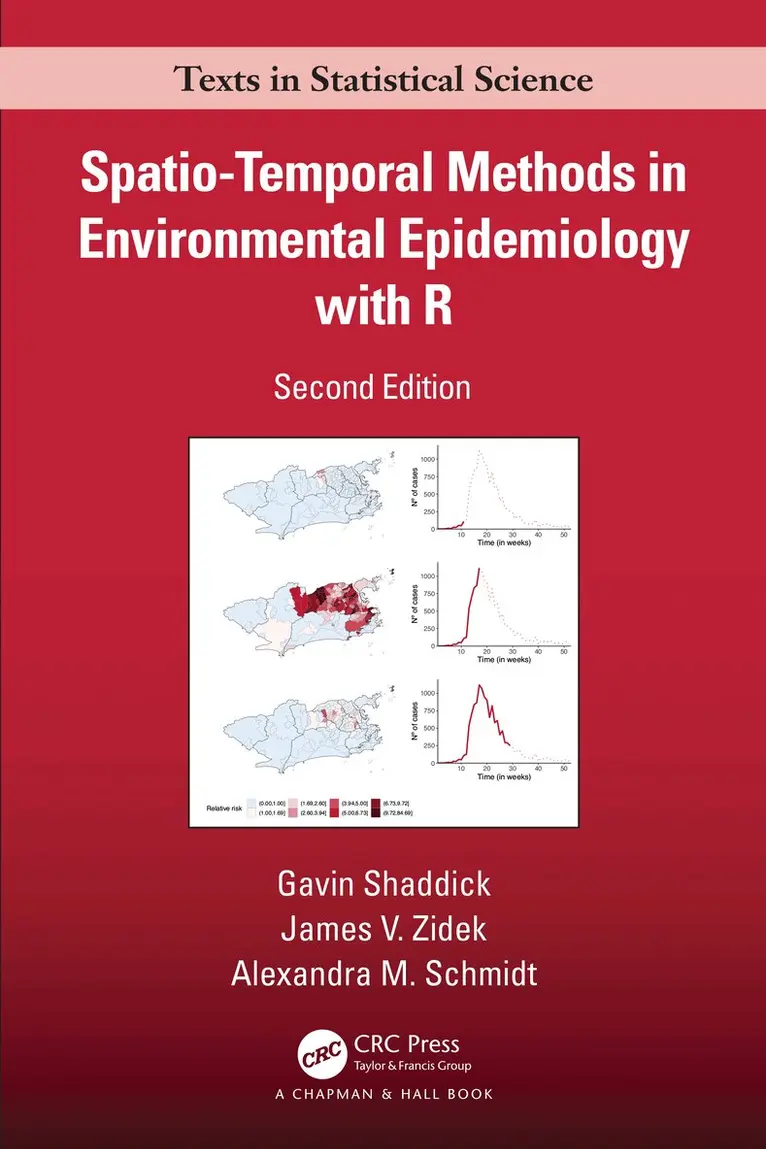
Spatio-Temporal Methods in Environmental Epidemiology with R, like its First Edition, explores the interface between environmental epidemiology and spatio-temporal modeling. It links recent developments in spatio-temporal theory with epidemiological applications. Drawing on real-life problems, it shows how recent advances in methodology can assess the health risks associated with environmental hazards. The book's clear guidelines enable the implementation of the methodology and estimation of risks in practice.New additions to the Second Edition include: a thorough exploration of the underlying concepts behind knowledge discovery through data; a new chapter on extracting information from data using R and the tidyverse; additional material on methods for Bayesian computation, including the use of NIMBLE and Stan; new methods for performing spatio-temporal analysis and an updated chapter containing further topics. Throughout the book there are new examples, and the presentation of R code for examples has been extended. Along with these additions, the book now has a GitHub site (https://spacetime-environ.github.io/stepi2) that contains data, code and further worked examples.Features:• Explores the interface between environmental epidemiology and spatio-temporal modeling• Incorporates examples that show how spatio-temporal methodology can inform societal concerns about the effects of environmental hazards on health• Uses a Bayesian foundation on which to build an integrated approach to spatio-temporal modeling and environmental epidemiology• Discusses data analysis and topics such as data visualization, mapping, wrangling and analysis• Shows how to design networks for monitoring hazardous environmental processes and the ill effects of preferential sampling• Through the listing and application of code, shows the power of R, tidyverse, NIMBLE and Stan and other modern tools in performing complex data analysis and modelingRepresenting a continuing important direction in environmental epidemiology, this book – in full color throughout – underscores the increasing need to consider dependencies in both space and time when modeling epidemiological data. Readers will learn how to identify and model patterns in spatio-temporal data and how to exploit dependencies over space and time to reduce bias and inefficiency when estimating risks to health.
1 632 kr
Skickas inom 10-15 vardagar
This book presents knowledge gained by the authors along with methods they developed, over more than 30 years of experience measuring, mod- ing, and mapping environmental space–time ?elds. That experience embraces both large (continentwide) spatial domains and small. In part it comes from their research, working with students as well as coinvestigators. But much was gained from all sorts of interactions with many individuals who have had to contend with the challenges these ?elds present. They include statistical as well as subject area scientists, in areas as diverse as analytical chemistry, airsampling,atmosphericscience,environmentalepidemiology,environmental risk management, and occupational health among others. We have colla- rated and consulted with government scientists as well as policy-makers, in all,alargegroupofindividualsfromwhomwehavelearnedalotandtowhom we are indebted. We hope all in these diverse groups will ?nd something of value in this book. We believe it will also bene?t graduate students, both in statistics and subject areas who must deal with the analysis of environmental ?elds. In fact we have given a successful statistics graduate course based on it. The book (and course) re?ect our conviction about the need for statistical scientiststolearnaboutthephenomenatheypurporttoexplain. Totheextent feasible, we have covered important nonstatistical issues involved in dealing with environmental processes. Thus in writing the book we have tried to strike a balance between important qualitative and quantitative aspects of the subject. Much of the most technical statistical-mathematical material has been placed in the starred sections, chapters, and appendices.
999 kr
Tillfälligt slut
Teaches Students How to Perform Spatio-Temporal Analyses within Epidemiological StudiesSpatio-Temporal Methods in Environmental Epidemiology is the first book of its kind to specifically address the interface between environmental epidemiology and spatio-temporal modeling. In response to the growing need for collaboration between statisticians and environmental epidemiologists, the book links recent developments in spatio-temporal methodology with epidemiological applications. Drawing on real-life problems, it provides the necessary tools to exploit advances in methodology when assessing the health risks associated with environmental hazards. The book’s clear guidelines enable the implementation of the methodology and estimation of risks in practice.Designed for graduate students in both epidemiology and statistics, the text covers a wide range of topics, from an introduction to epidemiological principles and the foundations of spatio-temporal modeling to new research directions. It describes traditional and Bayesian approaches and presents the theory of spatial, temporal, and spatio-temporal modeling in the context of its application to environmental epidemiology. The text includes practical examples together with embedded R code, details of specific R packages, and the use of other software, such as WinBUGS/OpenBUGS and integrated nested Laplace approximations (INLA). A supplementary website provides additional code, data, examples, exercises, lab projects, and more.Representing a major new direction in environmental epidemiology, this book—in full color throughout—underscores the increasing need to consider dependencies in both space and time when modeling epidemiological data. Students will learn how to identify and model patterns in spatio-temporal data as well as exploit dependencies over space and time to reduce bias and inefficiency.