James W Clarke – författare
Visar alla böcker från författaren James W Clarke. Handla med fri frakt och snabb leverans.
24 produkter
Defining Danger
American Assassins and the New Domestic Terrorists
Inbunden, 2006
2504 kr
Lägg i varukorg
Since 1789, when George Washington became the first president of the United States, forty-three men have held the nation's highest office. Four were killed by assassins, and serious attempts were made on the lives of eight others. Add to that list the names of Martin Luther King, Jr. and Malcolm X, …
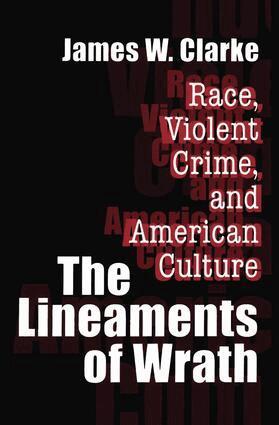
Lineaments of Wrath
Race, Violent Crime and American Culture
Häftad, 2001
381 kr
Lägg i varukorg
Violence has marked relations between blacks and whites in America for nearly four hundred years. In The Lineaments of Wrath, James W. Clarke draws upon behavioral science theory and primary historical evidence to examine and explain its causes and enduring consequences.Beginning with slavery and …
Man Farthest Down
Häftad, 1984
770 kr
Lägg i varukorg
The Man Farthest Down represents an early contribution to the study of comparative social systems. Its treatment of life in the East European shtetls is as moving as the analysis of ghetto life in America. In his new introduction to this edition, Drake illustrates the intellectual camaraderie …
Lineaments of Wrath
Race, Violent Crime and American Culture
Inbunden, 2018
1226 kr
Lägg i varukorg
Violence has marked relations between blacks and whites in America for nearly four hundred years. In The Lineaments of Wrath, James W. Clarke draws upon behavioral science theory and primary historical evidence to examine and explain its causes and enduring consequences.Beginning with slavery and …
Man Farthest Down
Inbunden, 2017
2578 kr
Lägg i varukorg
The Man Farthest Down represents an early contribution to the study of comparative social systems. Its treatment of life in the East European shtetls is as moving as the analysis of ghetto life in America. In his new introduction to this edition, Drake illustrates the intellectual camaraderie …
Lineaments of Wrath
Race, Violent Crime and American Culture
E-bok, 2018
446 kr
Lägg i varukorg
Violence has marked relations between blacks and whites in America for nearly four hundred years. In The Lineaments of Wrath , James W. Clarke draws upon behavioral science theory and primary historical evidence to examine and explain its causes and enduring consequences. Beginning with slavery and …
Lineaments of Wrath
Race, Violent Crime and American Culture
E-bok, 2018
421 kr
Lägg i varukorg
Violence has marked relations between blacks and whites in America for nearly four hundred years. In The Lineaments of Wrath , James W. Clarke draws upon behavioral science theory and primary historical evidence to examine and explain its causes and enduring consequences. Beginning with slavery and …
Man Farthest Down
E-bok, 2017
890 kr
Lägg i varukorg
The Man Farthest Down represents an early contribution to the study of comparative social systems. Its treatment of life in the East European shtetls is as moving as the analysis of ghetto life in America. In his new introduction to this edition, Drake illustrates the intellectual camaraderie …
Man Farthest Down
E-bok, 2017
910 kr
Lägg i varukorg
The Man Farthest Down represents an early contribution to the study of comparative social systems. Its treatment of life in the East European shtetls is as moving as the analysis of ghetto life in America. In his new introduction to this edition, Drake illustrates the intellectual camaraderie …
Defining Danger
American Assassins and the New Domestic Terrorists
E-bok, 2018
889 kr
Lägg i varukorg
Since 1789, when George Washington became the first president of the United States, forty-three men have held the nation''s highest office. Four were killed by assassins, and serious attempts were made on the lives of eight others. Add to that list the names of Martin Luther King, Jr. and Malcolm …
Defining Danger
American Assassins and the New Domestic Terrorists
E-bok, 2018
909 kr
Lägg i varukorg
Since 1789, when George Washington became the first president of the United States, forty-three men have held the nation''s highest office. Four were killed by assassins, and serious attempts were made on the lives of eight others. Add to that list the names of Martin Luther King, Jr. and Malcolm …
Defining Danger
American Assassins and the New Domestic Terrorists
Häftad, 2012
791 kr
Lägg i varukorg
Since 1789, when George Washington became the first president of the United States, forty-three men have held the nation's highest office. Four were killed by assassins,and serious attempts were made on the lives of eight others.Add to that list Martin Luther King, Jr. and Malcolm X,and it is …