James W. Grau – författare
Visar alla böcker från författaren James W. Grau. Handla med fri frakt och snabb leverans.
3 produkter
3 produkter
Inbunden, Engelska, 2001
1 669 kr
Skickas inom 10-15 vardagar
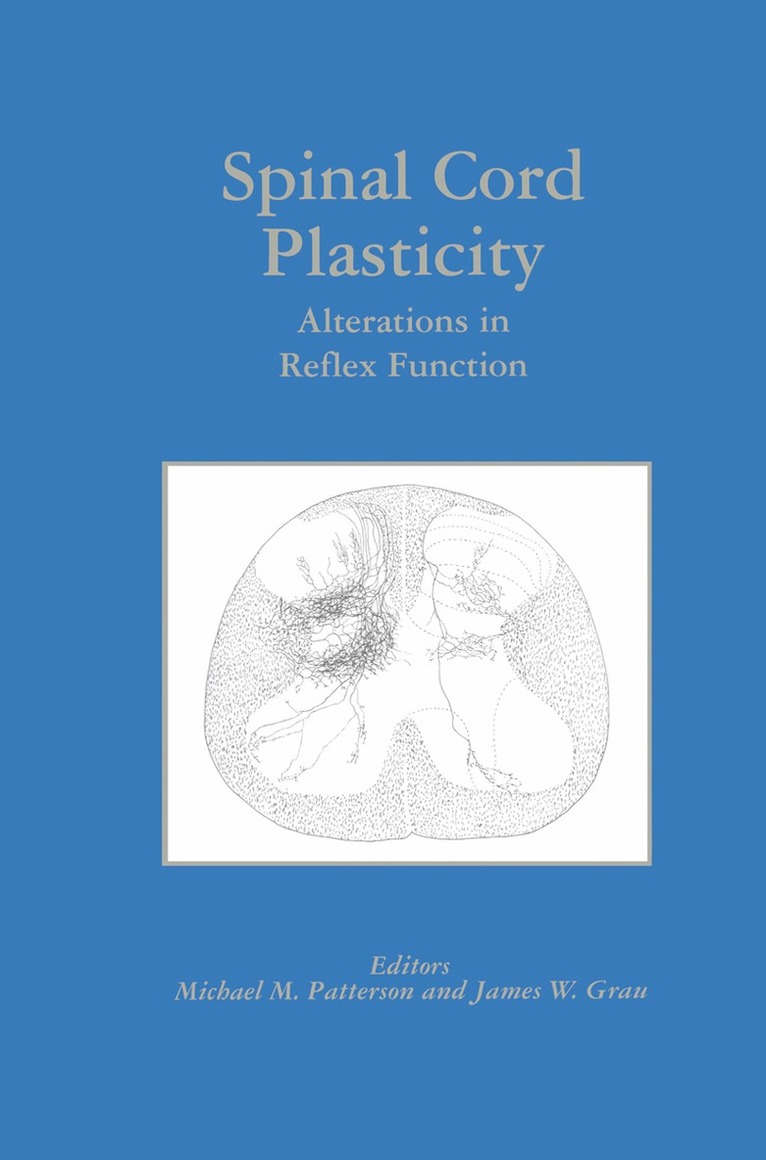
The spinal cord has long been viewed as largely a conduit for neural impulses from the body to the brain and the brain to the body, with various reflexes hard wired in the structure to allow for low level control. The past two decades of the 20th century have seen a very different view of the spinal cord emerging from the laboratories of various disciplines. Studies rooted in physiology, psychology, rehabilitation, pain control and regeneration have begun to show that the spinal cord contains neurons whose functional capacities are highly plastic. This book brings together researchers from several of the most exciting areas of spinal cord plasticity research. Collectively, they present not only findings in their areas, but a perspective of the broader emerging picture of spinal cord neural plasticity.
Häftad, Engelska, 2012
1 669 kr
Skickas inom 10-15 vardagar
The area of spinal cord plasticity has become a very actively researched field. The spinal cord has long been known to organize reflex patterns and serve as the major transmission pathway for sensory and motor nerve impulses. However, the role of the spinal cord in information processing and in experience driven alterations is generally not recognized. With recent advances in neural recording techniques, behavioral technologies and neural tracing and imaging methods has come the ability to better assess the role of the spinal cord in behavioral control and alteration. The discoveries in recent years have been revolutionary. Alterations due to nociceptive inputs, simple learning paradigms and repetitive inputs have now been documented and their mechanisms are being elucidated. These findings have important clinical implications. The development of pathological pain after a spinal cord injury likely depends on the sensitization of neurons within the spinal cord. The capacity of the spinal cord to change as a function of experience, and adapt to new environmental relations, also affects the recovery locomotive function after a spinal cord injury. Mechanisms within the spinal cord can support stepping and the capacity for this behavior depends on behavioral training. By taking advantage of the plasticity inherent within the spinal cord, rehabilitative procedures may foster the recovery of function.
E-bok
PDF, Engelska, 20112 036 kr
Läs direkt efter köp
The area of spinal cord plasticity has become a very actively researched field. The spinal cord has long been known to organize reflex patterns and serve as the major transmission pathway for sensory and motor nerve impulses. However, the role of the spinal cord in information processing and in experience driven alterations is generally not recognized. With recent advances in neural recording techniques, behavioral technologies and neural tracing and imaging methods has come the ability to better assess the role of the spinal cord in behavioral control and alteration. The discoveries in recent years have been revolutionary. Alterations due to nociceptive inputs, simple learning paradigms and repetitive inputs have now been documented and their mechanisms are being elucidated. These findings have important clinical implications. The development of pathological pain after a spinal cord injury likely depends on the sensitization of neurons within the spinal cord. The capacity of the spinal cord to change as a function of experience, and adapt to new environmental relations, also affects the recovery locomotive function after a spinal cord injury. Mechanisms within the spinal cord can support stepping and the capacity for this behavior depends on behavioral training. By taking advantage of the plasticity inherent within the spinal cord, rehabilitative procedures may foster the recovery of function.