James Z. Wang - Böcker
Visar alla böcker från författaren James Z. Wang. Handla med fri frakt och snabb leverans.
6 produkter
6 produkter
1 105 kr
Skickas inom 10-15 vardagar
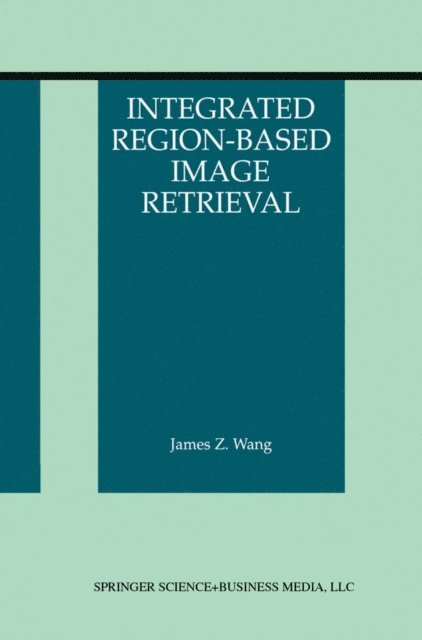
The need for efficient content-based image retrieval has increased in areas such as biomedicine, military, commerce, education, and Web image classification and searching. In the biomedical domain, content-based image retrieval can be used in patient digital libraries, clinical diagnosis, searching of 2-D electrophoresis gels, and pathology slides. This title presents a wavelet-based approach for feature extraction, combined with integrated region matching. An image in the database, or a portion of an image, is represented by a set of regions, roughly corresponding to objects, which are characterized by colour, texture, shape, and location. A measure for the overall similarity between images is developed as a region-matching scheme that integrates properties of all the regions in the images. The advantage of using this "soft matching" is that it makes the metric robust to poor segmentation, an important property that previous research has not solved.Integrated Region-Based Image Retrieval demonstrates an experimental image retrieval system called SIMPLIcity (Semantics-sensitive Integrated Matching for Picture LIbraries), This system validates these methods on various image databases, proving that such methods perform much better and much faster than existing ones. The system is exceptionally robust to image alterations such as intensity variation, sharpness variation, intentional distortions, cropping, shifting, and rotation. These features are extremely important to biomedical image databases since visual features in the query image are not exactly the same as the visual features in the images in the database. Integrated Region-Based Image Retrieval is an excellent reference for researchers in the fields of image retrieval, multimedia, computer vision and image processing.
Del 14 - Information Retrieval Series
Machine Learning and Statistical Modeling Approaches to Image Retrieval
Inbunden, Engelska, 2004
1 064 kr
Skickas inom 10-15 vardagar
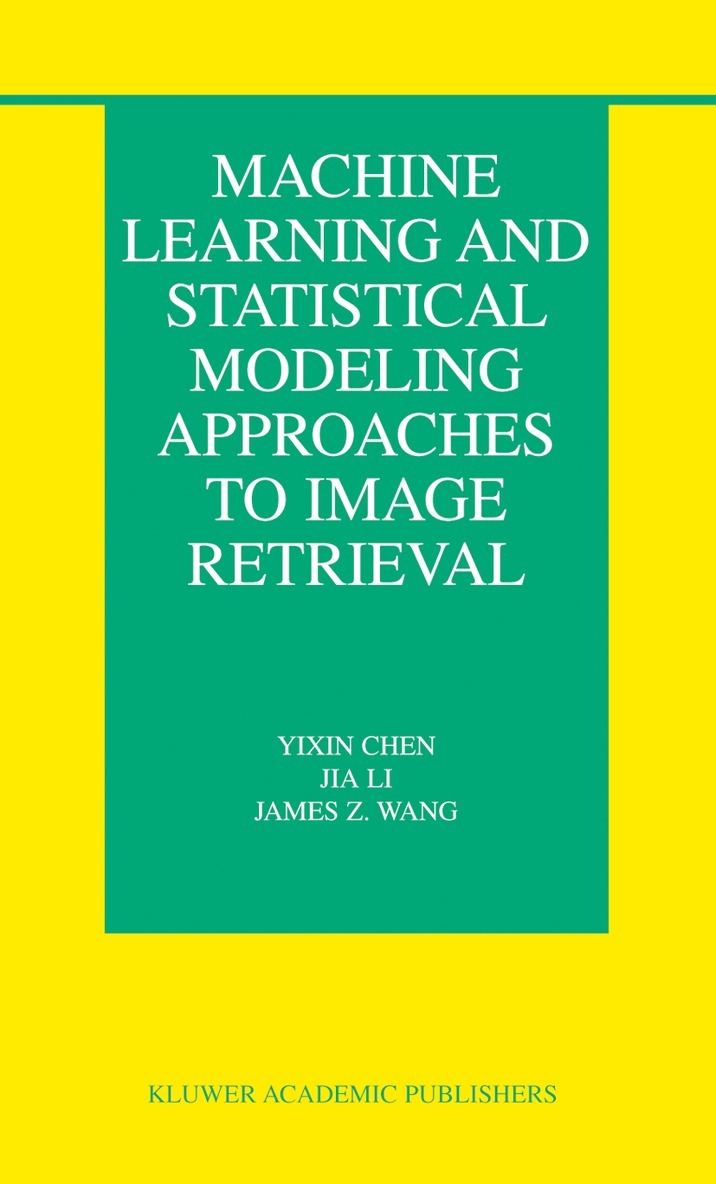
In the early 1990s, the establishment of the Internet brought forth a revolutionary viewpoint of information storage, distribution, and processing: the World Wide Web is becoming an enormous and expanding distributed digital library. Along with the development of the Web, image indexing and retrieval have grown into research areas sharing a vision of intelligent agents. Far beyond Web searching, image indexing and retrieval can potentially be applied to many other areas, including biomedicine, space science, biometric identification, digital libraries, the military, education, commerce, culture and entertainment. Machine Learning and Statistical Modeling Approaches to Image Retrieval describes several approaches of integrating machine learning and statistical modeling into an image retrieval and indexing system that demonstrates promising results. The topics of this book reflect authors' experiences of machine learning and statistical modeling based image indexing and retrieval. This book contains detailed references for further reading and research in this field as well.Machine Learning and Statistical Modeling Approaches to Image Retrieval is designed for a professional audience composed of researchers and practitioners in industry. This book is also suitable as a secondary text for graduate-level students in computer science and electrical engineering.
1 095 kr
Skickas inom 10-15 vardagar
Content-based image retrieval is the set of techniques for retrieving relevant images from an image database on the basis of automatically derived image features. The need for efficient content-based image re trieval has increased tremendously in many application areas such as biomedicine, the military, commerce, education, and Web image clas sification and searching. In the biomedical domain, content-based im age retrieval can be used in patient digital libraries, clinical diagnosis, searching of 2-D electrophoresis gels, and pathology slides. I started my work on content-based image retrieval in 1995 when I was with Stanford University. The project was initiated by the Stan ford University Libraries and later funded by a research grant from the National Science Foundation. The goal was to design and implement a computer system capable of indexing and retrieving large collections of digitized multimedia data available in the libraries based on the media contents. At the time, it seemed reasonable to me that I should discover the solution to the image retrieval problem during the project. Experi ence has certainly demonstrated how far we are as yet from solving this basic problem.
1 095 kr
Skickas inom 10-15 vardagar
In the early 1990s, the establishment of the Internet brought forth a revolutionary viewpoint of information storage, distribution, and processing: the World Wide Web is becoming an enormous and expanding distributed digital library. Along with the development of the Web, image indexing and retrieval have grown into research areas sharing a vision of intelligent agents. Far beyond Web searching, image indexing and retrieval can potentially be applied to many other areas, including biomedicine, space science, biometric identification, digital libraries, the military, education, commerce, culture and entertainment. Machine Learning and Statistical Modeling Approaches to Image Retrieval describes several approaches of integrating machine learning and statistical modeling into an image retrieval and indexing system that demonstrates promising results. The topics of this book reflect authors' experiences of machine learning and statistical modeling based image indexing and retrieval. This book contains detailed references for further reading and research in this field as well.
1 786 kr
Skickas inom 10-15 vardagar
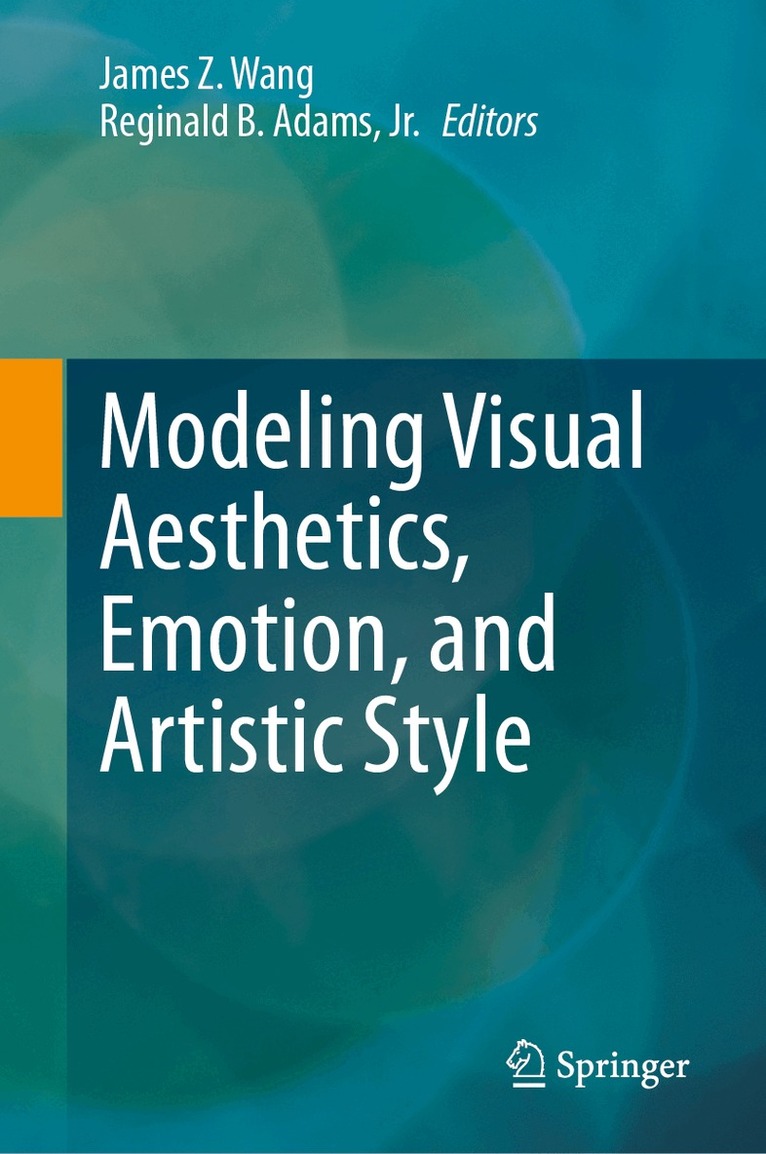
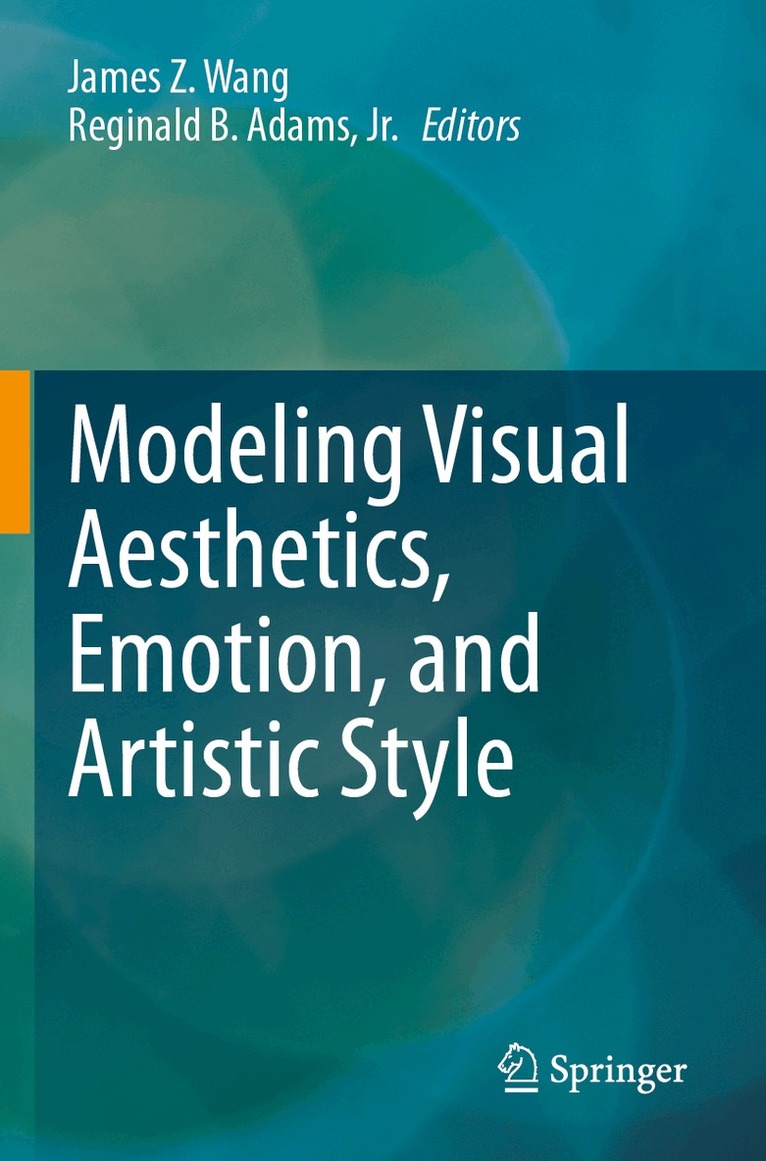
Modeling Visual Aesthetics, Emotion, and Artistic Style offers a comprehensive exploration of the increasingly significant topic of the complex interplay between human perception and digital technology. It embodies the cumulative knowledge and efforts of a wide array of active researchers and practitioners from diverse fields including computer vision, affective computing, robotics, psychology, data mining, machine learning, art history, and movement analysis. This volume seeks to address the profound and challenging research questions related to the computational modeling and analysis of visual aesthetics, emotions, and artistic style, vital components of the human experience that are increasingly relevant in our digitally connected world.The book's vast scope encompasses a broad range of topics. The initial chapters lay a strong foundation with background knowledge on emotion models and machine learning, which then transitions into exploring social visual perception in humans and its technological applications. Readers will uncover the psychological and neurological foundations of social and emotional perception from faces and bodies. Subsequent sections broaden this understanding to include technology's role in detecting discrete and subtle emotional expressions, examining facial neutrality, and including research contexts that involve children as well as adults. Furthermore, the book illuminates the dynamic intersection of art and technology, the language of photography, the relationship between breath-driven robotic performances and human dance, and the application of machine learning in analyzing artistic styles.This book sets itself apart with its unique multidisciplinary approach, encouraging collaboration across related domains. Packed with comprehensive tutorials, theoretical reviews, novel methodologies, empirical investigations, and comparative analyses, the book offers a rich combination of knowledge and methodologies. The book's focus on cutting-edge research not only presents the latest developments in the field but also illuminates potential paths that can lead to significant advancements in computer and robotic applications.
1 786 kr
Skickas inom 10-15 vardagar
Modeling Visual Aesthetics, Emotion, and Artistic Style offers a comprehensive exploration of the increasingly significant topic of the complex interplay between human perception and digital technology. It embodies the cumulative knowledge and efforts of a wide array of active researchers and practitioners from diverse fields including computer vision, affective computing, robotics, psychology, data mining, machine learning, art history, and movement analysis. This volume seeks to address the profound and challenging research questions related to the computational modeling and analysis of visual aesthetics, emotions, and artistic style, vital components of the human experience that are increasingly relevant in our digitally connected world.The book's vast scope encompasses a broad range of topics. The initial chapters lay a strong foundation with background knowledge on emotion models and machine learning, which then transitions into exploring social visual perception in humans and its technological applications. Readers will uncover the psychological and neurological foundations of social and emotional perception from faces and bodies. Subsequent sections broaden this understanding to include technology's role in detecting discrete and subtle emotional expressions, examining facial neutrality, and including research contexts that involve children as well as adults. Furthermore, the book illuminates the dynamic intersection of art and technology, the language of photography, the relationship between breath-driven robotic performances and human dance, and the application of machine learning in analyzing artistic styles.This book sets itself apart with its unique multidisciplinary approach, encouraging collaboration across related domains. Packed with comprehensive tutorials, theoretical reviews, novel methodologies, empirical investigations, and comparative analyses, the book offers a rich combination of knowledge and methodologies. The book's focus on cutting-edge research not only presents the latest developments in the field but also illuminates potential paths that can lead to significant advancements in computer and robotic applications.