Jan Bures – författare
Visar alla böcker från författaren Jan Bures. Handla med fri frakt och snabb leverans.
4 produkter
4 produkter
E-bok
PDF, Engelska, 1998842 kr
Läs direkt efter köp
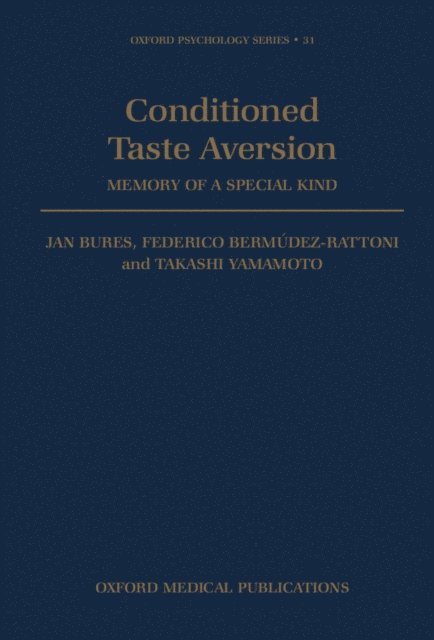
Conditioned taste aversion (CTA) is a robust defence device protecting animals against repeated consumption of toxic food. It is characterised by the ability of many animals to learn to avoid certain substances by their sight, smell, or taste after experiencing an unpleasant or harmful reaction to them. CTA is encountered at all levels of evolution, with similar forms of food aversion learning found in vertebrate and invertebrate species whose ancestral linesdiverged more than 500 million years ago. CTA has a number of unusual properties contrasting sharply with the basic assumptions of traditional learning theories, which has brought it increasingly to the attention of neurobiologists interested in neural plasticity. In CTA, the usual time parameters betweenstimulus and aversion are relaxed considerably, frequently with delays of hours rather than seconds. Moreover, the critical stage of CTA acquisition may proceed under deep anaesthesia incompatible with other forms of learning. In the past decade several pivotal discoveries have considerably avanced our understanding of the neural processes underlying CTA, and opened new possibilities for their analysis at the molecular and cellular levels. This book, written by three of the world''s leadingresearchers in the subject, comprehensively reviews the current state of research into conditioned taste aversion. The first book of its kind to provide an up-to-date summary of research into the neuroanatomy, pharmacology, electrophysiology, and functional morphology of CTA, it will be welcomed by allresearchers and graduate students in the field.
Del 31 - Oxford Psychology Series
Conditioned Taste Aversion
Memory of a Special Kind
Inbunden, Engelska, 1998
1 509 kr
Skickas inom 5-8 vardagar
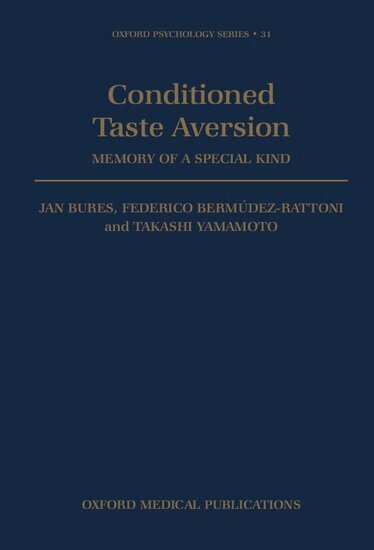
Conditioned taste aversion (CTA) is a robust defence device protecting animals against repeated consumption of toxic food. It is characterised by the ability of many animals to learn to avoid certain substances by their sight, smell, or taste after experiencing an unpleasant or harmful reaction to them. CTA is encountered at all levels of evolution, with similar forms of food aversion learning found in vertebrate and invertebrate species whose ancestral lines diverged more than 500 million years ago. CTA has a number of unusual properties contrasting sharply with the basic assumptions of traditional learning theories, which has brought it increasingly to the attention of neurobiologists interested in neural plasticity. In CTA, the usual time parameters between stimulus and aversion are relaxed considerably, frequently with delays of hours rather than seconds. Moreover, the critical stage of CTA acquisition may proceed under deep anaesthesia incompatible with other forms of learning. In the past decade several pivotal discoveries have considerably avanced our understanding of the neural processes underlying CTA, and opened new possibilities for their analysis at the molecular and cellular levels. This book, written by three of the world's leading researchers in the subject, comprehensively reviews the current state of research into conditioned taste aversion. The first book of its kind to provide an up-to-date summary of research into the neuroanatomy, pharmacology, electrophysiology, and functional morphology of CTA, it will be welcomed by all researchers and graduate students in the field.
E-bok
PDF, Engelska, 2016735 kr
Läs direkt efter köp
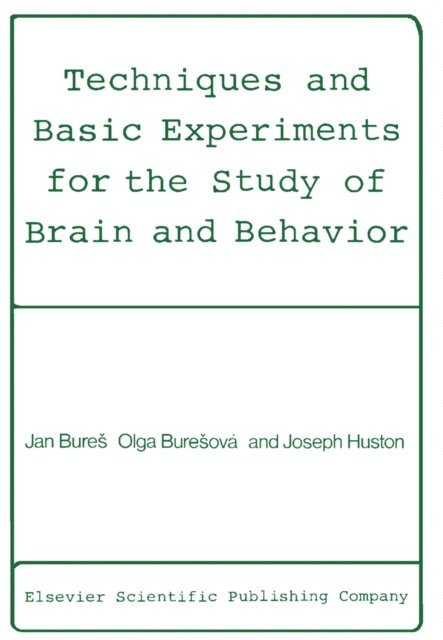
Techniques and Basic Experiments for the Study of Brain and Behavior emphasizes the practical aspects of conducting behavioral experiments, illustrates the various fundamental methods with characteristic examples, and provides a thorough description of the techniques. This text aims to teach the basic skills of behavioral research by providing a wide range of reproducible experiments. Most of the experiments can be completed within a few hours, which makes them suitable for classroom demonstrations and laboratory courses for students. Although this book is organized into systematically arranged sections, the reader can commence with any of the experiments without studying the preceding chapters. A general knowledge of physiological psychology, along the lines outlined in Chapter 1, however, is indispensable. This book is intended for students and scientists (physiologists, psychologists, pharmacologists, biologists, and biophysicists) interested in physiological psychology.
E-bok
PDF, Engelska, 2013979 kr
Läs direkt efter köp
Electrophysiological Methods in Biological Research, Third Revised Edition describes the principles and applications of significant electrophysiological methods as regards to transistorisation of electrophysiological apparatus and to the mathematical analysis of electrophysiological data. The book explains the aspects of physics and electronics that are important in electrophysiology, such as the basic principles of semiconductor function, electronic simulators, electrodes, and the processing of electrophysiological data. The text also cites several examples that measure the resulting membrane potential if one electrode is inside the cell while the other is in contact with the cell''s surface. Other experiments show the electrophysiological techniques and the fundamentals of electrical activity in the peripheral excitable structures, and its association with physiological functions. In considering the problems of nerve and muscle physiology, the investigator should know the technique of recording the electrical signs of a nerve impulse. These signs, or action potentials, indicate the presence of a nerve impulse. The text also discusses the effects of barbiturates or ether anesthesia in EEG activity, as well as its dissociation after physostigmine and atropine have been administered. The book can prove useful for pharmacologists, microchemists, cellular biologists, and research workers and technologists dealing with neural mechanisms.