Jan De Vos – författare
Visar alla böcker från författaren Jan De Vos. Handla med fri frakt och snabb leverans.
26 produkter
Psychologization and the Subject of Late Modernity
Av Kenneth A. Loparo, Jan De Vos m. fl.
Inbunden, 2013
568 kr
Lägg i varukorg
Jan De Vos's second book on psychologization argues that psychology IS psychologization, a phenomenon traced back from Late-Modernity to the Enlightenment. Engaging with seminal thinkers such La Mettrie, Husserl, Lasch and Agamben, the book teases out the limits of psychoanalysis as a critical tool.
Psychologisation in Times of Globalisation
Av Jan De Vos
Inbunden, 2012
2455 kr
Lägg i varukorg
Today more than ever, our understanding of ourselves, others and the world around us is described in psychological terms. Psychologists deeply influence our society, and psychological-discourse has invaded companies, advertising, culture, politics, and even our social and family life. Moreover, …
Psychologisation in Times of Globalisation
Av Jan De Vos
Häftad, 2012
704 kr
Lägg i varukorg
Today more than ever, our understanding of ourselves, others and the world around us is described in psychological terms. Psychologists deeply influence our society, and psychological-discourse has invaded companies, advertising, culture, politics, and even our social and family life. Moreover, …
Psychologisation in Times of Globalisation
Av Jan De Vos
E-bok, 2012
825 kr
Lägg i varukorg
Today more than ever, our understanding of ourselves, others and the world around us is described in psychological terms. Psychologists deeply influence our society, and psychological-discourse has invaded companies, advertising, culture, politics, and even our social and family life. Moreover, …
Psychologisation in Times of Globalisation
Av Jan De Vos
E-bok, 2012
825 kr
Lägg i varukorg
Today more than ever, our understanding of ourselves, others and the world around us is described in psychological terms. Psychologists deeply influence our society, and psychological-discourse has invaded companies, advertising, culture, politics, and even our social and family life. Moreover, …
Metamorphoses of the Brain – Neurologisation and its Discontents
Av Jan De Vos
Inbunden, 2016
879 kr
Lägg i varukorg
What are we exactly, when we are said to be our brain? This question leads Jan De Vos to examine the different metamorphoses of the brain: the educated brain, the material brain, the iconographic brain, the sexual brain, the celebrated brain and, finally, the political brain. This first, protracted …
Metamorphoses of the Brain - Neurologisation and its Discontents
Av Jan De Vos
E-bok, 2016
932 kr
Lägg i varukorg
What are we exactly, when we are said to be our brain? This question leads Jan De Vos to examine the different metamorphoses of the brain: the educated brain, the material brain, the iconographic brain, the sexual brain, the celebrated brain and, finally, the political brain. This first, protracted …
Digitalisation of (Inter)Subjectivity
A Psy-critique of the Digital Death Drive
Av Jan De Vos
Inbunden, 2020
2526 kr
Lägg i varukorg
This book explores the responsibility of psychological and neuropsychological perspectives in relation to the digitalisation of inter-subjectivity. It examines how integral their theories and models have been to the development of digital technologies, and by combining theoretical and critical work …
Digitalisation of (Inter)Subjectivity
A Psy-critique of the Digital Death Drive
Av Jan De Vos
Häftad, 2020
769 kr
Lägg i varukorg
This book explores the responsibility of psychological and neuropsychological perspectives in relation to the digitalisation of inter-subjectivity. It examines how integral their theories and models have been to the development of digital technologies, and by combining theoretical and critical work …
Constructions of Neuroscience in Early Childhood Education
Av Michel Vandenbroeck, Jan De Vos m. fl.
Inbunden, 2017
2526 kr
Lägg i varukorg
This book explores and critiques topical debates in educational sciences, philosophy, social work and cognitive neuroscience. It examines constructions of children, parents and the welfare state in relation to neurosciences and its vocabulary of brain architecture, critical periods and toxic …
Constructions of Neuroscience in Early Childhood Education
Av Michel Vandenbroeck, Jan De Vos m. fl.
Häftad, 2017
827 kr
Lägg i varukorg
This book explores and critiques topical debates in educational sciences, philosophy, social work and cognitive neuroscience. It examines constructions of children, parents and the welfare state in relation to neurosciences and its vocabulary of brain architecture, critical periods and toxic …
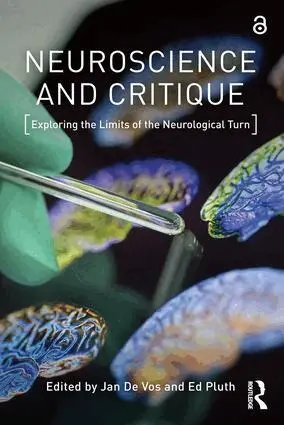
Neuroscience and Critique
Exploring the Limits of the Neurological Turn
Av Jan De Vos, Ed Pluth
Inbunden, 2015
2526 kr
Lägg i varukorg
Recent years have seen a rapid growth in neuroscientific research, and an expansion beyond basic research to incorporate elements of the arts, humanities and social sciences. It has been suggested that the neurosciences will bring about major transformations in the understanding of ourselves, our …
Neuroscience and Critique
Exploring the Limits of the Neurological Turn
Av Jan De Vos, Ed Pluth
Häftad, 2015
827 kr
Lägg i varukorg
Recent years have seen a rapid growth in neuroscientific research, and an expansion beyond basic research to incorporate elements of the arts, humanities and social sciences. It has been suggested that the neurosciences will bring about major transformations in the understanding of ourselves, our …
Constructions of Neuroscience in Early Childhood Education
Av Sue White, Dave Wastell m. fl.
E-bok, 2017
922 kr
Lägg i varukorg
This book explores and critiques topical debates in educational sciences, philosophy, social work and cognitive neuroscience. It examines constructions of children, parents and the welfare state in relation to neurosciences and its vocabulary of brain architecture, critical periods and toxic …
Constructions of Neuroscience in Early Childhood Education
Av Sue White, Dave Wastell m. fl.
E-bok, 2017
943 kr
Lägg i varukorg
This book explores and critiques topical debates in educational sciences, philosophy, social work and cognitive neuroscience. It examines constructions of children, parents and the welfare state in relation to neurosciences and its vocabulary of brain architecture, critical periods and toxic …
Neuroscience and Critique
Exploring the Limits of the Neurological Turn
Av Ed Pluth, Jan De Vos
E-bok, 2015
823 kr
Lägg i varukorg
Recent years have seen a rapid growth in neuroscientific research, and an expansion beyond basic research to incorporate elements of the arts, humanities and social sciences. It has been suggested that the neurosciences will bring about major transformations in the understanding of ourselves, our …
Neuroscience and Critique
Exploring the Limits of the Neurological Turn
Av Ed Pluth, Jan De Vos
E-bok, 2015
842 kr
Lägg i varukorg
Recent years have seen a rapid growth in neuroscientific research, and an expansion beyond basic research to incorporate elements of the arts, humanities and social sciences. It has been suggested that the neurosciences will bring about major transformations in the understanding of ourselves, our …
Psychologization and the Subject of Late Modernity
Av Jan de Vos, Kenneth A. Loparo m. fl.
Häftad, 2013
568 kr
Lägg i varukorg
Jan De Vos's second book on psychologization argues that psychology IS psychologization, a phenomenon traced back from Late-Modernity to the Enlightenment. Engaging with seminal thinkers such La Mettrie, Husserl, Lasch and Agamben, the book teases out the limits of psychoanalysis as a critical tool.
Metamorphoses of the Brain – Neurologisation and its Discontents
Av Jan De Vos
Häftad, 2020
715 kr
Lägg i varukorg
What are we exactly, when we are said to be our brain? This question leads Jan De Vos to examine the different metamorphoses of the brain: the educated brain, the material brain, the iconographic brain, the sexual brain, the celebrated brain and, finally, the political brain. This first, protracted …
Digitalisation of (Inter)Subjectivity
A Psy-critique of the Digital Death Drive
Av Jan De Vos
E-bok, 2020
901 kr
Lägg i varukorg
This book explores the responsibility of psychological and neuropsychological perspectives in relation to the digitalisation of inter-subjectivity. It examines how integral their theories and models have been to the development of digital technologies, and by combining theoretical and critical work …
Digitalisation of (Inter)Subjectivity
A Psy-critique of the Digital Death Drive
Av Jan De Vos
E-bok, 2020
881 kr
Lägg i varukorg
This book explores the responsibility of psychological and neuropsychological perspectives in relation to the digitalisation of inter-subjectivity. It examines how integral their theories and models have been to the development of digital technologies, and by combining theoretical and critical work …
Fray Pedro Lorenzo de la Nada
Misionero de Chiapas y Tabasco
Av Jan de Vos
E-bok, 2014
23 kr
Lägg i varukorg
Desdeñado por sus compañeros de orden, apenas retratado en algunas crónicas, Pedro Lorenzo de la Nada ha sido rescatado del olvido, cuatro siglos después, por la provechosa investigación que realizó Jan de Vos en archivos de Chiapas, Guatemala, España y Estados Unidos. El resultado es el conmovedor …
Una tierra para sembrar sueños
Historia reciente de la Selva Lacandona, 1950-2000
Av Jan de Vos
E-bok, 2015
102 kr
Lägg i varukorg
El autor narra la historia de la selva a través de los sueños de ocho personajes que son representativos de cada tema: la explotación maderera, la colonización campesina, la iniciativa finquera, la intervención gubernamental, la unión ejidal, la evangelización autóctona, el refugio guatemalteco y …
Oro verde
La conquista de la selva lacandona por los madereros tabasqueños, 1822-1949
Av Jan De Vos
E-bok, 2015
27 kr
Lägg i varukorg
En 1822, año en que la provincia colonial de Las Chiapas se independiza definitivamente de España, la selva lacandona es descubierta por primera vez como reserva forestal. A partir de ese súbito ingreso en la historia moderna, este inmenso baluarte natural ha sido escenario de un enfrentamiento …
La paz de Dios y del Rey
La conquista de la Selva Lacandona (1525-1821)
Av Jan de Vos
E-bok, 2015
34 kr
Lägg i varukorg
El largo proceso de destrucción de las civilizaciones prehispánicas se inició con la llegada a América de los primeros europeos y no ha llegado aún a su término. Una de las víctimas de este proceso fue una pequeña tribu indígena del sureste de México, los lacandones, que, como señala Jan de Vos, …
Fray Pedro Lorenzo de la Nada
Misionero de Chiapas y Tabasco
Av Jan de Vos
E-bok, 2024
17 kr
Lägg i varukorg
Desdeñado por sus compañeros de orden, apenas retratado en algunas crónicas, Pedro Lorenzo de la Nada ha sido rescatado del olvido, cuatro siglos después, por la provechosa investigación que realizó Jan de Vos en archivos de Chiapas, Guatemala, España y Estados Unidos. El resultado es el conmovedor …