Jan-Pieter Barbian – författare
Visar alla böcker från författaren Jan-Pieter Barbian. Handla med fri frakt och snabb leverans.
7 produkter
7 produkter
E-bok
PDF, Engelska, 2013605 kr
Läs direkt efter köp
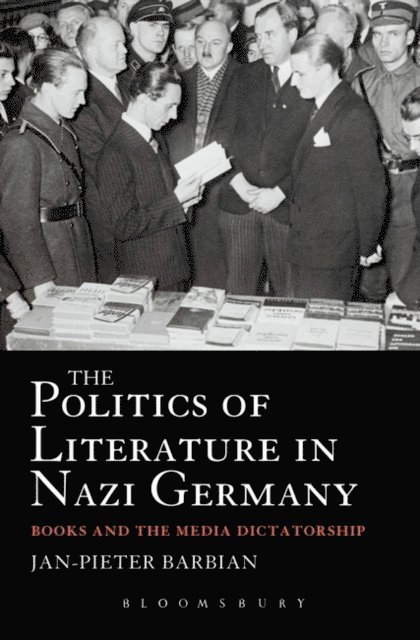
This is the most comprehensive account to date of literary politics in Nazi Germany and of the institutions, organizations and people who controlled German literature during the Third Reich. Barbian details a media dictatorship-involving the persecution and control of writers, publishers and libraries, but also voluntary assimilation and pre-emptive self-censorship-that began almost immediately under the National Socialists, leading to authors' forced declarations of loyalty, literary propaganda, censorship, and book burnings. Special attention is given to Nazi regulation of the publishing industry and command over all forms of publication and dissemination, from the most presitigious publishing houses to the smallest municipal and school libraries. Barbian also shows that, although the Nazis censored books not in line with Party aims, many publishers and writers took advantage of loopholes in their system of control. Supporting his work with exhaustive research of original sources, Barbian describes a society in which everybody who was not openly opposed to it, participated in the system, whether as a writer, an editor, or even as an ordinary visitor to a library.
E-bok
Engelska, 2013605 kr
Läs direkt efter köp
This is the most comprehensive account to date of literary politics in Nazi Germany and of the institutions, organizations and people who controlled German literature during the Third Reich. Barbian details a media dictatorship-involving the persecution and control of writers, publishers and libraries, but also voluntary assimilation and pre-emptive self-censorship-that began almost immediately under the National Socialists, leading to authors' forced declarations of loyalty, literary propaganda, censorship, and book burnings. Special attention is given to Nazi regulation of the publishing industry and command over all forms of publication and dissemination, from the most presitigious publishing houses to the smallest municipal and school libraries. Barbian also shows that, although the Nazis censored books not in line with Party aims, many publishers and writers took advantage of loopholes in their system of control. Supporting his work with exhaustive research of original sources, Barbian describes a society in which everybody who was not openly opposed to it, participated in the system, whether as a writer, an editor, or even as an ordinary visitor to a library.
Inbunden, Tyska, 2024
422 kr
Skickas inom 3-6 vardagar
227 kr
Läs direkt efter köp
Die Bücherverbrennungen, die am 10. Mai 1933 in nahezu allen deutschen Universitätsstädten stattfanden, waren ein medienwirksam inszeniertes Ereignis. Bis heute verstellt dieses Symbol der Kulturbarbarei den Blick auf die Entscheidungsabläufe, die zur Etablierung einer nationalsozialistischen Literaturpolitik führten. Die Beseitigung eines bedeutenden Teils der Literatur der Weimarer Moderne und ihrer Protagonisten war nur das öffentliche Vorspiel zu einem allumfassenden Prozess, in dem staatliche Behörden und Partei"dienststellen" politischen Einfluss auf die Produktion und Verbreitung von Literatur nahmen.Eine Schlüsselrolle fiel dabei Joseph Goebbels als Reichsminister für Volksaufklärung und Propaganda und als Präsident der von ihm gegründeten Reichskulturkammer zu. Was im Dritten Reich erscheinen durfte, war "von seinen Gnaden" zugelassen. Allerdings musste Goebbels seine Macht mit anderen Herrschaftsträgern teilen. Und auch die Beherrschten - Autoren, Verleger, Buchhändler und das lesende Publikum - folgten keineswegs allen Vorgaben des Regimes.Der Autor präsentiert einen knappen wie präzisen Überblick über all die Institutionen, Akteure und Betätigungsfelder, die für die nationalsozialistische Literaturpolitik entscheidend waren. Die Darstellung stützt sich auf umfangreiche Überlieferungen in staatlichen Archiven und zugleich auf Analysen der Verhaltensweisen von Schriftstellern, Verlagen, des Buchmarktes und des Leseverhaltens, wie sie sich in Tagebüchern, Erinnerungen, Briefen, statistischen Erhebungen und Darstellungen zur Buchhandelsgeschichte widerspiegeln.Jan-Pieter Barbian, geb. 1958, studierte Germanistik, Geschichte und Philosophie. Seit 1995 ist er Direktor der Stadtbibliothek Duisburg. Er gilt als einer der ganz wenigen Kenner des Forschungsfeldes.Buchpublikationen u. a.: "Literaturpolitik im ''Dritten Reich''" (zuletzt bei dtv 1993/95, 950 S, seit 1998 vergriffen); »Die vollendete Ohnmacht. Schriftsteller, Verleger und Buchhändler im NS-Staat« (2008).Unsere Adressen im Internet: www.fischerverlage.de
E-bok
PDF, Tyska, 20193 014 kr
Läs direkt efter köp
Keine ausführliche Beschreibung für "Literaturpolitik im "Dritten Reich"" verfügbar.
Inbunden, Tyska, 1993
3 254 kr
Skickas inom 5-8 vardagar
Häftad, Tyska, 2024
289 kr
Skickas inom 3-6 vardagar