Jan W. Gooch – författare
Visar alla böcker från författaren Jan W. Gooch. Handla med fri frakt och snabb leverans.
17 produkter
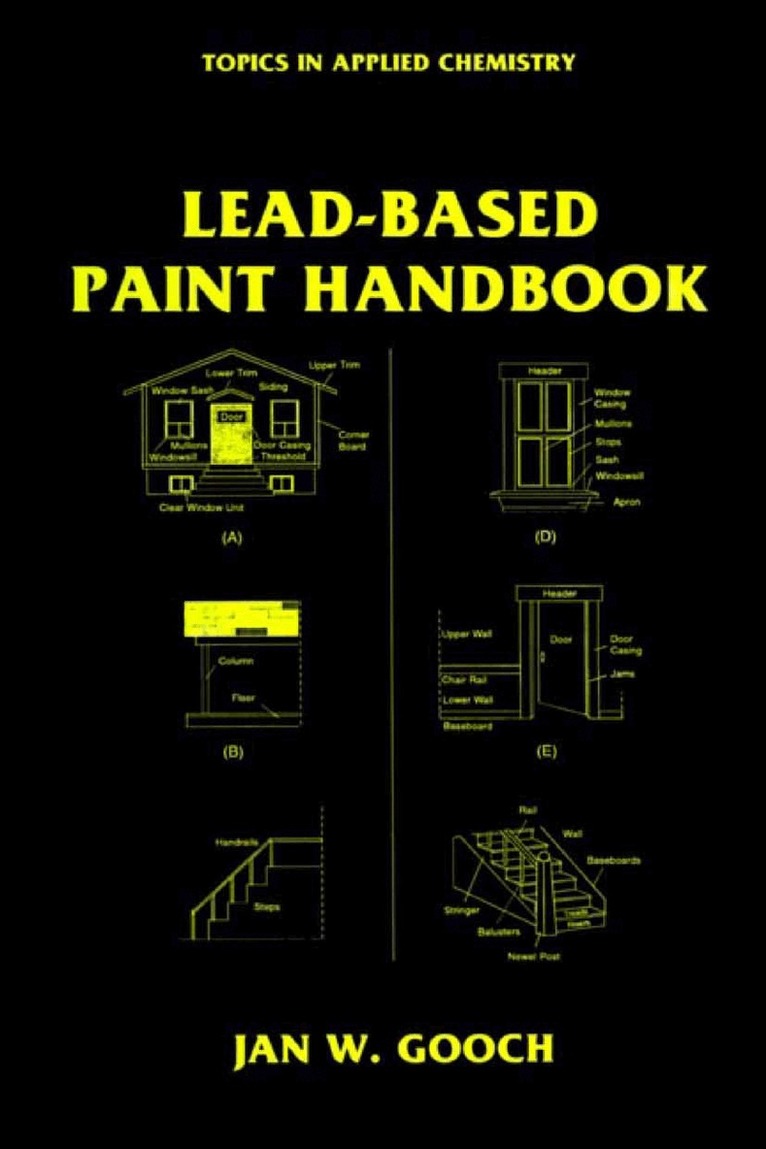
Lead-Based Paint Handbook
Av Jan W. Gooch
Inbunden, 1993
1641 kr
Lägg i varukorg
Lead-based paint has become a national issue and will continue to be a hi- priority focus ofnational, state, and local agencies until there is no lead-based paint in the United States. Lead-based paint has become a tremendous health hazard for people and animals. Lead-based paint has been in …
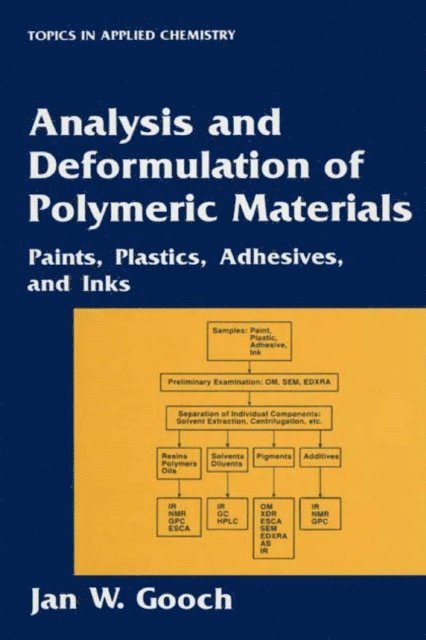
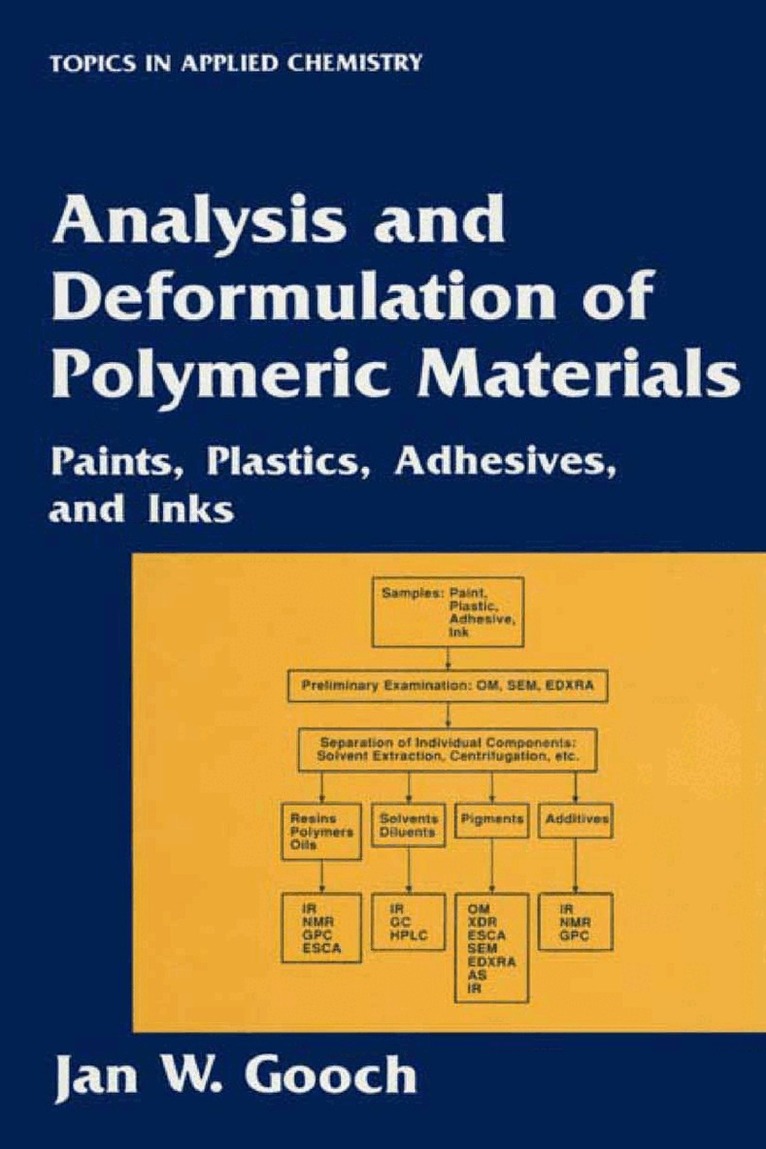
Analysis and Deformulation of Polymeric Materials
Paints, Plastics, Adhesives, and Inks
Av Jan W. Gooch
Inbunden, 1997
2512 kr
Lägg i varukorg
This book is designed for the chemist, formulator, student, teacher, forensic scientist, or others who wish to investigate the composition of polymeric materials. Theinformationwithinthesepagesisintendedtoarmthereaderwiththenecessary workingknowledgetoanalyze,characterize, anddeformulatematerials. …
Emulsification and Polymerization of Alkyd Resins
Av Jan W. Gooch
Inbunden, 2002
1096 kr
Lägg i varukorg
Emulsification of vegetable oil-based resins was a daunting task when the author began his research, but the subsequent technology spawned a generation of stable emulsions for waterborne coatings based on vegetable oil-based alkyd resins, oils and fatty acids. Autoxidative polymerization of …
Lead-Based Paint Handbook
Av Jan W. Gooch
E-bok, 2005
2065 kr
Lägg i varukorg
Lead-based paint has become a national issue and will continue to be a hi- priority focus ofnational, state, and local agencies until there is no lead-based paint in the United States. Lead-based paint has become a tremendous health hazard for people and animals. Lead-based paint has been in …
Analysis and Deformulation of Polymeric Materials
Paints, Plastics, Adhesives, and Inks
Av Jan W. Gooch
E-bok, 2005
3251 kr
Lägg i varukorg
Emulsification and Polymerization of Alkyd Resins
Av Jan W. Gooch
E-bok, 2005
1427 kr
Lägg i varukorg
Emulsification of vegetable oil-based resins was a daunting task when the author began his research, but the subsequent technology spawned a generation of stable emulsions for waterborne coatings based on vegetable oil-based alkyd resins, oils and fatty acids. Autoxidative polymerization of …
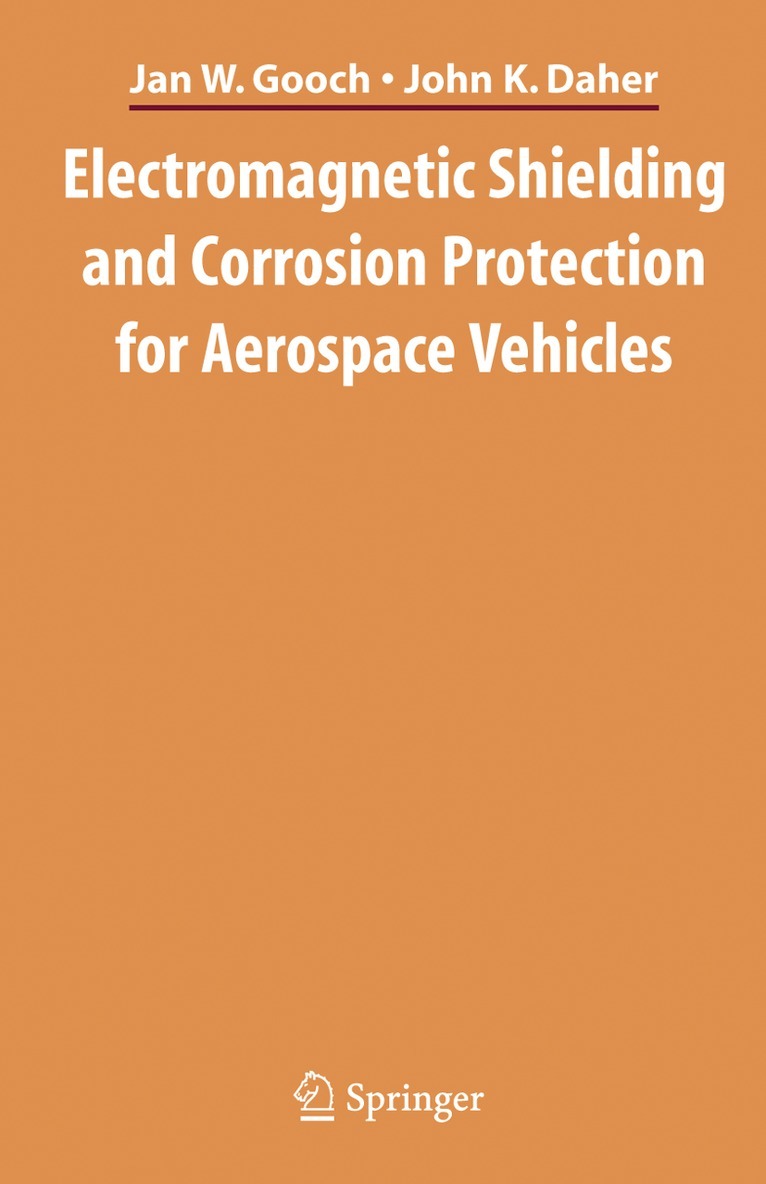
Electromagnetic Shielding and Corrosion Protection for Aerospace Vehicles
Av Jan W. Gooch, John K. Daher
Inbunden, 2007
1096 kr
Lägg i varukorg
Civil and military aircraft – and aerospace vehicles in general – face two related problems:- They depend heavily upon electronic systems and thus must be shielded against electromagnetic interference (EMI). This interference may come in the form of lighting strikes, interference from radio …
Electromagnetic Shielding and Corrosion Protection for Aerospace Vehicles
Av John K. Daher, Jan W. Gooch
E-bok, 2010
1459 kr
Lägg i varukorg
Civil and military aircraft – and aerospace vehicles in general – face two related problems: - They depend heavily upon electronic systems and thus must be shielded against electromagnetic interference (EMI). This interference may come in the form of lighting strikes, interference from radio …
Electromagnetic Shielding and Corrosion Protection for Aerospace Vehicles
Av Jan W. Gooch, John K. Daher
Häftad, 2011
1096 kr
Lägg i varukorg
Civil and military aircraft – and aerospace vehicles in general – face two related problems:- They depend heavily upon electronic systems and thus must be shielded against electromagnetic interference (EMI). This interference may come in the form of lighting strikes, interference from radio …
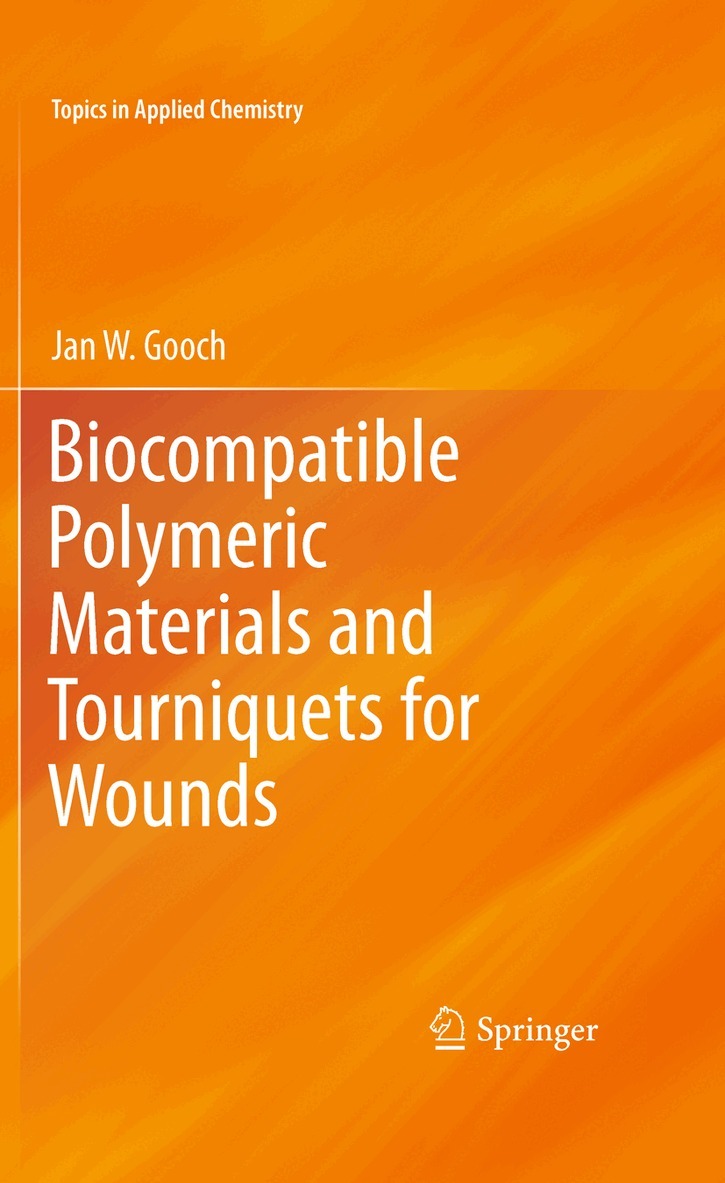
Biocompatible Polymeric Materials and Tourniquets for Wounds
Av Jan W. Gooch
Inbunden, 2010
1129 kr
Lägg i varukorg
In recent years biocompatible polymers for injuries and wounds have seen advances and innovations that have outpaced the growing field's literature. In this book Dr. Jan W. Gooch, a National Research Council Research Associateship Award recipient, reveals how innovative polymer technology can be …
Encyclopedic Dictionary of Polymers
Av Jan W. Gooch
2010
8998 kr
Lägg i varukorg
This reference, in its second edition, contains more than 7,500 polymeric material terms, including the names of chemicals, processes, formulae, and analytical methods that are used frequently in the polymer and engineering fields. In view of the evolving partnership between physical and life …
Encyclopedic Dictionary of Polymers
Av Jan W. Gooch
E-bok, 2011
10005 kr
Lägg i varukorg
This reference, in its second edition, contains more than 7,500 polymeric material terms, including the names of chemicals, processes, formulae, and analytical methods that are used frequently in the polymer and engineering fields. In view of the evolving partnership between physical and life …
Biocompatible Polymeric Materials and Tourniquets for Wounds
Av Jan W. Gooch
E-bok, 2010
1502 kr
Lägg i varukorg
In recent years biocompatible polymers for injuries and wounds have seen advances and innovations that have outpaced the growing field''s literature. In this book Dr. Jan W. Gooch, a National Research Council Research Associateship Award recipient, reveals how innovative polymer technology can be …
Biocompatible Polymeric Materials and Tourniquets for Wounds
Av Jan W. Gooch
Häftad, 2012
1129 kr
Lägg i varukorg
In recent years biocompatible polymers for injuries and wounds have seen advances and innovations that have outpaced the growing field's literature. In this book Dr. Jan W. Gooch, a National Research Council Research Associateship Award recipient, reveals how innovative polymer technology can be …
Analysis and Deformulation of Polymeric Materials
Paints, Plastics, Adhesives, and Inks
Av Jan W. Gooch
Häftad, 2013
2512 kr
Lägg i varukorg
This book is designed for the chemist, formulator, student, teacher, forensic scientist, or others who wish to investigate the composition of polymeric materials. Theinformationwithinthesepagesisintendedtoarmthereaderwiththenecessary workingknowledgetoanalyze,characterize, anddeformulatematerials. …
Lead-Based Paint Handbook
Av Jan W. Gooch
Häftad, 2013
1641 kr
Lägg i varukorg
Lead-based paint has become a national issue and will continue to be a hi- priority focus ofnational, state, and local agencies until there is no lead-based paint in the United States. Lead-based paint has become a tremendous health hazard for people and animals. Lead-based paint has been in …
Emulsification and Polymerization of Alkyd Resins
Av Jan W. Gooch
Häftad, 2013
1096 kr
Lägg i varukorg
Emulsification of vegetable oil-based resins was a daunting task when the author began his research, but the subsequent technology spawned a generation of stable emulsions for waterborne coatings based on vegetable oil-based alkyd resins, oils and fatty acids. Autoxidative polymerization of …