
Häftad, Engelska, 2024
544 kr
Skickas inom 3-6 vardagar
544 kr
Skickas inom 3-6 vardagar
1 051 kr
Läs direkt efter köp
This book investigates governance practiced by non-state actors. It analyses how multinational mining companies protect their sites in fragile contexts and what that tells us about political ordering ''beyond'' the state.
Based on extensive primary research in the Democratic Republic of Congo, South Africa, Europe and North America, the book compares companies'' political role in the 19th and 21st centuries. It demonstrates that despite a number of disturbing parallels, many contemporary practices are not a reversion to the past but unique to the present. The book discloses hybrid security practices with highly ambiguous effects around the sites of contemporary companies that have committed to norms of corporate social and security responsibility. Companies invest in local communities, and offer human rights training to security forces alongside coercive techniques of fortress protection, and stability-oriented clientele practice and arrangements of indirect rule. The book traces this hybridity back to contradictory collective meaning systems that cross borders and structure the perceptions and choices of company managers, private security officers, NGO collaborators and others practitioners. The book argues that hybrid security practices are not the result of an encounter between a supposed ‘local’ with the liberal ‘global’. Instead, this hybridity is inherent in the transnational and part and parcel of liberal transnational governance. Therefore, more critical reflection of global governance in practice is required.
These issues are sharply pertinent to liberal peacebuilding as well as global governance more broadly. The book will be of interest to anyone interested in business, politics and human rights; critical security studies; peacebuilding and statebuilding; African politics; and ethnographic and sociological approaches to global governance and international relations more generally.
1 051 kr
Läs direkt efter köp
This book investigates governance practiced by non-state actors. It analyses how multinational mining companies protect their sites in fragile contexts and what that tells us about political ordering ''beyond'' the state.
Based on extensive primary research in the Democratic Republic of Congo, South Africa, Europe and North America, the book compares companies'' political role in the 19th and 21st centuries. It demonstrates that despite a number of disturbing parallels, many contemporary practices are not a reversion to the past but unique to the present. The book discloses hybrid security practices with highly ambiguous effects around the sites of contemporary companies that have committed to norms of corporate social and security responsibility. Companies invest in local communities, and offer human rights training to security forces alongside coercive techniques of fortress protection, and stability-oriented clientele practice and arrangements of indirect rule. The book traces this hybridity back to contradictory collective meaning systems that cross borders and structure the perceptions and choices of company managers, private security officers, NGO collaborators and others practitioners. The book argues that hybrid security practices are not the result of an encounter between a supposed ‘local’ with the liberal ‘global’. Instead, this hybridity is inherent in the transnational and part and parcel of liberal transnational governance. Therefore, more critical reflection of global governance in practice is required.
These issues are sharply pertinent to liberal peacebuilding as well as global governance more broadly. The book will be of interest to anyone interested in business, politics and human rights; critical security studies; peacebuilding and statebuilding; African politics; and ethnographic and sociological approaches to global governance and international relations more generally.
796 kr
Läs direkt efter köp
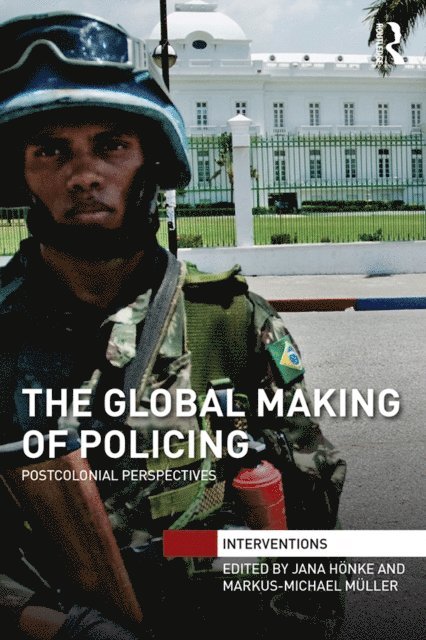
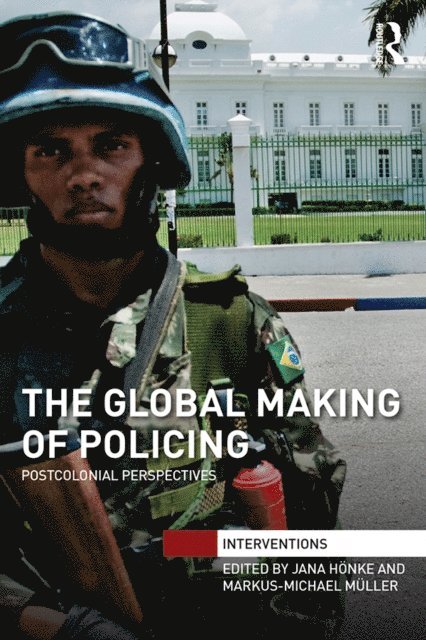
This edited volume analyses the global making of security institutions and practices in our postcolonial world. The volume will offer readers the opportunity to gain a deeper understanding of the global making of how security is thought of and practiced, from US urban policing, diaspora politics and transnational security professionals to policing encounters in Afghanistan, Palestine, Colombia or Haiti.
It critically examines and decentres conventional perspectives on security governance and policing. In doing so, the book offers a fresh analytical approach, moving beyond dominant, one-sided perspectives on the transnational character of security governance, which suggest a diffusion of models and practices from a ‘Western’ centre to the rest of the globe. Such perspectives omit much of the experimenting and learning going on in the (post)colony as well as the active agency and participation of seemingly subaltern actors in producing and co-constituting what is conventionally thought of as ‘Western’ policing practice, knowledge and institutions.
This is the first book that studies the truly global making of security institutions and practices from a postcolonial perspective, by bringing together highly innovative, in-depth empirical cases studies from across the globe. It will be of particular interest to students and scholars interested in International Relations and Global Studies, (critical) Security Studies, Criminology and Postcolonial Studies.
796 kr
Läs direkt efter köp
This edited volume analyses the global making of security institutions and practices in our postcolonial world. The volume will offer readers the opportunity to gain a deeper understanding of the global making of how security is thought of and practiced, from US urban policing, diaspora politics and transnational security professionals to policing encounters in Afghanistan, Palestine, Colombia or Haiti.
It critically examines and decentres conventional perspectives on security governance and policing. In doing so, the book offers a fresh analytical approach, moving beyond dominant, one-sided perspectives on the transnational character of security governance, which suggest a diffusion of models and practices from a ‘Western’ centre to the rest of the globe. Such perspectives omit much of the experimenting and learning going on in the (post)colony as well as the active agency and participation of seemingly subaltern actors in producing and co-constituting what is conventionally thought of as ‘Western’ policing practice, knowledge and institutions.
This is the first book that studies the truly global making of security institutions and practices from a postcolonial perspective, by bringing together highly innovative, in-depth empirical cases studies from across the globe. It will be of particular interest to students and scholars interested in International Relations and Global Studies, (critical) Security Studies, Criminology and Postcolonial Studies.