Jane Ziegelman – författare
Visar alla böcker från författaren . Handla med fri frakt och snabb leverans.
6 produkter
6 produkter
Häftad, Engelska, 2011
250 kr
Skickas inom 3-6 vardagar
90 kr
Läs direkt efter köp
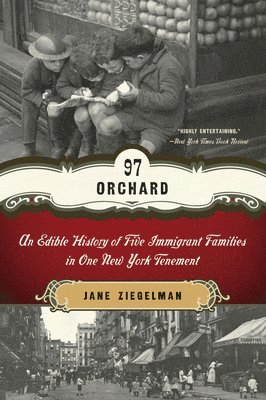
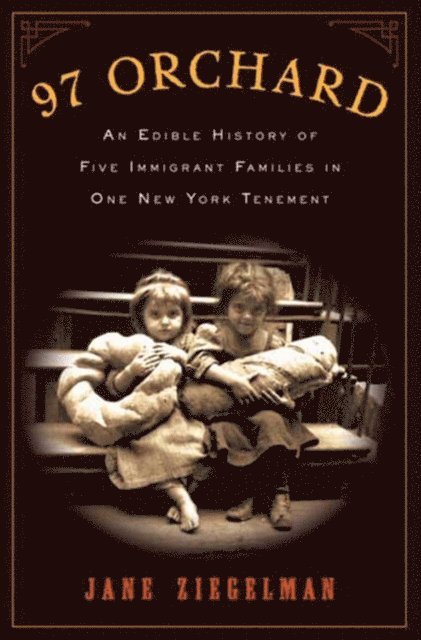
A "highly entertaining" culinary and social history of five immigrant families living in a turn-of-the-twentieth-century New York City tenement house (New York Times)."A unique and aromatic narrative of New York''s immigrant culture: with bread in the oven, steam rising from pots, and the family gathering round." —Russell Shorto, author of The Island at the Center of the WorldIn ninety-seven Orchard, Jane Ziegelman explores the culinary life that was the heart and soul of New York''s Lower East Side around the turn of the twentieth century—a city within a city, where Germans, Irish, Italians, and Eastern European Jews attempted to forge a new life. Through the experiences of five families, all of them residents of ninety-seven Orchard Street, Ziegelman takes readers on a vivid and unforgettable tour, from impossibly cramped tenement apartments, down dimly lit stairwells, beyond the front stoops where housewives congregated, and out into the hubbub of the dirty, teeming streets. Ziegelman shows how immigrant cooks brought their ingenuity to the daily task of feeding their families, preserving traditions from home but always ready to improvise. ninety-seven Orchard lays bare the roots of our collective culinary heritage."A celebration of food, language, and of the mutual aid and comfort that these brave pioneers shared with their tenement neighbors." —Boston Globe"A tasty, satisfying stew of history, sociology, cultural anthropology, and spicy prose." —Kirkus Reviews (starred review)
Häftad, Engelska, 2017
200 kr
Skickas inom 5-8 vardagar
E-bok
Engelska, 2016113 kr
Läs direkt efter köp
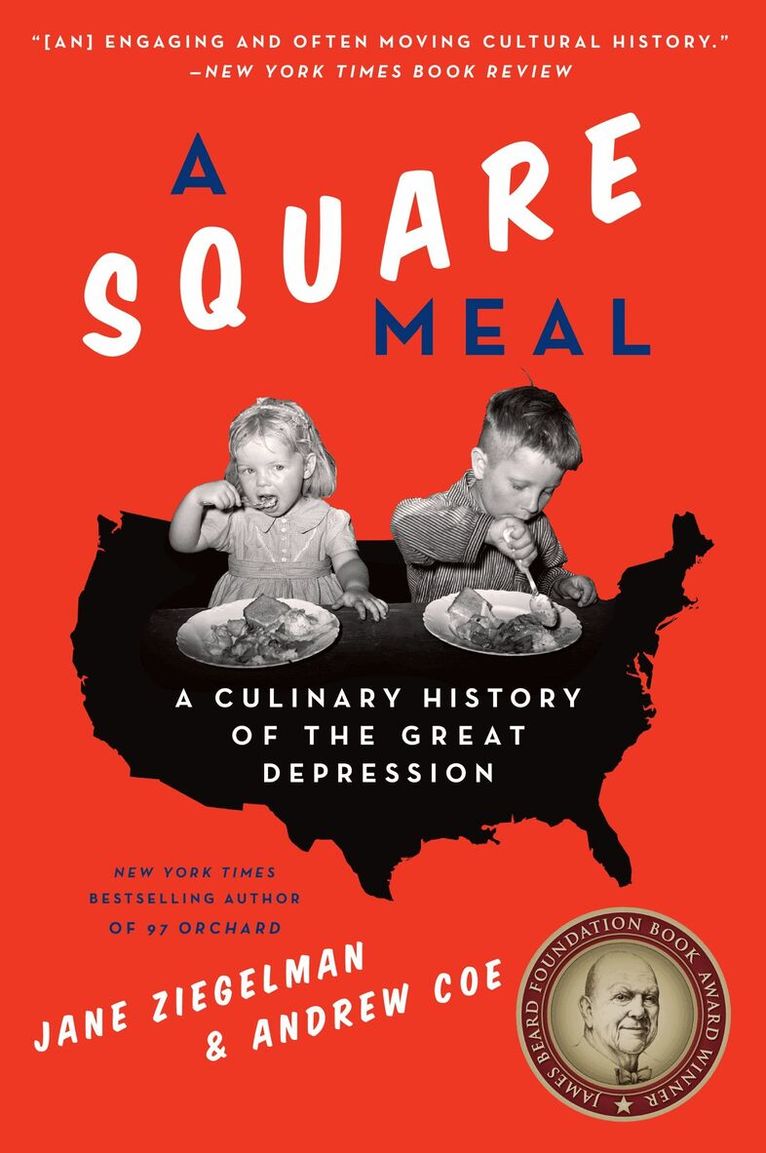
A James Beard Foundation Book Award–winning study of how the Great Depression changed the way the United States eats."With a dinner plate as their lens, the authors explore one of America''s darkest hours." —Wall Street JournalThe idea of America as a place of abundance is enshrined in our culture, from Jefferson''s agrarian democracy to the immensity of our supermarkets. The Great Depression, which left a quarter of all Americans out of work and undernourished, tested our belief in this land''s unlimited bounty, and in the process changed the way America eats.In 1933, after four years of deprivation and national debate, President Roosevelt reversed long-standing biases toward government-sponsored "food charity" and assumed responsibility for feeding the hungry. Championed by Eleanor Roosevelt, "home economists," who had long fought to bring science into the kitchen, rose to national stature. Through the Bureau of Home Economics, these women led a sweeping campaign to impose their vision of a sturdy, utilitarian cuisine and instill nutritional recommendations, the forerunners of today''s Dietary Guidelines for Americans. At the same time, expanding conglomerates introduced packaged and processed foods, which led to a new American cuisine based on speed and convenience. This movement toward a homogenized national diet sparked a revival of American regional cooking that continues to this day.A Square Meal examines how economic contraction and environmental disaster shaped the way Americans ate during the Great Depression, and shares the lessons and insights we may learn from those experiences today."An absorbing account of how the Depression changed eating habits that is by turns amusing and sobering." —Smithsonian"A highly readable, illuminating look at the many ramifications of feeding the hungry in hard times." —Kirkus Reviews
Inbunden, Engelska, 2026
271 kr
Skickas
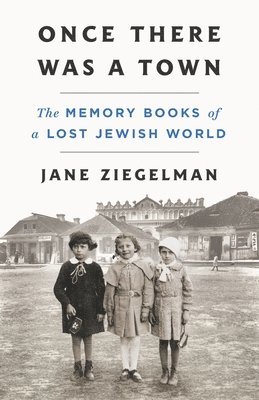
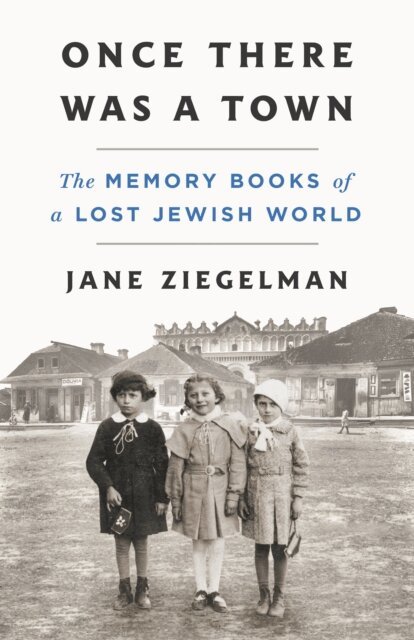
A powerful exploration of the books created by Jewish Holocaust survivors to honour their lost world.
E-bok
Engelska, 2026259 kr
Läs direkt efter köp
A powerful exploration of the books created by Jewish Holocaust survivors to honor their lost world"e;An animated tapestry."e; -Wall Street JournalBy the close of World War II, six million Jews had been erased from the face of the earth. Those who eluded death had lost their homes, families, and entire way of life. Their response was quintessentially Jewish. From a people with a long-history of self-narration, survivors gathered in groups and wrote books, yizkor books, remembering all that had been destroyed. Jane Ziegelman's Once There Was a Town takes readers on a journey through this largely uncharted body of writing and the vanished world it depicts. Once There Was a Town resounds with the voices of rich and poor, shopkeepers and tradespeople, scholars and peddlers, Zionists and Communists, men and women telling stories of the towns that were their homes. Stops are made in the bustling market squares where Jewish merchants catered to local farmers; study houses where men recited Torah; kitchens where homemakers baked 20-pound loaves of bread; cemeteries where mourners conversed with departed loved ones and wooded groves where young couples met for the occasional moonlit tryst. Of the many towns on Ziegelman's itinerary, she always circles back to Luboml, her family's ancestral shtetl and the point of departure for her own journey of discovery.In conversation with classics by IB Singer and Roman Vishniac, Once There Was a Town is a landmark of rediscovery, and a love song to a vanished world.