Janet Salmons – författare
2 097 kr
Skickas inom 10-15 vardagar
330 kr
Skickas inom 10-15 vardagar
379 kr
Läs direkt efter köp
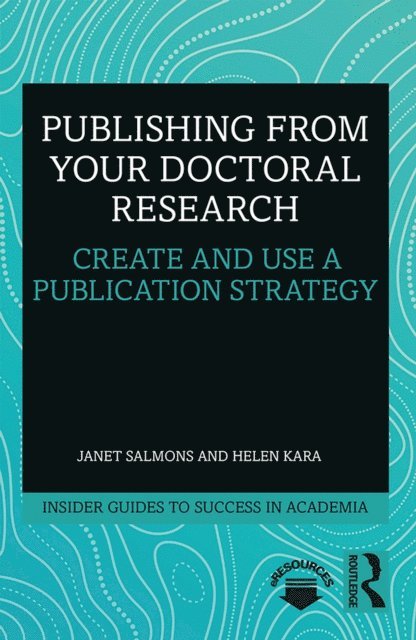
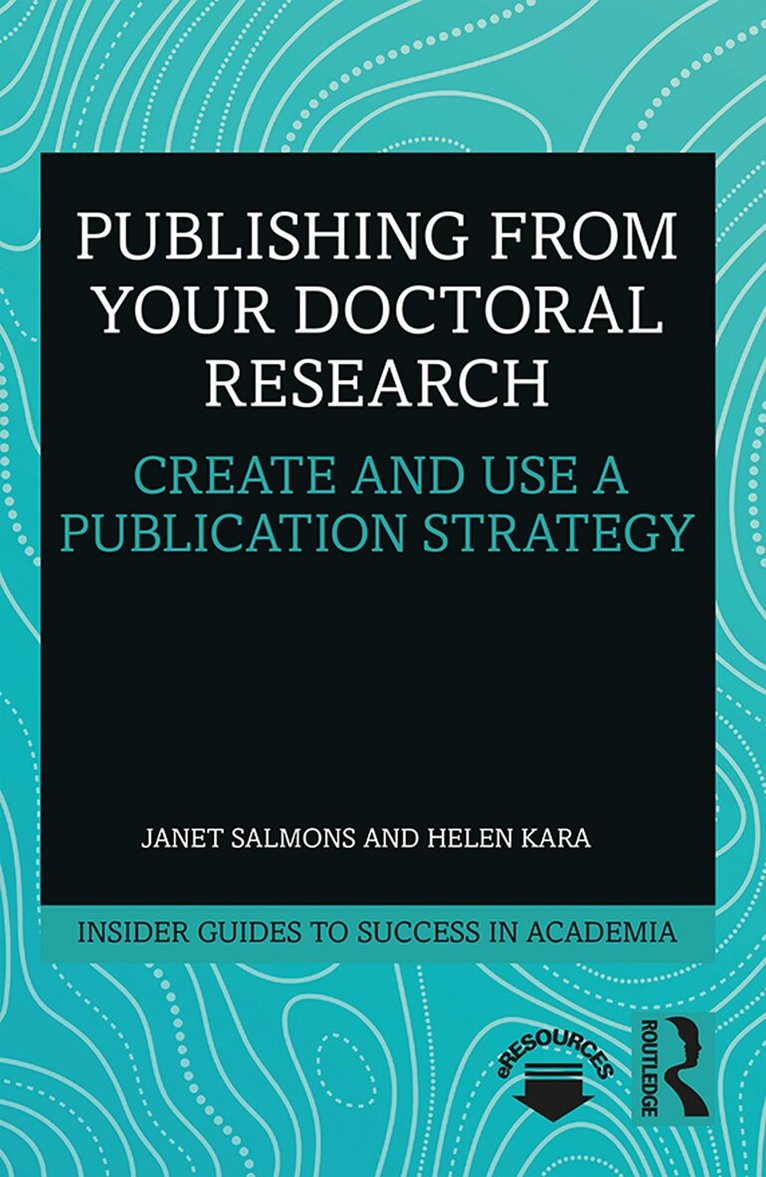
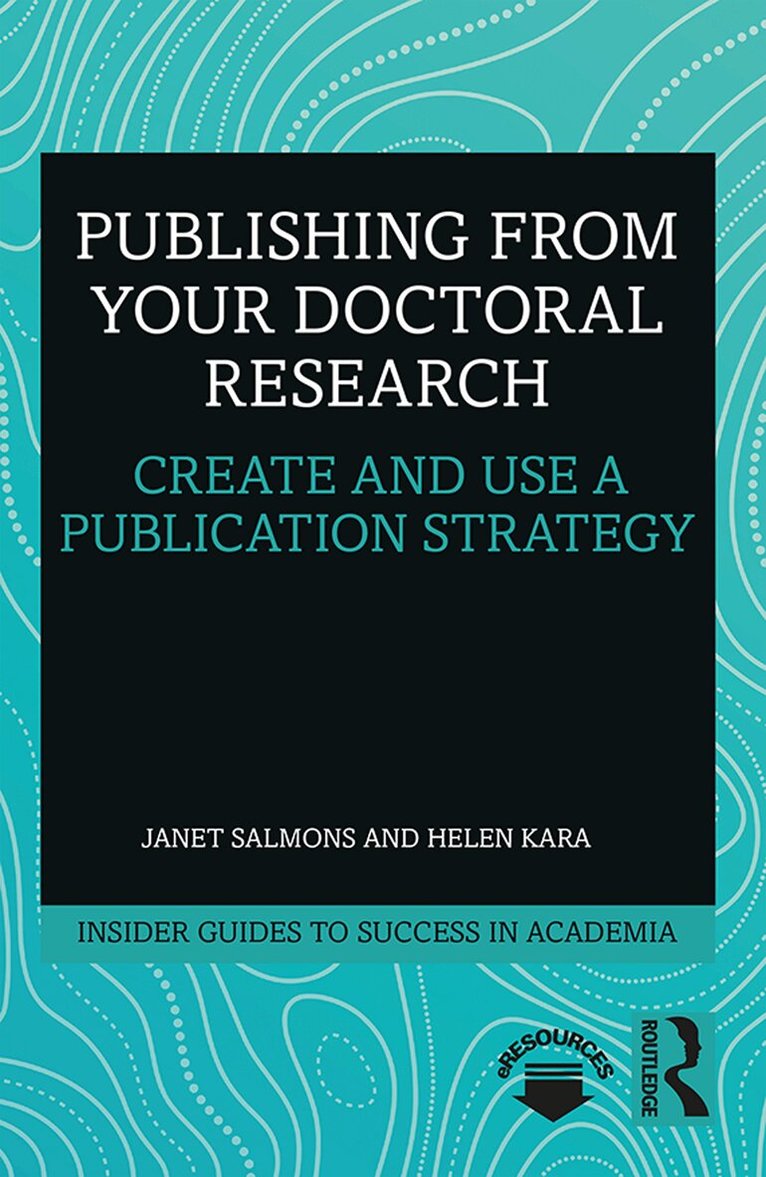
Today’s researchers have many opportunities for disseminating their work, including traditional and digital publications, written articles, podcasts, and other media such as zines and graphic books. But how do they decide which output is right for them, and where to start? Publishing from your Doctoral Research provides methods and tools to help assess, identify, and adapt academic work for publication to support career aspirations.
Discussing what publication can achieve in career terms, this book:
Explains how to audit doctoral research, and any associated materials, to assess which elements are best suited for publication
Provides advice on how to determine what kind of publication is best suited to different types of research
Discusses journal articles, books, self-publishing, online and social media options, and alternative methods of publishing
Considers each type of publication in light of career aspirations
Each chapter includes practical examples, tailored to researchers interested in working in academia, industry or business, a clinical or practical career, or self-employment. Providing key strategies and insights to secure knowledge and success, Publishing from your Doctoral Research is the ideal guide for anyone looking to develop their career through publication within or outside academia.
The ‘Insider Guides to Success in Academia’ offers support and practical advice to doctoral students and early-career researchers. Covering the topics that really matter, but which often get overlooked, this indispensable series provides practical and realistic guidance to address many of the needs and challenges of trying to operate, and remain, in academia.
These neat pocket guides fill specific and significant gaps in current literature. Each book offers insider perspectives on the often implicit rules of the game – the things you need to know but usually aren’t told by institutional postgraduate support, researcher development units, or supervisors – and will address a practical topic that is key to career progression. They are essential reading for doctoral students, early-career researchers, supervisors, mentors, or anyone looking to launch or maintain their career in academia.
379 kr
Läs direkt efter köp
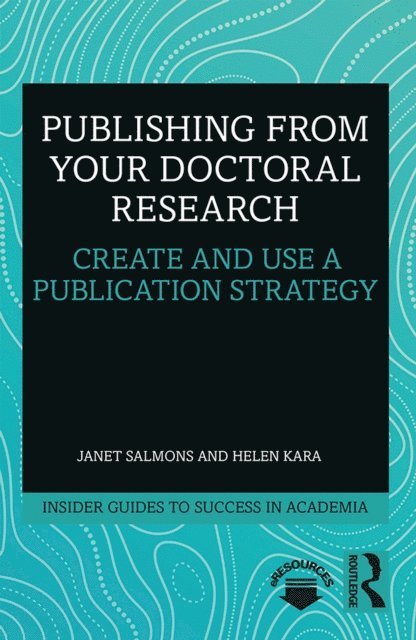
Today’s researchers have many opportunities for disseminating their work, including traditional and digital publications, written articles, podcasts, and other media such as zines and graphic books. But how do they decide which output is right for them, and where to start? Publishing from your Doctoral Research provides methods and tools to help assess, identify, and adapt academic work for publication to support career aspirations.
Discussing what publication can achieve in career terms, this book:
Explains how to audit doctoral research, and any associated materials, to assess which elements are best suited for publication
Provides advice on how to determine what kind of publication is best suited to different types of research
Discusses journal articles, books, self-publishing, online and social media options, and alternative methods of publishing
Considers each type of publication in light of career aspirations
Each chapter includes practical examples, tailored to researchers interested in working in academia, industry or business, a clinical or practical career, or self-employment. Providing key strategies and insights to secure knowledge and success, Publishing from your Doctoral Research is the ideal guide for anyone looking to develop their career through publication within or outside academia.
The ‘Insider Guides to Success in Academia’ offers support and practical advice to doctoral students and early-career researchers. Covering the topics that really matter, but which often get overlooked, this indispensable series provides practical and realistic guidance to address many of the needs and challenges of trying to operate, and remain, in academia.
These neat pocket guides fill specific and significant gaps in current literature. Each book offers insider perspectives on the often implicit rules of the game – the things you need to know but usually aren’t told by institutional postgraduate support, researcher development units, or supervisors – and will address a practical topic that is key to career progression. They are essential reading for doctoral students, early-career researchers, supervisors, mentors, or anyone looking to launch or maintain their career in academia.
379 kr
Läs direkt efter köp
Reframing and Rethinking Collaboration in Higher Education and Beyond delves deep into a Taxonomy of Collaboration underpinned by mindful choices – being present, aware, non-judgemental, curious and open – while also considering your and others’ strengths.
In looking at how higher degree research students and early career researchers can approach collaboration, this book unpacks what collaboration is and points to the specific knowledge, skills, and abilities associated with achieving collaborative advantage. Covering a range of issues in a variety of contexts, this book:
Helps you understand the meaning and value of working collaboratively.
Prepares you for success in collaborative academic and postgraduate career activities.
Invites you to use models, including the Taxonomy of Collaboration, to plan your collaborative projects.
Explains options for different situations through realistic examples of commonly experienced collaborative issues or problems.
Encourages you to think about collaboration from a strengths-based approach.
Offers practical strategies for you can use to plan, organise and participate in collaborative activities, including ways to deal with problems and resolve conflicts.
Full of practical tips, case studies, real life situations and lived experiences, this book offers strategies that can be used in online or hybrid collaborations and is ideal reading for anyone interested in finding out how to make collaborative practice work for them.
The ''Insider Guides to Success in Academia'' offers support and practical advice to doctoral students and early-career researchers. Covering the topics that really matter, but which often get overlooked, this indispensable series provides practical and realistic guidance to address many of the needs and challenges of trying to operate, and remain, in academia.
These neat pocket guides fill specific and significant gaps in current literature. Each book offers insider perspectives on the often implicit rules of the game - the things you need to know but usually aren''t told by institutional postgraduate support, researcher development units, or supervisors - and will address a practical topic that is key to career progression. They are essential reading for doctoral students, early-career researchers, supervisors, mentors, or anyone looking to launch or maintain their career in academia.
379 kr
Läs direkt efter köp
Reframing and Rethinking Collaboration in Higher Education and Beyond delves deep into a Taxonomy of Collaboration underpinned by mindful choices – being present, aware, non-judgemental, curious and open – while also considering your and others’ strengths.
In looking at how higher degree research students and early career researchers can approach collaboration, this book unpacks what collaboration is and points to the specific knowledge, skills, and abilities associated with achieving collaborative advantage. Covering a range of issues in a variety of contexts, this book:
Helps you understand the meaning and value of working collaboratively.
Prepares you for success in collaborative academic and postgraduate career activities.
Invites you to use models, including the Taxonomy of Collaboration, to plan your collaborative projects.
Explains options for different situations through realistic examples of commonly experienced collaborative issues or problems.
Encourages you to think about collaboration from a strengths-based approach.
Offers practical strategies for you can use to plan, organise and participate in collaborative activities, including ways to deal with problems and resolve conflicts.
Full of practical tips, case studies, real life situations and lived experiences, this book offers strategies that can be used in online or hybrid collaborations and is ideal reading for anyone interested in finding out how to make collaborative practice work for them.
The ''Insider Guides to Success in Academia'' offers support and practical advice to doctoral students and early-career researchers. Covering the topics that really matter, but which often get overlooked, this indispensable series provides practical and realistic guidance to address many of the needs and challenges of trying to operate, and remain, in academia.
These neat pocket guides fill specific and significant gaps in current literature. Each book offers insider perspectives on the often implicit rules of the game - the things you need to know but usually aren''t told by institutional postgraduate support, researcher development units, or supervisors - and will address a practical topic that is key to career progression. They are essential reading for doctoral students, early-career researchers, supervisors, mentors, or anyone looking to launch or maintain their career in academia.
536 kr
Läs direkt efter köp
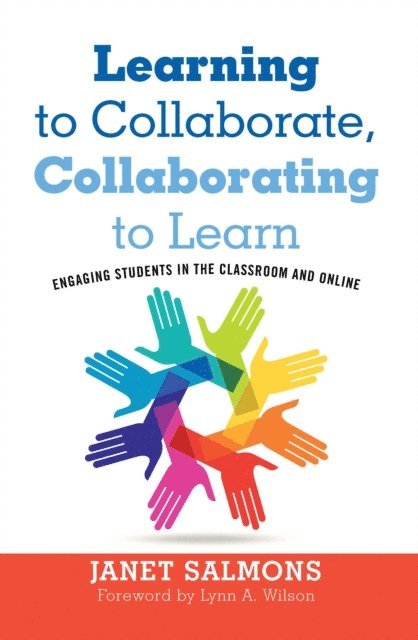
Students who know how to collaborate successfully in the classroom will be better prepared for professional success in a world where we are expected to work well with others. Students learn collaboratively, and acquire the skills needed to organize and complete collaborative work, when they participate in thoughtfully-designed learning activities.Learning to Collaborate, Collaborating to Learn uses the author’s Taxonomy of Online Collaboration to illustrate levels of progressively more complex and integrated collaborative activities.- Part I introduces the Taxonomy of Online Collaboration and offers theoretical and research foundations.- Part II focuses on ways to use Taxonomy of Online Collaboration, including, clarifying roles and developing trust, communicating effectively, organizing project tasks and systems.- Part III offers ways to design collaborative learning activities, assignments or projects, and ways to fairly assess participants’ performance.Learning to Collaborate, Collaborating to Learn is a professional guide intended for faculty, curriculum planners, or instructional designers who want to design, teach, facilitate, and assess collaborative learning. The book covers the use of information and communication technology tools by collaborative partners who may or may not be co-located. As such, the book will be appropriate for all-online, blended learning, or conventional classrooms that infuse technology with “flipped” instructional techniques.
536 kr
Läs direkt efter köp
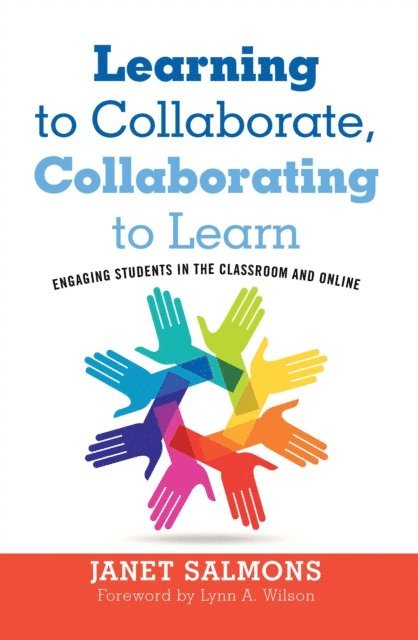
Students who know how to collaborate successfully in the classroom will be better prepared for professional success in a world where we are expected to work well with others. Students learn collaboratively, and acquire the skills needed to organize and complete collaborative work, when they participate in thoughtfully-designed learning activities.Learning to Collaborate, Collaborating to Learn uses the author’s Taxonomy of Online Collaboration to illustrate levels of progressively more complex and integrated collaborative activities.- Part I introduces the Taxonomy of Online Collaboration and offers theoretical and research foundations.- Part II focuses on ways to use Taxonomy of Online Collaboration, including, clarifying roles and developing trust, communicating effectively, organizing project tasks and systems.- Part III offers ways to design collaborative learning activities, assignments or projects, and ways to fairly assess participants’ performance.Learning to Collaborate, Collaborating to Learn is a professional guide intended for faculty, curriculum planners, or instructional designers who want to design, teach, facilitate, and assess collaborative learning. The book covers the use of information and communication technology tools by collaborative partners who may or may not be co-located. As such, the book will be appropriate for all-online, blended learning, or conventional classrooms that infuse technology with “flipped” instructional techniques.
2 097 kr
Skickas inom 10-15 vardagar
330 kr
Skickas inom 10-15 vardagar
1 232 kr
Skickas inom 3-6 vardagar
"This is foundational and state-of-the-art for online interviewing methods and technologies…. I salute all of the participants for doing such a wonderful job with it."—John M. Johnson, Arizona State University
"The editor has made meticulous efforts to place the various chapters within a useful grid of interpretation, and this will aid readers' understanding and use of the material."—S.E. Bennett, Carleton University
In an era of constrained research budgets, online interviewing opens up immense possibilities: A researcher can literally conduct a global study without ever leaving home. But more than a decade after these technologies started to become available, there are still few studies on how to utilize online interviews in research. This book provides 10 cases of research conducted using online interviews, with data collected through text-based, videoconferencing, multichannel meeting, and immersive 3-D environments. Each case is followed by two commentaries: one from another expert contributor, the second from Janet Salmons as editor.
A open-access companion website provides sample syllabi, assignment ideas, links to other work by the book's contributors, and guidelines for utilizing the book's E-Interview Research Framework.
Cases in Online Interview Research is an ideal companion to Janet Salmons' Online Interviews in Real Time, also from SAGE.
144 kr
Skickas inom 5-8 vardagar
One of the most crucial foundational steps in any research project surrounds understanding and choosing an appropriate theory to frame the research question. Theoretical frameworks don’t just impact design, they impact how the entire study is interpreted, contextualized, and discussed. There are lots of resources about epistemologies and ontologies, but most focus on the philosophical and historical dimensions that can quickly overwhelm students. They need something quick that helps them understand the practical connection between theory and the purpose/nature of the study and, more importantly, decide which theory is best suited to their particular study. This Little Quick Fix covers questions like: What is theory? How does theory relate to research design? What is a theoretical framework? What is a theoretical contribution? How do I choose which theory (or theories) fits my research? What practical steps should I take to integrate theory into my research?
Little Quick Fix titles provide quick but authoritative answers to the problems, hurdles, and assessment points students face inthe research course, project proposal, or design—whatever their methods learning is.
Lively, ultra-modern design; full-colour, each page a tailored design.An hour's read. Easy to dip in and out of with clear navigation enables the reader to find what she needs—quick.Direct written style gets to the point with clear language. Nothing needs to be read twice. No fluff.Learning is reinforced through a 2-minute overview summary; 3-second summaries with super-quick Q&ADIY tasks create a work plan to accomplish a task, do a self-check quiz, solve a problem, get students to what they need to show their supervisor.Checkpoints in each section make sure students are nailing it as they go and support self-directed learning.How do I know I’m done? Each Little Quick Fix wraps up with a final checklist that allows the reader to self-assess they’ve got what they need to progress, submit, or ace the test or task.164 kr
Skickas
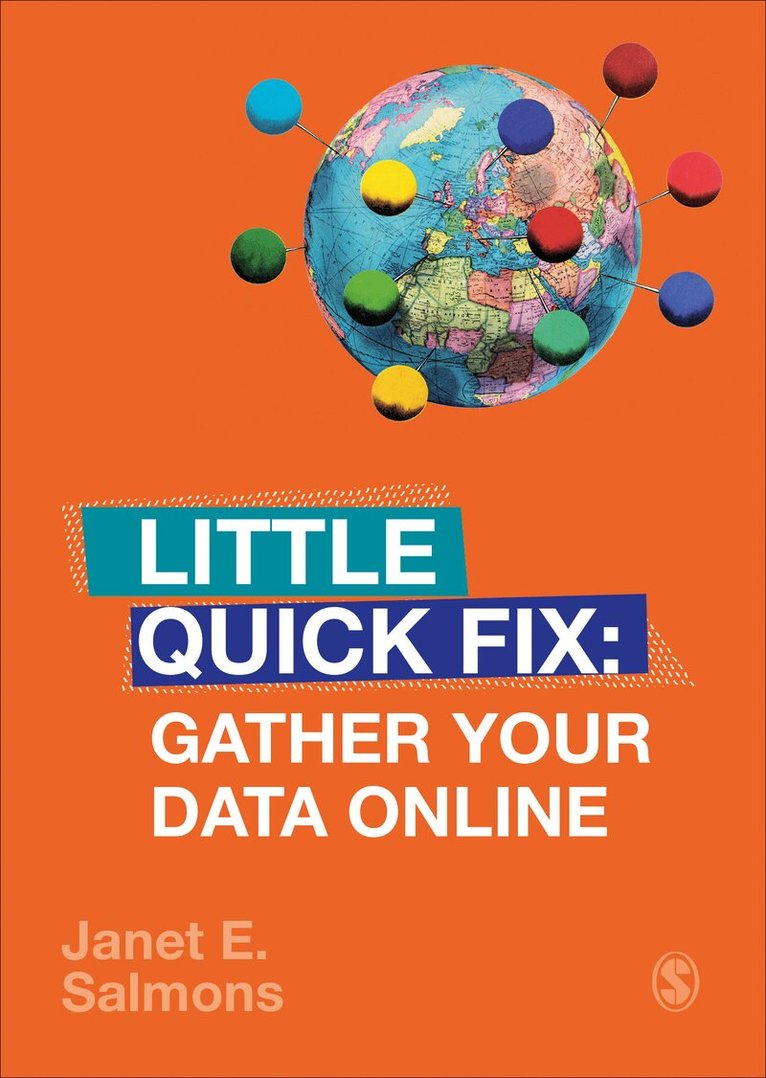
Between the comfort of using a medium they use daily and the perceived easiness of access and use, students are increasingly quick to choose online methods for their research projects. However getting data online isn’t as easy as it seems. No matter how data is collected (through existing materials, through elicited responses, or through work with participants) or what type of online data is used (e.g. blogs, websites, interviews, etc.), there are a lot of unique and complex considerations that must be factored in to every step of the research process. This Little Quick Fix boils down all these potentially thorny issues into a speedy guide so students thinking about working with online data can be prepared for (and avoid) any unexpected circumstances like access issues or ethical dilemmas. It will also help students decide what, if any, online data is best suited to their particular research question so they don’t end up fighting unnecessary complications for little benefit. It covers: What types of data collection do researchers conduct online? How do I choose which type(s) fit my research? How can I find, and get permission to use, data that exists online? How can I find, and gain consent from, participants online? How can I interact with participants online to collect data? What practical steps should I take to prepare for online research?
Little Quick Fix titles provide quick but authoritative answers to the problems, hurdles, and assessment points students face inthe research course, project proposal, or design—whatever their methods learning is.
Lively, ultra-modern design; full-colour, each page a tailored design.An hour's read. Easy to dip in and out of with clear navigation enables the reader to find what she needs—quick.Direct written style gets to the point with clear language. Nothing needs to be read twice. No fluff.Learning is reinforced through a 2-minute overview summary; 3-second summaries with super-quick Q&A.DIY tasks create a work plan to accomplish a task, do a self-check quiz, solve a problem, get students to what they need to show their supervisor.Checkpoints in each section make sure students are nailing it as they go and support self-directed learning.How do I know I’m done? Each Little Quick Fix wraps up with a final checklist that allows the reader to self-assess they’ve got what they need to progress, submit, or ace the test or task.162 kr
Skickas
Between the comfort of using a medium they use daily and the perceived easiness of access and use, students are increasingly quick to choose online methods for their research projects. However getting data online isn’t as easy as it seems. No matter how data is collected (through existing materials, through elicited responses, or through work with participants) or what type of online data is used (e.g. blogs, websites, interviews, etc.), there are a lot of unique and complex considerations that must be factored in to every step of the research process. This Little Quick Fix boils down all these potentially thorny issues into a speedy guide so students thinking about working with online data can be prepared for (and avoid) any unexpected circumstances like access issues or ethical dilemmas. It will also help students decide what, if any, online data is best suited to their particular research question so they don’t end up fighting unnecessary complications for little benefit. It covers: What types of data collection do researchers conduct online? How do I choose which type(s) fit my research? How can I find, and get permission to use, data that exists online? How can I find, and gain consent from, participants online? How can I interact with participants online to collect data? What practical steps should I take to prepare for online research?
Little Quick Fix titles provide quick but authoritative answers to the problems, hurdles, and assessment points students face inthe research course, project proposal, or design—whatever their methods learning is.
Lively, ultra-modern design; full-colour, each page a tailored design.An hour's read. Easy to dip in and out of with clear navigation enables the reader to find what she needs—quick.Direct written style gets to the point with clear language. Nothing needs to be read twice. No fluff.Learning is reinforced through a 2-minute overview summary; 3-second summaries with super-quick Q&A.DIY tasks create a work plan to accomplish a task, do a self-check quiz, solve a problem, get students to what they need to show their supervisor.Checkpoints in each section make sure students are nailing it as they go and support self-directed learning.How do I know I’m done? Each Little Quick Fix wraps up with a final checklist that allows the reader to self-assess they’ve got what they need to progress, submit, or ace the test or task.162 kr
Skickas
One of the most crucial foundational steps in any research project surrounds understanding and choosing an appropriate theory to frame the research question. Theoretical frameworks don’t just impact design, they impact how the entire study is interpreted, contextualized, and discussed. There are lots of resources about epistemologies and ontologies, but most focus on the philosophical and historical dimensions that can quickly overwhelm students. They need something quick that helps them understand the practical connection between theory and the purpose/nature of the study and, more importantly, decide which theory is best suited to their particular study. This Little Quick Fix covers questions like: What is theory? How does theory relate to research design? What is a theoretical framework? What is a theoretical contribution? How do I choose which theory (or theories) fits my research? What practical steps should I take to integrate theory into my research?
Little Quick Fix titles provide quick but authoritative answers to the problems, hurdles, and assessment points students face inthe research course, project proposal, or design—whatever their methods learning is.
Lively, ultra-modern design; full-colour, each page a tailored design.An hour's read. Easy to dip in and out of with clear navigation enables the reader to find what she needs—quick.Direct written style gets to the point with clear language. Nothing needs to be read twice. No fluff.Learning is reinforced through a 2-minute overview summary; 3-second summaries with super-quick Q&ADIY tasks create a work plan to accomplish a task, do a self-check quiz, solve a problem, get students to what they need to show their supervisor.Checkpoints in each section make sure students are nailing it as they go and support self-directed learning.How do I know I’m done? Each Little Quick Fix wraps up with a final checklist that allows the reader to self-assess they’ve got what they need to progress, submit, or ace the test or task.651 kr
Skickas
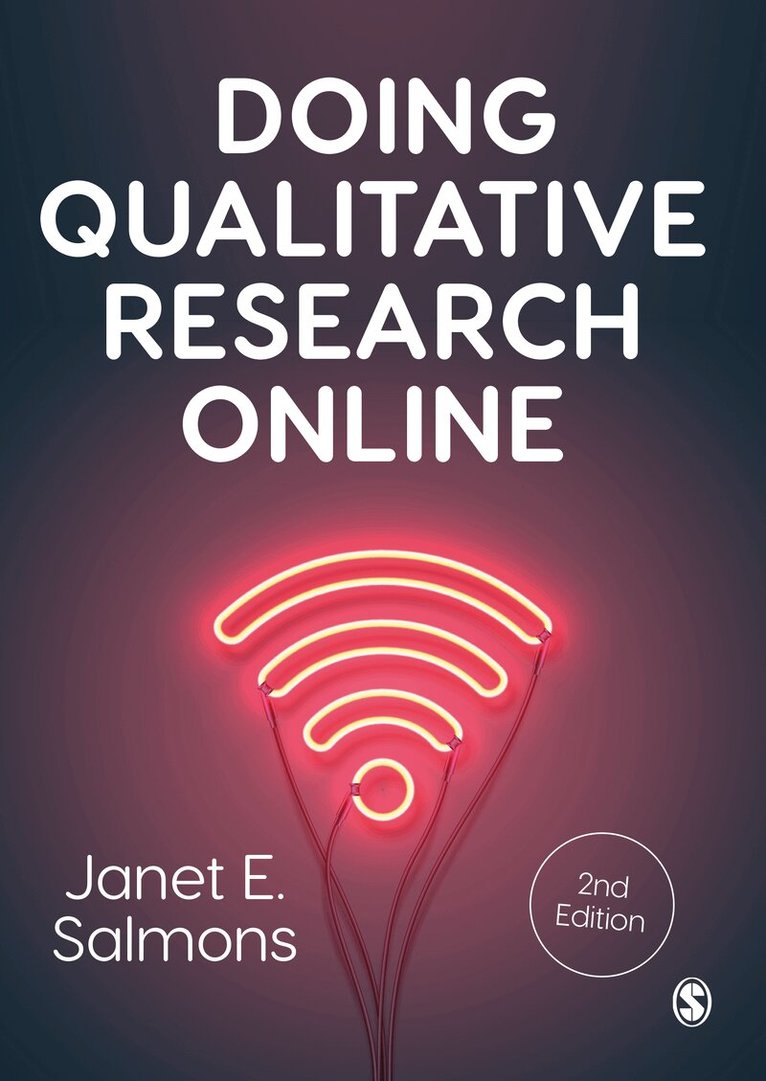
New to online research? This book will give you the foundation you need to confidently design and conduct a project using internet methods.
First providing an overview of online qualitative research, it then provides how-to guidance for studying the ways we use diverse technologies to communicate with words and images. It covers a well-established methods, from document research to online interviews, as well as introducing new turns in qualitative research, such as big data.
This second edition:
Equips you with the skills to make good decisions about methodologies, methods and technologies at every stage of your project. Dedicates three chapters to being an ethical online researcher, covering vital aspects such as respecting partners in research and researcher positionality. Includes over 30 ‘Research Cameo’ examples showing you how to put theory into practice.Written by a scholar-practitioner in e-learning and online academia with 20 years’ experience, this book will help students and researchers across the social sciences looking to do qualitative research online. Accompanied by online resources including templates, exercises and further reading, this book will develop your digital literacy and enable you to take advantage of the possibilities of Internet research.
3 520 kr
Skickas inom 3-6 vardagar
New to online research? This book will give you the foundation you need to confidently design and conduct a project using internet methods.
First providing an overview of online qualitative research, it then provides how-to guidance for studying the ways we use diverse technologies to communicate with words and images. It covers a well-established methods, from document research to online interviews, as well as introducing new turns in qualitative research, such as big data.
This second edition:
Equips you with the skills to make good decisions about methodologies, methods and technologies at every stage of your project. Dedicates three chapters to being an ethical online researcher, covering vital aspects such as respecting partners in research and researcher positionality. Includes over 30 ‘Research Cameo’ examples showing you how to put theory into practice.Written by a scholar-practitioner in e-learning and online academia with 20 years’ experience, this book will help students and researchers across the social sciences looking to do qualitative research online. Accompanied by online resources including templates, exercises and further reading, this book will develop your digital literacy and enable you to take advantage of the possibilities of Internet research.
144 kr
Skickas inom 5-8 vardagar
Helping readers understand their perspectives and use that understanding to inform their research approach, this Little Quick Fix will enable first time researchers to reflect upon and identify their view of truth and knowledge, as well as what those mean and how they are established. After reading they will be better placed to choose and critically evaluate appropriate research questions and make informed methodological decisions. With activities that get readers to identify their stance and question their own and others’ assumptions about research practice, this Little Quick Fix covers questions like:
• How can you become a researcher known for integrity?
• What stand will you take towards your inquiry?
• How will you study problems as an outsider?
• How will you study problems as an insider?
• How will my research design choices communicate the kind of researcher I am?
• How can mindful self-awareness help me stay true to my intentions?
Little Quick Fix books provide quick but authoritative answers to the problems, hurdles, and assessment points students face in the research course, project proposal, or design - whatever their methods learning is.
Lively, ultra-modern design; full-colour, each page a tailored design. An hour's read. Easy to dip in and out of with clear navigation enables readers to find what they need - quick. Direct written style gets to the point with clear language. Nothing needs to be read twice. No fluff. Learning is reinforced through a 2-minute overview summary; 3-second summaries with super-quick Q&A DIY tasks create a work plan to accomplish a task, do a self-check quiz, solve a problem, get students to what they need to show their supervisor. Checkpoints in each section make sure students are nailing it as they go and support self-directed learning. How do I know I’m done? Each Little Quick Fix wraps up with a final checklist that allows the reader to self-assess they’ve got what they need to progress, submit, or ace the test or task.162 kr
Skickas
Helping readers understand their perspectives and use that understanding to inform their research approach, this Little Quick Fix will enable first time researchers to reflect upon and identify their view of truth and knowledge, as well as what those mean and how they are established. After reading they will be better placed to choose and critically evaluate appropriate research questions and make informed methodological decisions. With activities that get readers to identify their stance and question their own and others’ assumptions about research practice, this Little Quick Fix covers questions like:
• How can you become a researcher known for integrity?
• What stand will you take towards your inquiry?
• How will you study problems as an outsider?
• How will you study problems as an insider?
• How will my research design choices communicate the kind of researcher I am?
• How can mindful self-awareness help me stay true to my intentions?
Little Quick Fix books provide quick but authoritative answers to the problems, hurdles, and assessment points students face in the research course, project proposal, or design - whatever their methods learning is.
Lively, ultra-modern design; full-colour, each page a tailored design. An hour's read. Easy to dip in and out of with clear navigation enables readers to find what they need - quick. Direct written style gets to the point with clear language. Nothing needs to be read twice. No fluff. Learning is reinforced through a 2-minute overview summary; 3-second summaries with super-quick Q&A DIY tasks create a work plan to accomplish a task, do a self-check quiz, solve a problem, get students to what they need to show their supervisor. Checkpoints in each section make sure students are nailing it as they go and support self-directed learning. How do I know I’m done? Each Little Quick Fix wraps up with a final checklist that allows the reader to self-assess they’ve got what they need to progress, submit, or ace the test or task.188 kr
Skickas
Learn how to successfully adapt to online remote learning with this super quick guide. Packed with pragmatic, applied tips on how to adjust to a digital learning experience, this handy resource will instil you with the confidence and know-how needed to succeed.
Set up an effective workplace and stay motivatedWork well with tutors and get the support you needGet the most out of different forms of learning, from lectures to field workMake the best use of materials, such as online databases and open-access content.Collaborate effectively with peers and create your best work.An invaluable guide to get you through university cool, calm and in control!
1 122 kr
Skickas inom 3-6 vardagar
Learn how to successfully adapt to online remote learning with this super quick guide. Packed with pragmatic, applied tips on how to adjust to a digital learning experience, this handy resource will instil you with the confidence and know-how needed to succeed.
Set up an effective workplace and stay motivatedWork well with tutors and get the support you needGet the most out of different forms of learning, from lectures to field workMake the best use of materials, such as online databases and open-access content.Collaborate effectively with peers and create your best work.An invaluable guide to get you through university cool, calm and in control!
175 kr
Skickas
Learn how to successfully adapt to online remote learning with this super quick guide. Packed with pragmatic, applied tips on how to adjust to a digital learning experience, this handy resource will instil you with the confidence and know-how needed to succeed.
Set up an effective workplace and stay motivatedWork well with tutors and get the support you needGet the most out of different forms of learning, from lectures to field workMake the best use of materials, such as online databases and open-access content.Collaborate effectively with peers and create your best work.An invaluable guide to get you through university cool, calm and in control!
7 035 kr
Läs direkt efter köp
2 097 kr
Skickas inom 10-15 vardagar
465 kr
Skickas inom 10-15 vardagar