Jani Marjanen - Böcker
Visar alla böcker från författaren Jani Marjanen. Handla med fri frakt och snabb leverans.
7 produkter
7 produkter
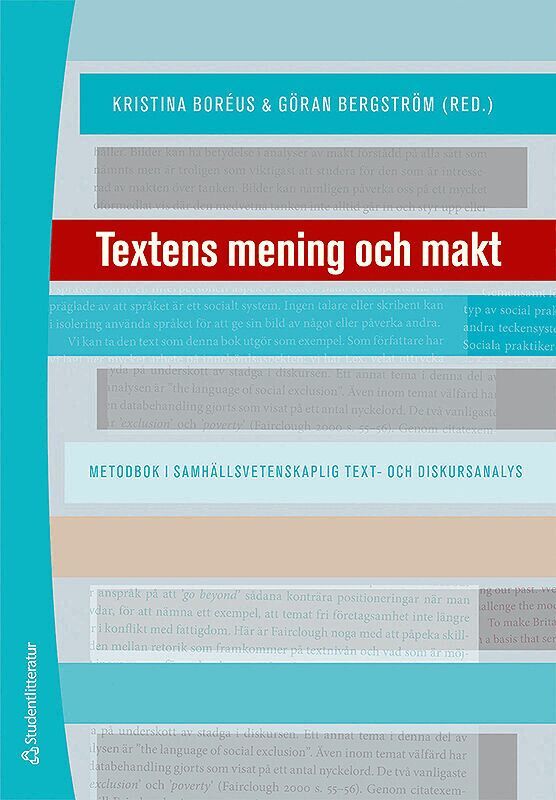
Textens mening och makt : metodbok i samhällsvetenskaplig text- och diskursanalys
Häftad, Svenska, 2018
444 kr
I moderna samhällen flödar texter och bilder. De är resultat av kommunikation mellan individer och grupper, men de är också centrala för hur vi förstår och agerar i samhället. Därför måste den som studerar samhället kunna analysera bildens och textens mening och makt.I denna fjärde omarbetade och aktualiserade upplaga av Textens mening och makt visar författarna hur man kan analysera texter och bilder med hjälp av:• innehållsanalys• argumentationsanalys• idé- och ideologianalys• begreppshistoria• narrativanalys• diskursteori, diskurspsykologi och WPR-ansatsen• kritisk diskursanalys (CDA)• visuell textanalys.Varje inriktning ges en teoretisk bakgrund, men boken är framför allt inriktad på hur man gör. Konkreta exempel ur aktuell forskning, liksom övningsuppgifter med utarbetade lösningsförslag, åtföljer varje inriktning. Till Textens mening och makt hör en digital del, med texter till övningsuppgifterna, åtkomlig med hjälp av koden på insidan av bokens omslag. I denna upplaga lyfts särskilt digital textanalys fram i flera av kapitlen. Boken vänder sig till metodintresserade samhällsvetare och humanister, framför allt studenter och forskarstuderande vid universitet och högskolor.
395 kr
Skickas
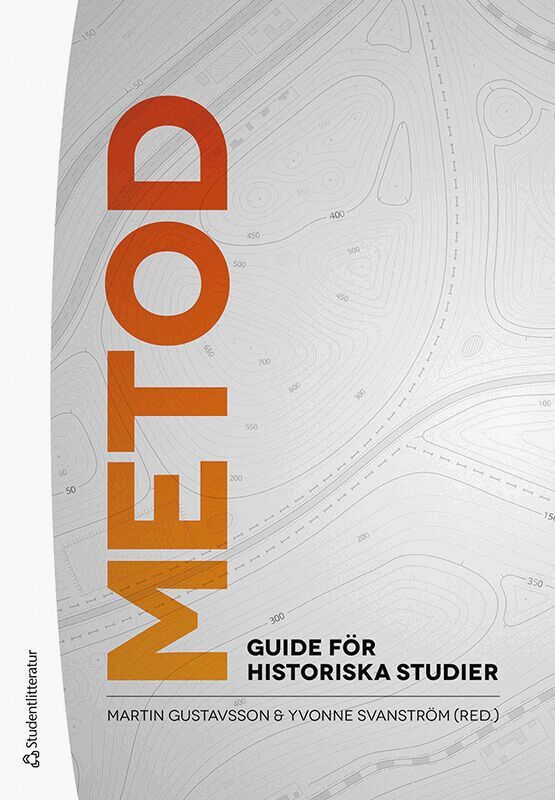
Metodkunskaper är nödvändiga för att både skriva, läsa och förstå vetenskaplig text. För att kunna få fram och ta del av information i historiska källor krävs både kvalitativa och kvantitativa metoder av olika slag. Den här grundboken har därför ett brett anslag och presenterar ett flertal praktiska tillvägagångssätt inom historiska studier.Boken har tre delar. I den första behandlas de inledande faserna av en historisk studie, med kapitel om undersökningsdesign och källkritik. Den andra delen har en kvalitativ inriktning och samlar kapitel om textanalys, begreppshistoria, diskursanalys, bild som källa och muntlig historia. I den tredje delen är fokus kvantitativt och här tar författarna upp beskrivande statistik, korrelations- och regressionsanalys, kollektivbiografi och korrespondensanalys samt rumslig metod.Metod - guide för historiska studier är avsedd för studenter i humanistiska och samhällsvetenskapliga ämnen med historisk inriktning vid universitet och högskolor. I denna utökade upplaga har samtliga kapitel uppdaterats.
1 039 kr
Skickas inom 10-15 vardagar
Writing Conceptual Histories introduces conceptual history as a research perspective and as a lens through which we can study the past and present. This book provides students and researchers with an overview of, and easy access to, central concepts of conceptual history and its practical applications.With an introduction that relates conceptual history to historical semantics, rhetoric, intellectual history and discourse analysis, a glossary explaining central analytical concepts, and inspiring case studies of various types of conceptual history, the volume serves readers interested in the theory of conceptual history and those seeking concrete methods for analysis.Writing Conceptual Histories adopts an innovative case study approach showcasing novel histories of democracy, ideologies, science and technology studies, human rights, compassion, sexual identity, climate change and crisis. The case studies concretely present different ways of writing conceptual history, guiding readers on how to write conceptual history and encouraging them to experiment with a variety of methods.The volume boasts a variety of pedagogical features, including:- A glossary of key terms and concepts- A unique case study approach to theory and method- Recommended readings at the end of each chapter
331 kr
Skickas
Writing Conceptual Histories introduces conceptual history as a research perspective and as a lens through which we can study the past and present. This book provides students and researchers with an overview of, and easy access to, central concepts of conceptual history and its practical applications.With an introduction that relates conceptual history to historical semantics, rhetoric, intellectual history and discourse analysis, a glossary explaining central analytical concepts, and inspiring case studies of various types of conceptual history, the volume serves readers interested in the theory of conceptual history and those seeking concrete methods for analysis.Writing Conceptual Histories adopts an innovative case study approach showcasing novel histories of democracy, ideologies, science and technology studies, human rights, compassion, sexual identity, climate change and crisis. The case studies concretely present different ways of writing conceptual history, guiding readers on how to write conceptual history and encouraging them to experiment with a variety of methods.The volume boasts a variety of pedagogical features, including:- A glossary of key terms and concepts- A unique case study approach to theory and method- Recommended readings at the end of each chapter
1 107 kr
Skickas inom 3-6 vardagar
The terms ‘Nordic’ and ‘Scandinavian’ are widely used to refer to the politics, society and culture of Denmark, Finland, Iceland, Norway and Sweden. But why have people felt the need to frame things as Nordic and why has the adjective Nordic become so prominent? This book adopts a rhetorical approach, analysing the speech acts which have shaped the meanings of the term. What do the different terms Nordic and Scandinavian have in common, and how have the uses of these terms changed in different historical periods? What accounts for the apparent upsurge in uses of the rhetoric of Nordicness in the 2010s? Drawing on eight case studies of the uses of Nordic and Scandinavian from the nineteenth century to the present day, the book explores the appeal and the flexibility of the rhetoric of Nordicness, in relation to race, openness, gender equality, food, crime fiction, Nordic co-operation and the Nordic model. Arguing that ‘Nordic’ and ‘Scandinavian’ are flexible and contested concepts that have been used in different, often contradictory and inherently political ways, the book suggests that the usage of the term has evolved from a means of creating a cultural community, to forging political co-operation and further to marketing models in politics and popular culture. The rhetorical approach also shows how many of the hallmarks of Nordic political culture, such as the Nordic model, Nordic gender equality or Nordic openness are more recent conceptualisations than usually assumed. As such, the book argues for the need to turn attention away from analysing the different components of Nordicness into studying how, when, and for what purpose different features were made Nordic.
Perspektiv på lantbrukets organisering : historiografi, begreppshistoria och källor
Häftad, Svenska, 2016
227 kr
Skickas inom 7-10 vardagar
Det är lätt att följa den historiska händelsekedja som lett till nutiden. Men mycket kunde ha tagit andra riktningar, om vissa faktorer hade varit annorlunda under tidens gång. De stora organisationerna, exempelvis Lantmännen, RLF och Hushållningssällskapen har behandlat sin egen historia, men i denna antologi är det främst de många skilda tolkningarna och utvecklingslinjerna som intresserat forskarna.
299 kr
Skickas inom 5-8 vardagar
Today shared media content and virality represent significant phenomena, but they are not as unique to our current society as commonly assumed. More than a century before the internet, information circulated within a network of newspapers that borrowed texts from both nearby and distant sources. From the late eighteenth century to the early twentieth century, newspapers gradually gained greater significance as a technological medium. However, a fundamental yet often overlooked characteristic of these newspapers was their cut-and-paste nature, which facilitated the widespread dissemination of text items in time and space. Employing a computer-assisted methodology to identify chains of text reuse in over 7.5 million newspaper pages derived from 1629 distinct newspaper titles, Information Flows across the Baltic Sea introduces a comprehensive database of reused texts. It examines the types of content that traversed transnationally and those that remained local. By combining a digitally enhanced bird’s-eye view with meticulous close readings, the book widens our understanding of the cultural relations across the Baltic Sea.