Janice Fon - Böcker
Visar alla böcker från författaren Janice Fon. Handla med fri frakt och snabb leverans.
4 produkter
4 produkter
775 kr
Skickas inom 7-10 vardagar
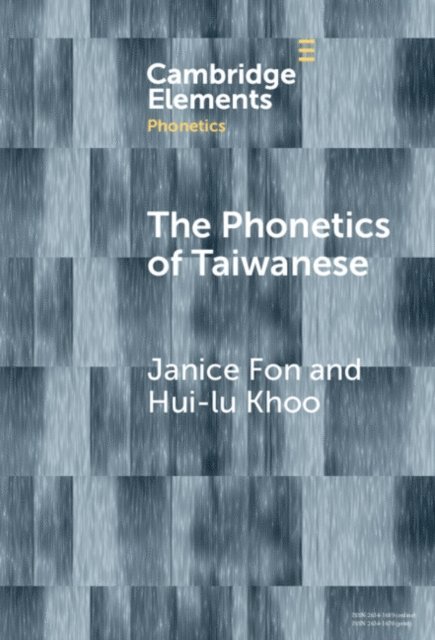
Taiwanese, formerly the lingua franca of Taiwan and currently the second largest language on the island, is genealogically related to Min from the Sino-Tibetan family. Throughout history, it has been influenced by many languages, but only Mandarin has exerted heavy influences on its phonological system. This Element provides an overview of the sound inventory in mainstream Taiwanese, and details its major dialectal differences. In addition, the Element introduces speech materials that could be used for studying the phonetics of Taiwanese, including datasets from both read and spontaneous speech. Based on the data, this Element provides an analysis of Taiwanese phonetics, covering phenomena in consonants, vowels, tones, syllables, and prosody. Some of the results are in line with previous studies, while others imply potential new directions in which the language might be analyzed and might evolve. The Element ends with suggestions for future research lines for the phonetics of the language.
241 kr
Skickas inom 7-10 vardagar
Taiwanese, formerly the lingua franca of Taiwan and currently the second largest language on the island, is genealogically related to Min from the Sino-Tibetan family. Throughout history, it has been influenced by many languages, but only Mandarin has exerted heavy influences on its phonological system. This Element provides an overview of the sound inventory in mainstream Taiwanese, and details its major dialectal differences. In addition, the Element introduces speech materials that could be used for studying the phonetics of Taiwanese, including datasets from both read and spontaneous speech. Based on the data, this Element provides an analysis of Taiwanese phonetics, covering phenomena in consonants, vowels, tones, syllables, and prosody. Some of the results are in line with previous studies, while others imply potential new directions in which the language might be analyzed and might evolve. The Element ends with suggestions for future research lines for the phonetics of the language.
1 754 kr
Skickas inom 5-8 vardagar
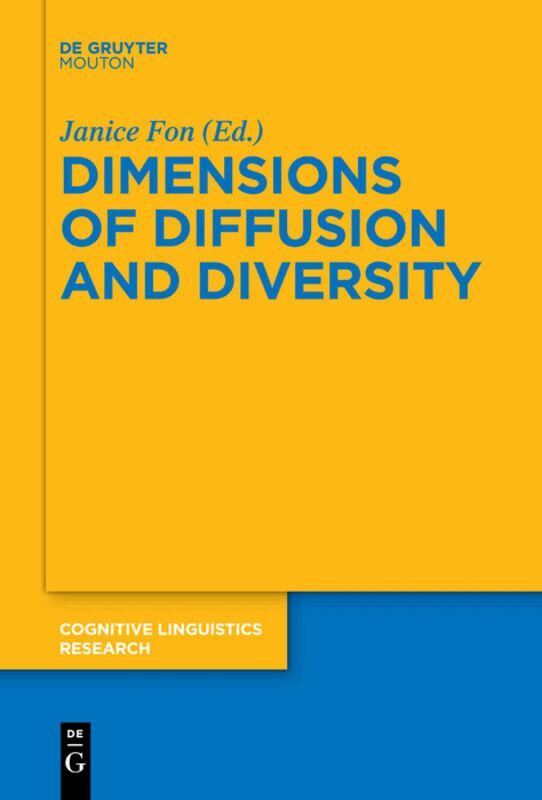
Variation is the norm in language. It is the universal trait that has never been embarrassed by counterexamples. As language is a joint product of human cognition and human society, the dimensions underlying language variation could potentially reveal the complexity of the human mind and defines us of what we are as cognitive and social beings, be it Austrians speaking German, or Nepalis speaking Dumi. This volume includes eight papers highlighting three dimensions underlying language variation. The linguistic dimension explores how language changes across the physical time span and across linguistic breadth. The cognitive dimension examines how the human mind handles experiential frequency and life experiences, and how it copes with suboptimal processing faculties. Finally, the contextual dimension focuses on how language interacts with its ambiance, either in the form of geographical surroundings, or in the form of artistic styles. The uniqueness of this volume lies not only in its wide range of dimensions investigated, but also in its broad spectrum of languages covered. This enables us to form a fuller understanding of how language evolves and interacts with human cognition.
350 kr
Skickas inom 5-8 vardagar
Variation is the norm in language. It is the universal trait that has never been embarrassed by counterexamples. As language is a joint product of human cognition and human society, the dimensions underlying language variation could potentially reveal the complexity of the human mind and defines us of what we are as cognitive and social beings, be it Austrians speaking German, or Nepalis speaking Dumi. This volume includes eight papers highlighting three dimensions underlying language variation. The linguistic dimension explores how language changes across the physical time span and across linguistic breadth. The cognitive dimension examines how the human mind handles experiential frequency and life experiences, and how it copes with suboptimal processing faculties. Finally, the contextual dimension focuses on how language interacts with its ambiance, either in the form of geographical surroundings, or in the form of artistic styles. The uniqueness of this volume lies not only in its wide range of dimensions investigated, but also in its broad spectrum of languages covered. This enables us to form a fuller understanding of how language evolves and interacts with human cognition.