Janine Cossy – författare
1 995 kr
Skickas inom 5-8 vardagar
2 297 kr
Läs direkt efter köp
All the latest tools needed to plan and perform the synthesis of complex bioactive molecules
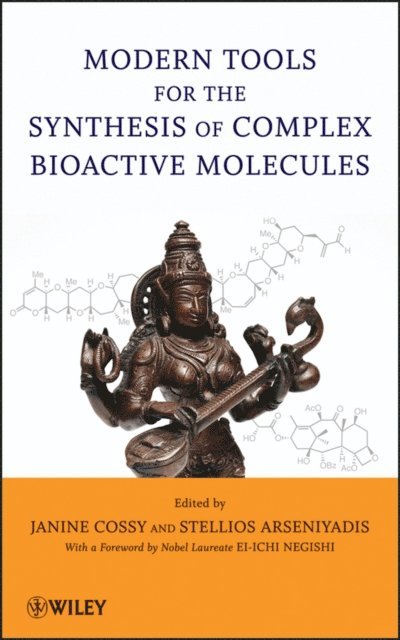
Focusing on organic, organometallic, and bio-oriented processes, this book explores the impact and use of the latest synthetic tools for the synthesis of complex biologically active compounds. Readers will discover step by step how these synthetic tools have provided new, elegant solutions to many synthetic puzzles. Moreover, they will discover innovative methods that make it possible to control the exact connectivity of atoms within a molecule in order to set precise three-dimensional arrangements.
Modern Tools for the Synthesis of Complex Bioactive Molecules features sixteen chapters, each one written by one or more leading experts in organic synthesis from around the world. It covers a broad range of topics that enable readers to take advantage of the latest methods for synthesizing complex molecules, including:
Modern catalysis, emphasizing key transformations such as C-H functionalizations, cross-couplings, gold-catalyzed reactions, metathesis-based syntheses, and asymmetric organocatalysis Eco-compatible transformations, including rearrangements and domino reactions Tools for the synthesis of carbohydrates and alkaloids New techniques, including the use of fluorous tags and engineered biosynthesisThe last two chapters explore target- and diversity-oriented organic synthesis as well as the use of DNA-based asymmetric catalysis, which are all promising tools for the successful synthesis of complex bioactive molecules.
Modern Tools for the Synthesis of Complex Bioactive Molecules is ideal for students and researchers who need to plan and perform the synthesis of complex molecules as efficiently as possible. The book''s expert advice will help these readers quickly resolve a broad range of problems that can arise in organic syntheses.
2 297 kr
Läs direkt efter köp
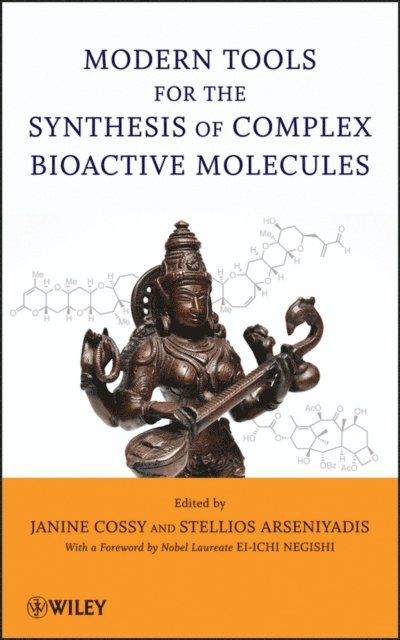
All the latest tools needed to plan and perform the synthesis of complex bioactive molecules
Focusing on organic, organometallic, and bio-oriented processes, this book explores the impact and use of the latest synthetic tools for the synthesis of complex biologically active compounds. Readers will discover step by step how these synthetic tools have provided new, elegant solutions to many synthetic puzzles. Moreover, they will discover innovative methods that make it possible to control the exact connectivity of atoms within a molecule in order to set precise three-dimensional arrangements.
Modern Tools for the Synthesis of Complex Bioactive Molecules features sixteen chapters, each one written by one or more leading experts in organic synthesis from around the world. It covers a broad range of topics that enable readers to take advantage of the latest methods for synthesizing complex molecules, including:
Modern catalysis, emphasizing key transformations such as C-H functionalizations, cross-couplings, gold-catalyzed reactions, metathesis-based syntheses, and asymmetric organocatalysis Eco-compatible transformations, including rearrangements and domino reactions Tools for the synthesis of carbohydrates and alkaloids New techniques, including the use of fluorous tags and engineered biosynthesisThe last two chapters explore target- and diversity-oriented organic synthesis as well as the use of DNA-based asymmetric catalysis, which are all promising tools for the successful synthesis of complex bioactive molecules.
Modern Tools for the Synthesis of Complex Bioactive Molecules is ideal for students and researchers who need to plan and perform the synthesis of complex molecules as efficiently as possible. The book''s expert advice will help these readers quickly resolve a broad range of problems that can arise in organic syntheses.
2 105 kr
Läs direkt efter köp
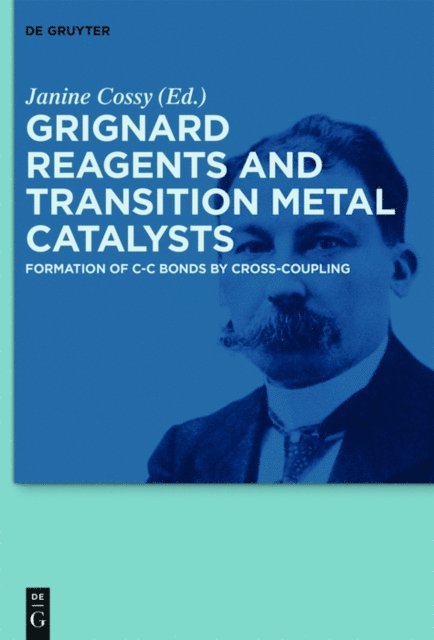
In 1912, the Chemistry Nobel Prize was awarded for the discovery of the so-called Grignard reagents. Nowadays, many transition metal variants are developed to modify reactivity and selectivity of the C–C bond formation reaction.
The Grignard reaction is one of the fundamental organometallic reactions, often used in alcohol syntheses. With transition metals like iron, cobalt and nickel or with noble metals like copper, silver and palladium, modern Grignard reagents can be designed in reactivity, selectivity and functional group tolerance. This book, written by international experts, presents an overview on timely Grignard chemistry involving transition metals.
2 105 kr
Läs direkt efter köp
In 1912, the Chemistry Nobel Prize was awarded for the discovery of the so-called Grignard reagents. Nowadays, many transition metal variants are developed to modify reactivity and selectivity of the C–C bond formation reaction.
The Grignard reaction is one of the fundamental organometallic reactions, often used in alcohol syntheses. With transition metals like iron, cobalt and nickel or with noble metals like copper, silver and palladium, modern Grignard reagents can be designed in reactivity, selectivity and functional group tolerance. This book, written by international experts, presents an overview on timely Grignard chemistry involving transition metals.
1 925 kr
Skickas inom 5-8 vardagar
2 035 kr
Läs direkt efter köp
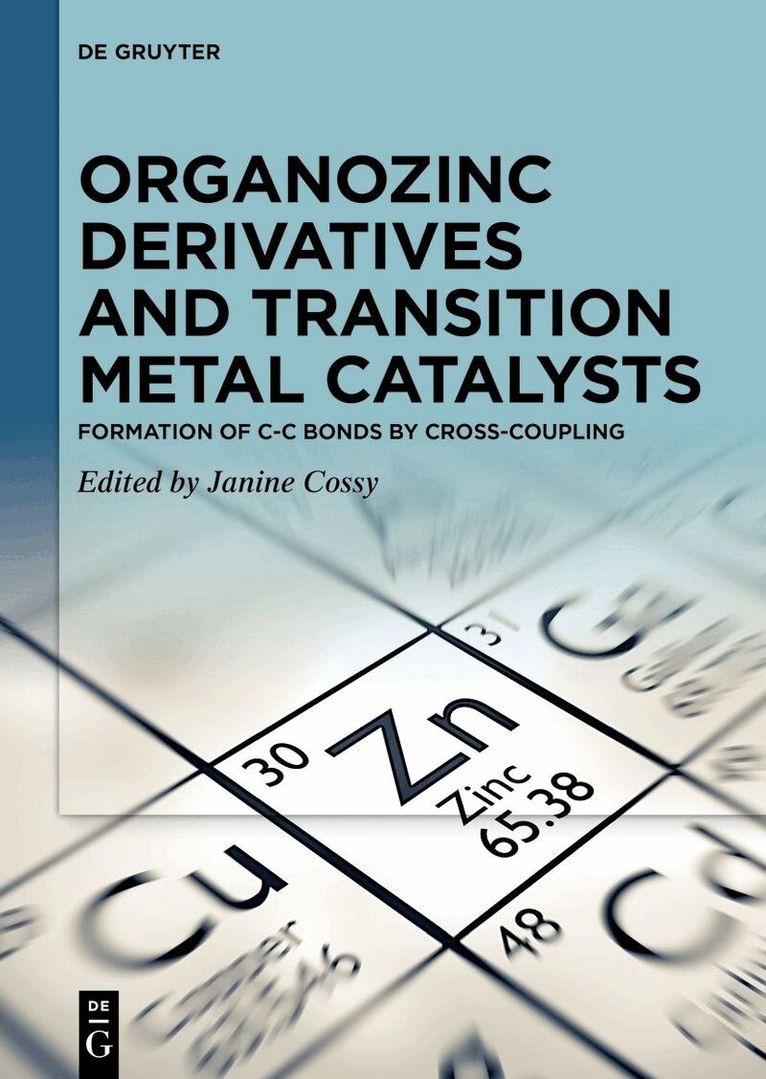
Organozinc reagents are less reactive than Grignard reagents but they are much more chemoselective. Since the Negishi cross-coupling reaction developed by Ei-ichi Negishi, who was awarded the Nobel Price in chemistry in 2010, a number of cross-coupling reactions involving organozinc derivatives and transition metal catalysts (Pd, Ni, Fe, Co, Cu, …) has been tuned up to form C-C bonds. This book on "Organozinc derivatives and transition metal catalysts" has been written by experts in the field and is a complement to the book entitled "Grignard reagents and transition metal catalysts" (a De Gruyter book, edited by J. Cossy).
Grignard reagents or organozinc reagents, that is the question? From a given substrate, what is the best organometallic reagent and the best transition metal to form a C-C bond by using a cross-coupling reaction? The solution might be found in these two books.
2 035 kr
Läs direkt efter köp
Organozinc reagents are less reactive than Grignard reagents but they are much more chemoselective. Since the Negishi cross-coupling reaction developed by Ei-ichi Negishi, who was awarded the Nobel Price in chemistry in 2010, a number of cross-coupling reactions involving organozinc derivatives and transition metal catalysts (Pd, Ni, Fe, Co, Cu, …) has been tuned up to form C-C bonds. This book on "Organozinc derivatives and transition metal catalysts" has been written by experts in the field and is a complement to the book entitled "Grignard reagents and transition metal catalysts" (a De Gruyter book, edited by J. Cossy).
Grignard reagents or organozinc reagents, that is the question? From a given substrate, what is the best organometallic reagent and the best transition metal to form a C-C bond by using a cross-coupling reaction? The solution might be found in these two books.
706 kr
Skickas inom 3-6 vardagar
33 619 kr
Läs direkt efter köp
2 290 kr
Läs direkt efter köp
2 290 kr
Läs direkt efter köp
Synthesis of Saturated Oxygenated Heterocycles II
7- to 16-Membered Rings
2 158 kr
Skickas inom 10-15 vardagar
2 925 kr
Läs direkt efter köp
Synthesis of Saturated Oxygenated Heterocycles I
5- and 6-Membered Rings
2 158 kr
Skickas inom 10-15 vardagar
2 925 kr
Läs direkt efter köp
Synthesis of Saturated Oxygenated Heterocycles II
7- to 16-Membered Rings
2 222 kr
Skickas inom 10-15 vardagar
2 948 kr
Tillfälligt slut