Jānis (John) Tālivaldis Ozoliņš – författare
Visar alla böcker från författaren Jānis (John) Tālivaldis Ozoliņš. Handla med fri frakt och snabb leverans.
4 produkter
4 produkter
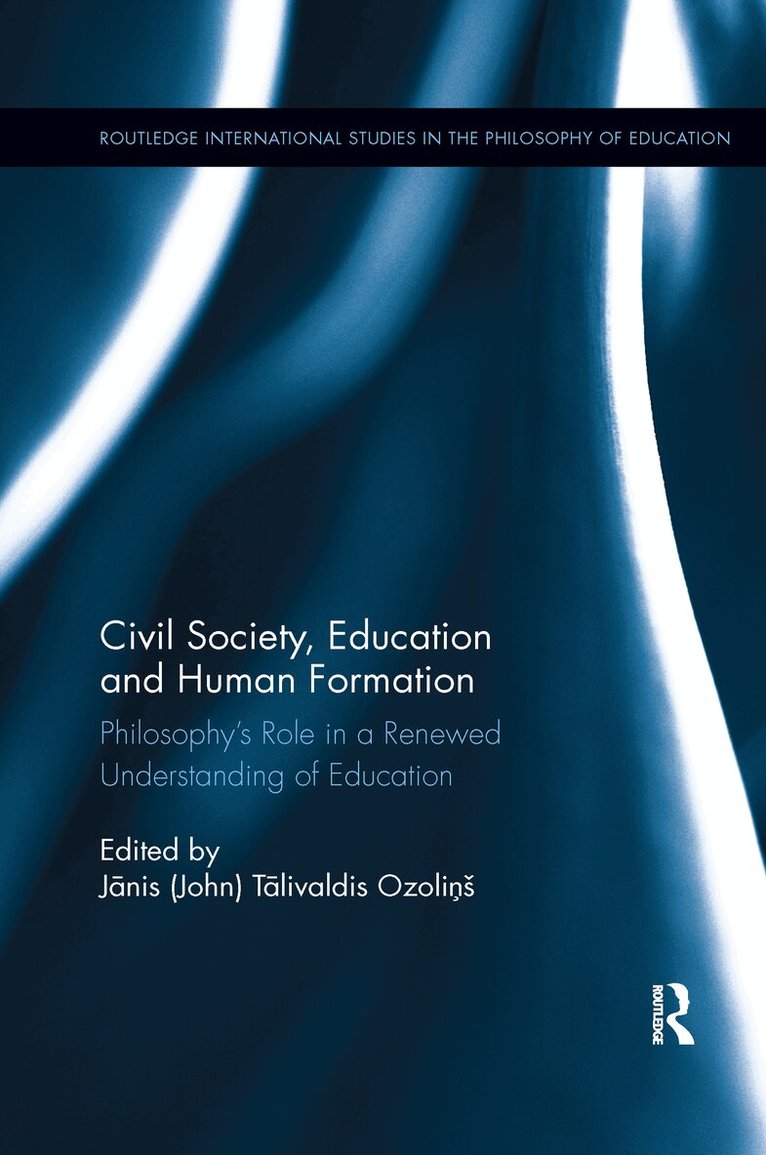
Civil Society, Education and Human Formation
Philosophy's Role in a Renewed Understanding of Education
Häftad, Engelska, 2020
561 kr
Skickas inom 10-15 vardagar
Education has been widely criticised as being too narrowly focused on skills, capacities and the transference of knowledge that can be used in the workplace. As a result of the dominance of economic rationalism and neo-liberalism, it has become commodified and marketed to potential customers. As a consequence, students have become consumers of an educational product and education has become an industry. There is deep dissatisfaction with these neo-liberal developments. What is missing is any conception of education as a key factor in the ‘human formation’ that will lead students to develop the virtues and values that they will need to not only lead successful lives, but also be responsible members of their communities — working for the common good and acting to transform them into just societies. This volume draws together a number of different perspectives on what is meant by ‘human formation’, argues that for a much richer conception of education, and addresses the lack of attention to human fulfilment. It also highlights the importance of philosophy in the articulation of novel ways of conceptualising education — providing alternatives to the dominant neo-liberal and economic rationalist models. The central question with which the book is concerned is a renewed understanding of education as the formation of persons, of civil society and the role of philosophy in fostering that renewal.In this volume there are a variety of voices from diverse traditions and cultures. Both East and West are represented and it might be expected that this would result in a divergence of opinion about the purpose of education. However, in spite of the diversity, there is some significant convergence in thinking about the ways in which education ought to serve the needs of both the individual and their communities. What is also particularly useful, and what is fresh about the essays presented here, is that there is also diversity in the philosophical approaches to the problem. This means that the convergence on the importance of ‘human formation’ as the cornerstone of education does not rely on a privileged philosophical method.
2 053 kr
Skickas inom 10-15 vardagar
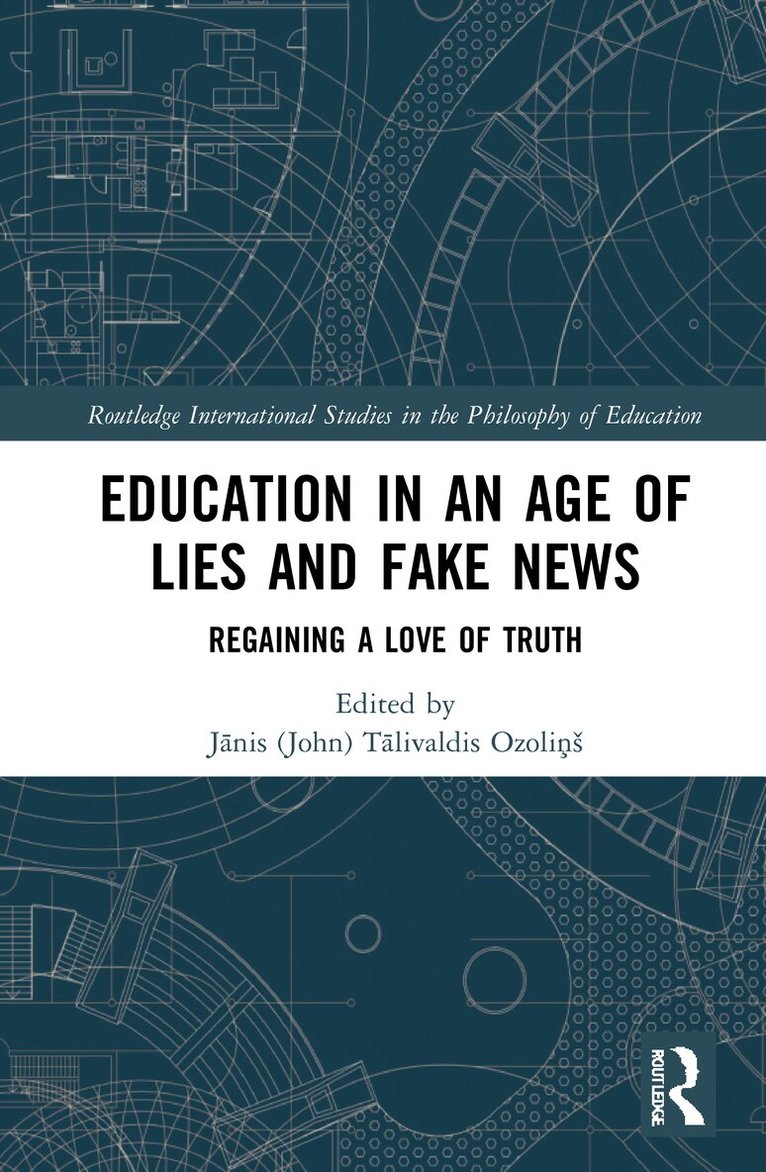
The ‘post-truth’ world in which we live has been beset by fake news, lies and a cavalier disregard for truth. If truth is neglected then an alternative is an appeal to the emotions in order to validate a particular position, which can quickly turn to the use of power to impose a particular view. The loss of truth results in the loss of freedom. This book contends that if we want to preserve our freedom then we have a serious obligation to pursue truth. One way to do this is through an adequate moral education.Education in an Age of Lies and Fake News: Regaining a Love of Truth makes an argument for the importance of truth. It explores how we can retrieve the concept of truth and how moral education can be deployed in order to re-establish a commitment to truth. It introduces Eastern perspectives on the question of truth and how we view reality, and presents a realist position on the nature of truth as a counter to scepticism, drawing on Augustine and Thomas Aquinas, amongst others. Further, the chapters are mindful of the significance of developing a pedagogy which not only enables students to be critical thinkers, but to foster a genuine concern for truth and for its pursuit. This book will be essential reading for students, educators, philosophers and researchers pursuing the question of truth in the modern age.
561 kr
Skickas inom 10-15 vardagar
The ‘post-truth’ world in which we live has been beset by fake news, lies and a cavalier disregard for truth. If truth is neglected then an alternative is an appeal to the emotions in order to validate a particular position, which can quickly turn to the use of power to impose a particular view. The loss of truth results in the loss of freedom. This book contends that if we want to preserve our freedom then we have a serious obligation to pursue truth. One way to do this is through an adequate moral education.Education in an Age of Lies and Fake News: Regaining a Love of Truth makes an argument for the importance of truth. It explores how we can retrieve the concept of truth and how moral education can be deployed in order to re-establish a commitment to truth. It introduces Eastern perspectives on the question of truth and how we view reality, and presents a realist position on the nature of truth as a counter to scepticism, drawing on Augustine and Thomas Aquinas, amongst others. Further, the chapters are mindful of the significance of developing a pedagogy which not only enables students to be critical thinkers, but to foster a genuine concern for truth and for its pursuit. This book will be essential reading for students, educators, philosophers and researchers pursuing the question of truth in the modern age.
Civil Society, Education and Human Formation
Philosophy's Role in a Renewed Understanding of Education
Inbunden, Engelska, 2017
1 855 kr
Skickas inom 10-15 vardagar
Education has been widely criticised as being too narrowly focused on skills, capacities and the transference of knowledge that can be used in the workplace. As a result of the dominance of economic rationalism and neo-liberalism, it has become commodified and marketed to potential customers. As a consequence, students have become consumers of an educational product and education has become an industry. There is deep dissatisfaction with these neo-liberal developments. What is missing is any conception of education as a key factor in the ‘human formation’ that will lead students to develop the virtues and values that they will need to not only lead successful lives, but also be responsible members of their communities — working for the common good and acting to transform them into just societies. This volume draws together a number of different perspectives on what is meant by ‘human formation’, argues that for a much richer conception of education, and addresses the lack of attention to human fulfilment. It also highlights the importance of philosophy in the articulation of novel ways of conceptualising education — providing alternatives to the dominant neo-liberal and economic rationalist models. The central question with which the book is concerned is a renewed understanding of education as the formation of persons, of civil society and the role of philosophy in fostering that renewal.In this volume there are a variety of voices from diverse traditions and cultures. Both East and West are represented and it might be expected that this would result in a divergence of opinion about the purpose of education. However, in spite of the diversity, there is some significant convergence in thinking about the ways in which education ought to serve the needs of both the individual and their communities. What is also particularly useful, and what is fresh about the essays presented here, is that there is also diversity in the philosophical approaches to the problem. This means that the convergence on the importance of ‘human formation’ as the cornerstone of education does not rely on a privileged philosophical method.