JArgen Beckmann – författare
883 kr
Läs direkt efter köp
Mental health is a rapidly increasing topic in the field of sport psychology. As the relevance of athletes’ mental health has come to prominence through emerging research, there is a high demand for evidence-based practice in order to promote athletes'' mental health and prevent mental disorders as well as maladaptive syndromes. However, there is currently no comprehensive overview available that highlights the empirical evidence for the constructs of mental health, illustrating the latest developments in research, or that highlights implications for future science and practice.
The Routledge Handbook of Mental Health in Elite Sport delivers such an understanding and overview for this field, offering students, researchers, mental health professionals, applied sport psychologists, and coaches a state-of-the-art and insightful summary of science in the newly emerged field of clinical sport psychology and mental health in athletes.
This thorough volume covers major current and emerging topics on mental health and mental illness (e.g., depression), subclinical syndromes (e.g., burnout), as well as a comprehensive overview of research on prevention (e.g., green exercise) and treatment of mental health disorders in athletes and will be a vital resource for researchers, academics, and students in the fields of sport psychology, clinical psychology, sport coaching, sport sciences, health psychology, and physical activity and related disciplines.
883 kr
Läs direkt efter köp
Mental health is a rapidly increasing topic in the field of sport psychology. As the relevance of athletes’ mental health has come to prominence through emerging research, there is a high demand for evidence-based practice in order to promote athletes'' mental health and prevent mental disorders as well as maladaptive syndromes. However, there is currently no comprehensive overview available that highlights the empirical evidence for the constructs of mental health, illustrating the latest developments in research, or that highlights implications for future science and practice.
The Routledge Handbook of Mental Health in Elite Sport delivers such an understanding and overview for this field, offering students, researchers, mental health professionals, applied sport psychologists, and coaches a state-of-the-art and insightful summary of science in the newly emerged field of clinical sport psychology and mental health in athletes.
This thorough volume covers major current and emerging topics on mental health and mental illness (e.g., depression), subclinical syndromes (e.g., burnout), as well as a comprehensive overview of research on prevention (e.g., green exercise) and treatment of mental health disorders in athletes and will be a vital resource for researchers, academics, and students in the fields of sport psychology, clinical psychology, sport coaching, sport sciences, health psychology, and physical activity and related disciplines.
849 kr
Läs direkt efter köp
This insightful book addresses recovery as a comprehensive concept for prevention of health-threats in modern societies through active lifestyles. Several areas of society are addressed, such as sports, work environments, and the military. Internationally renowned experts from different scientific disciplines present results of empirical research as well as applied intervention techniques to effectively manage stress and promote recovery in healthy lifestyles.
Recognizing the systemic nature of stress and recovery is critical to designing effective interventions and policies. By promoting a balance between stress and recovery in physiological, psychological, and social terms, individuals and societies can build resilience, promote optimal well-being, and mitigate the negative effects of chronic stress. This book focuses on key research in the area of recovery and healthy living and addresses psychological, somatic and organizational prevention strategies that foster recovery and healthy lifestyles in society. It offers an expanded understanding of recovery in the health field and applies this to different areas, such as the workplace.
Though written for the scientific community, the book will also benefit applied health scientists, instructors, and students, as well as readers interested in applying effective well-being and recovery techniques in their own lives.
727 kr
Läs direkt efter köp
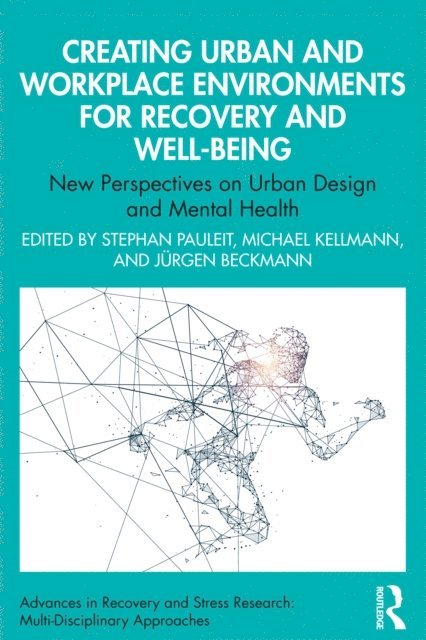
This essential book offers suggestions for how cities and spaces can be planned and designed to reduce the impact of stress, provide opportunities for recovery, and promote the resilience of individuals in urban communities.
Connecting research from different scientific disciplines, the book provides a broader perspective of creating healthy lifestyle in society. It focuses on mental health and well-being by exploring how urban and workplace environments can be created to enhance and promote recovery. Divided into three parts, the book begins by investigating the multi-dimensional challenges of planning and design for stress reduction and recovery in urban areas. Part 2 concentrates on the design of residential and working environments, including commuting between the two, while Part 3 considers how neighbourhoods and entire cities contribute to or obstruct stress reduction, recovery, and well-being. The book concludes by demonstrating how the insights from the book can be implemented in practice to create restorative and inclusive environments. Bringing together leading experts, the book offers an interdisciplinary perspective for increasing well-being in urban developments.
The book will be of interest to researchers and practitioners in related fields, including environmental psychologists, urban planners, architects and landscape architects, healthcare staff, and policymakers.
727 kr
Läs direkt efter köp
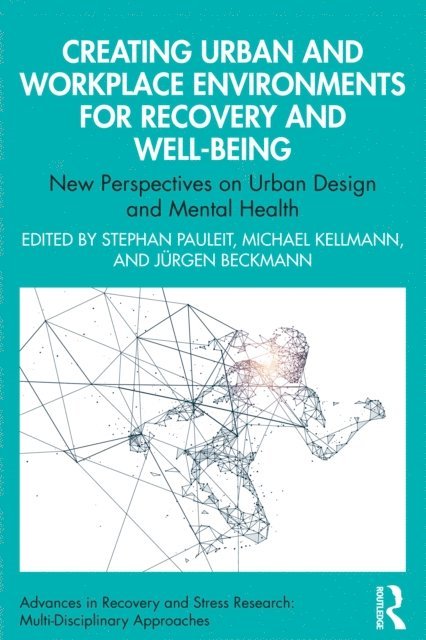
This essential book offers suggestions for how cities and spaces can be planned and designed to reduce the impact of stress, provide opportunities for recovery, and promote the resilience of individuals in urban communities.
Connecting research from different scientific disciplines, the book provides a broader perspective of creating healthy lifestyle in society. It focuses on mental health and well-being by exploring how urban and workplace environments can be created to enhance and promote recovery. Divided into three parts, the book begins by investigating the multi-dimensional challenges of planning and design for stress reduction and recovery in urban areas. Part 2 concentrates on the design of residential and working environments, including commuting between the two, while Part 3 considers how neighbourhoods and entire cities contribute to or obstruct stress reduction, recovery, and well-being. The book concludes by demonstrating how the insights from the book can be implemented in practice to create restorative and inclusive environments. Bringing together leading experts, the book offers an interdisciplinary perspective for increasing well-being in urban developments.
The book will be of interest to researchers and practitioners in related fields, including environmental psychologists, urban planners, architects and landscape architects, healthcare staff, and policymakers.