Jaroslav Pelikan – författare
Visar alla böcker från författaren Jaroslav Pelikan. Handla med fri frakt och snabb leverans.
32 produkter
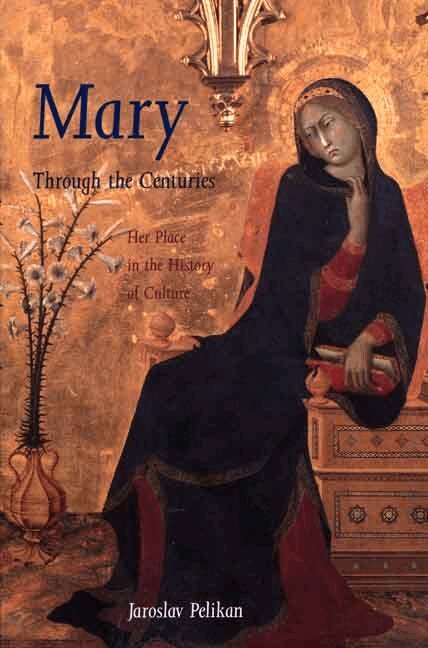
Mary Through the Centuries
Her Place in the History of Culture
Häftad, 1998
3,0 utav 5 stjärnor. Totalt antal röster: (1)
242 kr
Lägg i varukorg
The Virgin Mary has been an inspiration to more people than any other woman who ever lived. For Catholics, Protestants, Jews, and Muslims, for artists, musicians, and writers, and for women and men everywhere she has shown many faces and personified a variety of virtues. In this important book, a …
Christian Tradition: A History of the Development of Doctrine, Volume 2
The Spirit of Eastern Christendom
Häftad, 1977
255 kr
Lägg i varukorg
The line that separated Eastern Christendom from Western on the medieval map is similar to the "iron curtain" of recent times. Linguistic barriers, political divisions, and liturgical differences combined to isolate the two cultures from each other. Except for such episodes as the schism between …
Christian Tradition: A History of the Development of Doctrine, Volume 1
The Emergence of the Catholic Tradition
Häftad, 1975
289 kr
Lägg i varukorg
In this five-volume opus--now available in its entirety in paperback--Pelikan traces the development of Christian doctrine from the first century to the twentieth. "Pelikan's "The Christian Tradition" [is] a series for which they must have coined words like 'magisterial'."--Martin Marty, …
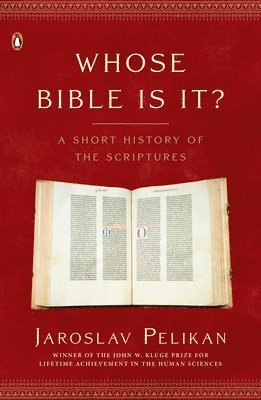
Whose Bible Is It?
A History of the Scriptures through the Ages
E-bok, 2006
113 kr
Lägg i varukorg
The Bible is among the world's most influential and important books - and the most controversial. It affects not just religious beliefs but every aspect of our culture, including the very language we speak. But how did it become the book we know it to be? In this superbly written history, Jaroslav …
Christian Tradition: A History of the Development of Doctrine, Volume 3
The Growth of Medieval Theology
Häftad, 1980
272 kr
Lägg i varukorg
"A magnificent history of doctrine."—New York Review of Books"In this volume Jaroslav Pelikan continues the splendid work he has done thus far in his projected five-volume history of the development of Christian doctrine, defined as 'what the Church believes, teaches, and confesses on the basis of …
Christian Tradition: A History of the Development of Doctrine, Volume 4
Reformation of Church and Dogma (1300-1700)
Häftad, 1985
289 kr
Lägg i varukorg
This penultimate volume in Pelikan's acclaimed history of Christian doctrine—winner with Volume 3 of the Medieval Academy's prestigious Haskins Medal—encompasses the Reformation and the developments that led to it. "Only in America, and in this case from a Lutheran scholar, could we expect an …
Christian Tradition: A History of the Develo – Christian Doctrine and Modern Culture (since 1700)
Häftad, 1991
272 kr
Lägg i varukorg
Jaroslav Pelikan begins this volume with the crisis of orthodoxy that confronted all Christian denominations by the beginning of the eighteenth century and continues through the twentieth century in its particular concerns with ecumenism. The modern period in the history of Christian doctrine, …
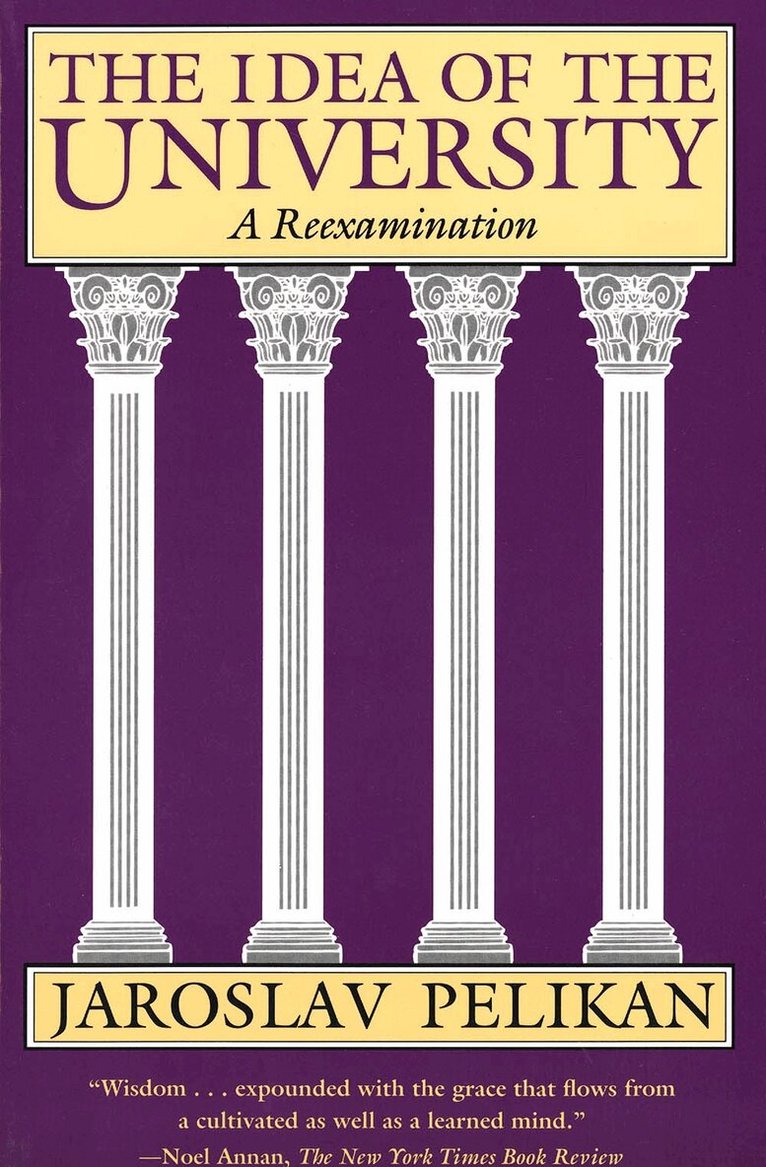
Idea of the University
A Reexamination
Häftad, 1994
442 kr
Lägg i varukorg
The crisis in university education has been the subject of vigorous debate in recent years. In this eloquent and deeply personal book, a distinguished scholar reflects on the character and aims of the university, assessing its guiding principles, its practical functions, and its role in society. …
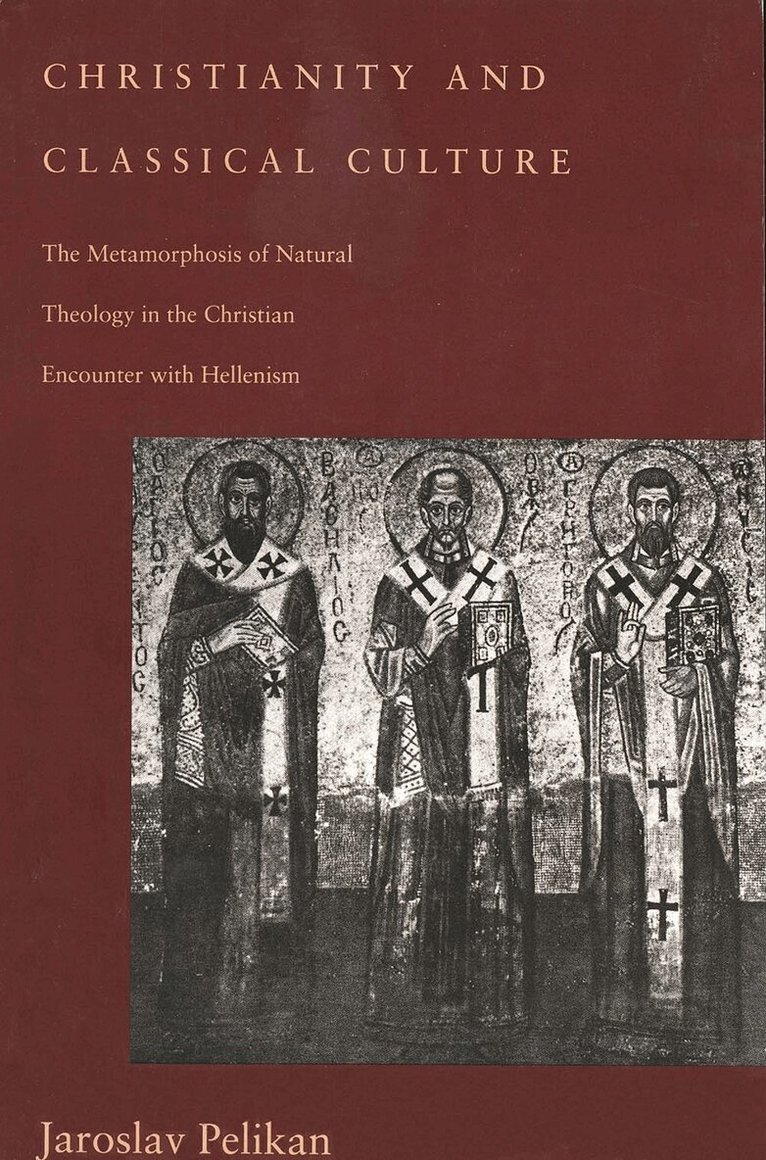
Christianity and Classical Culture
The Metamorphosis of Natural Theology in the Christian Encounter with Hellenism
Häftad, 1995
601 kr
Lägg i varukorg
The momentous encounter between Christian thought and Greek philosophy reached a high point in fourth-century Byzantium, and the principal actors were four Greek-speaking Christian thinkers whose collective influence on the Eastern Church was comparable to that of Augustine on Western Latin …
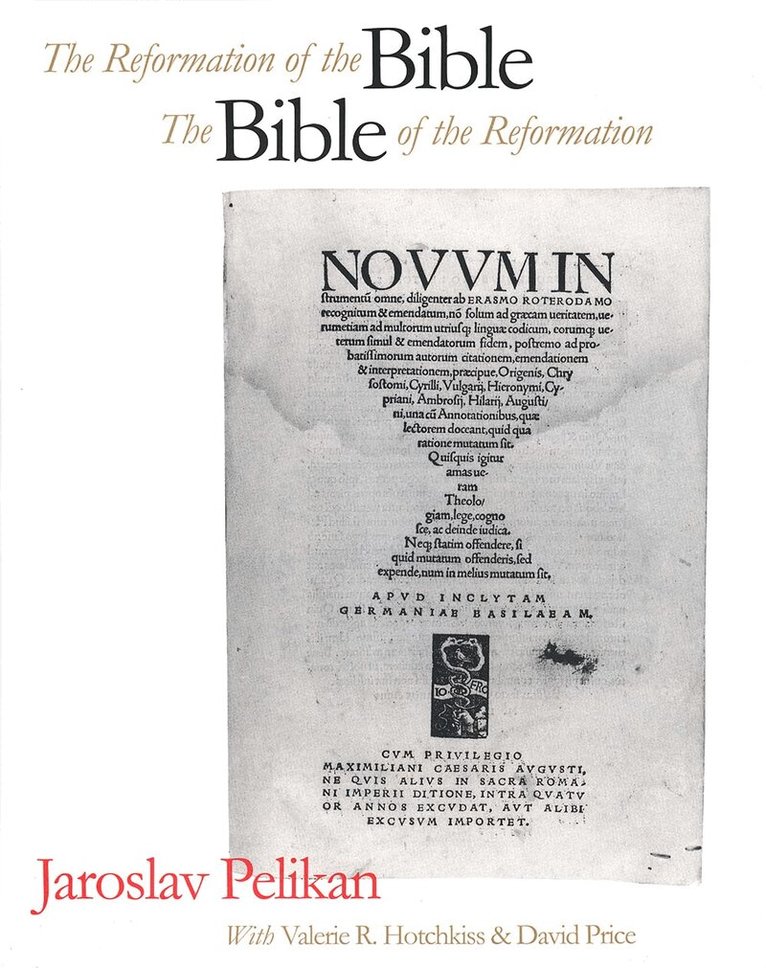
Reformation of the Bible/The Bible of the Reformation
Inbunden, 1996
895 kr
Lägg i varukorg
It is equally true that the Reformation was inspired and defined by the Bible and that the Bible was reshaped by the intellectual, political, and cultural forces of the Reformation. In this book, a distinguished scholar—whose contributions to the field of religious studies have won him wide …
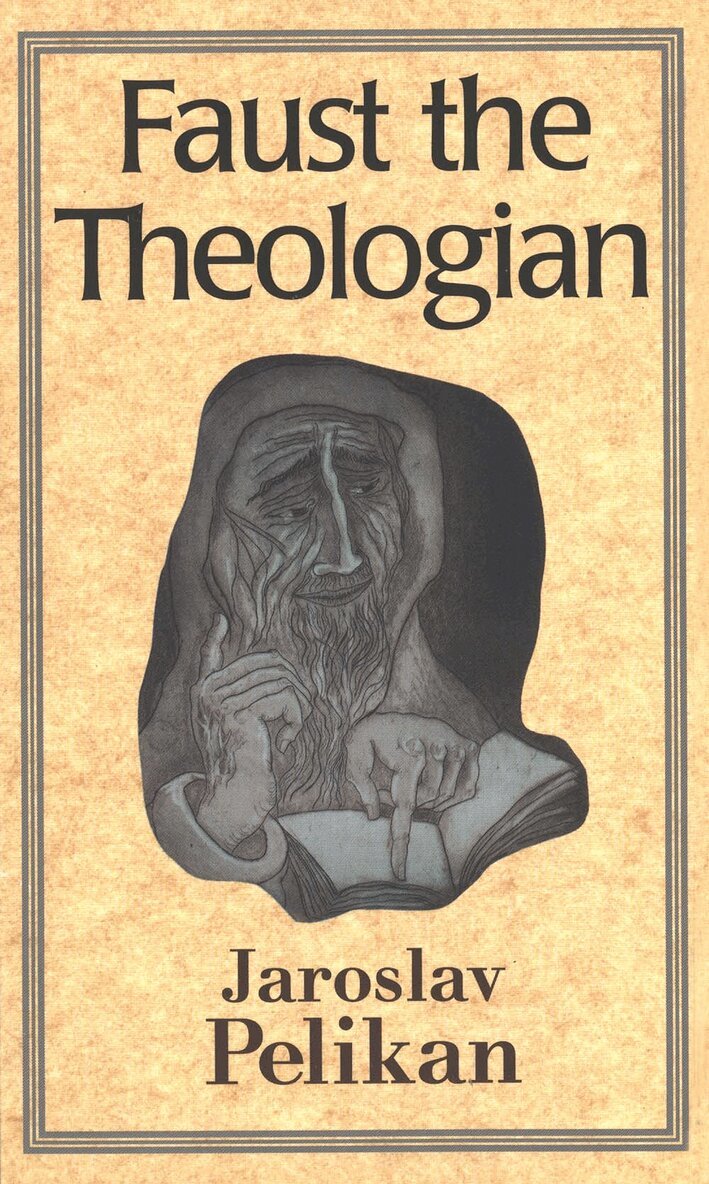
Faust the Theologian
Häftad, 1997
418 kr
Lägg i varukorg
In this erudite and beautifully written book, an eminent scholar meditates on the theological implications of Goethe's Faust. Jaroslav Pelikan reflects on Goethe's statement that he was a pantheist when it came to science, a polytheist in art, and a monotheist in ethics, and he uses it for the …
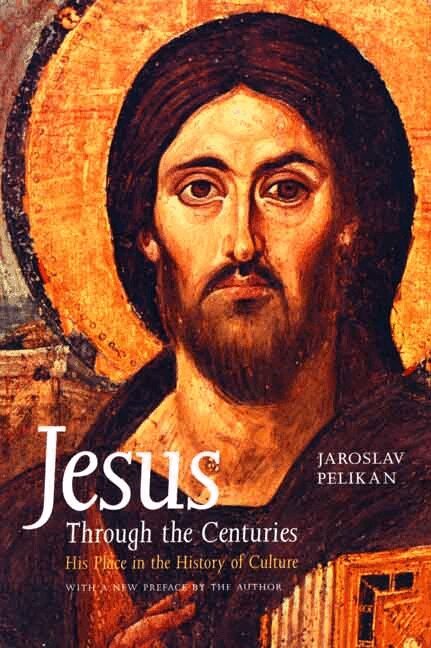
Jesus Through the Centuries
His Place in the History of Culture
Häftad, 1999
252 kr
Lägg i varukorg
An eminent theologian’s original and compelling study of how images of Jesus through history reveal each era’s temper and values “A rich and expansive description of Jesus’ impact on the general history of culture. . . . Believers and skeptics alike will find it a sweeping visual and conceptual …
Interpreting the Bible and the Constitution
Inbunden, 2004
785 kr
Lägg i varukorg
Both the Bible and the Constitution have the status of “Great Code,” but each of these important texts is controversial as well as enigmatic. They are asked to speak to situations that their authors could not have anticipated on their own. In this book, one of our greatest religious historians …
Development of Christian Doctrine
Some Historical Prolegomena
Häftad, 1969
363 kr
Lägg i varukorg
The problem of change has assumed great prominence in much of the current ferment in theology, and many of the issues in question can best be interpreted as relating to the validity and limits of doctrinal development. The questions cannot be faced constructively, however, until the development of …
What Has Athens to Do with Jerusalem?
Timaeus and Genesis in Counterpoint
Inbunden, 1997
848 kr
Lägg i varukorg
The debate about evolution and creationism is striking evidence of the tensions between biblical and philosophical-scientific explanations of the origins of the universe. For most of the past twenty centuries, important historical context for the debate has been supplied by the relation (or …
Imago Dei
The Byzantine Apologia for Icons
Häftad, 2011
503 kr
Lägg i varukorg
In 726 the Byzantine emperor, Leo III, issued an edict that all religious images in the empire were to be destroyed, a directive that was later endorsed by a synod of the Church in 753 under his son, Constantine V. If the policy of Iconoclasm had succeeded, the entire history of Christian art--and …
Imago Dei
The Byzantine Apologia for Icons
E-bok, 2023
685 kr
Lägg i varukorg
A sweeping account of the controversies surrounding the worship of images in the early Byzantine church In 726, the Byzantine emperor, Leo III, issued an edict that all religious images in the empire were to be destroyed, a directive that was later endorsed by a synod of the church in 753 under his …
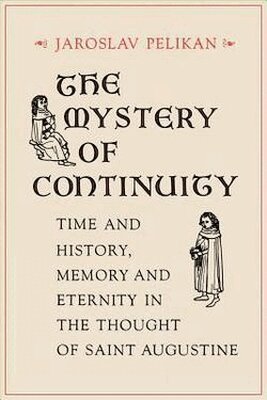
Mystery of Continuity
Time and History, Memory and Eternity in the Thought of St Augustine
Häftad, 2013
444 kr
Lägg i varukorg
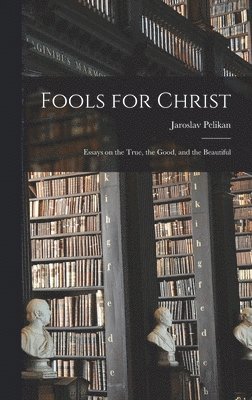
Fools for Christ: Essays on the True, the Good, and the Beautiful
Inbunden, 2021
472 kr
Lägg i varukorg
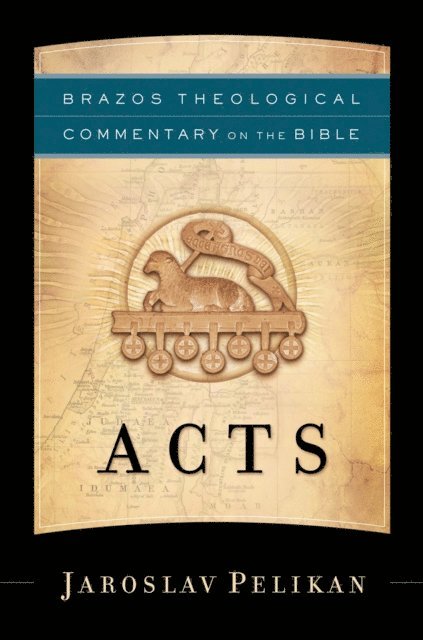
Acts (Brazos Theological Commentary on the Bible)
E-bok, 2006
352 kr
Lägg i varukorg
In this volume, an internationally renowned historian of Christian doctrine offers a theological reading of Acts. Now in paper. "[A] significant commentary. . . . Pelikan asks big questions: what is sin? what were the earliest creeds? what is the nature of apostleship? He is sensitive to nuances of …
Acts
Häftad, 2013
471 kr
Lägg i varukorg
In this volume, an internationally renowned historian of Christian doctrine offers a theological reading of Acts. Now in paper."[A] significant commentary. . . . Pelikan asks big questions: what is sin? what were the earliest creeds? what is the nature of apostleship? He is sensitive to nuances of …
Melody of Theology
A Philosophical Dictionary
E-bok, 2014
572 kr
Lägg i varukorg
While compiling a comprehensive bibliography of the works of Jaroslav Pelikan for a Festschrift celebrating his 80th birthday in 2003, I occasionally brought to light an article or lecture that Jary himself had all but forgotten. This is not surprising, given his prolific, fifty-eight-year …
Excellent Empire
The Fall of Rome and the Triumph of the Church
E-bok, 2014
329 kr
Lägg i varukorg
This remarkable account by an award-winning historian details the responses to the fall of Rome by the church fathers, who set the pattern for interpreting this momentous event for all succeeding centuries. "e;To speak about the decline and fall of the Roman empire as 'the social triumph of the …