Jasjit S. Suri - Böcker
1 954 kr
Skickas inom 7-10 vardagar
Computer-Assisted Diagnosis: Diabetes and Cardiovascular Disease brings together multifaceted information on research and clinical applications from an academic, clinical, bioengineering and bioinformatics perspective. The editors provide a stellar, diverse list of authors to explore this interesting field. Academic researchers, bioengineers, new investigators and students interested in diabetes and heart disease need an authoritative reference to reduce the amount of time spent on source-searching so they can spend more time on actual research and clinical application. This reference accomplishes this with contributions by authors from around the world.
Provides valuable information for academic clinicians, researchers, bioengineers and industry on diabetes and cardiovascular disease Discusses the impact of diabetes on cardiovascular disease Covers statistical classification techniques and risk stratification1 979 kr
Skickas inom 7-10 vardagar
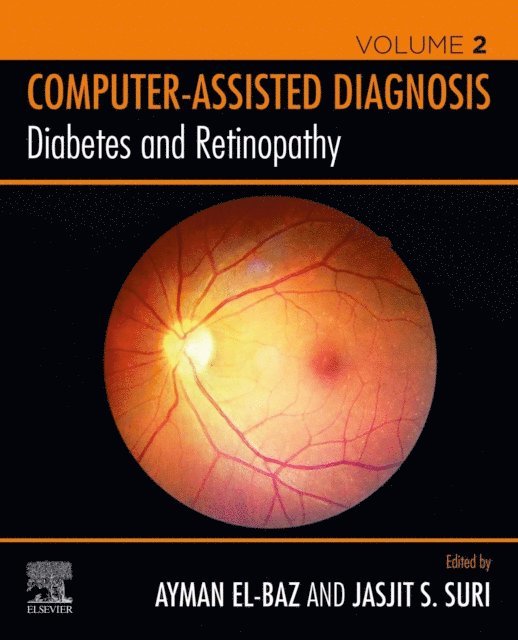
Diabetes and Retinopathy brings together the multifaceted information about the research and clinical application from academic, clinical, bioengineering and bioinformatics perspectives. The editors bring together a stellar cast of authors to pull together this diverse and interesting field. Academic researchers, bioengineers, new investigators and students interested in diabetes and retinopathy need an authoritative reference to bring this multidisciplinary field together to reduce the amount of time spent on source-searching and more time on actual research and the clinical application. This reference depicts the current clinical understanding of DR as well as the many scientific advances in understanding this condition.
Provides valuable information for academic clinicians, researchers, bioengineers and industry on diabetes and retinopathy Discusses the impact of diabetic retinopathy, a major cause of new-onset visual loss in all the industrialized nations Covers statistical classification techniques and risk stratification1 979 kr
Skickas inom 7-10 vardagar
Diabetes and Fundus OCT brings together a stellar cast of authors who review the computer-aided diagnostic (CAD) systems developed to diagnose non-proliferative diabetic retinopathy in an automated fashion using Fundus and OCTA images. Academic researchers, bioengineers, new investigators and students interested in diabetes and retinopathy need an authoritative reference to bring this multidisciplinary field together to help reduce the amount of time spent on source-searching and instead focus on actual research and the clinical application. This reference depicts the current clinical understanding of diabetic retinopathy, along with the many scientific advances in understanding this condition.
As the role of optical coherence tomography (OCT) in the assessment and management of diabetic retinopathy has become significant in understanding the vireo retinal relationships and the internal architecture of the retina, this information is more critical than ever.
Includes unique information for academic clinicians, researchers and bioengineers Provides insights needed to understand the imaging modalities involved, the unmet clinical need that is being addressed, and the engineering and technical approaches applied Brings together details on the retinal vasculature in diabetics as imaged by optical coherence tomography angiography and automated detection of retinal diseaseCognitive Informatics, Computer Modelling, and Cognitive Science
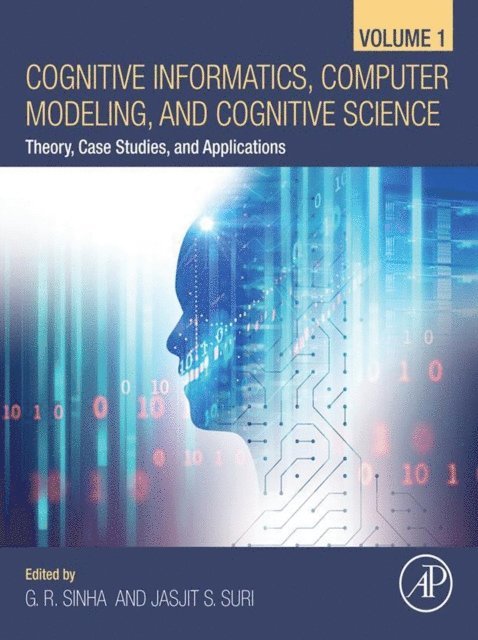
Volume 1: Theory, Case Studies, and Applications
1 446 kr
Skickas inom 7-10 vardagar
Cognitive Informatics, Computer Modelling, and Cognitive Science: Theory, Case Studies, and Applications presents the theoretical background and history of cognitive science to help readers understand its foundations, philosophical and psychological aspects, and applications in a wide range of engineering and computer science case studies. Cognitive science, a cognitive model of the brain, knowledge representation, and information processing in the human brain are discussed, as is the theory of consciousness, neuroscience, intelligence, decision-making, mind and behavior analysis, and the various ways cognitive computing is used for information manipulation, processing and decision-making.
Mathematical and computational models, structures and processes of the human brain are also covered, along with advances in machine learning, artificial intelligence, cognitive knowledge base, deep learning, cognitive image processing and suitable data analytics.
Identifies how foundational theories and concepts in cognitive science are applicable in other fields Includes a comprehensive review of cognitive science applications in multiple domains, applying it to neural engineering, robotics, computer science and STEM Includes models of brain processing, consciousness, decision-making, and more Provides in-depth technical coverage of cognitive informatics and computing, including coverage of cognitive knowledge base, information theory, cognitive machine learning and intelligenceCognitive Informatics, Computer Modelling, and Cognitive Science
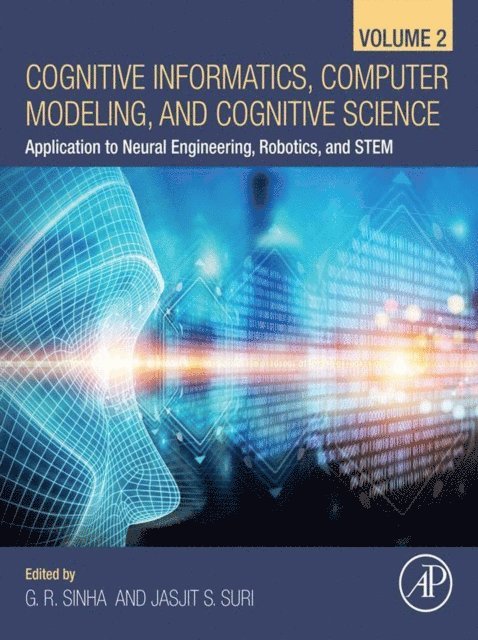
Volume 2: Application to Neural Engineering, Robotics, and STEM
1 446 kr
Skickas inom 7-10 vardagar
Cognitive Informatics, Computer Modelling, and Cognitive Science: Volume Two, Application to Neural Engineering, Robotics, and STEM presents the practical, real-world applications of Cognitive Science to help readers understand how it can help them in their research, engineering and academic pursuits. The book is presented in two volumes, covering Introduction and Theoretical Background, Philosophical and Psychological Theory, and Cognitive Informatics and Computing. Volume Two includes Statistics for Cognitive Science, Cognitive Applications and STEM Case Studies. Other sections cover Cognitive Informatics, Computer Modeling and Cognitive Science: Application to Neural Engineering, Robotics, and STEM.
The book's authors discuss the current status of research in the field of Cognitive Science, including cognitive language processing that paves the ways for developing numerous tools for helping physically challenged persons, and more.
Identifies how foundational theories and concepts in cognitive science are applicable in other fields Includes a comprehensive review of cognitive science applications in multiple domains, applying it to neural engineering, robotics, computer science and STEM Presents basic statistics and cognitive maps, testing strategies of hypothesis, maximum likelihood estimator, Bayesian statistics, and discrete probability models of neural computation Contains in-depth technical coverage of cognitive applications and case studies, including neuro-computing, brain modeling, cognitive ability and cognitive robots1 678 kr
Skickas inom 7-10 vardagar
1 653 kr
Skickas inom 7-10 vardagar
State of the Art in Neural Networks and Their Applications, Volume Two presents the latest advances in artificial neural networks and their applications across a wide range of clinical diagnoses. The book provides over views and case studies of advances in the role of machine learning, artificial intelligence, deep learning, cognitive image processing, and suitable data analytics useful for clinical diagnosis and research applications. The application of neural network, artificial intelligence and machine learning methods in biomedical image analysis have resulted in the development of computer-aided diagnostic (CAD) systems that aim towards the automatic early detection of several severe diseases.
State of the Art in Neural Networks and Their Applications is presented in two volumes. Volume One: Neural Networks in Oncology Imaging covers lung cancer, prostate cancer, and bladder cancer. Volume Two: Neural Networks in Brain Disorders and Other Diseases covers autism spectrum disorder, Alzheimer's disease, attention deficit hyperactivity disorder, hypertension, and other diseases. Written by experienced engineers in the field, these two volumes will help engineers, computer scientists, researchers, and clinicians understand the technology and applications of artificial neural networks.
Includes applications of neural networks, AI, machine learning, and deep learning techniques to a variety of oncology imaging technologies Provides in-depth technical coverage of computer-aided diagnosis (CAD), including coverage of computer-aided classification, unified deep learning frameworks, 3D MRI, PET/CT, and more Covers deep learning cancer identification from histopathological images, medical image analysis, detection, segmentation and classification via AI1 892 kr
Skickas inom 7-10 vardagar
1 929 kr
Skickas inom 7-10 vardagar
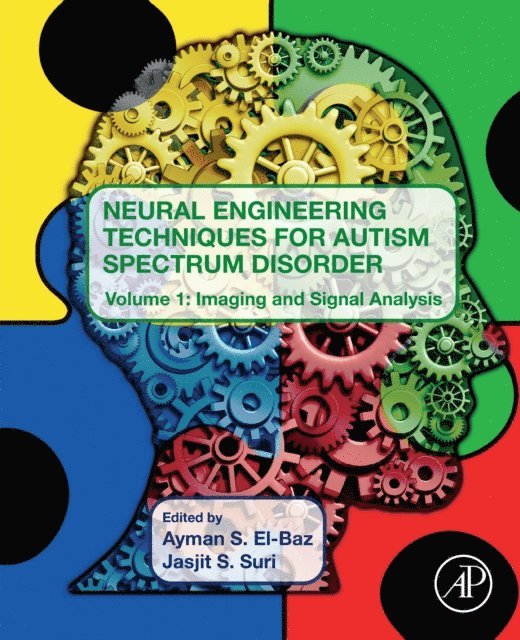
Neural Engineering Techniques for Autism Spectrum Disorder
Volume 1: Imaging and Signal Analysis
1 678 kr
Skickas inom 7-10 vardagar
Neural Engineering Techniques for Autism Spectrum Disorder, Volume 2
Diagnosis and Clinical Analysis
1 653 kr
Skickas inom 7-10 vardagar
Neural Engineering for Autism Spectrum Disorder, Volume Two: Diagnosis and Clinical Analysis presents the latest advances in neural engineering and biomedical engineering as applied to the clinical diagnosis and treatment of Autism Spectrum Disorder (ASD). Advances in the role of neuroimaging, magnetic resonance spectroscopy, MRI, fMRI, DTI, video analysis of sensory-motor and social behaviors, and suitable data analytics useful for clinical diagnosis and research applications for Autism Spectrum Disorder are covered, including relevant case studies. The application of brain signal evaluation, EEG analytics, fuzzy model and temporal fractal analysis of rest state BOLD signals and brain signals are also presented.
A clinical guide for general practitioners is provided along with a variety of assessment techniques such as magnetic resonance spectroscopy. The book is presented in two volumes, including Volume One: Imaging and Signal Analysis Techniques comprised of two Parts: Autism and Medical Imaging, and Autism and Signal Analysis. Volume Two: Diagnosis and Treatment includes Autism and Clinical Analysis: Diagnosis, and Autism and Clinical Analysis: Treatment.
Presents applications of Neural Engineering techniques for diagnosis of Autism Spectrum Disorder (ASD) Includes in-depth technical coverage of assessment techniques, such as the functional and structural networks underlying visuospatial vs. linguistic reasoning in autism Covers treatment techniques for Autism Spectrum Disorder (ASD), including social skills intervention, behavioral treatment, evidence-based treatments, and technical tools such as Magnetic Resonance Spectroscopy for ASD Written by engineers for engineers, computer scientists, researchers and clinicians who need to understand the technology and applications of Neural Engineering for the detection and diagnosis of Autism Spectrum Disorder (ASD)987 kr
Skickas inom 7-10 vardagar
Recent advances and technologies in 3D printing have improved and expanded applications for surgery, biomedical engineering, and nanotechnology. In this concise new title, Drs. Georgios Tsoulfas, Petros I. Bangeas, and Jasjit S. Suri synthesize state-of-the-art information on 3D printing and provide guidance on the optimal application in today's surgical practice, from evaluation of the technology to virtual reality and future opportunities.
949 kr
Skickas inom 7-10 vardagar
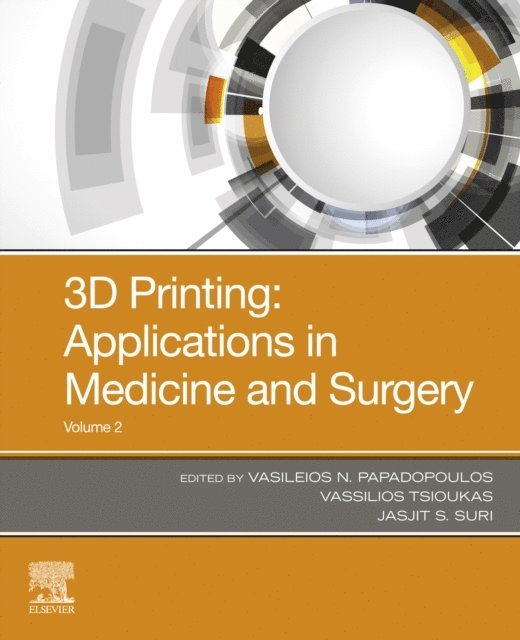
New technologies in 3D printing offer innovative capabilities in surgery, from planning complex operations to providing alternatives to traditional training with more cost-effective outcomes. In 3D Printing: Application in Medical Surgery, Volume 2, Drs. Vasileios N. Papadopoulos, Vassilios Tsioukas, and Jasjit S. Suri bring together up-to-date information on 3D printing and its application in surgical specialties such as hebatobilliary and pancreatic surgery, vascular surgery, orthopedic surgery, obstetrics and gynecology, cardiovascular and thoracic surgery, and more.
1 841 kr
Skickas inom 7-10 vardagar
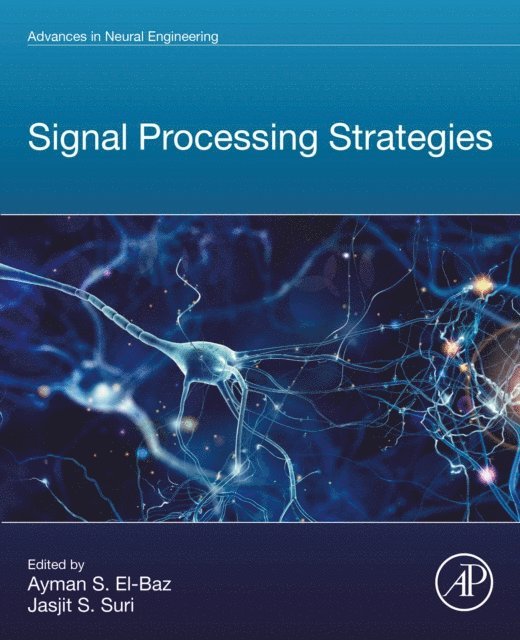
Neural engineering is an emerging and fast-moving interdisciplinary research area that combines engineering with (a) electronic and photonic technologies, (b) computer science, (c) physics, (d) chemistry, (e) mathematics, and (f) cellular, molecular, cognitive, and behavioral neuroscience. This helps us understand the organizational principles and underlying mechanisms of the biology of neural systems and to further to study the behavioral dynamics and complexity of neural systems in nature. The field of neural engineering deals with many aspects of basic and clinical problems associated with neural dysfunction, including (i) the representation of sensory and motor information, (ii) electrical stimulation of the neuromuscular system to control muscle activation and movement, (iii) the analysis and visualization of complex neural systems at multiscale from the single cell to system levels to understand the underlying mechanisms, (iv) development of novel electronic and photonic devices and techniques for experimental probing, the neural simulation studies, (v) the design and development of human-machine interface systems and artificial vision sensors, and (vi) neural prosthesis to restore and enhance the impaired sensory and motor systems and functions. To highlight this emerging discipline, Dr. Ayman El-Baz and Dr. Jasjit Suri have developed Advances in Neural Engineering, covering the broad spectrum of neural engineering subfields and applications. This Series includes 7 volumes in the following order: Volume 1: Signal Processing Strategies, Volume 2: Brain-Computer Interfaces, Volume 3: Diagnostic Imaging Systems, Volume 4: Brain Pathologies and Disorders, Volume 5: Computing and Data Technologies, Volume 6: Advanced Brain Imaging Techniques and Volume 7: Neural Science Ethics. Volume 1 provides a comprehensive review of dominant feature extraction methods and classification algorithms in the brain-computer interfaces for motor imagery tasks. The authors discuss existing challenges in the domain of motor imagery brain-computer interface and suggest possible research directions.
Presents Neural Engineering techniques applied to Signal Processing, including featureextraction methods and classification algorithms in BCI for motor imagery tasksIncludes in-depth technical coverage of disruptive neurocircuitry, including neurocircuitry of stress integration, role of basal ganglia neurocircuitry in pathology of psychiatric disorders, and neurocircuitry of anxiety in obsessive-compulsive disorderCovers neural signal processing data analysis and neuroprosthetics applications, including EEG-based BCI paradigms, EEG signal processing in anesthesia, neural networks for intelligent signal processing, and a variety of neuroprosthetic applicationsWritten by engineers to help engineers, computer scientists, researchers, and clinicians understand the technology and applications of signal processing1 841 kr
Skickas inom 7-10 vardagar
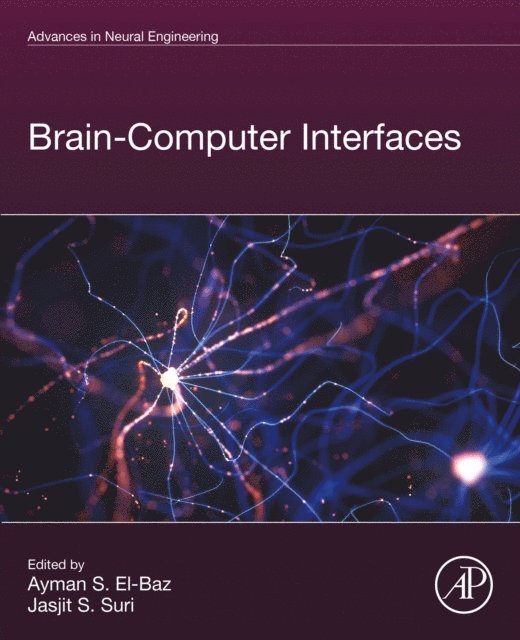
Advances in Neural Engineering: Brain-Computer Interfaces, Volume Two covers the broad spectrum of neural engineering subfields and applications. The set provides a comprehensive review of dominant feature extraction methods and classification algorithms in the brain-computer interfaces for motor imagery tasks. The book's authors discuss existing challenges in the domain of motor imagery brain-computer interface and suggest possible research directions. The field of neural engineering deals with many aspects of basic and clinical problems associated with neural dysfunction, including sensory and motor information, stimulation of the neuromuscular system to control muscle activation and movement, analysis and visualization of complex neural systems, and more.
Presents Neural Engineering techniques applied to Signal Processing, including feature extraction methods and classification algorithms in BCI for motor imagery tasksIncludes in-depth technical coverage of disruptive neurocircuitry, including neurocircuitry of stress integration, role of basal ganglia neurocircuitry in pathology of psychiatric disorders, and neurocircuitry of anxiety in obsessive-compulsive disorderCovers neural signal processing data analysis and neuroprosthetics applications, including EEG-based BCI paradigms, EEG signal processing in anesthesia, neural networks for intelligent signal processing, and a variety of neuroprosthetic applicationsWritten by engineers to help engineers, computer scientists, researchers, and clinicians understand the technology and applications of signal processing1 891 kr
Kommande
Neural engineering is an emerging and fast-moving interdisciplinary research area that combines engineering with (a) electronic and photonic technologies, (b) computer science, (c) physics, (d) chemistry, (e) mathematics, and (f) cellular, molecular, cognitive, and behavioral neuroscience. This helps us understand the organizational principles and underlying mechanisms of the biology of neural systems and to further to study the behavioral dynamics and complexity of neural systems in nature.The field of neural engineering deals with many aspects of basic and clinical problems associated with neural dysfunction, including (i) the representation of sensory and motor information, (ii) electrical stimulation of the neuromuscular system to control muscle activation and movement, (iii) the analysis and visualization of complex neural systems at multiscale from the single cell to system levels to understand the underlying mechanisms, (iv) development of novel electronic and photonic devices and techniques for experimental probing, the neural simulation studies, (v) the design and development of human-machine interface systems and artificial vision sensors, and (vi) neural prosthesis to restore and enhance the impaired sensory and motor systems and functions.To highlight this emerging discipline, Dr. Ayman El-Baz and Dr. Jasjit Suri have developed Advances in Neural Engineering, covering the broad spectrum of neural engineering subfields and applications. This Series includes 7 volumes in the following order: Volume 1: Signal Processing Strategies, Volume 2: Brain-Computer Interfaces, Volume 3: Diagnostic Imaging Systems, Volume 4: Brain Pathologies and Disorders, Volume 5: Computing and Data Technologies, Volume 6: Advanced Brain Imaging Techniques and Volume 7: Neural Science Ethics.Volume 3 provides a comprehensive review of diagnostic imaging systems and technologies, including brain tumor characterization and classification techniques, tumor segmentation using AI and deep neural networks, dynamic brain imaging analysis, and functional brain imaging. The authors discuss existing challenges in the domain of diagnostic imaging systems and suggest possible research directions.
Presents Neural Engineering techniques applied to diagnostic imaging systems, brain tumor characterization, brain tumor classification, tumor segmentation, dynamic brain imaging, and functional brain imaging.Covers neural imaging data analysis, including brain tumor classification with Deep Learning, segmentation using MRI with Deep Neural Networks, and Machine Learning algorithms for identifying risks of complications.Written by engineers to help engineers, computer scientists, researchers, and clinicians understand the technology and applications of signal processing.1 891 kr
Kommande
Neural engineering is an emerging and fast-moving interdisciplinary research area that combines engineering with (a) electronic and photonic technologies, (b) computer science, (c) physics, (d) chemistry, (e) mathematics, and (f) cellular, molecular, cognitive, and behavioral neuroscience. This helps us understand the organizational principles and underlying mechanisms of the biology of neural systems and to further to study the behavioral dynamics and complexity of neural systems in nature.The field of neural engineering deals with many aspects of basic and clinical problems associated with neural dysfunction, including (i) the representation of sensory and motor information, (ii) electrical stimulation of the neuromuscular system to control muscle activation and movement, (iii) the analysis and visualization of complex neural systems at multiscale from the single cell to system levels to understand the underlying mechanisms, (iv) development of novel electronic and photonic devices and techniques for experimental probing, the neural simulation studies, (v) the design and development of human-machine interface systems and artificial vision sensors, and (vi) neural prosthesis to restore and enhance the impaired sensory and motor systems and functions.To highlight this emerging discipline, Dr. Ayman El-Baz and Dr. Jasjit Suri have developed Advances in Neural Engineering, covering the broad spectrum of neural engineering subfields and applications. This Series includes 7 volumes in the following order: Volume 1: Signal Processing Strategies, Volume 2: Brain-Computer Interfaces, Volume 3: Diagnostic Imaging Systems, Volume 4: Brain Pathologies and Disorders, Volume 5: Computing and Data Technologies, Volume 6: Advanced Brain Imaging Techniques and Volume 7: Neural Science Ethics.Volume 4 provides a comprehensive review of brain pathologies and disorders, including Parkinson’s Disease, Alzheimer’s Disease, Attention-Deficit/Hyperactivity Disorder, and Tourette’s Syndrome. The authors discuss existing challenges in the domain of diagnosis, detection, analysis, treatment modalities, as well as possible research directions.
Presents Neural Engineering techniques applied to a variety of brain pathologies and disorders, including Parkinson’s Disease; Alzheimer’s Disease; ADHD; and Tourette’s Syndrome.Includes in-depth technical coverage of methods for detecting and diagnosing brain disorders, including PET, EEG, MRI, multimodal fusion techniques, and deep brain stimulation.Covers data analysis methods and algorithms such as neural networks, Machine Learning, AI, and nonlinear graph fusion.Written by engineers to help engineers, computer scientists, researchers, and clinicians understand the technology and applications of signal processing.5 345 kr
Skickas inom 10-15 vardagar
Handbook of Texture Analysis
Generalized Texture for AI-Based Industrial Applications
2 292 kr
Skickas inom 10-15 vardagar
2 292 kr
Skickas inom 10-15 vardagar
713 kr
Skickas inom 10-15 vardagar
2 153 kr
Skickas inom 10-15 vardagar
1 738 kr
Skickas inom 10-15 vardagar
1 084 kr
Skickas inom 10-15 vardagar
1 475 kr
Skickas inom 10-15 vardagar
Artificial Intelligence in e-Health Framework, Volume 1
AI, Classification, Wearable Devices, and Computer-Aided Diagnosis
1 837 kr
Skickas inom 7-10 vardagar
Artificial Intelligence in e-health Framework, Volume One: AI, Classification, Wearable Devices, and Computer-Aided Diagnosis presents a variety of AI techniques and applications for solving issues in the healthcare industry. As Artificial Intelligence is increasingly incorporated into medical systems and methods, it is critical to understand the formulations and basics of machine and deep learning as well as how to implement these advances into practice. This book specifically explores Artificial Intelligence developments in disease diagnosis, health monitoring, medical image recognition, and diagnostics, as well as e-health records management.This is a valuable resource for health professionals, scientists, researchers, students, and all who wish to broaden their knowledge in this advancing technology.
Provides an in-depth introduction to Artificial Intelligence in e-health frameworkReviews theoretical and application information to develop understanding of AI advances in diagnostics, health monitoring, and records managementDiscusses advanced AI techniques in both machine learning and deep learning for solving healthcare industry issues1 590 kr
Kommande
Artificial Intelligence in e-Health Framework, Volume 2
Telemedicine Applications, Drug Delivery, Augmented Reality, and Robotics
1 825 kr
Skickas inom 7-10 vardagar
Artificial Intelligence in e-health Framework, Volume Two: Telemedicine Applications, Drug Delivery, Augmented Reality, and Robotics offers a comprehensive exploration of AI’s role in enhancing medical solutions. Through a focus on machine learning, deep learning, and their practical applications, this book aims to bridge the gap between theoretical advancements and real-world healthcare implementations. In addition to telemedicine advancements, the book explores AI-driven drug discovery, virtual and augmented reality innovations, robotics in medicine, and radiotherapy applications. It serves as an indispensable resource for professionals, researchers, and students eager to deepen their understanding of AI's contributions to modern healthcare.
Provides an in-depth introduction to Artificial Intelligence in an e-health frameworkReviews theoretical and application information to develop our understanding of AI advances in telemedicine, drug development, virtual and augmented reality, robotics, and radiotherapy applicationsDiscusses advanced AI techniques in both treatment planning and AI-based quality assurance for solving healthcare industry issuesRadiomics and Radiogenomics in Neuro-Oncology
An Artificial Intelligence Paradigm - Volume 1: Radiogenomics Flow Using Artificial Intelligence
1 954 kr
Skickas inom 7-10 vardagar
Radiomics and Radiogenomics in Neuro-Oncology
An Artificial Intelligence Paradigm - Volume 2: Genetics and Clinical Applications
2 206 kr
Skickas inom 7-10 vardagar
Radiomics and Radiogenomics in Neuro-Oncology: An Artificial Intelligence Paradigm-Volume 2: Genetics and Clinical Applications provides readers with a broad and detailed framework for radiomics and radiogenomics (R-n-R) approaches with AI in neuro-oncology. It delves into the study of cancer biology and genomics, presenting methods and techniques for analyzing these elements. The book also highlights current solutions that R-n-R can offer for personalized patient treatments, as well as discusses the limitations and future prospects of AI technologies.Volume 1: Radiogenomics Flow Using Artificial Intelligence covers the genomics and molecular study of brain cancer, medical imaging modalities and their analysis in neuro-oncology, and the development of prognostic and predictive models using radiomics.Volume 2: Genetics and Clinical Applications extends the discussion to imaging signatures that correlate with molecular characteristics of brain cancer, clinical applications of R-n-R in neuro-oncology, and the use of Machine Learning and Deep Learning approaches for R-n-R in neuro-oncology.
Includes coverage of foundational concepts of the emerging fields of Radiomics and RadiogenomicsCovers imaging signatures for brain cancer molecular characteristics, including Isocitrate Dehydrogenase Mutations (IDH), TP53 Mutations, ATRX loss, MGMT gene, Epidermal Growth Factor Receptor (EGFR), and other mutationsPresents clinical applications of R-n-R in neuro-oncology such as risk stratification, survival prediction, heterogeneity analysis, as well as early and accurate prognosisProvides in-depth technical coverage of radiogenomics studies for difference brain cancer types, including glioblastoma, astrocytoma, CNS lymphoma, meningioma, acoustic neuroma, and hemangioblastoma