Jasmin Tzortzakakis Malik – författare
Visar alla böcker från författaren . Handla med fri frakt och snabb leverans.
3 produkter
3 produkter
Häftad, Engelska, 2025
145 kr
Skickas
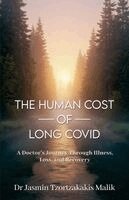
Long COVID has become one of thedefining medical challenges of the twenty-first century. Emerging in the wakeof the COVID-19 pandemic, it has affected millions of people worldwide,challenging long-held assumptions about post-viral illness, recovery and theremarkable complexity of the human body. What was once expected to be ashort-lived infection has, for many, become a chronic, multisystem conditionthat continues to reshape clinical practice, research and our understanding ofhuman health.When Dr Jasmin Tzortzakakis Malikfirst developed COVID-19, she expected to recover. Instead, she entered a worldof relentless fatigue, neurological disruption, fluctuating symptoms anduncertainty. Over the years that followed, repeated COVID-19 infectionscompounded her illness, with each infection resulting in months of worseningsymptoms and reinforcing the unpredictable nature of Long COVID.As both physician and patient, DrMalik experienced not only the impact of Long COVID itself, but also thereality of navigating a healthcare system that was learning in real time.Delayed recognition, evolving evidence and limited treatment options oftenmeant waiting for science and clinical practice to catch up with patients'lived experiences. Faced with uncertainty, she turned to the scientificliterature, critically reviewing the evidence to understand what her own bodyrequired to recover and how the body's adaptive responses could be supportedrather than overwhelmed.Drawing on more than twenty yearsof clinical experience as a General Practitioner, researcher, wellbeingspecialist and health inclusion leader, alongside her own lived experience, DrMalik brings together science, clinical practice and personal insight toexplore the human cost of Long COVID beyond the infection. She examines howdisruption across the nervous, immune, metabolic and autonomic systems affectsnot only physical health, but also identity, relationships, work and everydaylife.Grounded in scientific evidenceand enriched by personal insight, The HumanCost of Long COVID explains why recovery is rarely linear, whypushing through exhaustion can be harmful, and how understanding the body'sadaptive responses can help make sense of this complex condition. Introducingthe foundations of Dr Malik's Adaptive Integration Framework, the book providesa practical framework for understanding Long COVID, supporting recovery andapplying these principles more broadly to health and wellbeing. While rooted in the experience of Long COVID, the book also shines a light onthe broader landscape of post-infectious illness, including ME/CFS and relatedconditions, exploring the shared physiological mechanisms that challengeconventional approaches to diagnosis, recovery and rehabilitation.Readers will discover how to:· Understandthe science behind fatigue, brain fog, post-exertional symptom exacerbation andmultisystem symptoms.· Recognisethe emotional and identity changes associated with chronic illness and LongCOVID.· Make senseof fluctuating symptoms, repeated infections and the uncertainty of recovery.· Developpractical strategies that support healing while working with, rather thanagainst, the body's adaptive responses.· Betterunderstand how Long COVID relates to the broader family of post-infectiousconditions, including ME/CFS and other complex multisystem illnesses.Written for people living with post-viralillness, their families and carers, healthcare professionals, employerssupporting individuals returning to work, and anyone seeking to understand oneof the defining health challenges of our time, TheHuman Cost of Long COVID bridges scientific evidence with livedexperience to provide clarity, compassion and practical understanding.More than an account of illness,it is an exploration of resilience, adaptation and recovery. It offers readersa language for experiences that often feel invisible, a deeper understanding ofthe remarkable capacity of the human body to adapt, and hope that recovery canbe supported through science, understanding and a more compassionate approachto health.
Inbunden, Engelska, 2026
219 kr
Skickas
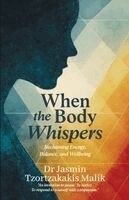
Our bodies are designed to adapt. Every momentof every day, our physiology responds to the world around us. Heart rate,hormones, immune function, energy and attention are constantly adjusting tomeet changing demands. Adaptation is one of the body's greatest strengths,enabling us to survive challenge, recover from illness and navigate anever-changing environment.But what happens when the pressure never stops?When stress becomes chronic, grief remainsunresolved, trauma is carried for years, or life demands that we simply keepgoing, the nervous system continues to adapt. Gradually, these survivalresponses become the patterns through which we experience everyday life. Welose sight of what balance truly feels like because the body has becomeexceptionally skilled at surviving.In When the Body Whispers, Dr JasminTzortzakakis Malik explores how the body's remarkable capacity to adapt canquietly become its greatest vulnerability. Survival responses are designed toprotect us, but when they are reinforced over time, they become the patternsthrough which we experience everyday life. Understanding the biology behindthese changes offers a new perspective on the physiology of stress, trauma,health and recovery."This succinct volume presents wise and compassionate adviceabout how to listen to our bodies' subtle messages, from a physician who had tolearn through her own hard experience what happens when we do not. Dr Malikcombines personal insight, keen clinical observation, social awareness andscience to offer a new path to health."— Gabor Maté, MD, author of When the Body Says NoDrawing on clinical practice, research, and livedexperience as both a physician and a patient, Dr Malik reveals how adaptationlies at the heart of both illness and healing. The same biological systems thatenable us to survive prolonged stress, trauma and adversity also retain thecapacity to recalibrate when the conditions for healing are restored.Blending neuroscience, physiology, trauma science,psychology and reflective practice, she introduces the Adaptive IntegrationFramework (AIF), a practical model that helps readers understand how thebody responds to prolonged challenge and how health and healing can emergethrough safety, awareness, rhythm and adaptation.Through accessible science, powerful personalstories and practical tools, readers will learn to:recognise the body's early warning signals before crisis developsunderstand how chronic stress and trauma reshape the nervous systemcreate the conditions that support regulation, recovery andresiliencerebuild energy and wellbeing by working with the body's naturaladaptive processesWritten for clinicians and non-clinicians alike, Whenthe Body Whispers offers a new way of understanding health, one that viewsthe body as an intelligent partner rather than a machine to be overridden. Itis for anyone who has spent too long living in survival mode and is ready torediscover a steadier, more sustainable path to wellbeing.As Dr Malik writes:"Prevention is not only the avoidance ofillness; it is the creation of safety. When stress eases and the nervous systemcan settle, health has the space to grow."
Häftad, Engelska, 2026
149 kr
Skickas
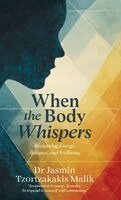
Our bodies are designed to adapt. Every momentof every day, our physiology responds to the world around us. Heart rate,hormones, immune function, energy and attention are constantly adjusting tomeet changing demands. Adaptation is one of the body's greatest strengths,enabling us to survive challenge, recover from illness and navigate anever-changing environment.But what happens when the pressure never stops?When stress becomes chronic, grief remainsunresolved, trauma is carried for years, or life demands that we simply keepgoing, the nervous system continues to adapt. Gradually, these survivalresponses become the patterns through which we experience everyday life. Welose sight of what balance truly feels like because the body has becomeexceptionally skilled at surviving.In When the Body Whispers, Dr JasminTzortzakakis Malik explores how the body's remarkable capacity to adapt canquietly become its greatest vulnerability. Survival responses are designed toprotect us, but when they are reinforced over time, they become the patternsthrough which we experience everyday life. Understanding the biology behindthese changes offers a new perspective on the physiology of stress, trauma,health and recovery."This succinct volume presents wise and compassionate adviceabout how to listen to our bodies' subtle messages, from a physician who had tolearn through her own hard experience what happens when we do not. Dr Malikcombines personal insight, keen clinical observation, social awareness andscience to offer a new path to health."— Gabor Maté, MD, author of When the Body Says NoDrawing on clinical practice, research, and livedexperience as both a physician and a patient, Dr Malik reveals how adaptationlies at the heart of both illness and healing. The same biological systems thatenable us to survive prolonged stress, trauma and adversity also retain thecapacity to recalibrate when the conditions for healing are restored.Blending neuroscience, physiology, trauma science,psychology and reflective practice, she introduces the Adaptive IntegrationFramework (AIF), a practical model that helps readers understand how thebody responds to prolonged challenge and how health and healing can emergethrough safety, awareness, rhythm and adaptation.Through accessible science, powerful personalstories and practical tools, readers will learn to:recognise the body's early warning signals before crisis developsunderstand how chronic stress and trauma reshape the nervous systemcreate the conditions that support regulation, recovery andresiliencerebuild energy and wellbeing by working with the body's naturaladaptive processesWritten for clinicians and non-clinicians alike, Whenthe Body Whispers offers a new way of understanding health, one that viewsthe body as an intelligent partner rather than a machine to be overridden. Itis for anyone who has spent too long living in survival mode and is ready torediscover a steadier, more sustainable path to wellbeing.As Dr Malik writes:"Prevention is not only the avoidance ofillness; it is the creation of safety. When stress eases and the nervous systemcan settle, health has the space to grow."