Jasna Dragovic-Soso – författare
Visar alla böcker från författaren Jasna Dragovic-Soso. Handla med fri frakt och snabb leverans.
2 produkter
2 produkter
E-bok
PDF, Engelska, 2002523 kr
Läs direkt efter köp
Jasna Dragovi -Soso asks why this strong and apparently democratic opposition movement subsequently turned towards an extreme form of nationalism and had by the end of the 1980s accepted Miloševi ''s undemocratic policies. Based on the author''s extensive primary source research and interviews with key protagonists, Saviours of the Nation examines both the causes and the consequences of the opposition''s transformation into a nationalist force. Highlighting the role of historical context, it argues that three main factors contributed to the intellectuals'' elaboration of a radical nationalist ideology: abandonment of cultural "Yugoslavism" in conjunction with the post-Tito crisis of the state, difficulties in solving the thorny "Kosovo question," and relationships between the dissidents and their Slovenian counterparts. Soso also includes a thorough analysis of the "Memorandum" of the Serbian Academy and the intellectuals'' relations with Miloševi . She argues that the intellectual opposition''s search for Serbian statehood at any price undermined its ability to present a convincing political alternative, allowing the regime to overcome its crisis of legitimacy and continue its reckless and belligerent policies.
Häftad, Engelska, 2007
550 kr
Skickas inom 10-15 vardagar
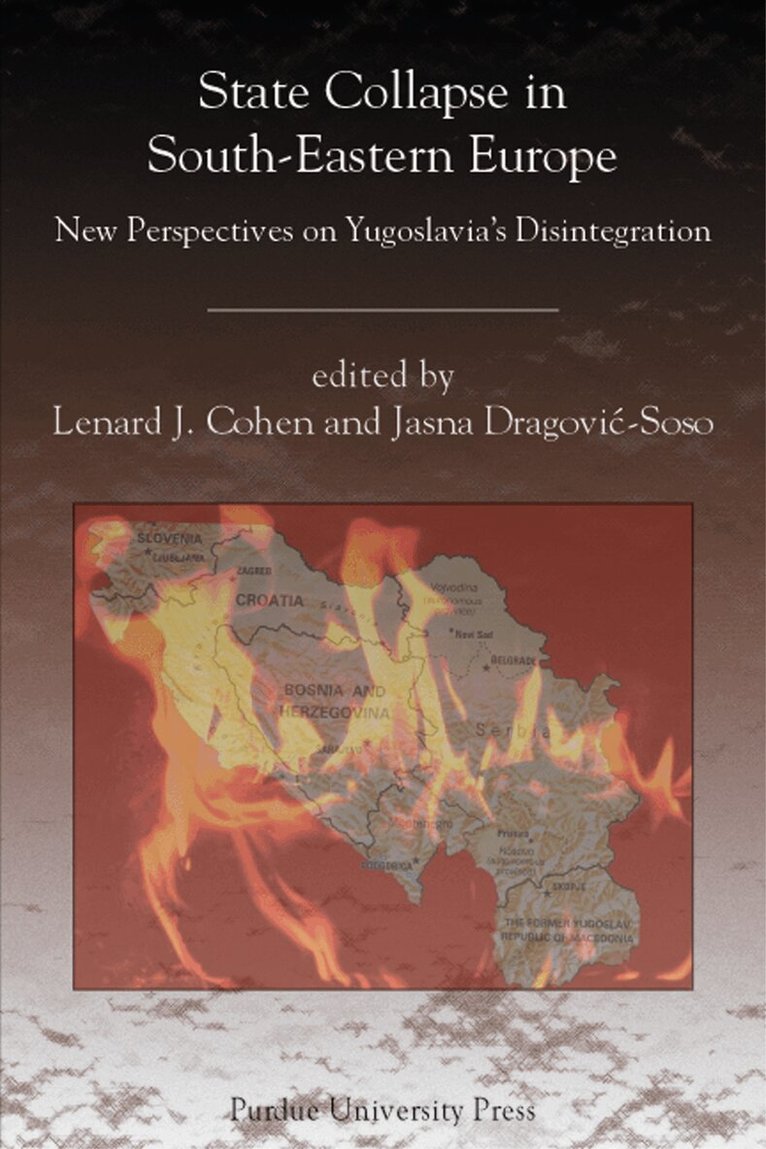
State Collapse in Southeastern Europe: New Perspectives on Yugoslavia's Disintegration is a multidisciplinary approach exploring the historical antecedents and the dynamic process of Yugoslavia's violent dissolution, drawing upon the most recently available resources. The volume, a compilation by distinguished scholars, examines issues broadening our understanding of the Yugoslav case, and also sheds light on how to deal with future episodes of state fragility and failure. The book updates, enhances, and when necessary revises explanations that have already been offered for Yugoslavia's collapse. Moreover, fifteen years after the Yugoslav crisis, the volume fills in the "blank spots" in the historical record. This careful reevaluation of Yugoslav dissolution provides needed assistance to policy makers who are routinely faced with the challenge of forging or rebuilding coherent, stable, and democratic state institutions in deeply divided societies. After an introductory chapter, an overview of the scholarly literature on Yugoslavia's disintegration, the volume is divided into three parts: the first is focused on "The Historical Legacy," including the first, interwar, Yugoslav state, and the effects of the two world wars; the second, "The Socialist Legacy," examines the reopening of the "national question," the legacy of the 1971 Croatian spring and the role of intellectual elites; and the third part, "The Breakdown of the 1980s," analyzes the failure of "Yugoslavism" and the socialist federation's descent into violence. The volume concludes with a comparative survey of the factors that account for the collapse of the three federal socialist states at the outset of the 1990s: Yugoslavia, the USSR, and Czechoslovakia.