Jason A. Springs – författare
Visar alla böcker från författaren Jason A. Springs. Handla med fri frakt och snabb leverans.
10 produkter
10 produkter
Inbunden, Engelska, 2018
871 kr
Skickas inom 7-10 vardagar
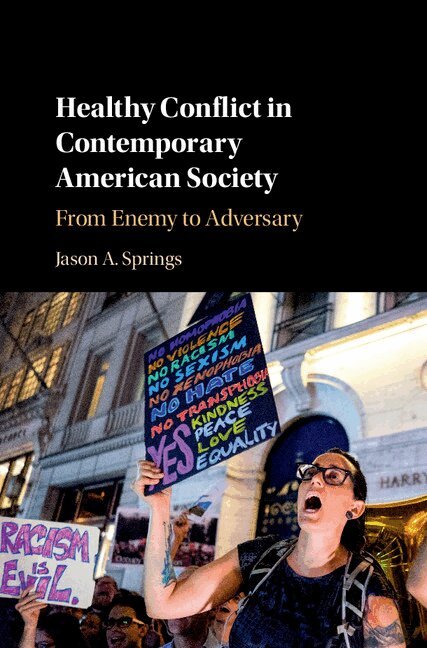
US citizens perceive their society to be one of the most diverse and religiously tolerant in the world today. Yet seemingly intractable religious intolerance and moral conflict abound throughout contemporary US public life - from abortion law battles, same-sex marriage, post-9/11 Islamophobia, public school curriculum controversies, to moral and religious dimensions of the Black Lives Matter and Occupy Wall Street movements, and Tea Party populism. Healthy Conflict in Contemporary American Society develops an approach to democratic discourse and coalition-building across deep moral and religious divisions. Drawing on conflict transformation in peace studies, recent American pragmatist thought, and models of agonistic democracy, Jason Springs argues that, in circumstances riven with conflict between strong religious identities and deep moral and political commitments, productive engagement may depend on thinking creatively about how to constructively utilize conflict and intolerance. The result is an approach oriented by the recognition of conflict as a constituent and life-giving feature of social and political relationships.
Häftad, Engelska, 2020
526 kr
Skickas inom 7-10 vardagar
US citizens perceive their society to be one of the most diverse and religiously tolerant in the world today. Yet seemingly intractable religious intolerance and moral conflict abound throughout contemporary US public life - from abortion law battles, same-sex marriage, post-9/11 Islamophobia, public school curriculum controversies, to moral and religious dimensions of the Black Lives Matter and Occupy Wall Street movements, and Tea Party populism. Healthy Conflict in Contemporary American Society develops an approach to democratic discourse and coalition-building across deep moral and religious divisions. Drawing on conflict transformation in peace studies, recent American pragmatist thought, and models of agonistic democracy, Jason Springs argues that, in circumstances riven with conflict between strong religious identities and deep moral and political commitments, productive engagement may depend on thinking creatively about how to constructively utilize conflict and intolerance. The result is an approach oriented by the recognition of conflict as a constituent and life-giving feature of social and political relationships.
Inbunden, Engelska, 2024
973 kr
Skickas inom 10-15 vardagar
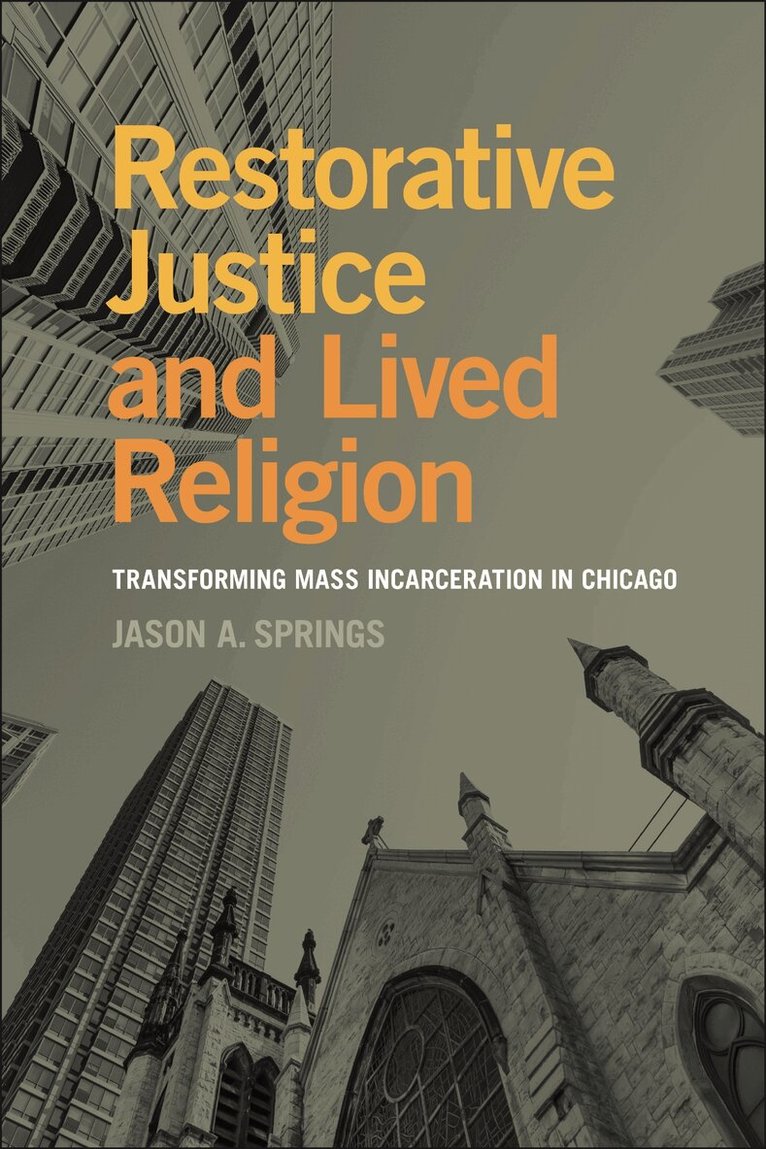
Frames restorative justice as a form of moral and spiritual practice with the capacity to transform injusticeIn the United States "restorative justice" typically refers to small-scale measures that divert alleged wrongdoers from a standard path through the criminal justice system by funneling them into alternative justice programs. These aim not to punish the offender, but to constructively address the harm that wrongdoing may have caused to individuals or to the community, engaging with the wrongdoer to come to a response that might heal and repair the harm.Yet restorative justice initiatives generally fail to challenge and transform the racist system of mass incarceration. This book argues that these initiatives have the potential to do so, but that we need to better understand what restorative justice is, and how it should be implemented. It claims that restorative justice can achieve its desired effect only insofar as it provides a mode of association between people that is, at its core, moral and spiritual. The book explores the ways in which restorative justice ethics and practices exhibit moral and spiritual dynamics, and what difference such "lived religious" dynamics can make for purposes of transforming structural violence.Looking to Chicago's restorative justice network as a model for developing these transformational and sustainable social changes, the volume showcases real-life examples of the kinds of practices and initiatives needed to shift the entrenched dynamics that fuel the prison-industrial complex across the United States.
Häftad, Engelska, 2024
316 kr
Skickas inom 5-8 vardagar
Frames restorative justice as a form of moral and spiritual practice with the capacity to transform injusticeIn the United States "restorative justice" typically refers to small-scale measures that divert alleged wrongdoers from a standard path through the criminal justice system by funneling them into alternative justice programs. These aim not to punish the offender, but to constructively address the harm that wrongdoing may have caused to individuals or to the community, engaging with the wrongdoer to come to a response that might heal and repair the harm.Yet restorative justice initiatives generally fail to challenge and transform the racist system of mass incarceration. This book argues that these initiatives have the potential to do so, but that we need to better understand what restorative justice is, and how it should be implemented. It claims that restorative justice can achieve its desired effect only insofar as it provides a mode of association between people that is, at its core, moral and spiritual. The book explores the ways in which restorative justice ethics and practices exhibit moral and spiritual dynamics, and what difference such "lived religious" dynamics can make for purposes of transforming structural violence.Looking to Chicago's restorative justice network as a model for developing these transformational and sustainable social changes, the volume showcases real-life examples of the kinds of practices and initiatives needed to shift the entrenched dynamics that fuel the prison-industrial complex across the United States.
Häftad, Engelska, 2016
298 kr
Skickas inom 5-8 vardagar
Inbunden, Engelska, 2016
363 kr
Skickas
Inbunden, Engelska, 2013
688 kr
Skickas inom 10-15 vardagar
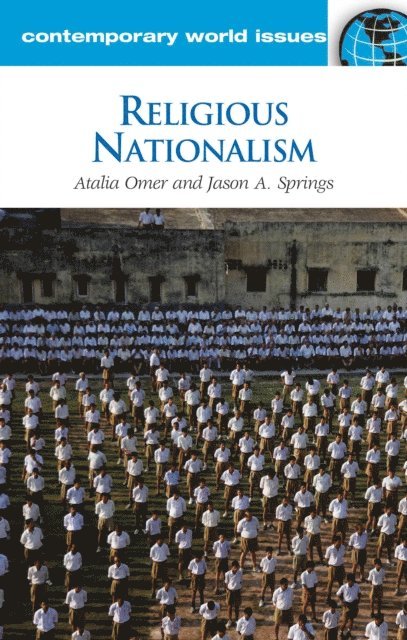
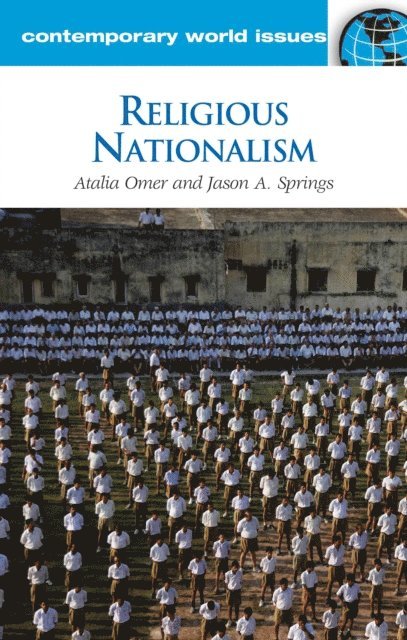
This book tackles the assumptions behind common understandings of religious nationalism, exploring the complex connections between religion, nationalism, conflict, and conflict transformation.Religious Nationalism: A Reference Handbook challenges dominant scholarly works on religious nationalism by identifying the preconceptions that skew analysis of the phenomenon dubbed "religious nationalism." The book utilizes a multidisciplinary approach that draws insight from theories of nationalism, religious studies, peace research, and political theory, and reframes the questions of religious nationalism within the perspectives of secularism, modernity, and Orientalism. In doing so, the author enables readers to uncover their own presumptions regarding the role of religion in public life.Unlike other works on this subject, the work outlines connections between the analysis of the role of religion in conflict to thoughts regarding how religion may relate to processes of peacebuilding and conflict transformation, and further connects the discussion of religious nationalism to broader conversations on the so-called resurgence of religion. The book will serve advanced high school and college students studying religion, international relations, and related subjects while also appealing to a wide audience of readers with an interest in questions of religion and politics.
E-bok
PDF, Engelska, 2013730 kr
Läs direkt efter köp
This book tackles the assumptions behind common understandings of religious nationalism, exploring the complex connections between religion, nationalism, conflict, and conflict transformation.Religious Nationalism: A Reference Handbook challenges dominant scholarly works on religious nationalism by identifying the preconceptions that skew analysis of the phenomenon dubbed "religious nationalism." The book utilizes a multidisciplinary approach that draws insight from theories of nationalism, religious studies, peace research, and political theory, and reframes the questions of religious nationalism within the perspectives of secularism, modernity, and Orientalism. In doing so, the author enables readers to uncover their own presumptions regarding the role of religion in public life.Unlike other works on this subject, the work outlines connections between the analysis of the role of religion in conflict to thoughts regarding how religion may relate to processes of peacebuilding and conflict transformation, and further connects the discussion of religious nationalism to broader conversations on the so-called resurgence of religion. The book will serve advanced high school and college students studying religion, international relations, and related subjects while also appealing to a wide audience of readers with an interest in questions of religion and politics.
E-bok
PDF, Engelska, 2016471 kr
Läs direkt efter köp
Hans Frei, one of the most influential American theologians of the twentieth century, is generally considered a founder of postliberal theology. Frei never set forth his thinking systematically, and he has been criticized for being inconsistent, contradictory, and insufficiently rigorous. Jason Springs seeks here to offer a re-evaluation of Frei's work. Arguing that Hans Frei's theology cannot be understood without a meticulous consideration of the complex equilibrium of his theological and philosophical interests and influences, Springs vindicates Frei's christologically motivated engagement with Ludwig Wittgenstein, Clifford Geertz, and Erich Auerbach, as well as his use of ordinary language philosophy and non-foundational philosophical insights, while illuminating his indebtedness to Karl Barth's theology. Moreover, by placing Frei's work in critical conversation with developments in pragmatist thought and cultural theory since his death, this re-reading aims to resolve many of the misunderstandings that vex his theological legacy. What emerges from Toward a Generous Orthodoxy is a sharpened account of the christologically anchored, interdisciplinary, and conversational character of Frei's theology, one he came to describe as a "e;generous orthodoxy"e;--modeling a way for academic theological voices to take seriously both their vocation to the Christian church and their roles as interlocutors in academic discourse.
E-bok
Engelska, 2013730 kr
Läs direkt efter köp
This book tackles the assumptions behind common understandings of religious nationalism, exploring the complex connections between religion, nationalism, conflict, and conflict transformation.Religious Nationalism: A Reference Handbook challenges dominant scholarly works on religious nationalism by identifying the preconceptions that skew analysis of the phenomenon dubbed "religious nationalism." The book utilizes a multidisciplinary approach that draws insight from theories of nationalism, religious studies, peace research, and political theory, and reframes the questions of religious nationalism within the perspectives of secularism, modernity, and Orientalism. In doing so, the author enables readers to uncover their own presumptions regarding the role of religion in public life.Unlike other works on this subject, the work outlines connections between the analysis of the role of religion in conflict to thoughts regarding how religion may relate to processes of peacebuilding and conflict transformation, and further connects the discussion of religious nationalism to broader conversations on the so-called resurgence of religion. The book will serve advanced high school and college students studying religion, international relations, and related subjects while also appealing to a wide audience of readers with an interest in questions of religion and politics.