Field schools are an intensive and crucial part of an education in folklore and other fields that require ethnographic methodologies. Students learn by doing: conducting interviews, documenting customs or activities, and learning how to respectfully collaborate with communities. In the best cases, field schools balance student learning with care for the communities where they take place. In this volume, veteran field school organizers Cassie Rosita Patterson and Jasper Waugh-Quasebarth make space for former students and community members to reflect on a program administered by the Center for Folklore Studies at The Ohio State University since 2017. The perspectives compiled here offer critical insights about the efficacy of collaborative projects, ways to balance needs of various stakeholders, and models for both institutional–community collaboration and pedagogies of equitable engagement.
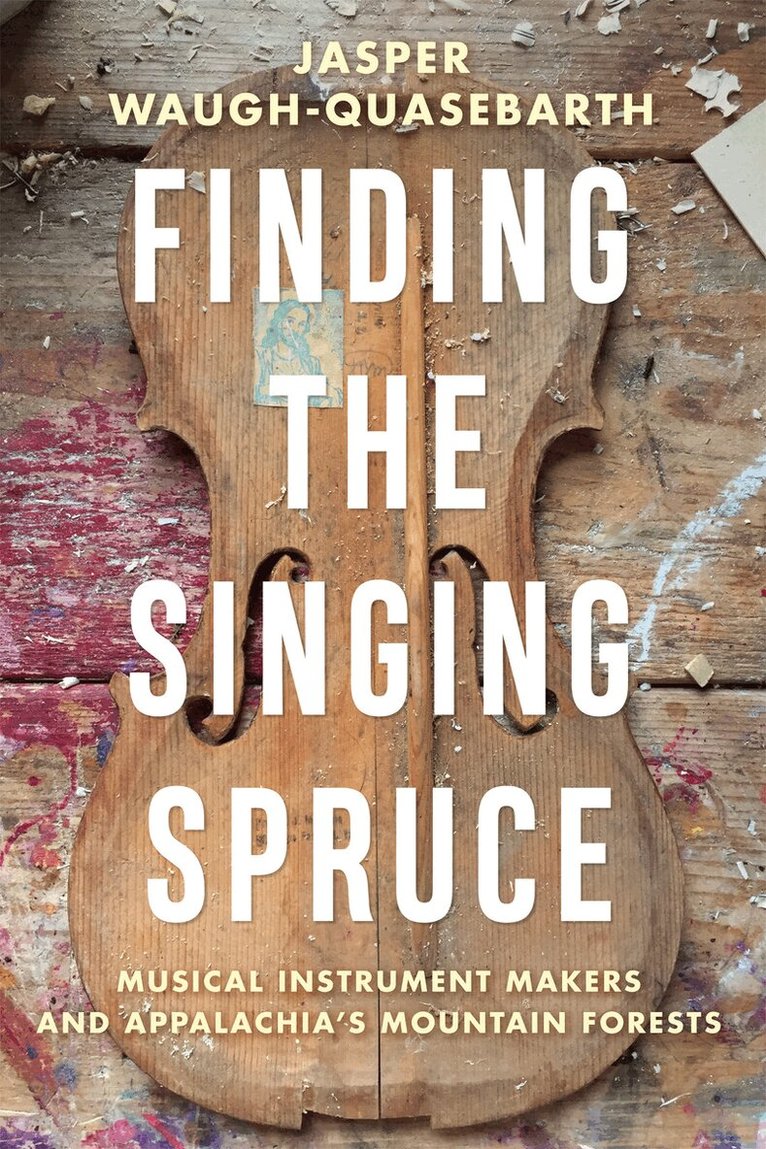
Environment, craft, and meaning in the work of Appalachian instrument makers.How can the craft of musical instrument making help reconnect people to place and reenchant work in Appalachia? How does the sonic search for musical tone change relationships with trees and forests? Following three craftspeople in the mountain forests of Appalachia through their processes of making instruments, Finding the Singing Spruce considers the meanings of work, place, and creative expression in drawing music from wood. Jasper Waugh-Quasebarth explores the complexities and contradictions of instrument-making labor, which is deeply rooted in mountain forests and expressive traditions but also engaged with global processes of production and consumption. Using historical narratives and sensory ethnography, among other approaches, he finds that the craft of lutherie speaks to the past, present, and future of the region’s work and nature.
Field schools are an intensive and crucial part of an education in folklore and other fields that require ethnographic methodologies. Students learn by doing: conducting interviews, documenting customs or activities, and learning how to respectfully collaborate with communities. In the best cases, field schools balance student learning with care for the communities where they take place. In this volume, veteran field school organizers Cassie Rosita Patterson and Jasper Waugh-Quasebarth make space for former students and community members to reflect on a program administered by the Center for Folklore Studies at The Ohio State University since 2017. The perspectives compiled here offer critical insights about the efficacy of collaborative projects, ways to balance needs of various stakeholders, and models for both institutional–community collaboration and pedagogies of equitable engagement.
Environment, craft, and meaning in the work of Appalachian instrument makers.How can the craft of musical instrument making help reconnect people to place and reenchant work in Appalachia? How does the sonic search for musical tone change relationships with trees and forests? Following three craftspeople in the mountain forests of Appalachia through their processes of making instruments, Finding the Singing Spruce considers the meanings of work, place, and creative expression in drawing music from wood. Jasper Waugh-Quasebarth explores the complexities and contradictions of instrument-making labor, which is deeply rooted in mountain forests and expressive traditions but also engaged with global processes of production and consumption. Using historical narratives and sensory ethnography, among other approaches, he finds that the craft of lutherie speaks to the past, present, and future of the region’s work and nature.