Javier Echevarria – författare
Visar alla böcker från författaren . Handla med fri frakt och snabb leverans.
3 produkter
3 produkter
136 kr
Läs direkt efter köp
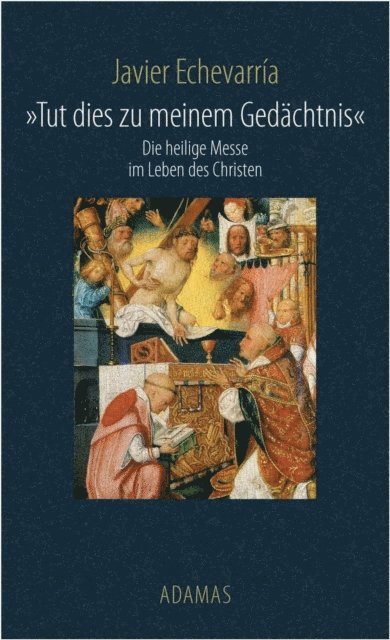
Das von Papst Johannes Paul II. ausgerufene Jahr der Eucharistie hat das Nachdenken über die Mitte und Wurzel des christlichen Lebens beflügelt und uns das Geheimnis unseres Glaubens theologisch neu und tiefer erschlossen.Die Eucharistie, die sich in der Glaubensgemeinschaft der Kirche vollzieht, ist gleichzeitig der Ort der Begegnung jedes einzelnen mit Christus, um kraft dieser Vereinigung dann auszustrahlen auf die Welt und sie im Geist Christi zu verwandeln.Hier setzen, gestuetzt auf den reichen Fundus geistlicher Literatur durch die Jahrhunderte bis in unsere Tage, die Überlegungen und geistlichen Impulse des Autors an. Dem Aufbau der Messe folgend, geht er dem Werdegang der einzelnen Messriten nach und deutet sie in ihrer Wirksamkeit für das tätige christliche Leben. Sein Buch richtet sich in gleicher Weise an Priester und Laien.
Häftad, Engelska, 2012
541 kr
Skickas inom 10-15 vardagar
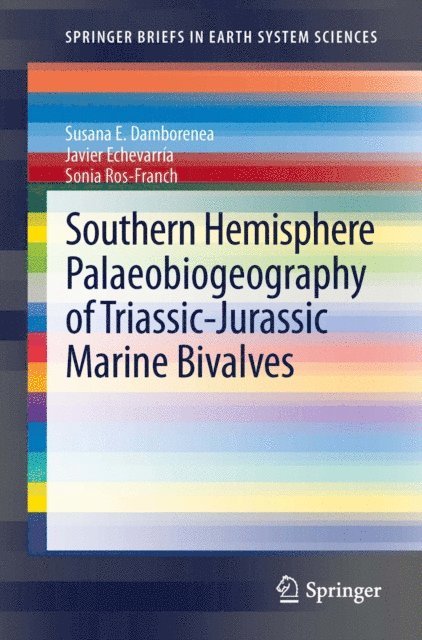
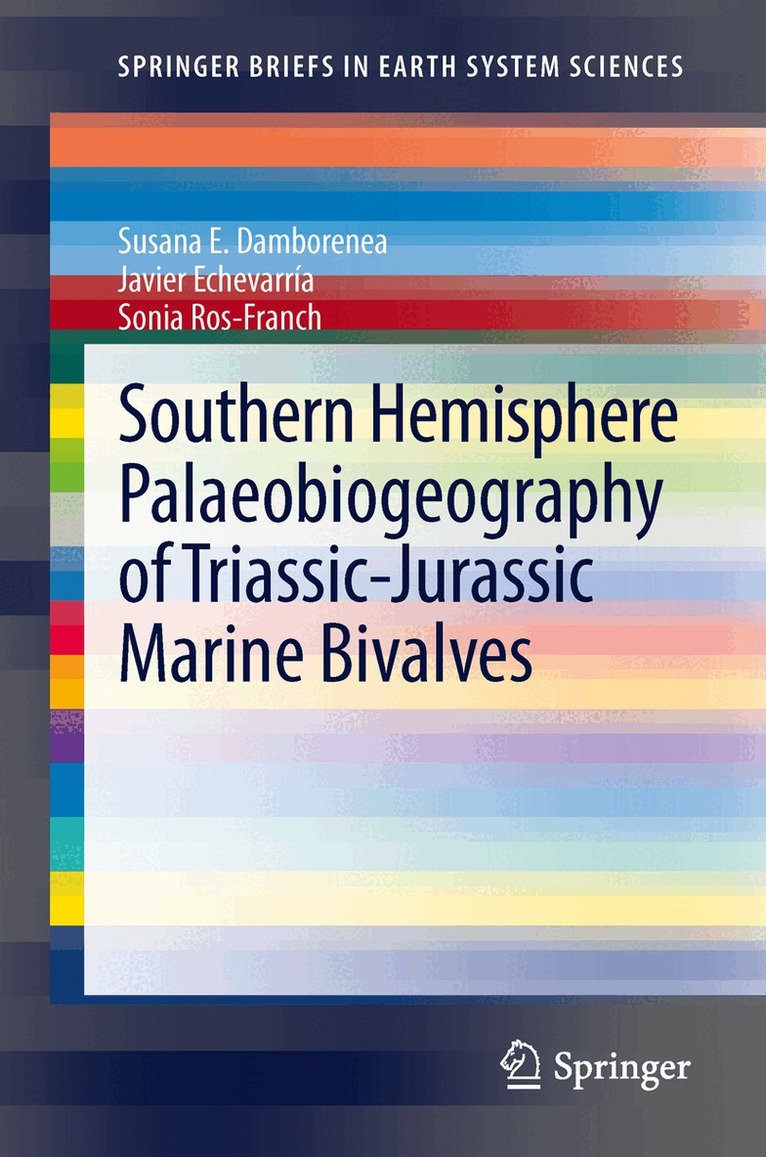
Palaeobiogeography is a complex subject which processes information provided by both Biology and Earth Sciences. It is conceptually and philosophically equivalent to neobiogeography. Nevertheless, its methods are somewhat different, since it is limited by the incompleteness of the fossil record. On the other hand, it has direct access to the time dimension, a key ingredient of organic evolution. Mesozoic benthonic mollusks, and especially bivalves, have a great potential for palaeobiogeographical analysis due to their commonly good preservation, abundance, diversity and high dispersion potential at the larval stage. From a merely descriptive point of view, the analysis of their distribution shows latitudinal gradients and distributional patterns, both at regional and global scales, which are the basis for the recognition of biochoremas or palaeobiogeographical units of different ranks. Moving forward towards a causal palaeobiogeography, these organisms also provide interesting insight into particular biogeographical questions, such as bipolarity and its origin. The evolution in time of the recognized biochoremas can be discussed in relation to palaeoclimas and extinction events. Finally, some of the results obtained from the analysis of the distribution of past bivalve biotas were even used to propose and discuss the development of marine corridors and argue about the distribution of continents in the past.
E-bok
PDF, Engelska, 2012687 kr
Läs direkt efter köp
Palaeobiogeography is a complex subject which processes information provided by both Biology and Earth Sciences. It is conceptually and philosophically equivalent to neobiogeography. Nevertheless, its methods are somewhat different, since it is limited by the incompleteness of the fossil record. On the other hand, it has direct access to the time dimension, a key ingredient of organic evolution. Mesozoic benthonic mollusks, and especially bivalves, have a great potential for palaeobiogeographical analysis due to their commonly good preservation, abundance, diversity and high dispersion potential at the larval stage. From a merely descriptive point of view, the analysis of their distribution shows latitudinal gradients and distributional patterns, both at regional and global scales, which are the basis for the recognition of biochoremas or palaeobiogeographical units of different ranks. Moving forward towards a causal palaeobiogeography, these organisms also provide interesting insight into particular biogeographical questions, such as bipolarity and its origin. The evolution in time of the recognized biochoremas can be discussed in relation to palaeoclimas and extinction events. Finally, some of the results obtained from the analysis of the distribution of past bivalve biotas were even used to propose and discuss the development of marine corridors and argue about the distribution of continents in the past.