Jay S. Albanese - Böcker
Visar alla böcker från författaren Jay S. Albanese. Handla med fri frakt och snabb leverans.
8 produkter
8 produkter
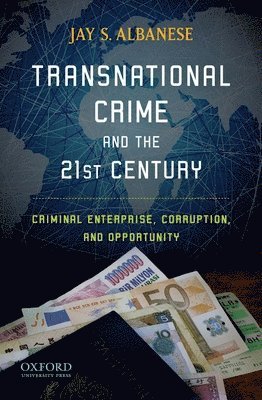
Transnational Crime and the 21st Century: Criminal Enterprise, Corruption, and Opportunity
Häftad, Engelska
1 660 kr
Skickas inom 3-6 vardagar
554 kr
Skickas inom 10-15 vardagar
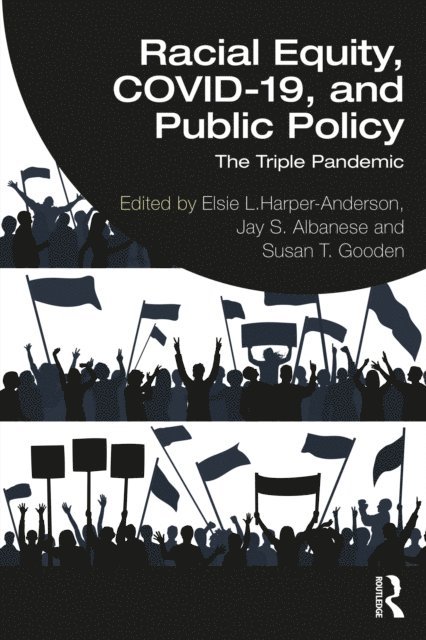
Racial Equity, COVID-19, and Public Policy: The Triple Pandemic focuses on the health, economic, and justice impacts of the COVID-19 pandemic on racial equity. The book does not simply document the problems made worse by the pandemic, but it provides historical context for issues that rose to the surface in new ways, the existing inequities revealed during COVID-19, as well as policy responses to those issues. The volume is distinguished in its focus on the implications for racial equity through an examination of both existing public policy and new ideas for change.The chapters in this volume demonstrate the ways in which this period of American history and politics is unique, most notably in the convergence of major threats to public health, economic livelihood, and access to justice. This “triple pandemic” will be felt in the coming years and will continue to unfold, depending upon the adequacy of the contemporary response. This edited volume is designed to provide the reader with a thorough understanding of issues including policing, housing, business, disaster response, education, immigration, vaccine distribution, reentry of justice-involved individuals, and the responses to public protests—all with a unifying focus on racial inequities and social justice concerns that elevated these issues to broader public attention and political response. This coalescing emphasis on public policy as both a cause and effect to address these issues makes the book a unique contribution to the public policy literature. This book responds to audiences seeking a better understanding of the events that occurred, the conditions that set the stage for their eruption into wider public view, and what might be done to prevent social and racial inequities in the future.
1 952 kr
Skickas inom 10-15 vardagar
Racial Equity, COVID-19, and Public Policy: The Triple Pandemic focuses on the health, economic, and justice impacts of the COVID-19 pandemic on racial equity. The book does not simply document the problems made worse by the pandemic, but it provides historical context for issues that rose to the surface in new ways, the existing inequities revealed during COVID-19, as well as policy responses to those issues. The volume is distinguished in its focus on the implications for racial equity through an examination of both existing public policy and new ideas for change.The chapters in this volume demonstrate the ways in which this period of American history and politics is unique, most notably in the convergence of major threats to public health, economic livelihood, and access to justice. This “triple pandemic” will be felt in the coming years and will continue to unfold, depending upon the adequacy of the contemporary response. This edited volume is designed to provide the reader with a thorough understanding of issues including policing, housing, business, disaster response, education, immigration, vaccine distribution, reentry of justice-involved individuals, and the responses to public protests—all with a unifying focus on racial inequities and social justice concerns that elevated these issues to broader public attention and political response. This coalescing emphasis on public policy as both a cause and effect to address these issues makes the book a unique contribution to the public policy literature. This book responds to audiences seeking a better understanding of the events that occurred, the conditions that set the stage for their eruption into wider public view, and what might be done to prevent social and racial inequities in the future.
2 098 kr
Skickas inom 10-15 vardagar
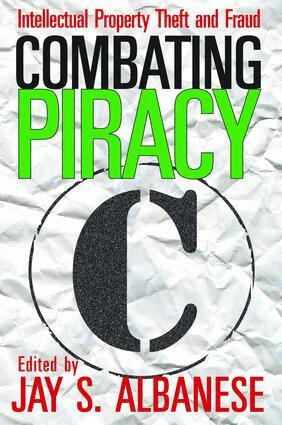
Fraud and piracy of products and ideas have become common in the early twenty-first century, as opportunities to commit them expand, and technology makes fraud and piracy easy to carry out. In Combating Piracy: Intellectual Property Theft and Fraud, Jay S. Albanese and his contributors provide new analyses of intellectual property theft and how perpetrators innovate and adapt in response to shifting opportunities.The cases described here illustrate the wide-ranging nature of the activity and the spectrum of persons involved in piracy of intellectual property. Intellectual property theft includes stolen copyrights, trademarks, trade secrets, and patents, which represent the creative work of individuals for which others cannot claim credit. The distributors of books, movies, music, and other forms of intellectual property pay for this right, and those who distribute this work without compensation to its creator effectively hijack or "pirate" that property without the owner's or distributor's permission. The problem has grown to the point where most software in many parts of the world is pirated. The World Health Organization estimates that 10 percent of all pharmaceuticals available worldwide are counterfeit.Such widespread fraud illustrates the global reach of the problem and the need for international remedies that include changed attitudes, public education, increasing the likelihood of apprehension, and reducing available opportunities. The contributors show that piracy is a form of fraud, a form of organized crime, a white-collar crime, a criminal activity with causes we can isolate and prevent, and a global problem. This book examines each of these perspectives to determine how they contribute to our understanding of the issues involved.
620 kr
Skickas inom 10-15 vardagar
Fraud and piracy of products and ideas have become common in the early twenty-first century, as opportunities to commit them expand, and technology makes fraud and piracy easy to carry out. In Combating Piracy: Intellectual Property Theft and Fraud, Jay S. Albanese and his contributors provide new analyses of intellectual property theft and how perpetrators innovate and adapt in response to shifting opportunities.The cases described here illustrate the wide-ranging nature of the activity and the spectrum of persons involved in piracy of intellectual property. Intellectual property theft includes stolen copyrights, trademarks, trade secrets, and patents, which represent the creative work of individuals for which others cannot claim credit. The distributors of books, movies, music, and other forms of intellectual property pay for this right, and those who distribute this work without compensation to its creator effectively hijack or "pirate" that property without the owner's or distributor's permission. The problem has grown to the point where most software in many parts of the world is pirated. The World Health Organization estimates that 10 percent of all pharmaceuticals available worldwide are counterfeit.Such widespread fraud illustrates the global reach of the problem and the need for international remedies that include changed attitudes, public education, increasing the likelihood of apprehension, and reducing available opportunities. The contributors show that piracy is a form of fraud, a form of organized crime, a white-collar crime, a criminal activity with causes we can isolate and prevent, and a global problem. This book examines each of these perspectives to determine how they contribute to our understanding of the issues involved.
2 566 kr
Skickas inom 3-6 vardagar
Transnational crime and justice will characterize the 21st century in same way that traditional street crimes dominated the 20th century. In the Handbook of Transnational Crime and Justice, Philip Reichel and Jay Albanese bring together top scholars from around the world to offer perspectives on the laws, crimes, and criminal justice responses to transnational crime. This concise, reader-friendly handbook is organized logically around four major themes: the problem of transnational crime; analysis of specific transnational crimes; approaches to its control; and regional geographical analyses. Each comprehensive chapter is designed to be explored as a stand-alone topic, making this handbook an important textbook and reference tool for students and practitioners alike.
1 169 kr
Skickas
Transnational crime and justice will characterize the 21st century in same way that traditional street crimes dominated the 20th century. In the Handbook of Transnational Crime and Justice, Philip Reichel and Jay Albanese bring together top scholars from around the world to offer perspectives on the laws, crimes, and criminal justice responses to transnational crime. This concise, reader-friendly handbook is organized logically around four major themes: the problem of transnational crime; analysis of specific transnational crimes; approaches to its control; and regional geographical analyses. Each comprehensive chapter is designed to be explored as a stand-alone topic, making this handbook an important textbook and reference tool for students and practitioners alike.
980 kr
Skickas
This unique text explores the expansive topic of transnational organized crime, incorporating expert perspectives found throughout the world’s six inhabited continents: North America, Central and South America, Europe, Africa, Asia, and Oceania. Editors Jay S. Albanese and Philip L. Reichel gather the knowledge and expertise of numerous authors, researchers, and practitioners in this field who are either native to each world region, have extensively travelled and worked there, or are recognized scholars for those regions. Through this text, readers will begin to understand the geographic, cultural, and regional similarities and differences underying the common threat of transnational organized crime, as well as how to address the global expansion of organized crime today.