Jaya Shankar Tumuluru – författare
721 kr
Skickas inom 10-15 vardagar
828 kr
Läs direkt efter köp
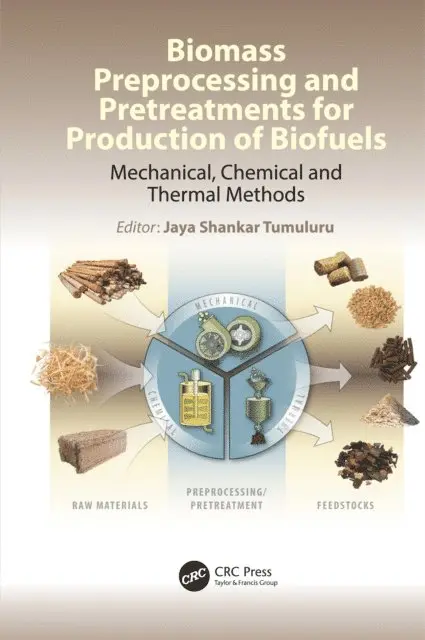
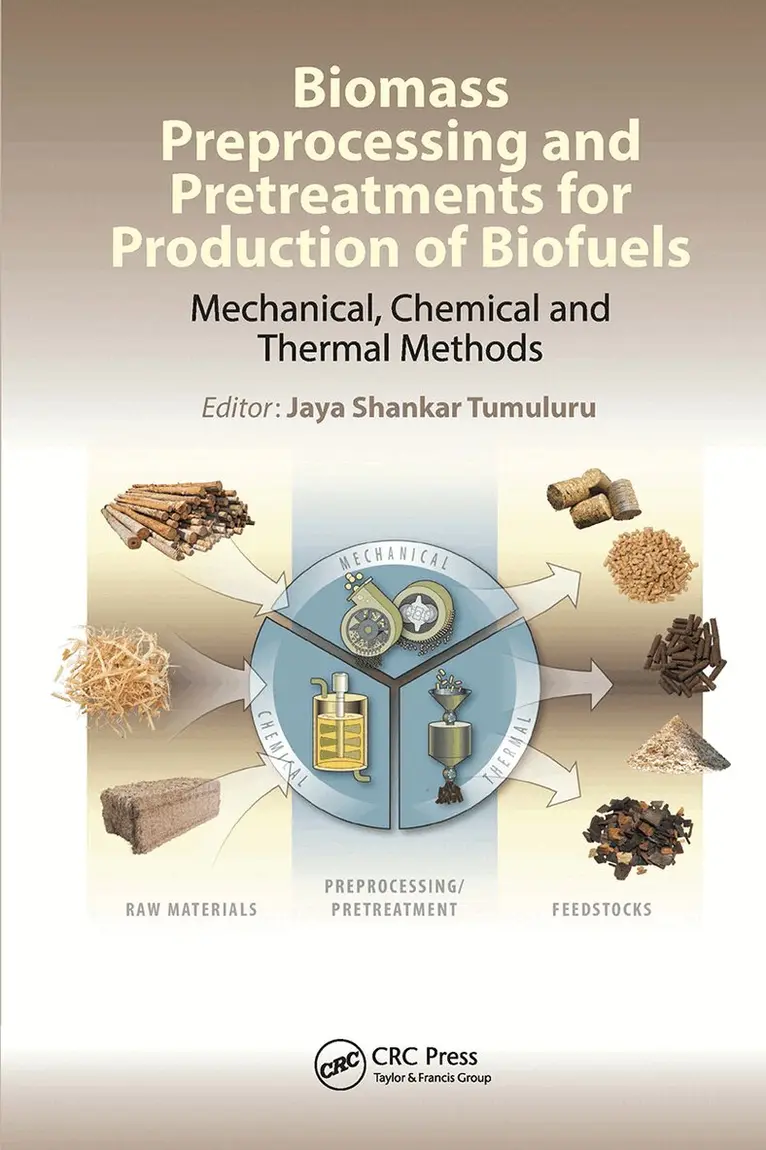
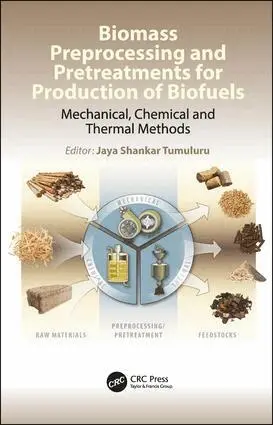
Engineering the physical, chemical, and energy properties of lignocellulosic biomass is important to produce high-quality consistent feedstocks with reduced variability for biofuels production. The emphasis of this book will be the beneficial impacts that mechanical, chemical, and thermal preprocessing methods can have on lignocellulosic biomass quality attributes or specifications for solid and liquid biofuels and biopower production technologies. "Preprocessing" refers to treatments that can occur at a distance from conversion and result in an intermediate with added value, with improved conversion performance and efficiency.
This book explores the effects of mechanical, chemical, and thermal preprocessing methods on lignocellulosic biomass physical properties and chemical composition and their suitability for biofuels production. For example, biomass mechanical preprocessing methods like size reduction (which impacts the particle size and distribution) and densification (density and size and shape) are important for feedstocks to meet the quality requirements for both biochemical and thermochemical conversion methods like enzymatic conversion, gasification, and pyrolysis process. Thermal preprocessing methods like drying, deep drying, torrefaction, steam explosion, hydrothermal carbonization, and hydrothermal liquefaction effect feedstock''s proximate, ultimate and energy property, making biomass suitable for both solid and liquid fuel production. Chemical preprocessing which includes washing, leaching, acid, alkali, and ammonia fiber explosion that can enable biochemical composition, such as modification of lignin and hemicellulose, and impacts the enzymatic conversion application for liquid fuels production. This book also explores the integration of these preprocessing technologies to achieve desired lignocellulosic biomass quality attributes for biofuels production.
2 809 kr
Skickas inom 10-15 vardagar
835 kr
Läs direkt efter köp
Engineering the physical, chemical, and energy properties of lignocellulosic biomass is important to produce high-quality consistent feedstocks with reduced variability for biofuels production. The emphasis of this book will be the beneficial impacts that mechanical, chemical, and thermal preprocessing methods can have on lignocellulosic biomass quality attributes or specifications for solid and liquid biofuels and biopower production technologies. "Preprocessing" refers to treatments that can occur at a distance from conversion and result in an intermediate with added value, with improved conversion performance and efficiency.
This book explores the effects of mechanical, chemical, and thermal preprocessing methods on lignocellulosic biomass physical properties and chemical composition and their suitability for biofuels production. For example, biomass mechanical preprocessing methods like size reduction (which impacts the particle size and distribution) and densification (density and size and shape) are important for feedstocks to meet the quality requirements for both biochemical and thermochemical conversion methods like enzymatic conversion, gasification, and pyrolysis process. Thermal preprocessing methods like drying, deep drying, torrefaction, steam explosion, hydrothermal carbonization, and hydrothermal liquefaction effect feedstock''s proximate, ultimate and energy property, making biomass suitable for both solid and liquid fuel production. Chemical preprocessing which includes washing, leaching, acid, alkali, and ammonia fiber explosion that can enable biochemical composition, such as modification of lignin and hemicellulose, and impacts the enzymatic conversion application for liquid fuels production. This book also explores the integration of these preprocessing technologies to achieve desired lignocellulosic biomass quality attributes for biofuels production.
Densification Impact On Raw, Chemically And Thermally Pretreated Biomass: Physical Properties And Biofuels Production
1 603 kr
Skickas inom 3-6 vardagar
1 741 kr
Skickas inom 10-15 vardagar
2 130 kr
Läs direkt efter köp
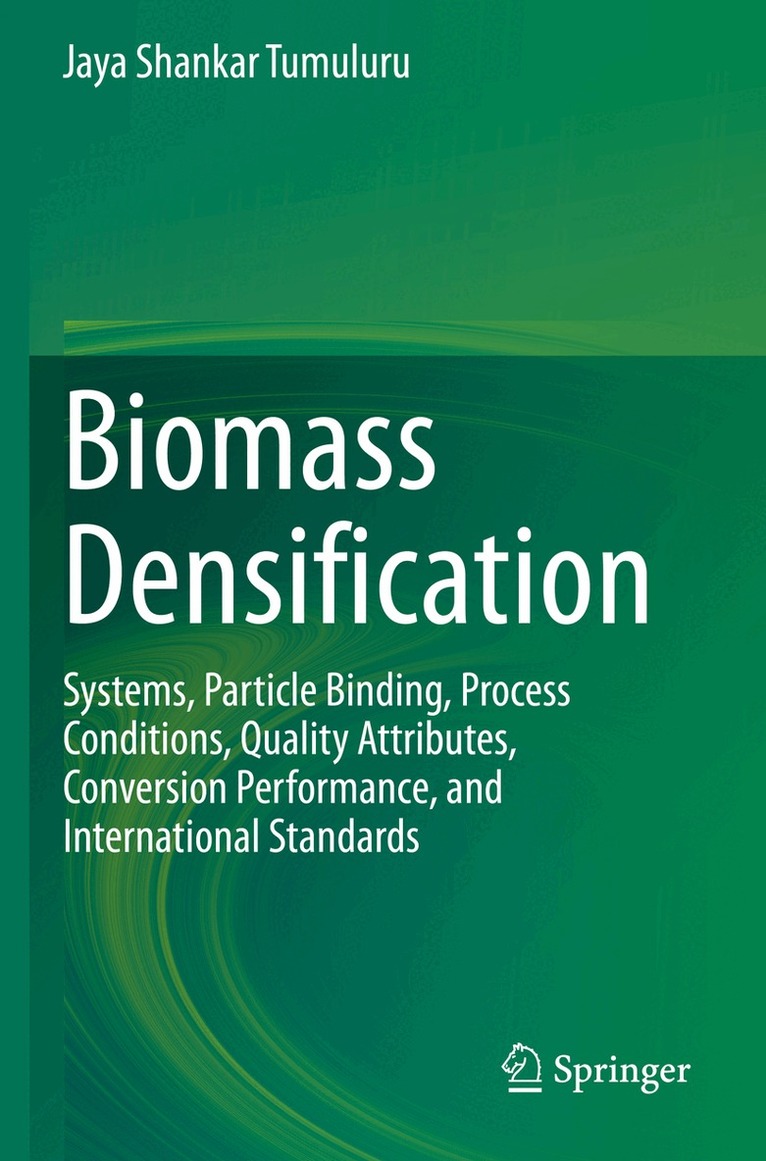
This monograph discusses the various biomass feedstocks currently available for biofuels production, and mechanical preprocessing technologies to reduce the feedstock variability for biofuels applications.
Variability in the properties of biomass—in terms of moisture, particle size distribution, and low-density—results in storage, transportation, handling, and feeding issues. Currently, biorefineries face serious particle bridging issues, uneven discharge, jamming of equipment, and transportation problems. These issues must be solved in order for smooth operations to be possible. Mechanical preprocessing technologies, such as size reduction, densification, and moisture management using drying and dewatering, can help to overcome these issues. Many densification systems exist that will assist in converting low-density biomass to a high-density commodity type feedstock.
In 6 chapters, the impact of densification process variables, such as temperature, pressure, moisture, etc., on biomass particle agglomeration, the quality of the densified products, and the overall energy consumption of the process are discussed, as are the various compression models for powders that can be used for biomass particles agglomeration behavior and optimization of the densification process using statistical and evolutionary methods. The suitability of these densified products for biochemical and thermochemical conversion pathways is also discussed, as well as the various international standards (CEN and ISO) they must adhere to.
The author has worked on biomass preprocessing at Idaho National Laboratory for the last ten years. He is the principal investigator for the U.S. Department of Energy Bioenergy Technologies Office-funded “Biomass Size Reduction and Densification” project. He has developed preprocessing technologies to reduce cost and improve quality. The author has published many papers and books focused on biomass preprocessing and pretreatments.Biomass process engineers and biorefinery managers can benefit from this book. Students in chemical, mechanical, biological, and environmental engineering can also use the book to understand preprocessing technologies, which greatly assist in improving the biomass critical material attributes. The book can help policymakers and energy systems planners to understand the biomass properties limitations and technologies to overcome the same.
1 741 kr
Skickas inom 10-15 vardagar
2 158 kr
Skickas inom 5-8 vardagar