Jean Cousteix - Böcker
Visar alla böcker från författaren Jean Cousteix. Handla med fri frakt och snabb leverans.
6 produkter
6 produkter
536 kr
Skickas inom 10-15 vardagar
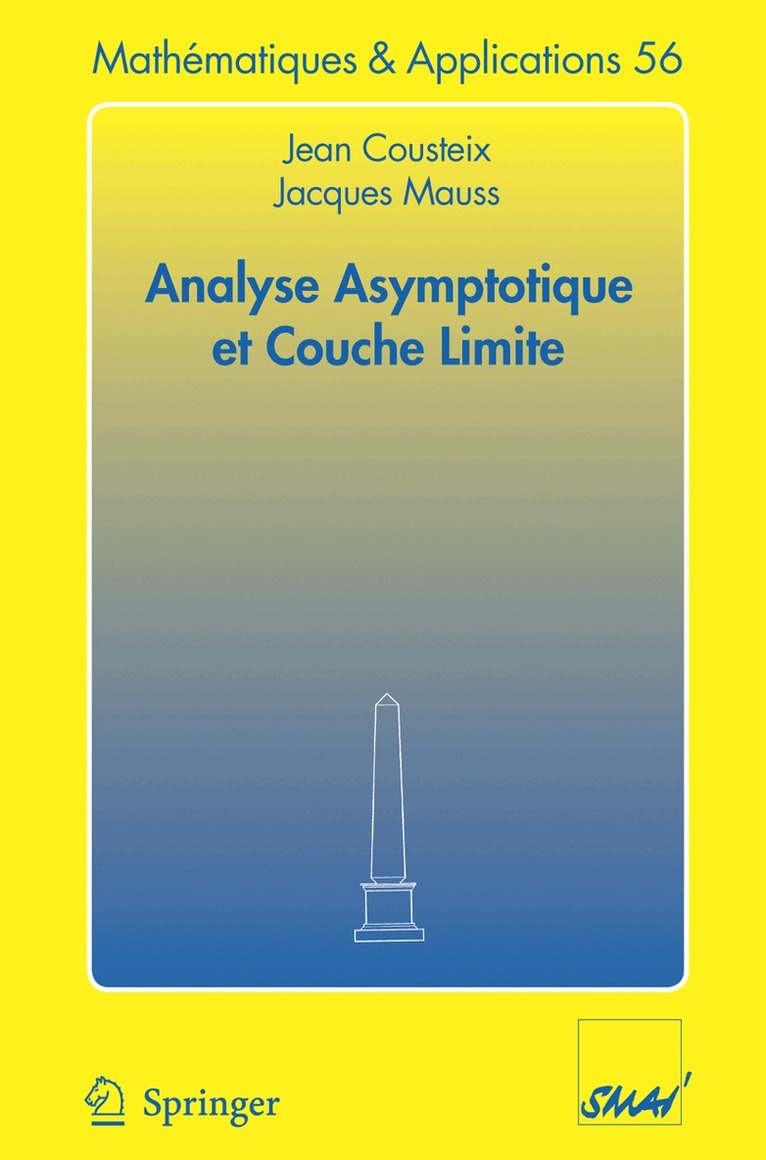
Le but du livre est de donner aux enseignants et aux étudiants (à partir de Bac+4) en mathématiques appliquées et en mécanique des fluides un outil d'enseignement et d'apprentissage illustré par cinquante problèmes accompagnés de leur correction détaillée. Ce livre présente une nouvelle méthode d'analyse asymptotique pour des problèmes de "couche limite". Celle-ci est appelée MASC "Méthode des Approximations Successives Complémentaires". La première moitié du livre est consacrée, outre la présentation de la MASC, à ordonner les connaissances nécessaires à l'analyse asymptotique et à donner les clés permettant la compréhension de ce qu'est un problème dit de "couche limite" et des méthodes permettant de construire une approximation. La seconde partie est consacrée à l'application de la MASC en mécanique des fluides et à la comparaison avec les méthodes plus traditionnelles issues de la célèbre MDAR, "Méthode des Développements Asymptotiques Raccordés".
1 064 kr
Skickas inom 10-15 vardagar
This book presents a new method of asymptotic analysis of boundary-layer problems, the Successive Complementary Expansion Method (SCEM). The first part is devoted to a general presentation of the tools of asymptotic analysis. It gives the keys to understand a boundary-layer problem and explains the methods to construct an approximation. The second part is devoted to SCEM and its applications in fluid mechanics, including external and internal flows.
1 064 kr
Skickas inom 10-15 vardagar
This book presents a new method of asymptotic analysis of boundary-layer problems, the Successive Complementary Expansion Method (SCEM). The first part is devoted to a general presentation of the tools of asymptotic analysis. It gives the keys to understand a boundary-layer problem and explains the methods to construct an approximation. The second part is devoted to SCEM and its applications in fluid mechanics, including external and internal flows.
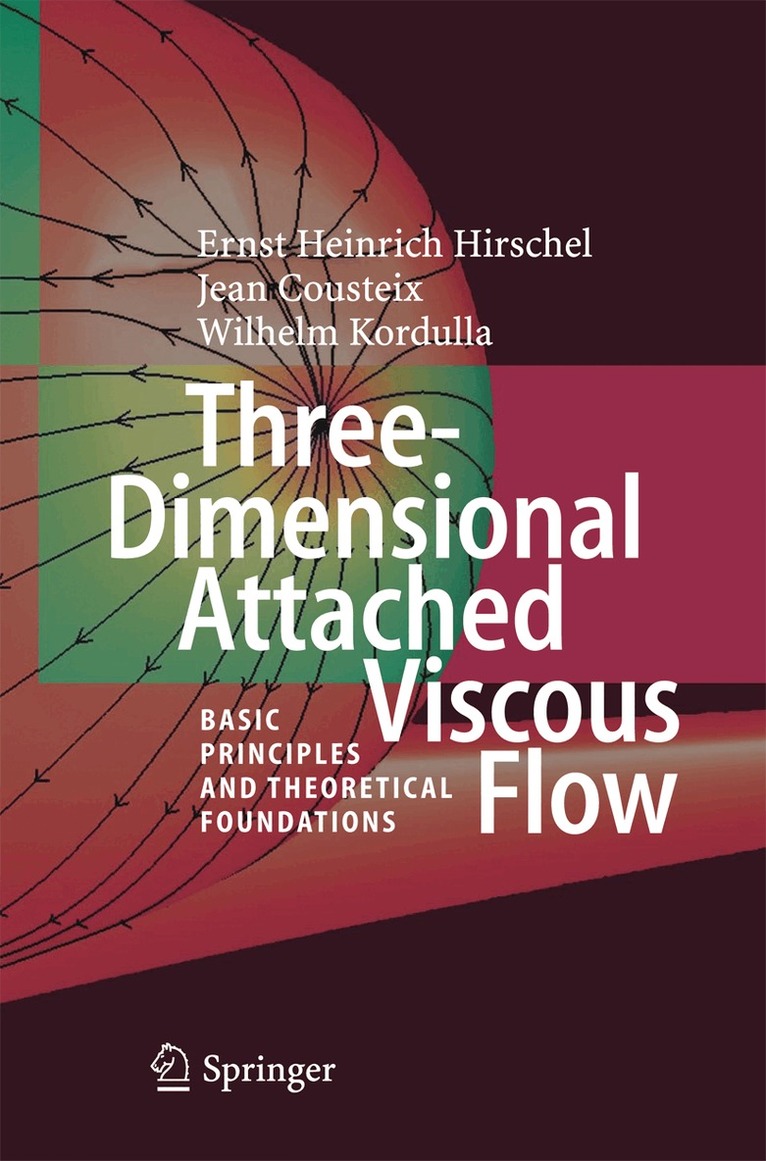
Three-Dimensional Attached Viscous Flow
Basic Principles and Theoretical Foundations
Inbunden, Engelska, 2013
1 064 kr
Skickas inom 10-15 vardagar
Viscous flow is treated usually in the frame of boundary-layer theory and as two-dimensional flow. Books on boundary layers give at most the describing equations for three-dimensional boundary layers, and solutions often only for some special cases.This book provides basic principles and theoretical foundations regarding three-dimensional attached viscous flow. Emphasis is put on general three-dimensional attached viscous flows and not on three-dimensional boundary layers. This wider scope is necessary in view of the theoretical and practical problems to be mastered in practice. The topics are weak, strong, and global interaction, the locality principle, properties of three-dimensional viscous flow, thermal surface effects, characteristic properties, wall compatibility conditions, connections between inviscid and viscous flow, flow topology, quasi-one- and two-dimensional flows, laminar-turbulent transition and turbulence. Though the primary flight speed range is that of civil air transport vehicles, flows past other flying vehicles up to hypersonic speeds are also considered. Emphasis is put on general three-dimensional attached viscous flows and not on three-dimensional boundary layers, as this wider scope is necessary in view of the theoretical and practical problems that have to be overcome in practice.The specific topics covered include weak, strong, and global interaction; the locality principle; properties of three-dimensional viscous flows; thermal surface effects; characteristic properties; wall compatibility conditions; connections between inviscid and viscous flows; flow topology; quasi-one- and two-dimensional flows; laminar-turbulent transition; and turbulence. Detailed discussions of examples illustrate these topics and the relevant phenomena encountered in three-dimensional viscous flows. The full governing equations, reference-temperature relations for qualitative considerations and estimations of flow properties, and coordinates for fuselages and wings are also provided. Sample problems with solutions allow readers to test their understanding.
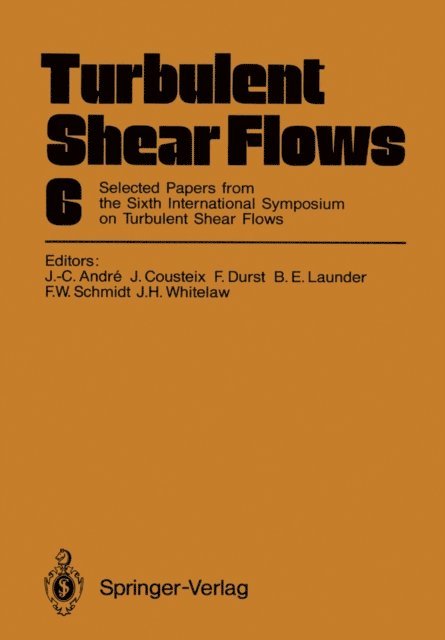
Turbulent Shear Flows 6
Selected Papers from the Sixth International Symposium on Turbulent Shear Flows, Université Paul Sabatier, Toulouse, France, September 7–9, 1987
Häftad, Engelska, 2012
536 kr
Skickas inom 10-15 vardagar
Since the inaugural symposium at the Pennsylvania State University in 1977, the venues for the series of biennial symposia on turbulent shear flows have alternated between the USA and Europe. For the Sixth Symposium, the first to be held in France, the city of Toulouse proved a natura] choice, being a centre for the aerospace industry, meteorological research and higher education. The meeting was hosted by the Paul Sabatier University on the southern perimeter of the city, and there nearly 300 workers in the field of turbulence converged to pronounce upon, debate and absorb the current issues in turbulent shear flows and to enjoy the unfailing September sunshine. The meeting had attracted more than 200 offers of papers from which just over 100 full papers and about 20 shorter communications in open forums could be accommodated. The present volume contains 28 of the original symposium presentations selected by the editors. Each contribution has been revised by its authors - sometimes quite extensively -in the light of the oral presentation. It is our hope that the selection provides a substantial statement of permanent interest on current research in the five areas covered by this book, i.e. fundamentals and closures, scalar transport and geophysical flows, aerodynamic flows, complex flows, and numerical simulations.
Three-Dimensional Attached Viscous Flow
Basic Principles and Theoretical Foundations
Häftad, Engelska, 2016
1 064 kr
Skickas inom 10-15 vardagar
Viscous flow is treated usually in the frame of boundary-layer theory and as two-dimensional flow. Books on boundary layers give at most the describing equations for three-dimensional boundary layers, and solutions often only for some special cases.This book provides basic principles and theoretical foundations regarding three-dimensional attached viscous flow. Emphasis is put on general three-dimensional attached viscous flows and not on three-dimensional boundary layers. This wider scope is necessary in view of the theoretical and practical problems to be mastered in practice. The topics are weak, strong, and global interaction, the locality principle, properties of three-dimensional viscous flow, thermal surface effects, characteristic properties, wall compatibility conditions, connections between inviscid and viscous flow, flow topology, quasi-one- and two-dimensional flows, laminar-turbulent transition and turbulence. Though the primary flight speed range is that of civil air transport vehicles, flows past other flying vehicles up to hypersonic speeds are also considered. Emphasis is put on general three-dimensional attached viscous flows and not on three-dimensional boundary layers, as this wider scope is necessary in view of the theoretical and practical problems that have to be overcome in practice.The specific topics covered include weak, strong, and global interaction; the locality principle; properties of three-dimensional viscous flows; thermal surface effects; characteristic properties; wall compatibility conditions; connections between inviscid and viscous flows; flow topology; quasi-one- and two-dimensional flows; laminar-turbulent transition; and turbulence. Detailed discussions of examples illustrate these topics and the relevant phenomena encountered in three-dimensional viscous flows. The full governing equations, reference-temperature relations for qualitative considerations and estimations of flow properties, and coordinates for fuselages and wings are also provided. Sample problems with solutions allow readers to test their understanding.