Jean-Etienne Joullie - Böcker
Visar alla böcker från författaren Jean-Etienne Joullie. Handla med fri frakt och snabb leverans.
6 produkter
6 produkter
534 kr
Skickas inom 10-15 vardagar
The book proposes a critique of Nietzsche's works 'from within'. In doing so, it answers the continuing question asked by any reader of Nietzsche: Why did he decide not to write the major work he said he would write?
1 904 kr
Skickas inom 10-15 vardagar
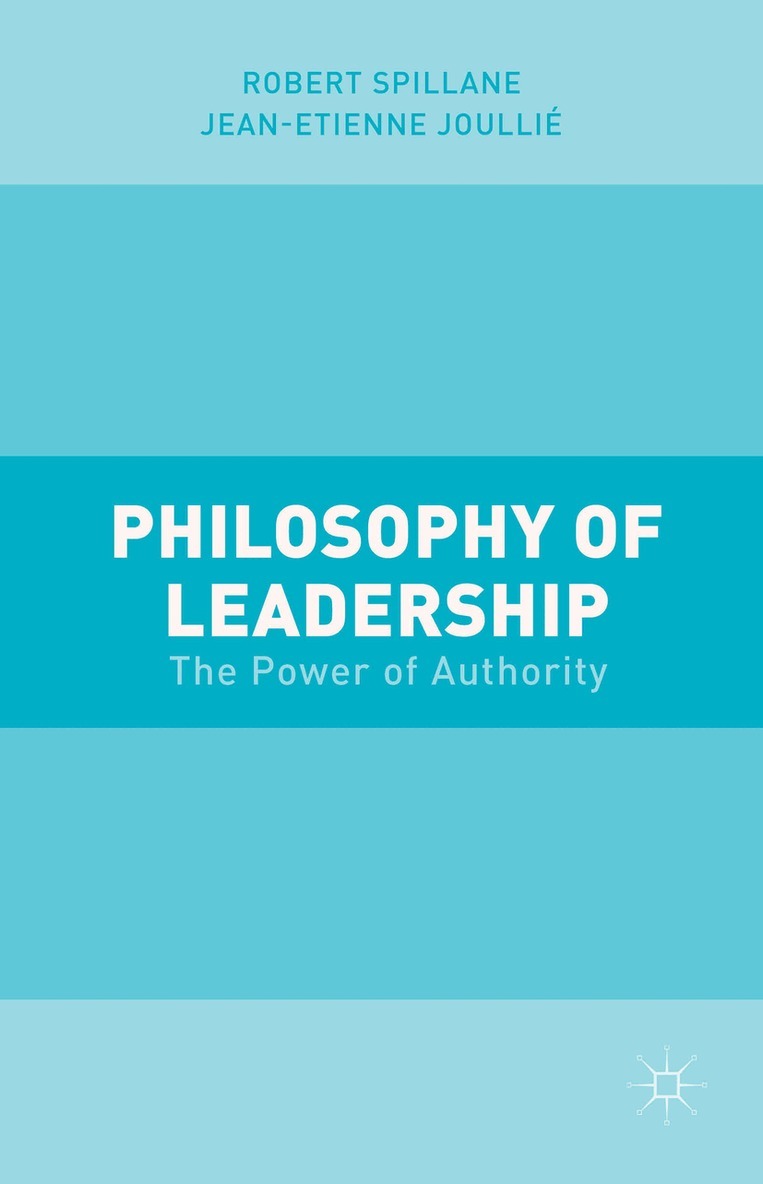
Philosophy of Leadership has been written to arouse curiosity, not to satisfy it. The authors point out ideas about leadership which draw upon both ancient and modern wisdom. This book develops a philosophy of leadership by tracing the evolution of Western ideas from philosophical perspectives, ancient and modern.
534 kr
Skickas inom 10-15 vardagar
The book proposes a critique of Nietzsche's works 'from within'. In doing so, it answers the continuing question asked by any reader of Nietzsche: Why did he decide not to write the major work he said he would write?
1 476 kr
Skickas inom 10-15 vardagar
The book's premise is that the theories taught in management schools are based on unacknowledged philosophical perspectives that are significant not so much for what they explain, but for what they assume. Rarely made explicit, these perspectives cannot be reconciled, with the result that the study of management has been dominated by contradictions and internecine intellectual warfare. However, the ability critically to analyze these diverse perspectives is essential to practicing and aspiring managers if they are to evaluate expert opinion. Moreover, since management is primarily an exercise in communication, managing is impossible in the darkness of an imprecise language, in the absence of moral references, or in the senseless outline of a world without intellectual foundations. Managing is a prime example of applied philosophy.
830 kr
Skickas
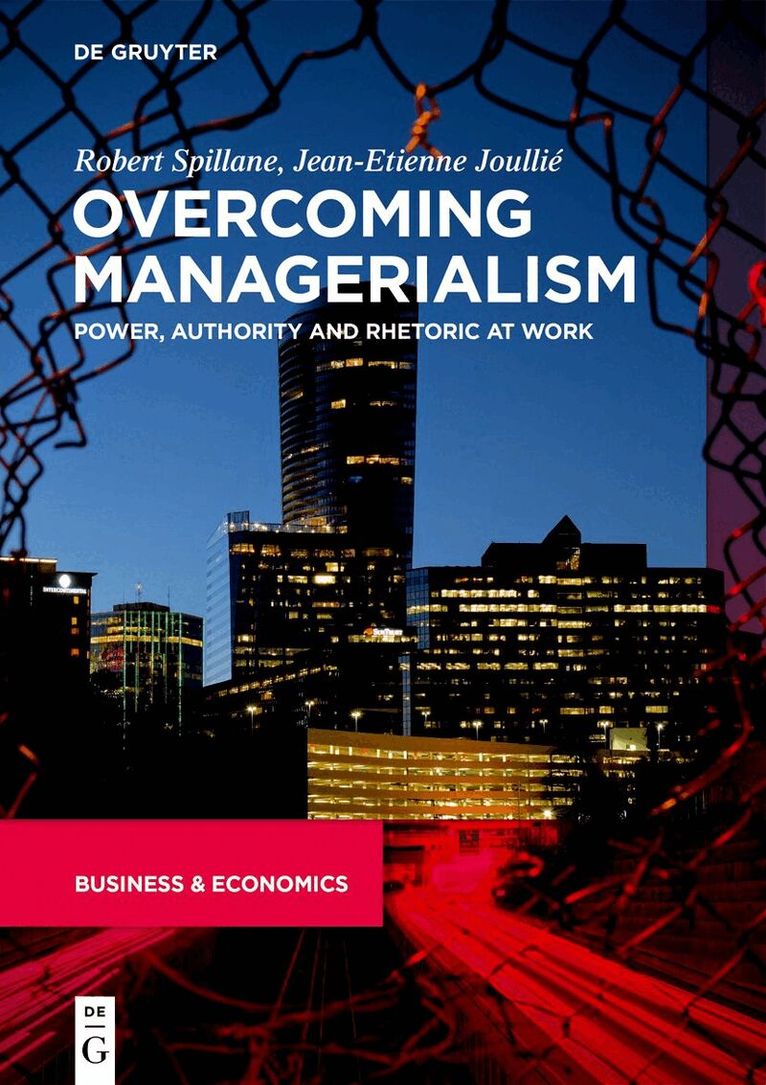
Managerialism has often been defined as an ideology, according to which the effective and efficient running of commercial firms, not-for-profit organizations and public administrations is delivered by individuals who possess superior formal knowledge and expertise in management. Arguing to their exclusive education, managers deprive employers and employees of decision-making power and ensconce themselves systematically in the power structure of workplaces to advance their own interests and agenda. The central thesis of Overcoming Managerialism is that resisting and overcoming managerialism necessitates the re-establishing of the conceptual distinction between power and authority. Second, it requires the rehabilitating of authoritative management as a protection against authoritarian practices. Authority, properly conceived, redirects power to technical experts and professionals and thereby limits managerial power. The authors discuss ten contentions which, taken together, represent a theory of the foundation of management in which authority, power and rhetoric are central concepts.This book combines academic scholarship with a readable critique of managerialism. It will be of interest to both management scholars and students.

274 kr
Skickas inom 5-8 vardagar
Managerialism has often been defined as an ideology, according to which the effective and efficient running of commercial firms, not-for-profit organizations and public administrations is delivered by individuals who possess superior formal knowledge and expertise in management. Arguing to their exclusive education, managers deprive employers and employees of decision-making power and ensconce themselves systematically in the power structure of workplaces to advance their own interests and agenda. The central thesis of Overcoming Managerialism is that resisting and overcoming managerialism necessitates the re-establishing of the conceptual distinction between power and authority. Second, it requires the rehabilitating of authoritative management as a protection against authoritarian practices. Authority, properly conceived, redirects power to technical experts and professionals and thereby limits managerial power. The authors discuss ten contentions which, taken together, represent a theory of the foundation of management in which authority, power and rhetoric are central concepts.This book combines academic scholarship with a readable critique of managerialism. It will be of interest to both management scholars and students.