
Jean Gaston Darboux - Böcker
Visar alla böcker från författaren Jean Gaston Darboux. Handla med fri frakt och snabb leverans.
2 produkter
2 produkter
793 kr
Skickas inom 7-10 vardagar
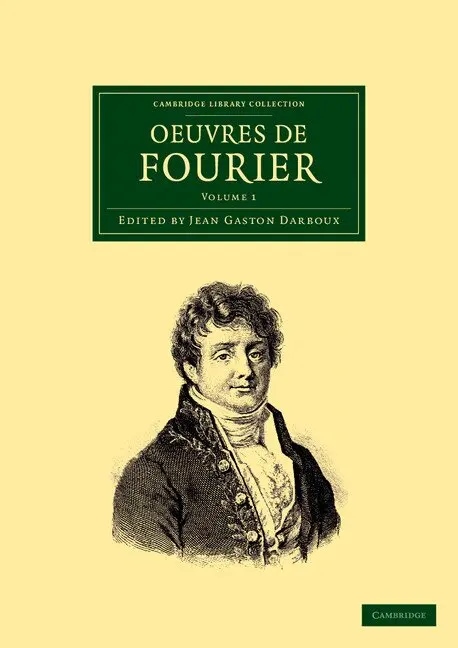
Following the French Revolution, the physicist and mathematician Jean Baptiste Joseph Fourier (1768-1830) taught at the École Normale Supérieure and later succeeded Lagrange at the École Polytechnique. He was promoted to administrative positions under Napoleon, but continued to pursue his scientific interests. From 1822 until his death he served as the permanent secretary for mathematical sciences at the Académie des Sciences. Thanks to his substantial contributions to the field, Fourier's name has passed as an adjective into the mathematical vocabulary of every major language. These selected works were edited by the mathematician Jean Gaston Darboux (1842-1917) and published in two volumes between 1888 and 1890. Volume 1 is given over entirely to the immortal Théorie analytique de la chaleur (1822), from which the world learnt about the heat equation and the series which bears Fourier's name.
875 kr
Skickas inom 7-10 vardagar
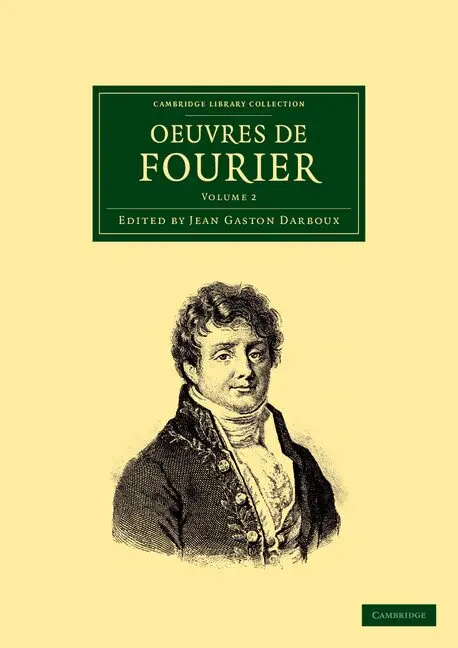
Following the French Revolution, the physicist and mathematician Jean Baptiste Joseph Fourier (1768-1830) taught at the École Normale Supérieure and later succeeded Lagrange at the École Polytechnique. He was promoted to administrative positions under Napoleon, but continued to pursue his scientific interests. From 1822 until his death he served as the permanent secretary for mathematical sciences at the Académie des Sciences. These selected works were edited by the mathematician Jean Gaston Darboux (1842-1917) and published in two volumes between 1888 and 1890. Volume 2 contains several extraordinary contributions: the first paper to address the question of why the earth's surface is warm (which we now call the greenhouse effect), the first paper to address the cooling of the earth's interior (still a major research topic) and the first paper on optimisation under linear constraints, along with the results on roots of polynomials which first made Fourier's reputation.