Jean-Germain Gros - Böcker
Visar alla böcker från författaren Jean-Germain Gros. Handla med fri frakt och snabb leverans.
7 produkter
7 produkter
833 kr
Skickas inom 10-15 vardagar
Few would disagree that since 1990 Sub-Saharan Africa has undergone a process of political transformation. Where one-party systems once stood, multi-parties are now dominant; where heads of state once ruled autocratically, open elections have emerged. In this study, both African and non-African scholars take a critical look at the evolution and contradictions of democratization in seven African nations: Malawi, Cameroon, Nigeria, Ethiopia, Tanzania, Ghana, and Gabon, each at a different stage in the democratization process.Some of these countries historically have not received much attention in North America. For example, little is known about Malawi, and Gabon has escaped notice outside the Francophone world. While other works have focused primarily upon the role that institutions have played in the democratization process, this study looks at individual leaders. Some of the authors were themselves participants in the reform movements in their home countries, and they examine the role that the military and the church played in the process. This volume also includes a discussion of why democratization has stagnated or been reversed in some nations.
2 164 kr
Skickas inom 10-15 vardagar
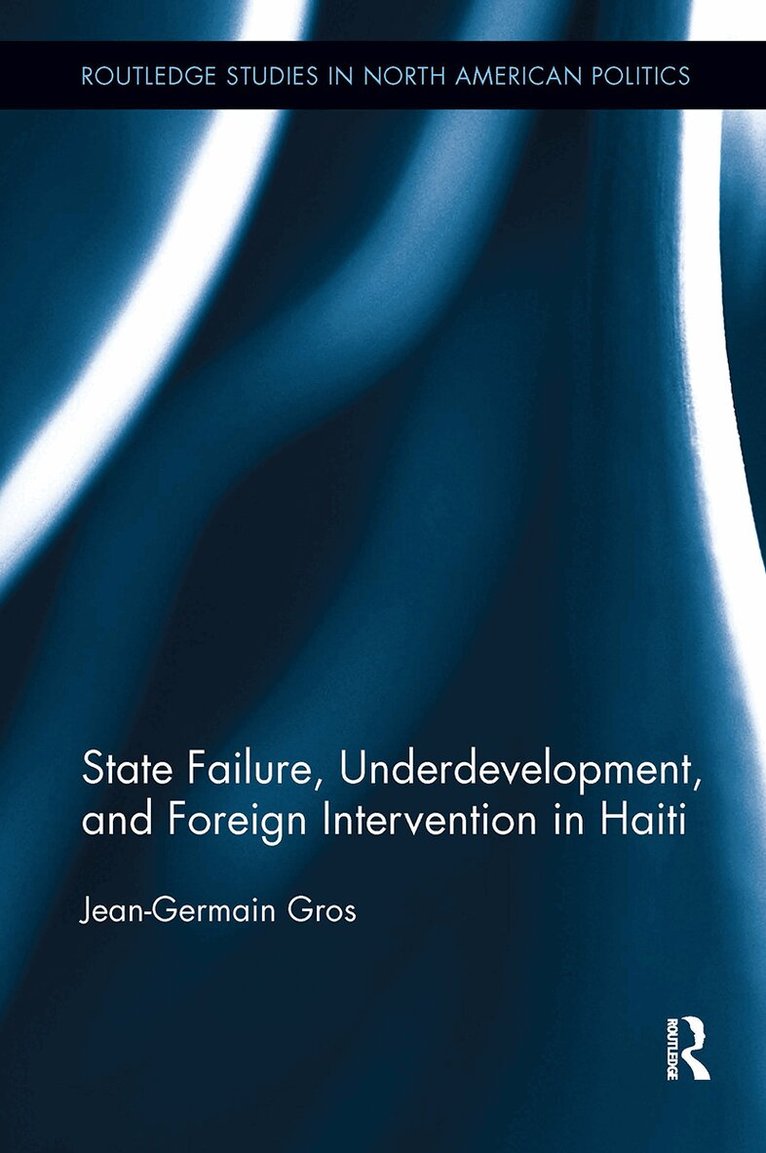
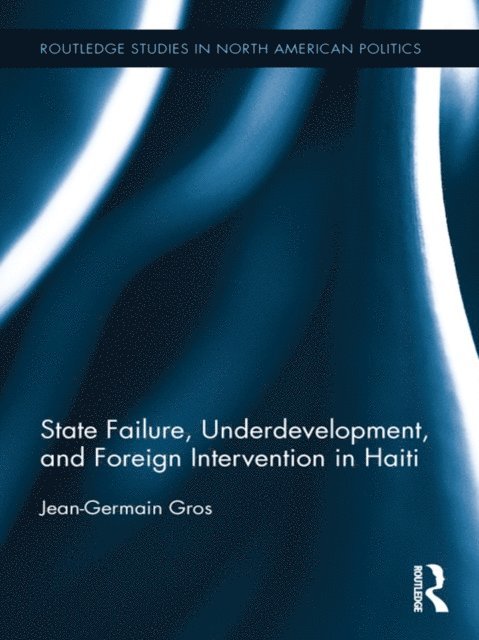
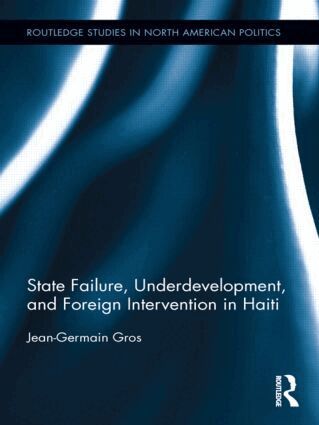
Failed states are a huge problem in international relations, threatening world order in a number of ways. Conflicts in failed states often spill unto neighbouring states, failed states make for unreliable partners in the resolution of global social problems such as poverty and AIDS, and failed states magnify the effects of natural disasters such as hurricanes and earthquakes. In response to the multiple threats posed by failed states, working states, sometimes acting alone sometimes in concert with others, have undertaken military operations, often under the rubric of humanitarian intervention. This book is a historical study of state failure, underdevelopment and foreign intervention in light of the Haitian experience with all three. Its main thesis is that state failure has been a recurring feature of Haitian political life for much of the country’s history, and this inability of the Haitians to craft a viable political order is at the heart of Haitian poverty and underdevelopment. Haitian state-making failure is underwritten by a complex array of deleterious local and external institutions, as well as natural constraints, including class, lack of elite cohesion, geography, population growth, the social origins of the Haitian polity, imperialism, and technology.
573 kr
Skickas inom 10-15 vardagar
Failed states are a huge problem in international relations, threatening world order in a number of ways. Conflicts in failed states often spill unto neighbouring states, failed states make for unreliable partners in the resolution of global social problems such as poverty and AIDS, and failed states magnify the effects of natural disasters such as hurricanes and earthquakes. In response to the multiple threats posed by failed states, working states, sometimes acting alone sometimes in concert with others, have undertaken military operations, often under the rubric of humanitarian intervention. This book is a historical study of state failure, underdevelopment and foreign intervention in light of the Haitian experience with all three. Its main thesis is that state failure has been a recurring feature of Haitian political life for much of the country’s history, and this inability of the Haitians to craft a viable political order is at the heart of Haitian poverty and underdevelopment. Haitian state-making failure is underwritten by a complex array of deleterious local and external institutions, as well as natural constraints, including class, lack of elite cohesion, geography, population growth, the social origins of the Haitian polity, imperialism, and technology.
2 096 kr
Skickas inom 10-15 vardagar
This book investigates the ways in which forms of social power such as magic, religion, the state and democracy, coexist in Africa, coming together in cooperative and sometimes conflictual ways to form the essence of politics.Contrary to some assumptions, the book argues that magic and religion are not marginal to political modernity but are instead central to contemporary political authority in many African countries. Drawing on cases from across the continent, the book suggests that magic and religion are prominent in social milieux, where the perceptions of control over supernatural forces are seen as important, but they are also by no means absent in legal rational political systems. Religious authorities in Africa are often sought assiduously by heads of state, and the rituals and symbols of the modern state and liberal democracy are often inspired by, if not directly borrowed from, magic (i.e., charisma) and religion, producing what is called in this book secular magic. For social power manifests not only in the application of force and delivery of public goods but also in the production of enchantment, of which magic and religion are the principal sources. The book also argues that social power forms are isomorphic, taking on each other’s features substantively and symbolically as competing elite factions derive strength from their putative ability to harness temporal and spiritual power sources.Multidisciplinary in scope, this book will be of interest to researchers across African studies, political science, anthropology, sociology and religious studies.
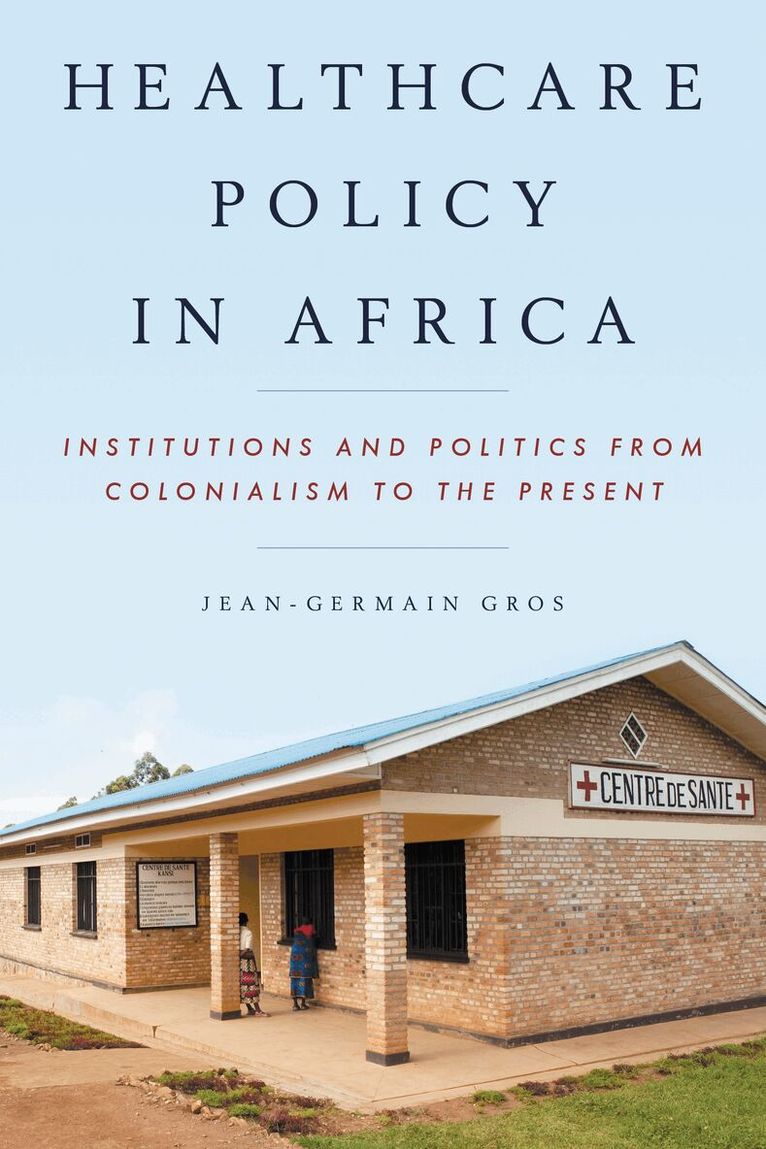
Healthcare Policy in Africa
Institutions and Politics from Colonialism to the Present
Inbunden, Engelska, 2015
1 245 kr
Skickas inom 10-15 vardagar
A comparative study of healthcare policy in Africa, the book explores the impact of historical institutions, multilateral organizations, and informal norms, such as, respectively, colonialism, the World Health Organization, and the Western-inspired biomedical approach to disease on health policy choices, implementation, and results in Africa. In addition, it examines the role of international philanthropy, such as the Bill and Melinda Gates Foundation, Partners In Health, Doctors Without Borders, and the multitude of NGOs that pullulate the African healthcare landscape. The emphasis on these (f)actors, not to mention Cuban medical aid, clearly underscores the “globalization” of healthcare policy in Africa. The case studies of Botswana, Ghana, and Rwanda —three differently endowed countries economically that are also at varying stages of democratic rule— help to shed light on the influence of domestic political institutions and elite agency on healthcare policy processes across the continent.
Healthcare Policy in Africa
Institutions and Politics from Colonialism to the Present
Häftad, Engelska, 2015
612 kr
Skickas inom 10-15 vardagar
A comparative study of healthcare policy in Africa, the book explores the impact of historical institutions, multilateral organizations, and informal norms, such as, respectively, colonialism, the World Health Organization, and the Western-inspired biomedical approach to disease on health policy choices, implementation, and results in Africa. In addition, it examines the role of international philanthropy, such as the Bill and Melinda Gates Foundation, Partners In Health, Doctors Without Borders, and the multitude of NGOs that pullulate the African healthcare landscape. The emphasis on these (f)actors, not to mention Cuban medical aid, clearly underscores the “globalization” of healthcare policy in Africa. The case studies of Botswana, Ghana, and Rwanda —three differently endowed countries economically that are also at varying stages of democratic rule— help to shed light on the influence of domestic political institutions and elite agency on healthcare policy processes across the continent.
When Reality Contradicts Rhetoric: World Bank Lending Practices in Developing Countries in Historical, Theoretical and Empirical Perspectives
Häftad, Engelska, 2005
388 kr
Skickas inom 5-8 vardagar