Jean-Jacques Lévy – författare
Visar alla böcker från författaren Jean-Jacques Lévy. Handla med fri frakt och snabb leverans.
7 produkter
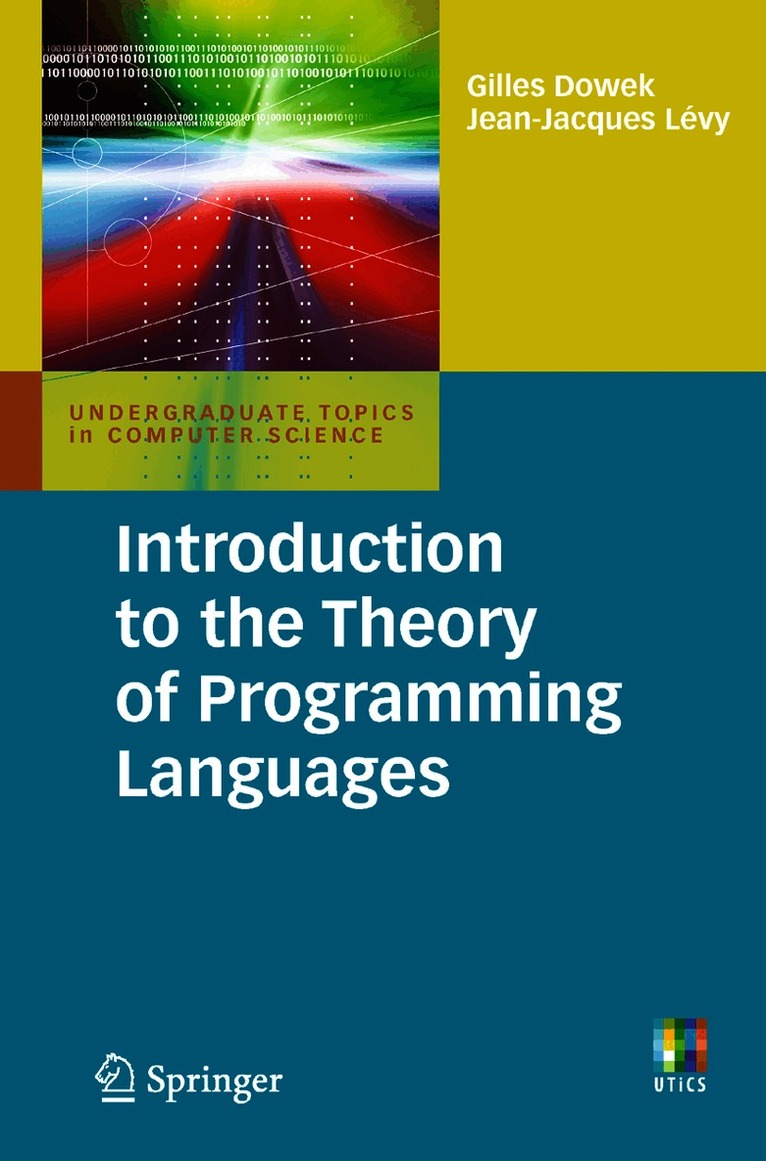
Introduction to the Theory of Programming Languages
Av Gilles Dowek, Jean-Jacques Lévy
Häftad, 2010
399 kr
Lägg i varukorg
The design and implementation of programming languages, from Fortran and Cobol to Caml and Java, has been one of the key developments in the management of ever more complex computerized systems. Introduction to the Theory of Programming Languages gives the reader the means to discover the tools to …
Introduction to the Theory of Programming Languages
Av Jean-Jacques Levy, Gilles Dowek
E-bok, 2010
439 kr
Lägg i varukorg
The design and implementation of programming languages, from Fortran and Cobol to Caml and Java, has been one of the key developments in the management of ever more complex computerized systems. Introduction to the Theory of Programming Languages gives the reader the means to discover the tools to …
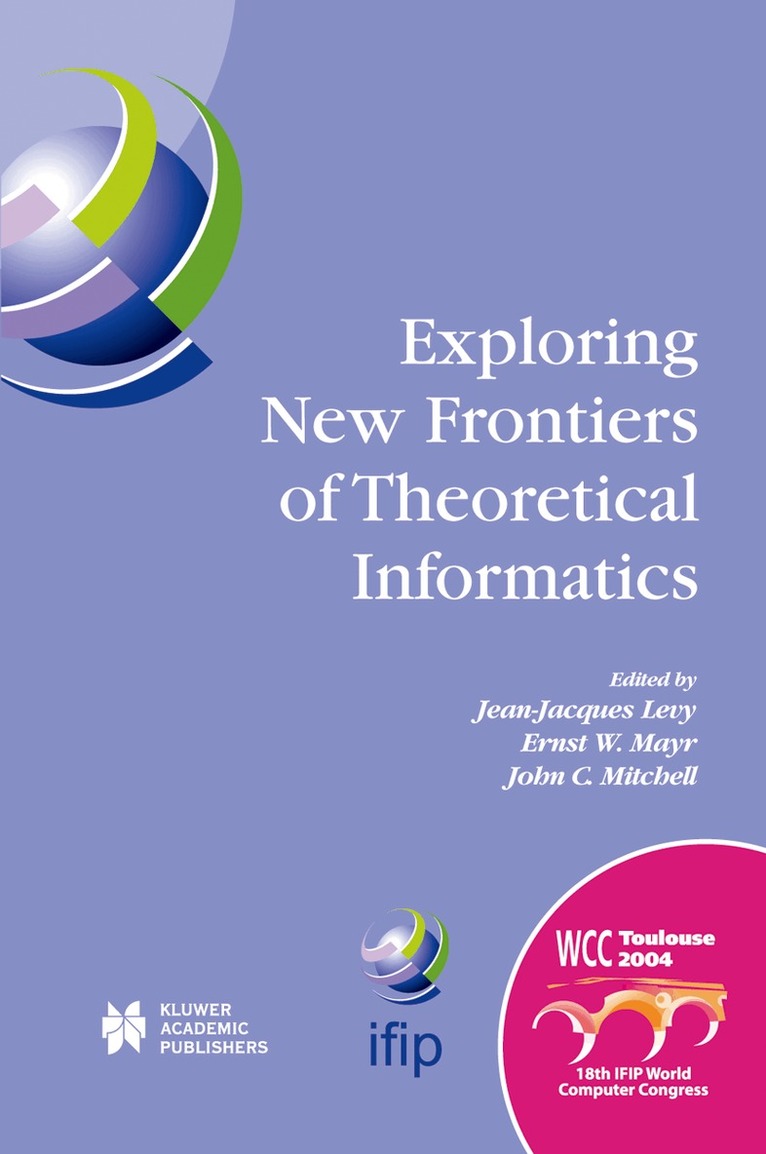
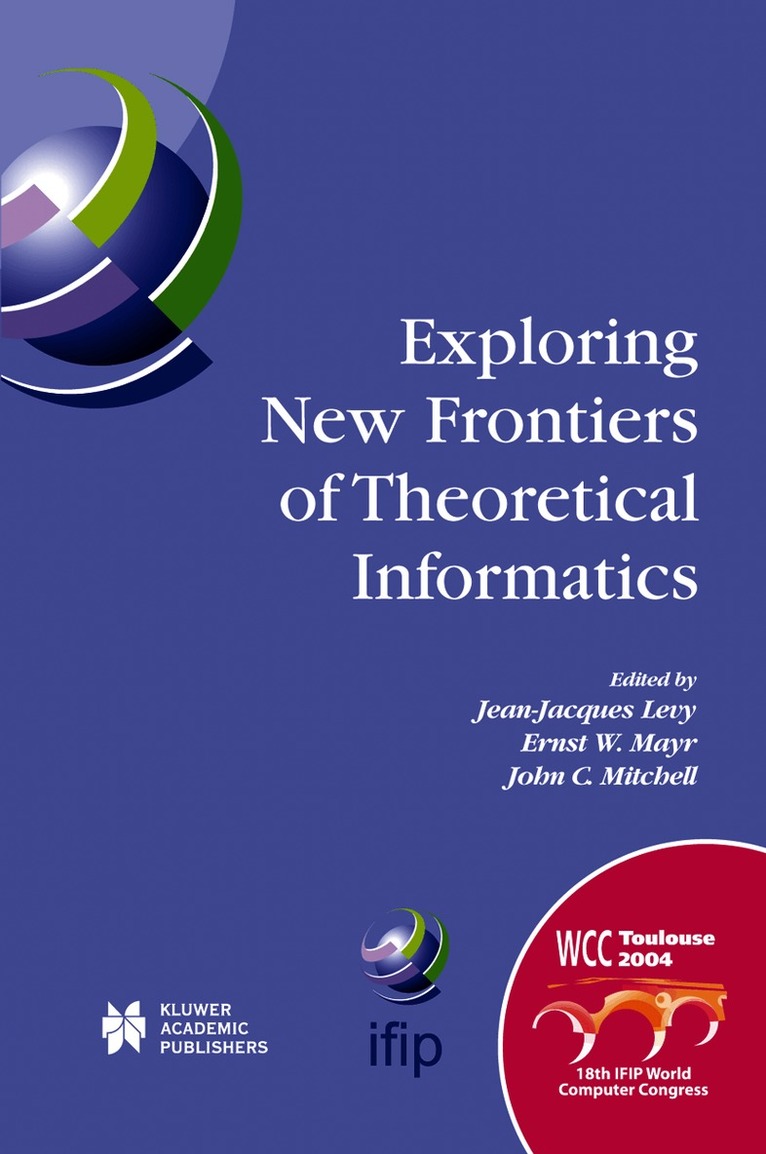
Exploring New Frontiers of Theoretical Informatics
IFIP 18th World Computer Congress TC1 3rd International Conference on Theoretical Computer Science (TCS2004) 22–27 August 2004 Toulouse, France
Av Jean-Jacques Lévy, Ernst W. Mayr m. fl.
Inbunden, 2004
1689 kr
Lägg i varukorg
In recent years, IT application scenarios have evolved in very innovative ways. Highly distributed networks have now become a common platform for large-scale distributed programming, high bandwidth communications are inexpensive and widespread, and most of our work tools are equipped with …
Exploring New Frontiers of Theoretical Informatics
IFIP 18th World Computer Congress TC1 3rd International Conference on Theoretical Computer Science (TCS2004) 22–27 August 2004 Toulouse, France
Av John C. Mitchell, Ernst W. Mayr m. fl.
E-bok, 2006
1989 kr
Lägg i varukorg
In recent years, IT application scenarios have evolved in very innovative ways. Highly distributed networks have now become a common platform for large-scale distributed programming, high bandwidth communications are inexpensive and widespread, and most of our work tools are equipped with …
Exploring New Frontiers of Theoretical Informatics
IFIP 18th World Computer Congress TC1 3rd International Conference on Theoretical Computer Science (TCS2004) 22–27 August 2004 Toulouse, France
Av Jean-Jacques Lévy, Ernst W. Mayr m. fl.
Häftad, 2011
1689 kr
Lägg i varukorg
In recent years, IT application scenarios have evolved in very innovative ways. Highly distributed networks have now become a common platform for large-scale distributed programming, high bandwidth communications are inexpensive and widespread, and most of our work tools are equipped with …
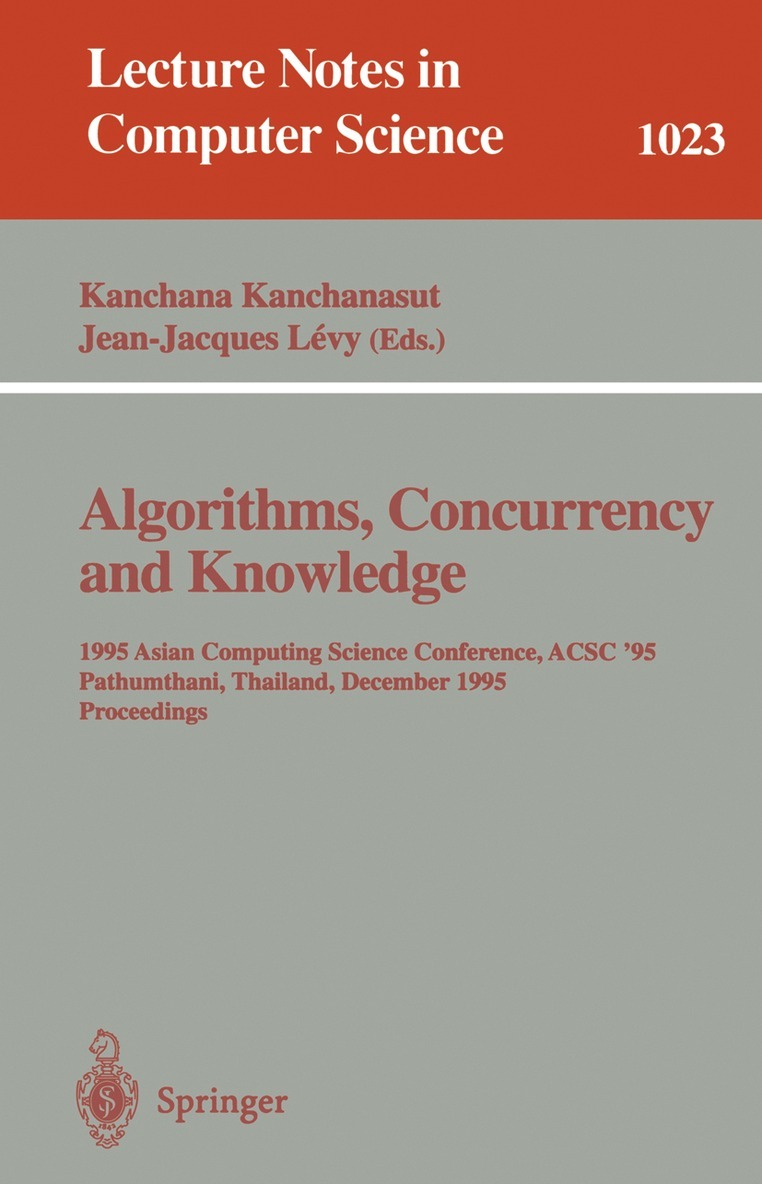
Algorithms, Concurrency and Knowledge
1995 Asian Computing Science Conference, ACSC '95 Pathumthani, Thailand, December 11 - 13, 1995. Proceedings
Av Kanchana Kanchanasut, Jean-Jacques Levy
Häftad, 1995
568 kr
Lägg i varukorg
This volume constitutes the refereed proceedings of the 1995 Asian Computing Science Conference, ACSC 95, held in Pathumthani, Thailand in December 1995.The 29 fully revised papers presented were selected from a total of 102 submissions; clearly the majority of the participating researchers come …