Jean Lee Cole – författare
Visar alla böcker från författaren Jean Lee Cole. Handla med fri frakt och snabb leverans.
14 produkter
14 produkter
Häftad, Engelska, 2002
420 kr
Skickas inom 5-8 vardagar
Madame Butterfly (1898) and A Japanese Nightingale (1901) both appeared at the height of American fascination with Japanese culture. These two novellas are paired here together for the first time to show how they defined and redefined contemporary misconceptions of the "Orient." This is the first reprinting of A Japanese Nightingale since its 1901 appearance, when it propelled Winnifred Eaton (using the pseudonym Onoto Watanna) to fame. John Luther Long's Madame Butterfly introduced American readers to the figure of the tragic geisha who falls in love with, and is then rejected by, a dashing American man; the opera Puccini based upon this work continues to enthrall audiences worldwide. Although Long emphasized the insensitivity of Westerners in their dealings with Asian people, the ever-faithful Cho-Cho-San typified Asian subservience and Western dominance. A Japanese Nightingale takes Long's revision several steps further. Eaton's heroine is powerful in her own right and is loved on her own terms. A Japanese Nightingale is also significant for its hidden personal nature. Although Eaton's pen name implied she was Japanese, she was, in fact, of Chinese descent. Living in a society that was virulently anti-Chinese, she used a Japanese screen for her own problematic identity, and A Japanese Nightingale tells us as much about the author's struggle to embrace her Asian heritage as it does about the stereotypes she contests.
Häftad, Engelska, 2008
654 kr
Skickas inom 3-6 vardagar
Though she died penniless and forgotten, Zora Neale Hurston is now recognized as a major figure in African American literature. Best known for her 1937 novel Their Eyes Were Watching God, she also published numerous short stories and essays, three other novels, and two books on black folklore.Even avid readers of Hurston’s prose, however, may be surprised to know that she was also a serious and ambitious playwright throughout her career. Although several of her plays were produced during her lifetime-and some to public acclaim-they have languished in obscurity for years. Even now, most critics and historians gloss over these texts, treating them as supplementary material for understanding her novels. Yet, Hurston’s dramatic works stand on their own merits and independently of her fiction.Now, eleven of these forgotten dramatic writings are being published together for the first time in this carefully edited and annotated volume. Filled with lively characters, vibrant images of rural and city life, biblical and folk tales, voodoo, and, most importantly, the blues, readers will discover a “real Negro theater” that embraces all the richness of black life.
Inbunden, Engelska, 2020
1 377 kr
Skickas inom 10-15 vardagar
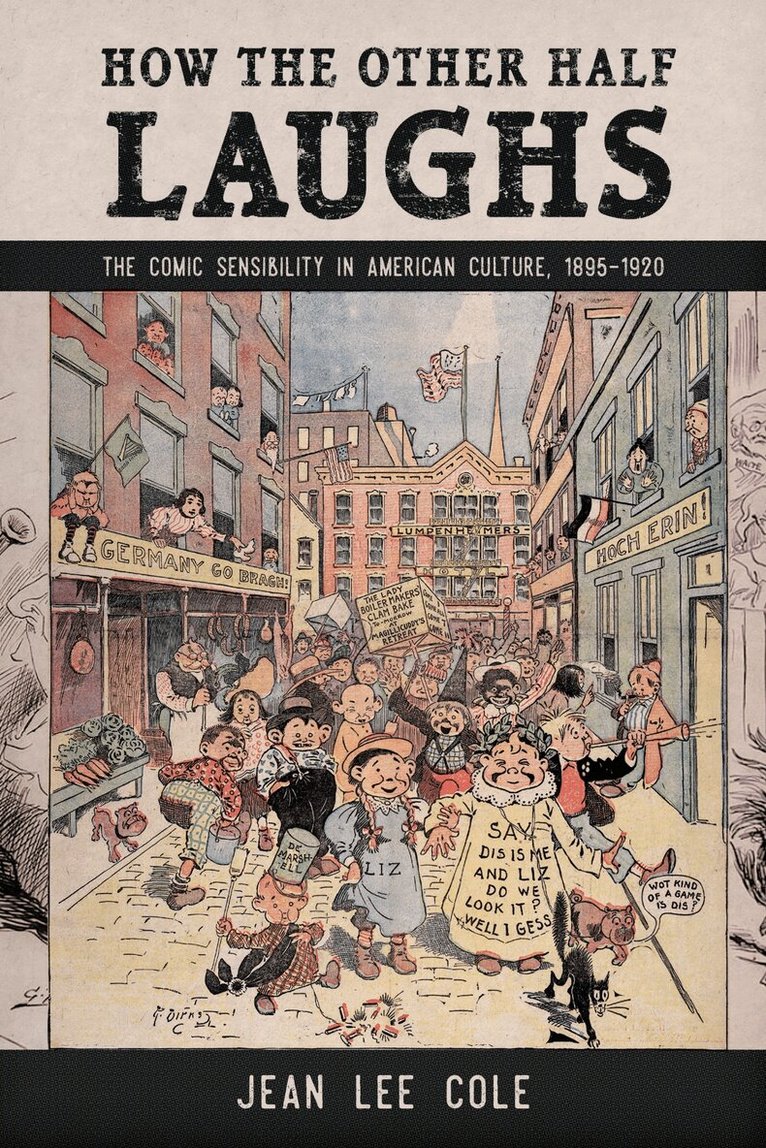
Taking up the role of laughter in society, How the Other Half Laughs: The Comic Sensibility in American Culture, 1895–1920 examines an era in which the US population was becoming increasingly multiethnic and multiracial. Comic artists and writers, hoping to create works that would appeal to a diverse Audience, had to formulate a method for making the "other half" laugh. In magazine fiction, vaudeville, and the comic strip, the oppressive conditions of the poor and the marginalized were portrayed unflinchingly, yet with a distinctly comic sensibility that grew out of caricature and ethnic humor.Author Jean Lee Cole analyzes Progressive Era popular culture, providing a critical angle to approach visual and literary humor about ethnicity—how avenues of comedy serve as expressions of solidarity, commiseration, and empowerment. Cole’s argument centers on the comic sensibility, which she defines as a performative act that fosters feelings of solidarity and community among the marginalized.Cole stresses the connections between the worlds of art, journalism, and literature and the people who produced them—including George Herriman, R. F. Outcault, Rudolph Dirks, Jimmy Swinnerton, George Luks, and William Glackens—and traces the form’s emergence in the pages of Joseph Pulitzer’s New York World and William Randolph Hearst’s Journal-American and how it influenced popular fiction, illustration, and art. How the Other Half Laughs restores the newspaper comic strip to its rightful place as a transformative element of American culture at the turn into the twentieth century.
Häftad, Engelska, 2020
428 kr
Skickas inom 10-15 vardagar
Taking up the role of laughter in society, How the Other Half Laughs: The Comic Sensibility in American Culture, 1895–1920 examines an era in which the US population was becoming increasingly multiethnic and multiracial. Comic artists and writers, hoping to create works that would appeal to a diverse Audience, had to formulate a method for making the "other half" laugh. In magazine fiction, vaudeville, and the comic strip, the oppressive conditions of the poor and the marginalized were portrayed unflinchingly, yet with a distinctly comic sensibility that grew out of caricature and ethnic humor.Author Jean Lee Cole analyzes Progressive Era popular culture, providing a critical angle to approach visual and literary humor about ethnicity—how avenues of comedy serve as expressions of solidarity, commiseration, and empowerment. Cole’s argument centers on the comic sensibility, which she defines as a performative act that fosters feelings of solidarity and community among the marginalized.Cole stresses the connections between the worlds of art, journalism, and literature and the people who produced them—including George Herriman, R. F. Outcault, Rudolph Dirks, Jimmy Swinnerton, George Luks, and William Glackens—and traces the form’s emergence in the pages of Joseph Pulitzer’s New York World and William Randolph Hearst’s Journal-American and how it influenced popular fiction, illustration, and art. How the Other Half Laughs restores the newspaper comic strip to its rightful place as a transformative element of American culture at the turn into the twentieth century.
Häftad, Engelska, 2014
216 kr
Skickas inom 5-8 vardagar
Häftad, Engelska, 2015
247 kr
Skickas inom 5-8 vardagar
Häftad, Engelska, 2019
576 kr
Skickas inom 3-6 vardagar
Häftad, Engelska, 2026
361 kr
Skickas inom 5-8 vardagar
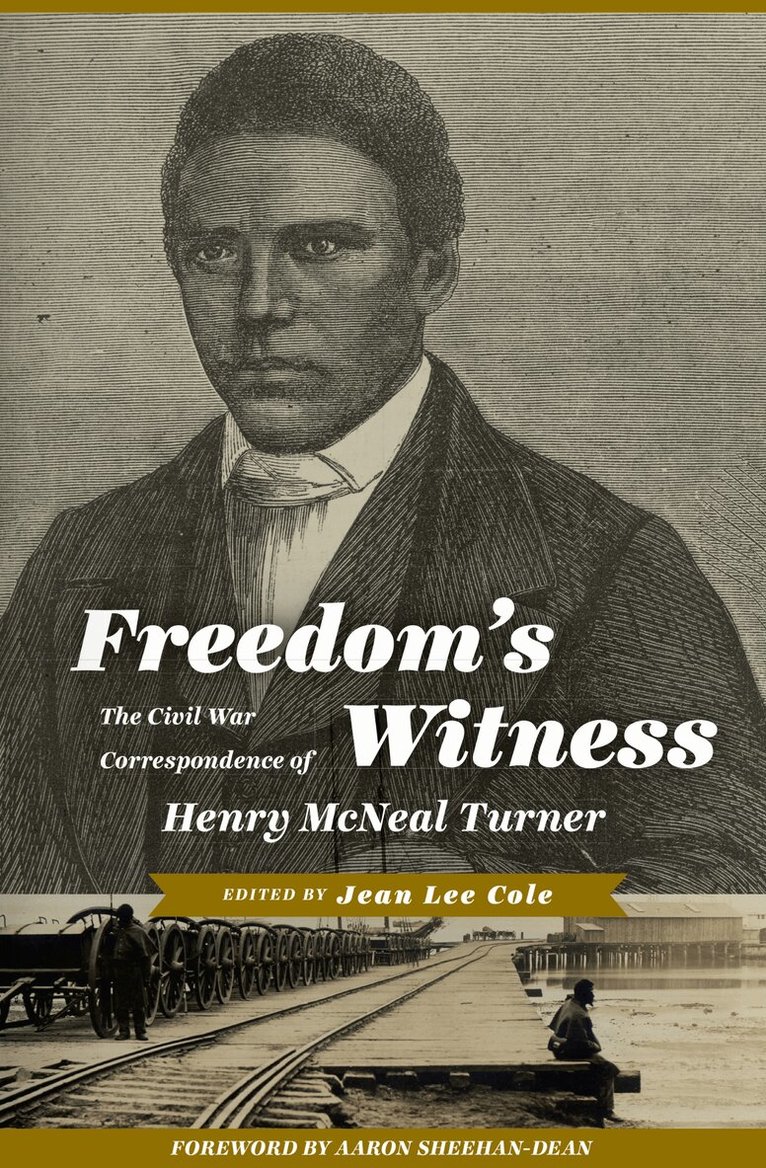
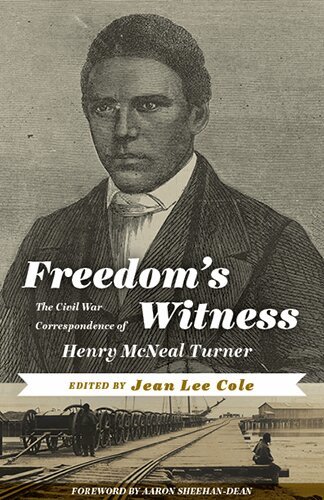
In a series of columns published in the African American newspaper the Christian Recorder, the young, charismatic preacher Henry McNeal Turner described his experience of the Civil War, first from the perspective of a civilian observer in Washington, DC, and later, as one of the Union army's first Black chaplains.In the halls of Congress, Turner witnessed the debates surrounding emancipation and Black enlistment. As army chaplain, Turner dodged "grape" and cannon, comforted the sick and wounded, and settled disputes between white southerners and their former slaves. He was dismayed by the destruction left by Sherman's army in the Carolinas, but buoyed by the bravery displayed by Bck soldiers in battle. After the war ended, he helped establish churches and schools for the freedmen, who previously had been prohibited from attending either.Throughout his columns, Turner evinces his firm belief in the absolute equality of Blacks with whites and insists on civil rights for all Black citizens. In vivid, detailed prose, laced with a combination of trenchant commentary and self-deprecating humor, Turner established himself as more than an observer: he became a distinctive and authoritative voice for the Black community and a leader in the African Methodist Episcopal church. After Reconstruction failed, Turner became disillusioned with the American dream and became a vocal advocate of black emigration to Africa, prefiguring black nationalists such as Marcus Garvey and Malcolm X. Here, however, we see Turner's youthful exuberance and optimism and his open-eyed wonder at the momentous changes taking place in American society.Well-known in his day, Turner has been relegated to the fringes of African American history, in large part because neither his views nor the forms in which he expressed them were recognized by either the black or white elite. With an introduction by Jean Lee Cole and a foreword by Aaron Sheehan-Dean, Freedom's Witness: The Civil War Correspondence of Henry McNeal Turner restores this important figure to the historical and literary record.
Häftad, Engelska, 2006
235 kr
Skickas inom 5-8 vardagar
Häftad, Engelska, 2013
218 kr
Skickas inom 5-8 vardagar
Häftad, Engelska, 2011
193 kr
Skickas inom 3-6 vardagar
Häftad, Engelska, 2012
195 kr
Skickas inom 5-8 vardagar
Inbunden, Engelska, 2013
729 kr
Skickas inom 3-6 vardagar
In a series of columns published in the African American newspaper The Christian Recorder, the young, charismatic preacher Henry McNeal Turner described his experience of the Civil War, first from the perspective of a civilian observer in Washington, D.C., and later, as one of the Union army's first black chaplains. In the halls of Congress, Turner witnessed the debates surrounding emancipation and black enlistment. As army chaplain, Turner dodged ""grape"" and cannon, comforted the sick and wounded, and settled disputes between white southerners and their former slaves. He was dismayed by the destruction left by Sherman's army in the Carolinas, but buoyed by the bravery displayed by black soldiers in battle. After the war ended, he helped establish churches and schools for the freedmen, who previously had been prohibited from attending either. Throughout his columns, Turner evinces his firm belief in the absolute equality of blacks with whites, and insists on civil rights for all black citizens. In vivid, detailed prose, laced with a combination of trenchant commentary and self-deprecating humor, Turner established himself as more than an observer: he became a distinctive and authoritative voice for the black community, and a leader in the African Methodist Episcopal church. After Reconstruction failed, Turner became disillusioned with the American dream and became a vocal advocate of black emigration to Africa, prefiguring black nationalists such as Marcus Garvey and Malcolm X. Here, however, we see Turner's youthful exuberance and optimism, and his open-eyed wonder at the momentous changes taking place in American society. Well-known in his day, Turner has been relegated to the fringes of African American history, in large part because neither his views nor the forms in which he expressed them were recognized by either the black or white elite. With an introduction by Jean Lee Cole and a foreword by Aaron Sheehan-Dean, Freedom's Witness: The Civil War Correspondence of Henry McNeal Turner restores this important figure to the historical and literary record.
Häftad, Engelska, 2013
298 kr
Skickas inom 3-6 vardagar
In a series of columns published in the African American newspaper The Christian Recorder, the young, charismatic preacher Henry McNeal Turner described his experience of the Civil War, first from the perspective of a civilian observer in Washington, D.C., and later, as one of the Union army's first black chaplains. In the halls of Congress, Turner witnessed the debates surrounding emancipation and black enlistment. As army chaplain, Turner dodged ""grape"" and cannon, comforted the sick and wounded, and settled disputes between white southerners and their former slaves. He was dismayed by the destruction left by Sherman's army in the Carolinas, but buoyed by the bravery displayed by black soldiers in battle. After the war ended, he helped establish churches and schools for the freedmen, who previously had been prohibited from attending either. Throughout his columns, Turner evinces his firm belief in the absolute equality of blacks with whites, and insists on civil rights for all black citizens. In vivid, detailed prose, laced with a combination of trenchant commentary and self-deprecating humor, Turner established himself as more than an observer: he became a distinctive and authoritative voice for the black community, and a leader in the African Methodist Episcopal church. After Reconstruction failed, Turner became disillusioned with the American dream and became a vocal advocate of black emigration to Africa, prefiguring black nationalists such as Marcus Garvey and Malcolm X. Here, however, we see Turner's youthful exuberance and optimism, and his open-eyed wonder at the momentous changes taking place in American society. Well-known in his day, Turner has been relegated to the fringes of African American history, in large part because neither his views nor the forms in which he expressed them were recognized by either the black or white elite. With an introduction by Jean Lee Cole and a foreword by Aaron Sheehan-Dean, Freedom's Witness: The Civil War Correspondence of Henry McNeal Turner restores this important figure to the historical and literary record.