Jean Lipman-Blumen - Böcker
Visar alla böcker från författaren Jean Lipman-Blumen. Handla med fri frakt och snabb leverans.
4 produkter
4 produkter
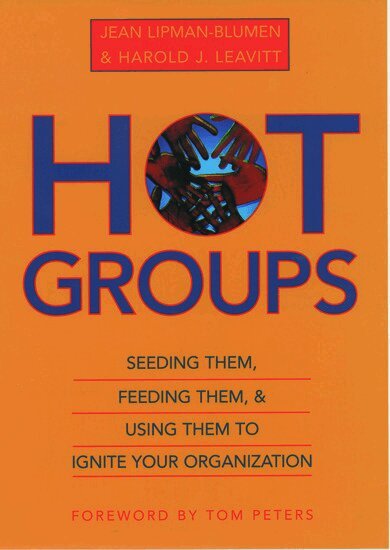
Hot Groups
Seeding Them, Feeding Them, and Using Them to Ignite Your Organization
Inbunden, Engelska, 1999
414 kr
Skickas inom 5-8 vardagar
Many corporations, in their attempt to create innovative products and services, have focused on the concept of building teams. While many groups fizzle, on rare occasions the members of a group will experience an extraordinary eruption of excitement, transcending an organization's rigid confines to achieve astonishing results. These individuals, say Jean Lipman-Blumen and Harold J. Leavitt, are lucky enough to be members of a "hot group," a phenomenon they lucidly and enthusiastically describe in their ground-breaking new book Hot Groups.A hot group is not a name for a newfangled team, task force, or committee. Rather, a hot group is defined by a distinctive state of mind coupled with a style of behavior that is intense and sharply focused on its ultimate goal. Stretching themselves beyond their own expectations, members of a hot group plunge into enterprises that have the potential to change, even ennoble, their own and others' lives. Neither trendy fabrication nor new management fad, hot groups have existed since the dawn of civilization, perhaps invigorating groups of cavemen to hunt together furiously for food before winter's approach. Today, examples of hot groups abound in territories such as Silicon Valley, where impassioned people have blazed paths through the burgeoning computer industry. Consider the hot group that created the original Macintosh and revolutionized the personal computer market. John Sculley, who joined Apple in the early 1980s, described a "magnetic field" that surrounded the Macintosh hot group members, and Bill Gates, Microsoft's mastermind, reported that a hot programming group to which he once belonged "didn't obey a 24-hour clock." Instead, they programmed for days at a time, pausing only to eat and talk about software with fellow programmers. Here also are examples of hot groups at work in other industries: the individuals that created the blockbuster TV drama "Hill Street Blues"; the Navy and civilian personnel that transformed a standard cruiser into a guided missile cruiser in less than 12 months; and even the ad hoc crisis management group advising President John F. Kennedy during the Cuban Missile crisis. Indeed, the inspiring case studies found throughout Hot Groups illustrate that well-nourished hot groups can profoundly transform any type of organization.Still, Lipman-Blumen and Leavitt recognize the risks inherent in loosening an organization's structural soil enough to accommodate these groups. Consequently, they address such issues as how to provide the kind of leadership required by a hot group, how to mesh a hot group with the regimented structure of the overall corporation, how managers can encourage new hot groups, and how best to cope with an overheated hot group.Drawing on decades of research and experience with groups and organizations throughout the world, Lipman-Blumen and Leavitt have written an intensely engaging book about a phenomenon that will become increasingly important in our rapidly changing world. Expertly carving a path through this unmapped terrain, they lucidly demonstrate how managers and executives can ignite hot group sparks in their own organizations.
216 kr
Skickas inom 5-8 vardagar
Business today is framed by two global tensions. On the one hand, the age of the Internet has ushered in an unprecedented interdependence. People from far-flung reaches of the globe now find themselves in close contact, and collaboration is the order of the day. On the other hand, we still live in an autonomous world of diverse nations and unique individuals, and the businesses and organizations that we have created to represent us are equally unique. In this conflicting environment, a special approach to leadership is called for, one that tames these two forces and integrates them in a political but ethical way. The Connective Leadership model defines that approach, emphasizing various modes of working with and through other people instead of bowing to authoritarianism. This includes creating short-term coalitions instead of long-term alliances and forming ennobling enterprises to which people want to commit themselves. Based on extensive research analysing the leadership styles of more than 5,000 leaders and managers world-wide, Lipman-Blumen has developed an innovative nine-part strategy for flourishing despite the demands of inter- and intraorganizational relationships. Connective Leadership begins by examining the origins and evolution of the human need for leadership. It then presents a detailed explanation of the Connective Leadership Model, showing leaders how to move beyond competition towards an ethical instrumentalism that employs the talents of others to achieve strategic goals. And in a final section, it explores the empirical organizational results and the philosophical implications of that model. Thoroughly researched and accessibly written, this book provides the skills and information needed to move organizations, nations, and people into the emerging era with stellar results.
Making Adult Stepfamilies Work: Strategies for the Whole Family When a Parent Marries Later in Life
Häftad, Engelska, 2005
310 kr
Skickas inom 3-6 vardagar
Del 146 - J-B Warren Bennis Series
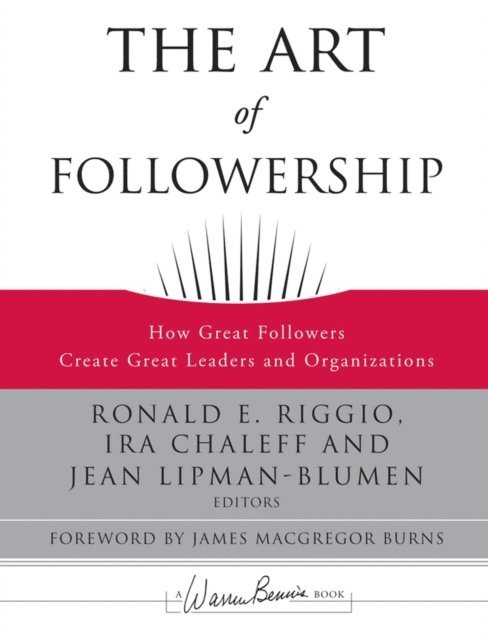
Art of Followership
How Great Followers Create Great Leaders and Organizations
Inbunden, Engelska, 2008
750 kr
Skickas inom 7-10 vardagar
The Art of Followership puts dynamic leader-follower interaction at the forefront of discussion. It examines the multiple roles followers play and their often complex relationship to leaders. With contributions from leading scholars and practitioners from the burgeoning field of leadership/followership studies, this groundbreaking book outlines how followers contribute to effective leadership and to organizations overall. Drawing from various disciplines?from philosophy, to psychology and management, to education?the book defines followership and its myriad meanings. The Art of Followership explores the practice and research that promote positive followership and reveals the part that followers play in setting the standards and formulating the culture and policies of the group.The contributors include new models of followership and explore fresh perspectives on the contributions that followers make to groups, organizations, societies, and leaders. The book also explores the most current research on followership and includes insights and perspectives on the future of leader-follower relationships.