Jean-Michel Servet – författare
Visar alla böcker från författaren Jean-Michel Servet. Handla med fri frakt och snabb leverans.
7 produkter
7 produkter
Inbunden, Engelska, 2015
1 248 kr
Skickas inom 10-15 vardagar
Microcredit programmes, long considered efficient development tools, now face unprecedented crises in a number of countries. Is this the end of microcredit or rather an essential step in its expansion? Should we stop microcredit altogether or rethink the way it is implemented?Drawing on extensive empirical research conducted in various parts of the world - from Morocco to Senegal to India - this important volume examines the whole chain of microcredit to provide the answers to these questions. In doing so, the authors highlight the diversity of crises, both in intensity and in nature, while also shedding light on a diversity of causes, be it microcredit organizations unprepared for massive growth, saturated local economies or greedy investors and shareholders attracted by profits. Crucially, the authors demonstrate that microcredit is not a monolithic project, and the crises should also be analysed in the light of national histories and policies.An original and necessary intervention in what has become one of the most contentious topics within the development world.
E-bok
PDF, Engelska, 20151 314 kr
Läs direkt efter köp
Microcredit programmes, long considered efficient development tools, now face unprecedented crises in a number of countries. Is this the end of microcredit or rather an essential step in its expansion? Should we stop microcredit altogether or rethink the way it is implemented?Drawing on extensive empirical research conducted in various parts of the world - from Morocco to Senegal to India - this important volume examines the whole chain of microcredit to provide the answers to these questions. In doing so, the authors highlight the diversity of crises, both in intensity and in nature, while also shedding light on a diversity of causes, be it microcredit organizations unprepared for massive growth, saturated local economies or greedy investors and shareholders attracted by profits. Crucially, the authors demonstrate that microcredit is not a monolithic project, and the crises should also be analysed in the light of national histories and policies.An original and necessary intervention in what has become one of the most contentious topics within the development world.
E-bok
Engelska, 20151 326 kr
Läs direkt efter köp
Microcredit programmes, long considered efficient development tools, now face unprecedented crises in a number of countries. Is this the end of microcredit or rather an essential step in its expansion? Should we stop microcredit altogether or rethink the way it is implemented?Drawing on extensive empirical research conducted in various parts of the world - from Morocco to Senegal to India - this important volume examines the whole chain of microcredit to provide the answers to these questions. In doing so, the authors highlight the diversity of crises, both in intensity and in nature, while also shedding light on a diversity of causes, be it microcredit organizations unprepared for massive growth, saturated local economies or greedy investors and shareholders attracted by profits. Crucially, the authors demonstrate that microcredit is not a monolithic project, and the crises should also be analysed in the light of national histories and policies.An original and necessary intervention in what has become one of the most contentious topics within the development world.
Inbunden, Franska
1 664 kr
Kommande
Häftad, Franska, 2006
754 kr
Skickas inom 3-6 vardagar
E-bok
Franska, 2015201 kr
Läs direkt efter köp
Offrir des prêts répondant aux besoins de ceux qui n’ont pas accès au crédit bancaire classique, tel est l’objectif du microcrédit. Celui-ci a connu un succès fulgurant : aujourd’hui, 200 millions de personnes y ont recours, principalement en Asie et en Amérique latine. Une révolution ? s’interroge Jean-Michel Servet dans ce livre. Pas si sûr… Rappelant le contexte dans lequel est né le microcrédit – celui de la promotion d’un marché prétendument pacificateur et libérateur –, il démonte le mythe selon lequel il pourrait éradiquer la pauvreté dans les pays en développement et émergents en favorisant le microentrepreneuriat et l’autoemploi. Ce livre le montre : si une révolution a eu lieu, elle serait plutôt du côté d’une microfinance devenue commerciale qui, pour répondre aux besoins réels des populations, a développé d’autres services que le microcrédit : épargne, transferts de fonds, paiement par la téléphonie mobile, microassurance. Analysant les ressorts de cette « vraie » révolution, Jean-Michel Servet souligne qu’elle pourrait être le levier d’une finance alternative, avec la monnaie et le crédit comme biens communs. Jean-Michel Servet est professeur à IHEID Genève, chercheur associé à Paris au Centre d’études en sciences sociales sur les mondes africain, américain et asiatique et à Bruxelles au Centre européen de recherche en microfinance. Il est l’auteur de Banquiers aux pieds nus.
E-bok
Franska, 2006254 kr
Läs direkt efter köp
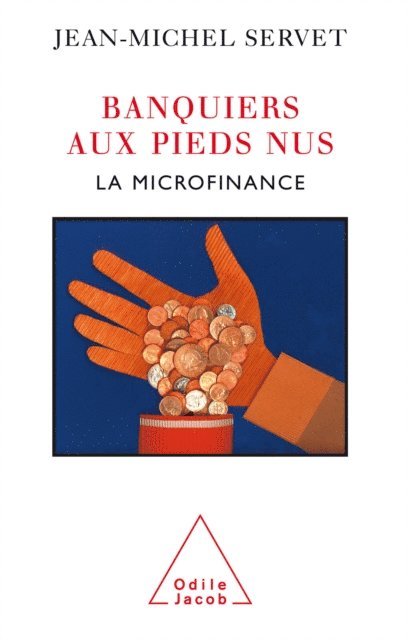
Comment lutter contre la pauvreté ? Comment vaincre le sous-développement ? Comment éviter le gaspillage de l’aide internationale et son détournement au profit de l’administration et de l’armée des pays pauvres ?La microfinance se veut une solution à ces problèmes. Répond-elle aux attentes du plus grand nombre ? Peut-elle subvenir aux besoins des exclus de la finance ? Peut-elle leur fournir des crédits, gérer leur épargne, garantir leurs prêts, les assurer, encaisser leurs chèques, transférer les fonds des migrants ? Comment parvenir à gérer ces sommes minuscules ?En s’appuyant sur de multiples expériences de terrain en Afrique et en Asie, ce livre, de notre meilleur spécialiste, propose de mieux comprendre l’essor exponentiel de la microfinance, ses promesses, mais aussi ses limites. Jean-Michel Servet est professeur à l''Institut universitaire d''études du développement à Genève, directeur de recherche associé à l''Institut de recherche pour le développement et au French Institute of Pondicherry.