Jean-Paul Fitoussi – författare
Visar alla böcker från författaren Jean-Paul Fitoussi. Handla med fri frakt och snabb leverans.
17 produkter
17 produkter
Inbunden, Engelska, 1987
2 230 kr
Skickas inom 10-15 vardagar
Inbunden, Engelska, 1995
1 674 kr
Skickas inom 10-15 vardagar
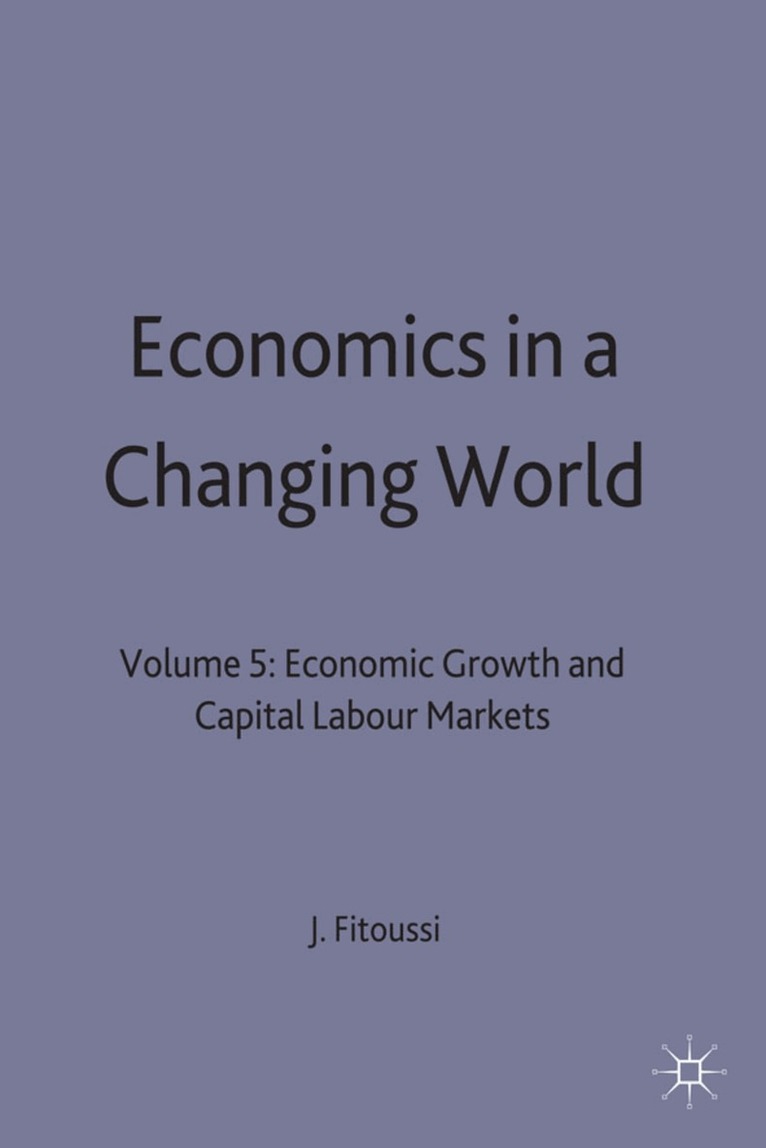
Growth patterns have changed radically over the last two decades, to which capital and the labour markets appear to have failed to adapt. Unemployment in Europe has been growing, almost without remission, to levels unseen since the Great Depression. These facts are somewhat at odds with the development of growth theory which has mainly been orientated towards an equilibrium full employment framework. The main message of equilibrium theory of fluctuations was precisely that the policy maker is impotent. Now, with the universal acceptance of endogenous growth theory, the common concensus proposition would be `we are all neo-classical for the short run and Keynesian for the long run' (investment being too important for growth to be left entirely in private hands).
E-bok
PDF, Engelska, 19872 925 kr
Läs direkt efter köp
Häftad, Engelska, 1987
2 230 kr
Skickas inom 10-15 vardagar
E-bok
PDF, Engelska, 19952 049 kr
Läs direkt efter köp
Growth patterns have changed radically over the last two decades, to which capital and the labour markets appear to have failed to adapt. Unemployment in Europe has been growing, almost without remission, to levels unseen since the Great Depression. These facts are somewhat at odds with the development of growth theory which has mainly been orientated towards an equilibrium full employment framework. The main message of equilibrium theory of fluctuations was precisely that the policy maker is impotent. Now, with the universal acceptance of endogenous growth theory, the common concensus proposition would be `we are all neo-classical for the short run and Keynesian for the long run'' (investment being too important for growth to be left entirely in private hands).
Häftad, Engelska, 2005
406 kr
Skickas inom 10-15 vardagar
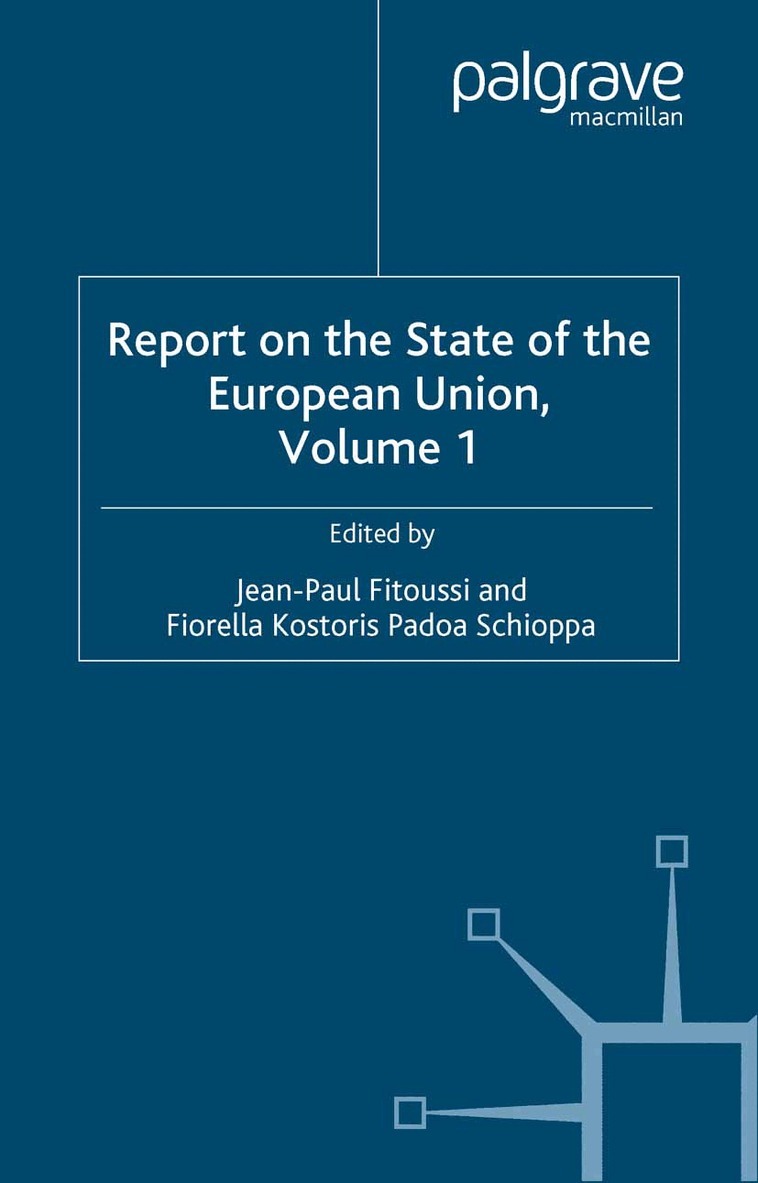
The time has come to open a lucid debate on the ways and means to make Europe better deliver democracy and sustainable growth. The Report on the State of the European Union examines the progress of European integration and focus on economic aspects of the process. This volume explores the themes of: democracy and legitimacy, convergence and cohesion, macroeconomic policies and social integration. the report is written in an accessible way and will be a useful resource for academics, students, policymakers, journalists, and government advisors.
E-bok
Engelska, 2010159 kr
Läs direkt efter köp
In February of 2008, amid the looming global financial crisis, President Nicolas Sarkozy of France asked Nobel Prize-winning economists Joseph Stiglitz and Amartya Sen, along with the distinguished French economist Jean Paul Fitoussi, to establish a commission of leading economists to study whether Gross Domestic Product (GDP)—the most widely used measure of economic activity—is a reliable indicator of economic and social progress. The Commission was given the further task of laying out an agenda for developing better measures.Mismeasuring Our Lives is the result of this major intellectual effort, one with pressing relevance for anyone engaged in assessing how and whether our economy is serving the needs of our society. The authors offer a sweeping assessment of the limits of GDP as a measurement of the well-being of societies—considering, for example, how GDP overlooks economic inequality (with the result that most people can be worse off even though average income is increasing); and does not factor environmental impacts into economic decisions.In place of GDP, Mismeasuring Our Lives introduces a bold new array of concepts, from sustainable measures of economic welfare, to measures of savings and wealth, to a “green GDP.” At a time when policymakers worldwide are grappling with unprecedented global financial and environmental issues, here is an essential guide to measuring the things that matter.
Häftad, Engelska, 2020
161 kr
Skickas
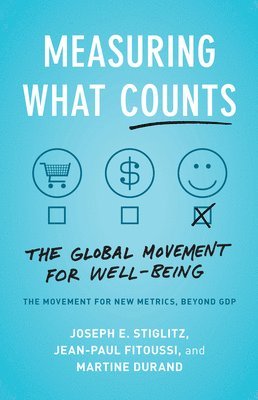
In 2009, a group of economists issued a report challenging gross domestic product (GDP) as a measure of progress and well-being. Now, in Measuring What Counts they - propose a new, 'beyond GDP' agenda. This book provides an accessible overview of the last decade's global movement, sparked by the original critique of GDP, and proposes a new 'dashboard' of metrics to assess a society's health, including measures of inequality and economic vulnerability, whether growth is environmentally sustainable, and how people feel about their lives.
Inbunden, Engelska, 2020
319 kr
Skickas
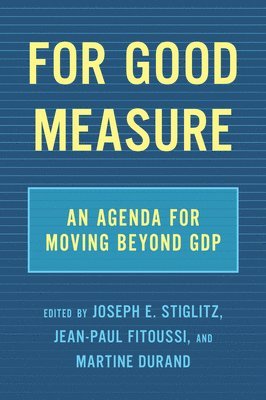
In the first book of its kind, leading economists from around the world, including Thomas Piketty, Emmanuel Saez, Elizabeth Beasely, Jacob Hacker, Francois Bourguignon, Nora Lustig, Alan B. Krueger, and Joseph E. Stiglitz, describe a range of fascinating metrics - from economic insecurity and environmental sustainability to inequality of opportunity and levels of trust and resilience - that can be used to supplement the simplistic measure of gross domestic product, providing a far more nuanced and accurate account of societal health and well-being.
Häftad, Franska, 2018
589 kr
Skickas inom 3-6 vardagar
Häftad, Franska, 2019
323 kr
Skickas inom 3-6 vardagar
196 kr
Läs direkt efter köp
Nous voulons faire du PIB la mesure de toute chose – performance, bien-être, qualité de la vie –, alors qu’il ne représente qu’une mesure de l’activité économique marchande. Il est possible au contraire de construire des mesures fiables des déterminants matériels du bien-être, de la répartition des revenus, de la qualité de la vie, de la durabilité des évolutions en cours et de bien d’autres aspects de notre économie et de notre société. C’est même l’essentiel si nous voulons que la société se reconnaisse davantage dans l’image que lui renvoie d’elle le miroir des données statistiques et, surtout, si nous voulons prendre des décisions éclairées relatives au futur. Pour affronter l’avenir, il faut, d’abord, mieux déchiffrer le monde qui nous entoure et mieux percevoir comment il change. Il n’est pas d’autre issue que d’améliorer l’Arithmétique des Nations. C’est précisément ce que propose ce livre. Joseph Stiglitz est lauréat du prix Nobel d’économie 2001. Après avoir été économiste en chef et premier vice-président de la Banque mondiale, il est professeur à l’Université Columbia à New York. Amartya Sen est lauréat du prix Nobel d’économie 1998. Il est professeur à l''Université Harvard. Jean-Paul Fitoussi est professeur à l’Institut d’études politiques de Paris. Il est également président de l’Observatoire français des conjonctures économiques.
E-bok
Franska, 2009155 kr
Läs direkt efter köp
« Si nous ne voulons pas que notre avenir, celui de nos enfants et des générations futures soit semé de catastrophes financières, économiques, sociales, écologiques et, par conséquent, humaines, nous devons changer nos manières de vivre, de consommer, de produire. Nous devons changer les critères de nos organisations sociales, de nos politiques publiques. Cette révolution ne s’accomplira pleinement que si elle est d’abord une révolution dans les esprits, dans les façons de penser, dans les mentalités dans les valeurs. C’est fort de cette conviction que j’ai demandé en février 2008 à Joseph Stiglitz, Amartya Sen et Jean-Paul Fitoussi de constituer une commission avec les meilleurs experts du monde. Pour remédier à cette situation, il fallait bousculer les habitudes de pensée. Il fallait qu’un débat s’ouvre enfin. Il fallait que ce débat soit porté au plus haut niveau de compétence. » Nicolas SarkozyJoseph Stiglitz est lauréat du prix Nobel d’économie 2001. Après avoir été économiste en chef et premier vice-président de la Banque mondiale, il est professeur à l’Université Columbia à New York. Amartya Sen est lauréat du prix Nobel d’économie 1998. Il est professeur à l''Université Harvard. Jean-Paul Fitoussi est professeur à l’Institut d’études politiques de Paris. Il est également président de l’Observatoire français des conjonctures économiques.
E-bok
PDF, Engelska, 2018358 kr
Läs direkt efter köp
Metrics matter for policy and policy matters for well-being. In this report, the co-chairs of the OECD-hosted High Level Expert Group on the Measurement of Economic Performance and Social Progress, Joseph E. Stiglitz, Jean-Paul Fitoussi and Martine Durand, show how over-reliance on GDP as the yardstick of economic performance misled policy makers who did not see the 2008 crisis coming. When the crisis did hit, concentrating on the wrong indicators meant that governments made inadequate policy choices, with severe and long-lasting consequences for many people. While GDP is the most well-known, and most powerful economic indicator, it can't tell us everything we need to know about the health of countries and societies. In fact, it can't even tell us everything we need to know about economic performance. We need to develop dashboards of indicators that reveal who is benefitting from growth, whether that growth is environmentally sustainable, how people feel about their lives, what factors contribute to an individual's or a country's success. This book looks at progress made over the past 10 years in collecting well-being data, and in using them to inform policies. An accompanying volume, For Good Measure: Advancing Research on Well-being Metrics Beyond GDP, presents the latest findings from leading economists and statisticians on selected issues within the broader agenda on defining and measuring well-being.
E-bok
Engelska, 2018309 kr
Läs direkt efter köp
Metrics matter for policy and policy matters for well-being. In this report, the co-chairs of the OECD-hosted High Level Expert Group on the Measurement of Economic Performance and Social Progress, Joseph E. Stiglitz, Jean-Paul Fitoussi and Martine Durand, show how over-reliance on GDP as the yardstick of economic performance misled policy makers who did not see the 2008 crisis coming. When the crisis did hit, concentrating on the wrong indicators meant that governments made inadequate policy choices, with severe and long-lasting consequences for many people. While GDP is the most well-known, and most powerful economic indicator, it can't tell us everything we need to know about the health of countries and societies. In fact, it can't even tell us everything we need to know about economic performance. We need to develop dashboards of indicators that reveal who is benefitting from growth, whether that growth is environmentally sustainable, how people feel about their lives, what factors contribute to an individual's or a country's success. This book looks at progress made over the past 10 years in collecting well-being data, and in using them to inform policies. An accompanying volume, For Good Measure: Advancing Research on Well-being Metrics Beyond GDP, presents the latest findings from leading economists and statisticians on selected issues within the broader agenda on defining and measuring well-being.
E-bok
PDF, Tyska, 2020318 kr
Läs direkt efter köp
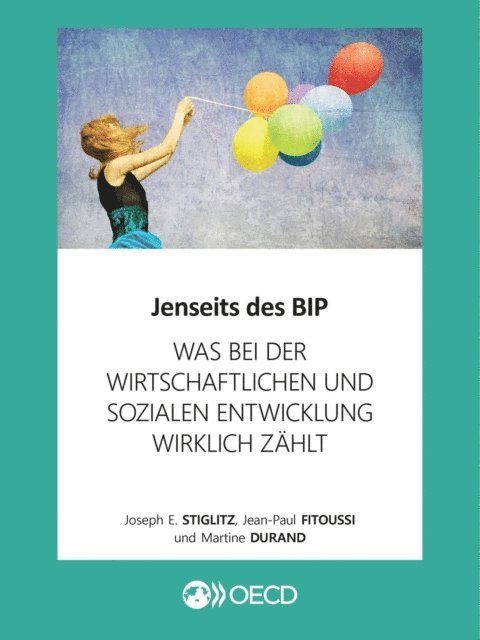
Das BIP ist zwar der bekannteste und gebrauchlichste Wirtschaftsindikator, es kann aber nicht uber alle relevanten Aspekte der wirtschaftlichen Leistung und des sozialen Fortschritts Auskunft geben. Dieser Band zeigt, dass das BIP als alleiniger Mastab fur die wirtschaftliche Leistung irrefuhrend ist: Es ist der Fokussierung auf diese Kennzahl zuzuschreiben, dass die Politikverantwortlichen die Krise von 2008 nicht kommen sahen und ihre wirtschaftlichen und sozialen Folgen nicht richtig beurteilten. Die Co-Vorsitzenden der der OECD angegliederten Hochrangigen Sachverstandigengruppe zur Messung von wirtschaftlicher Leistung und sozialem Fortschritt - Joseph E. Stiglitz, Jean-Paul Fitoussi und Martine Durand - argumentieren, dass wir Indikatoren-Dashboards entwickeln mussen, die abbilden, was wirklich zahlt: Wer vom Wachstum profitiert, ob dieses Wachstum okologisch nachhaltig ist, wie die Menschen ihr Leben empfinden und welche Faktoren fur den Erfolg eines Menschen oder eines Landes ausschlaggebend sind. Diese Dashboards werden den Politikverantwortlichen helfen, die richtigen Entscheidungen fur die Bevolkerung, das Land und die Welt zu treffen. Die Publikation beleuchtet daruber hinaus auch die Fortschritte, die in den letzten zehn Jahren im Hinblick auf die Erhebung von Daten zu Wohlstand und Lebensqualitat und ihre Berucksichtigung bei der Politikgestaltung erzielt wurden. In einem Begleitband - For Good Measure: Advancing Research on Well-being Metrics Beyond GDP - prasentieren einige Mitglieder der Hochrangigen Sachverstandigengruppe gemeinsam mit Co-Autoren, bei denen es sich um fuhrende Wirtschaftswissenschaftler, Politikwissenschaftler, Psychologen und Statistiker handelt, ihre neuesten Forschungsergebnisse in ausgewahlten Teilbereichen der umfassenden Agenda zur Definition und Messung von Wohlstand.
E-bok
Tyska, 2020307 kr
Läs direkt efter köp
Das BIP ist zwar der bekannteste und gebrauchlichste Wirtschaftsindikator, es kann aber nicht uber alle relevanten Aspekte der wirtschaftlichen Leistung und des sozialen Fortschritts Auskunft geben. Dieser Band zeigt, dass das BIP als alleiniger Mastab fur die wirtschaftliche Leistung irrefuhrend ist: Es ist der Fokussierung auf diese Kennzahl zuzuschreiben, dass die Politikverantwortlichen die Krise von 2008 nicht kommen sahen und ihre wirtschaftlichen und sozialen Folgen nicht richtig beurteilten. Die Co-Vorsitzenden der der OECD angegliederten Hochrangigen Sachverstandigengruppe zur Messung von wirtschaftlicher Leistung und sozialem Fortschritt - Joseph E. Stiglitz, Jean-Paul Fitoussi und Martine Durand - argumentieren, dass wir Indikatoren-Dashboards entwickeln mussen, die abbilden, was wirklich zahlt: Wer vom Wachstum profitiert, ob dieses Wachstum okologisch nachhaltig ist, wie die Menschen ihr Leben empfinden und welche Faktoren fur den Erfolg eines Menschen oder eines Landes ausschlaggebend sind. Diese Dashboards werden den Politikverantwortlichen helfen, die richtigen Entscheidungen fur die Bevolkerung, das Land und die Welt zu treffen. Die Publikation beleuchtet daruber hinaus auch die Fortschritte, die in den letzten zehn Jahren im Hinblick auf die Erhebung von Daten zu Wohlstand und Lebensqualitat und ihre Berucksichtigung bei der Politikgestaltung erzielt wurden. In einem Begleitband - For Good Measure: Advancing Research on Well-being Metrics Beyond GDP - prasentieren einige Mitglieder der Hochrangigen Sachverstandigengruppe gemeinsam mit Co-Autoren, bei denen es sich um fuhrende Wirtschaftswissenschaftler, Politikwissenschaftler, Psychologen und Statistiker handelt, ihre neuesten Forschungsergebnisse in ausgewahlten Teilbereichen der umfassenden Agenda zur Definition und Messung von Wohlstand.