Jeaneane Fowler - Böcker
Visar alla böcker från författaren Jeaneane Fowler. Handla med fri frakt och snabb leverans.
10 produkter
10 produkter
504 kr
Skickas inom 7-10 vardagar
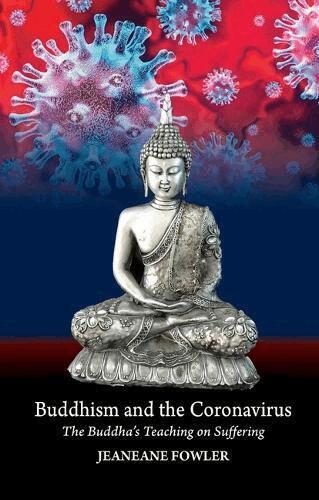
This book examines the early teachings of Buddhism associated with the life of the Buddha, Siddhatta Gotama. In these teachings, the Buddha put forward his famous Four Noble Truths concerning the nature of suffering, its causes, the Truth that it can be overcome, and a pathway to end suffering. The suffering experienced in the contemporary coronavirus pandemic may seem to be very distant from the Buddhas message delivered over two thousand years ago, but the teaching of the Four Noble Truths is as relevant today as it was all that time ago. So this book melds the two, occasionally with discrete treatment of past and present but ever cognizant of the ways in which the teachings of the past inform the present crisis. To understand coronaviruses, the book examines the nature of viruses, their origins, causes and the ways in which they are both friends and enemies of humankind. Importantly and crucially, the book investigates how far humanity itself is the cause of its own suffering in the pandemics that arise no less in the coronaviruses that have emerged in the twenty-first century. Chapters include: The Buddha; Viruses: Friends and Enemies; The Noble Truth of Suffering; The Second Noble Truth of the Cause of Suffering; The Third Noble Truth of the Cessation of Suffering; The Fourth Noble Truth: The Noble Eightfold Path; The Noble Eightfold Path: Mindfulness and Concentration; The Brahma-vihara: Love: Compassion: Sympathetic Joy: Equanimity.
575 kr
Skickas inom 7-10 vardagar
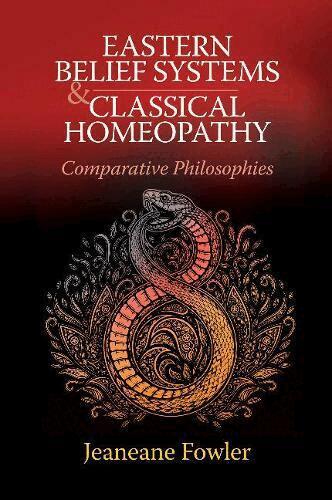
The many correlations between philosophical concepts in Eastern belief systems and the thought and practice of classical homeopathy have never been thoroughly explored. The homeopathy content of the arguments presented is mainly, though not exclusively, classical homeopathy, that is to say the method that emerges from the original founder, Samuel Hahnemann, and proceeds to the present day with a belief, where possible, in one, single, similimum remedy for the treatment of disease. The Eastern belief systems addressed are Hinduism, Buddhism, Taoism, and Jainism. Relevant detours include the mystical aspects of Islam as expressed in Sufism; and points of contact with Christian faith. Chapters include: Fundamental concepts The vital force The interrelated Universe Holism The pathological self Imbalance, disease and its symptoms Miasmatic pathology Remedies Potentization Cure: The purification of consciousness Homeopathy and the Coronavirus.
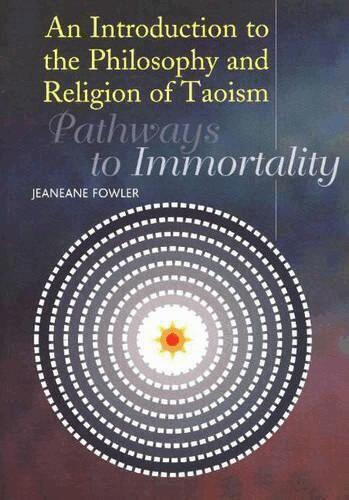
Introduction to the Philosophy and Religion of Taoism
Pathways to Immortality
Inbunden, Engelska, 2005
1 698 kr
Skickas inom 7-10 vardagar
In its rich evolution from antiquity to present times, Chinese religion has encompassed manifold religious expressions. Taoism is one facet of Chinese religion, and exemplifies particularly well the variety of beliefs and practices that humankind has adopted and experienced in the search for answers to both ultimate and proximate questions about life and death. This book explores the different pathways Taoism took in that search, touching at many points on the other interrelated facets of Chinese religion in Confucianism, Buddhism and popular religion. The mystical, philosophical traditions of Taoism are analysed, as well as the more colourful and overtly religious strands of Taoism.
476 kr
Skickas inom 7-10 vardagar
In its rich evolution from antiquity to present times, Chinese religion has encompassed manifold religious expressions. Taoism is one facet of Chinese religion, and exemplifies particularly well the variety of beliefs and practices that humankind has adopted and experienced in the search for answers to both ultimate and proximate questions about life and death. This book explores the different pathways Taoism took in that search, touching at many points on the other interrelated facets of Chinese religion in Confucianism, Buddhism and popular religion. The mystical, philosophical traditions of Taoism are analysed, as well as the more colourful and overtly religious strands of Taoism.
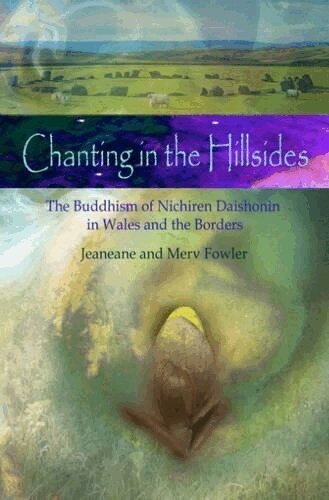
Chanting in the Hillsides
The Buddhism of Nichiren Daishonim in Wales & the Borders
Häftad, Engelska, 2008
320 kr
Skickas inom 7-10 vardagar
In 1983, a tiny group of people in Cardiff and a married couple in Aberporth West Wales were the only Welsh members of Soka Gakkai International, a Japanese movement based on the beliefs and teachings of the 13th century Buddhist, Nichiren Daishonin. Today, there are hundreds of members in Wales and the Borders. This book examines the history of the movement in these two areas, and draws on original research gleaned from the members themselves. The research elicits facets of their faith, practices, and study, as well as their testimonies to the success of such beliefs and practices in their daily lives. The book combines the twin goals of academic analysis of the Buddhism of Nichiren Daishonin in general with the warmth of its expression in the lives of its adherents in Wales and the Borders.
291 kr
Skickas inom 7-10 vardagar
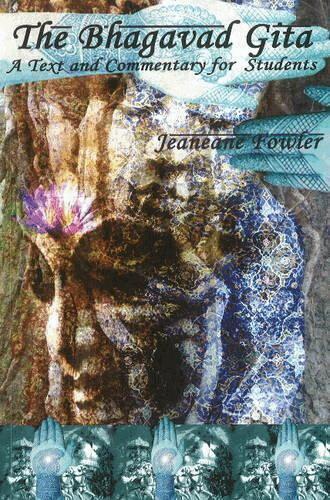
Jeaneane Fowler provides a text and detailed commentary on this important Hindu scripture, which is a dialogue between Arjuna the man and Krishna the God. Major Hindu concepts are examined in depth, and the background to the Gita is presented in a comprehensive introduction. Yoga is the key feature of the Gita but it has its own interpretation of what that yoga should be: thus, yoga features not only in each of the pathways of knowledge, desireless action and devotion, but in the way in which the divine is understood. The chapters of the Bhagavad Gita therefore describe Arjunas despondency followed by The Yoga of Sankhya, Action, Knowledge, Renunciation, Meditation, Knowledge and Realization, the Imperishable Brahman, Royal Knowledge and Royal Mystery, Manifestation, the Vision of the Universal Form, Devotion, the Differentiation of the Kshetra and Kshetrajna, the Differentiation of the Three Gunas, the Supreme Purusha, the Differentiation of the Divine and the Demonic, the Differentiation of the Threefold Shraddha and, finally, The Yoga of Liberation and Renunciation. The book also contains detailed notes to the Gita chapters, a Further Reading section, a combined Glossary and Index of Sanskrit Terms, and an Index of English words. The cover of the book is replete with symbolism. Krishna is always represented as blue in colour, hence the colour of the hands in the cover design. The chariot of Krishna and Arjuna is to be seen in the motif at the base, while the triple motif symbolizes the triple paths of the Gita action without desire for results, knowledge and devotion. There are also three strands that make up all phenomena light and radiance, energy, and inertia, as well as three aspects of the divine in the Gita the totally transcendent Absolute, the manifest deity that is also the essence of all things, and the personal God to whom devotion can be given. The main image of Krishna is superimposed on the roots of the ashvattha tree that features in chapter 15: its branches reach down into the earth and its roots ascend upwards and it represents phenomenal existence.
433 kr
Skickas inom 7-10 vardagar
Originally published in 1997 -- "A wonderful balance of detail and clarity with excellent introductory essays on the Indus Valley civilization, the Vedic Period, the Upanishads, and devotional Hinduism," Religious Studies Review; Choice Outstanding Academic Book selling over 10,000 copies, and now revised and expanded to two volumes (Volume II: Religious History and Philosophy). Herewith an outstanding introduction to Hinduism and the many expressions of the religion in India. The evolution and nature of the major Hindu deities occupies substantial sections of the book as well as social structures such as class and caste that inform not only ritualistic practices and approaches to divinity but also societal norms. Thus, the historical roots of present-day beliefs and practices and the religious contexts in which they are based are examined. Current issues such as the struggle for greater independence for women in all aspects of social and economic living are raised. The book also incorporates the ways in which Hinduism is expressed in the colourful festivals and the sacred pilgrimages throughout India. No prior knowledge of Hinduism is required. Contents include: Fundamental Beliefs; Scriptures; Class and Caste; The Four Stages of Life; Gods and Goddesses (Siva); Gods and Goddesses (Sakti); Gods and Goddesses (Visnu, Krisna and Radha); Ritual in the Home and Community (Worship); Ritual in the Home and Community (Life-cycle Rites); Women in the Home and Community; Sacred Times and Places: Festivals and Pilgrimage.
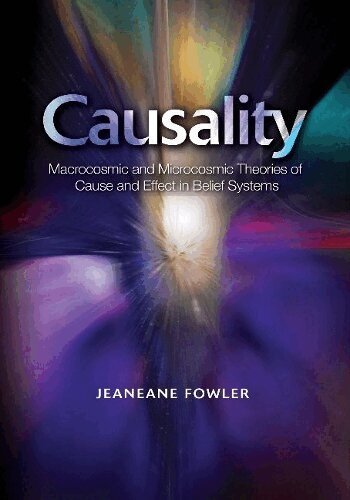
Causality
Macrocosmic and Microcosmic Theories of Cause and Effect in Belief Systems
Häftad, Engelska, 2020
575 kr
Skickas inom 7-10 vardagar
This book examines the concepts of cause and effect from two dimensions. The first concerns the macrocosm of the Universe and how each belief system views creation. The second dimension explores the ways in which beliefs about creation influence the microcosmic world in terms of the nature of the self, the proximate goals within each system, the answers each belief system offers to the presence of evil and suffering in existence, and ideas about the ultimate goal of release from them. All these ideas inform and are fundamental to the understanding of the present-day practices of different faiths, presenting challenges for scriptural testimony balanced with existential living. The final two chapters explore current research in physics concerning the beginnings of the cosmos and what implications such research might have for existence within it, with the final chapter examining scientific views of the nature of the self. Contents include: Judaic and Christian Traditions. Islam. Hinduism. Early Buddhism. Sikhism. Classical Taoism. Recycled Stardust. Ashes to Ashes and Dust to Atoms: The Life and Death of the Self.
405 kr
Skickas inom 7-10 vardagar
263 kr
Skickas inom 7-10 vardagar
The exploration of Taoism and T'ai Chi begins by examining their origins and affiliations under the title of Beginnings. Subsequent chapters take up the themes of Harmony (expressing the duality and interrelation of yin and yang); The Way (which looks at the philosophy of the Tao and the path that leads to its practical expression through T'ai Chi); Change (which examines the influence of the I Ching and the Eight Energies); Direction (an analysis of the Five Elements); and Energy (which explores alchemy and the vital energy of ch'i). The primary focus is on Movement and Stillness, which harmonizes the softness of movement with the stillness of the inner self -- leading to the theme of Unity, the ultimate goal of philosophical Taoism and the practical dimensions of that philosophy in T'ai Chi.