Jeanne Gang - Böcker
Visar alla böcker från författaren Jeanne Gang. Handla med fri frakt och snabb leverans.
5 produkter
5 produkter
181 kr
Tillfälligt slut
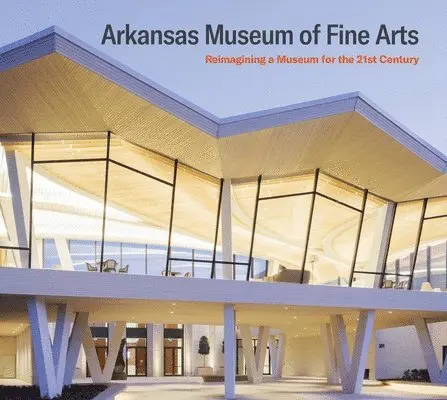
Richly illustrated guide to the Arkansas Museum of Fine Arts, published to mark the opening of the museum’s new landmark building.Founded in 1937, the Arkansas Museum of Fine Arts is the largest cultural institution of its kind in the region, offering a unique blend of visual and performing arts experiences. This book celebrates the opening of the museum’s new landmark building, introducing the museum’s collection for the first time within its stunning architecture, designed by Studio Gang, and landscape, designed by SCAPE.AMFA’s international collection spans seven centuries, with strengths in works on paper and contemporary craft, and includes notable holdings by artists from Arkansas, the Mid-South region and across the United States and Europe. Located in Little Rock’s oldest urban green space, MacArthur Park, AMFA’s landmark building and grounds are realised in collaboration with Polk Stanley Wilcox Architects.This celebratory volume will be essential to all visitors, and anyone interested in the art and architecture of the American South.
781 kr
Skickas inom 3-6 vardagar
The most in-depth exploration of one of the most important, innovative, and creative architecture practices working today.For the last twenty years Studio Gang, led by Jeanne Gang, has created bold, visionary architecture that engages the urgent social and environmental challenges of our time. This first comprehensive monograph brings together 25 signature projects-from the award-winning Aqua Tower and Writers Theatre to highly-anticipated upcoming buildings for the American Museum of Natural History and O'Hare International Airport-to reveal the resonant concepts and design approach that connect them. With a rich variety of visual materials and short essays by Jeanne Gang, the book elegantly captures the creative sensibility and trajectory of an architecture driven by pressing twenty-first-century questions.
390 kr
Tillfälligt slut
Jeanne Gang, one of America’s most distinguished contemporary architects, proposes using the ancient plant-cultivation technique of grafting in architecture and urban design as an effective way to address the pressing issue of climate change. Grafting is the biological process of connecting two separate living plants so they can grow and function as one. Motivated by both human need and desire, it is an ancient practice that continues to be performed today in search of more fruitful, palatable, and resilient varieties of plants.Grafting is also an incredibly useful and untapped paradigm for how architecture can begin to cope with climate change on a larger, more impactful scale, because it is predicated upon the building fabric that we already have. Grafting can become a term that informs architecture and its many scales, provoking the imagination while simultaneously lending know-how to tectonic, programmatic, formal, and regenerative adaptations.
398 kr
Skickas inom 5-8 vardagar
Jeanne Gang, one of America’s most distinguished contemporary architects, proposes using the ancient plant-cultivation technique of grafting in architecture and urban design as an effective way to address the pressing issue of climate change. Grafting is the biological process of connecting two separate living plants so they can grow and function as one. Motivated by both human need and desire, it is an ancient practice that continues to be performed today in search of more fruitful, palatable, and resilient varieties of plants.Grafting is also an incredibly useful and untapped paradigm for how architecture can begin to cope with climate change on a larger, more impactful scale, because it is predicated upon the building fabric that we already have. Grafting can become a term that informs architecture and its many scales, provoking the imagination while simultaneously lending know-how to tectonic, programmatic, formal, and regenerative adaptations.Text in French.
271 kr
Kommande
A programmatic manifesto and cultural proposal, New Natures: Planetary Museums reimagines the encyclopaedic museum for the 21st century. Beginning with Studio Gang’s speculative transformation of the Louvre in Paris, it dissolves the traditional boundaries between museum and ecosystem, culture and nature, city and planet. Other featured case studies include the Benjakitti Forest Park in Bangkok, designed by Yu Kongjan (China); the park of Luma Arles, designed by Bas Smets (Belgium); the Art Biotop Water Garden in Tochigi, designed by Junya Ishigami (Japan); and the Tidal Basin in Washington D.C., designed by Field Operations (USA).Written by French curator and writer Béatrice Grenier, architect Jeanne Gang, and Italian philosopher Emanuele Coccia, the book articulates the need for a new planetary encyclopaedia that encompasses ecological systems together with the geological, hydrological, and atmospheric forces that sustain them.Illustrated with some 50 images New Natures: Planetary Museums offers both a theoretical framework and a new cultural policy for a world shaped by climate crisis.