Jeb E. Barnes – författare
Visar alla böcker från författaren Jeb E. Barnes. Handla med fri frakt och snabb leverans.
2 produkter
2 produkter
E-bok
PDF, Engelska, 2014541 kr
Läs direkt efter köp
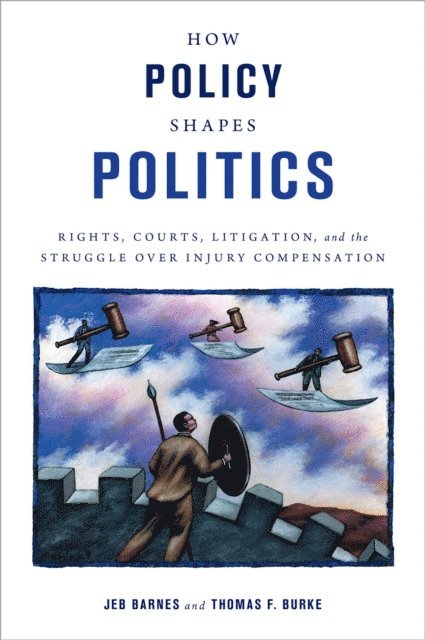
Judicialization, juridification, legalization-whatever terms they use, scholars, commentators and citizens are fascinated by what one book has called "The Global Rise of Judicial Power" and seek to understand its implications for politics and society. In How Policy Shapes Politics, Jeb Barnes and Thomas F. Burke find that the turn to courts, litigation, and legal rights can have powerful political consequences.Barnes and Burke analyze the field of injury compensation in the United States, in which judicialized policies operate side-by-side with bureaucratized social insurance programs. They conclude that litigation, by dividing social interests into victims and villains, winners and losers, generates a fractious, chaotic politics in which even seeming allies-business and professional groups on one side, injured victims on the other-can become divided amongst themselves. By contrast, social insurance programs that compensate for injury bring social interests together, narrowing the scope of conflict and over time producing a more technocratic politics.Policy does, in fact, create politics. But only by comparing the political trajectories of different types of policies -- some more court-centered, others less so -- can we understand the consequences of arguably one of the most significant developments in post-World War II government, the increasingly prominent role of courts, litigation, and legal rights in politics.
Inbunden, Engelska, 2015
734 kr
Skickas inom 5-8 vardagar
The 'global rise of judicial powe' has been called one of the most significant developments in late twentieth and early twenty-first century politics. In this book, Jeb Barnes and Thomas F. Burke examine the political consequences of the growing reliance on courts and litigation in public policy by analyzing the field of injury compensation, in which judicialized and bureaucratized programs operate side-by-side. Their study mixes quantitative data on a wide range of injury compensation policies with three in-depth case historical studies in which they trace political struggles over Social Security Disability Insurance, asbestos injury litigation, and the obscure but fascinating controversy over injuries purportedly caused by vaccines. They conclude that while social insurance programs that compensate for injury tend to bring social interests together, the use of litigation divides interests between victims and villains, winners and losers and so creates a comparatively fractious, chaotic politics.