Jeff Friesen - Böcker
Visar alla böcker från författaren Jeff Friesen. Handla med fri frakt och snabb leverans.
18 produkter
18 produkter
249 kr
Skickas inom 3-6 vardagar
LEGO (R) bricks meet The Way Things Work in this fun, informative tour of the world of engineering, from the creative mind of expert LEGO (R) builder Jeff Friesen.In The LEGO (R) Engineer, you'll explore how some of humanity's greatest feats of engineering work, from towering skyscrapers to powerful rockets to speeding bullet trains. Then follow step-by-step instructions to build these marvels with LEGO (R) bricks as you experience the world of engineering in a fun new way.How do diesel and electric engines work together to drive massive freight trains? How does a container ship's bow shape contribute to its fuel efficiency? How do cable-stayed bridges distribute weight differently than suspension bridges? You'll learn the answers to these engineering questions and more as you build your way through over 30 models, all designed by LEGO (R) expert Jeff Friesen. Understanding the engineering principles behind these structures will not only help you better appreciate the world around you, but will also help you make your own LEGO (R) builds more realistic.
346 kr
Skickas inom 10-15 vardagar
Android development is hot, and many programmers are interested in joining the fun. However, because this technology is based on Java, you should first obtain a solid grasp of the Java language and its foundational APIs to improve your chances of succeeding as an Android app developer. After all, you will be busy learning the architecture of an Android app, the various Android-specific APIs, and Android-specific tools. If you do not already know Java fundamentals, you will probably end up with a massive headache from also having to quickly cram those fundamentals into your knowledge base. Learn Java for Android Development teaches programmers of any skill level the essential Java language and foundational Java API skills that must be learned to improve the programmers chances of succeeding as an Android app developer. Each of the books 10 chapters provides an exercise section that gives you the opportunity to reinforce your understanding of the chapters material. Answers to the books more than 300 exercises are provided in an appendix. Additionally, author Jeff Friesen has created six bonus chapters that you can download from his personal site, located at http://tutortutor.ca/cgi-bin/makepage.cgi?/books/ljfad.Once you complete this book, you will be ready to dive into Android, and you can start that journey by obtaining a copy of Beginning Android 2.
366 kr
Skickas inom 10-15 vardagar
Android continues to be one of the leading mobile OS and development platforms driving today's mobile innovations and the apps ecosystem. Android appears complex, but offers a variety of organized development kits to those coming into Android with differing programming language skill sets. Android Recipes: A Problem-Solution Approach guides you step-by-step through a wide range of useful topics using complete and real-world working code examples. In this book, you'll start off with a recap of Android architecture and app fundamentals, and then get down to business and build an app with Google’s Android SDK at the command line and Eclipse. Next, you'll learn how to accomplish practical tasks pertaining to the user interface, communications with the cloud, device hardware, data persistence, communications between applications, and interacting with Android itself. Finally, you'll learn how to leverage various libraries and Scripting Layer for Android (SL4A) to help you perform tasks more quickly, how to use the Android NDK to boost app performance, and how to design apps for performance, responsiveness, seamlessness, and more. Instead of abstract descriptions of complex concepts, in Android Recipes, you'll find live code examples. When you start a new project, you can consider copying and pasting the code and configuration files from this book, then modifying them for your own customization needs. This can save you a great deal of work over creating a project from scratch!
438 kr
Skickas inom 10-15 vardagar
Beginning Java 7 guides you through version 7 of the Java language and a wide assortment of platform APIs. New Java 7 language features that are discussed include switch-on-string and try-with-resources. APIs that are discussed include Threading, the Collections Framework, the Concurrency Utilities, Swing, Java 2D, networking, JDBC, SAX, DOM, StAX, XPath, JAX-WS, and SAAJ. This book also presents an introduction to Android app development so that you can apply some of its knowledge to the exciting world of Android app development.This book presents the following table of contents:Chapter 1 introduces you to Java and begins to cover the Java language by focusing on fundamental concepts such as comments, identifiers, variables, expressions, and statements.Chapter 2 continues to explore this language by presenting all of its features for working with classes and objects. You learn about features related to class declaration and object creation, encapsulation, information hiding, inheritance, polymorphism, interfaces, and garbage collection.Chapter 3 focuses on the more advanced language features related to nested classes, packages, static imports, exceptions, assertions, annotations, generics, and enums. Additional chapters introduce you to the few features not covered in Chapters 1 through 3.Chapter 4 largely moves away from covering language features (although it does introduce class literals and strictfp) while focusing on language-oriented APIs. You learn about Math, StrictMath, Package, Primitive Type Wrapper Classes, Reference, Reflection, String, StringBuffer and StringBuilder, Threading, BigDecimal, and BigInteger in this chapter.Chapter 5 begins to explore Java's utility APIs by focusing largely on the Collections Framework. However, it also discusses legacy collection-oriented APIs and how to create your own collections.Chapter 6 continues to focus on utility APIsby presenting the concurrency utilities along with the Objects and Random classes.Chapter 7 moves you away from the command-line user interfaces that appear in previous chapters and toward graphical user interfaces. You first learn about the Abstract Window Toolkit foundation, and then explore the Java Foundation Classes in terms of Swing and Java 2D. Appendix C explores Accessibility and Drag and Drop.Chapter 8 explores filesystem-oriented I/O in terms of the File, RandomAccessFile, stream, and writer/reader classes.Chapter 9 introduces you to Java's network APIs (e.g., sockets). It also introduces you to the JDBC API for interacting with databases along with the Java DB database product.Chapter 10 dives into Java's XML support by first presenting an introduction to XML (including DTDs and schemas). It next explores the SAX, DOM, StAX, XPath, and XSLT APIs. It even briefly touches on the Validation API. While exploring XPath, you encounter namespace contexts, extension functions and function resolvers, and variables and variable resolvers.Chapter 11 introduces you to Java's support for SOAP-based and RESTful web services. As well as providing you with the basics of these web service categories, Chapter 11 presents some advanced topics, such as working with the SAAJ API to communicate with a SOAP-based web service without having to rely on JAX-WS. You will appreciate having learned about XML in Chapter 10 before diving into this chapter.Chapter 12 helps you put to use some of the knowledge you've gathered in previous chapters by showing you how to use Java to write an Android app's source code. This chapter introduces you to Android, discusses its architecture, shows you how to install necessary tools, and develops a simple app.Appendix A presents the solutions to the programming exercises that appear near the end of Chapters 1 through 12.Appendix B introduces you to Java's Scripting API along with Java 7's support for dynamically typed languages.Appendix C introduces you to additional APIs and architecture topics. Examples include Accessibility, classloaders, Console, Drag and Drop, Java Native Interface, and System Tray.Appendix D presents a gallery of significant applications that demonstrate various aspects of Java.Unfortunately, there are limits to how much knowledge can be crammed into a print book. For this reason, Appendixes A, B, C, and D are not included in this book's pages. Instead, these appendixes are freely distributed as PDF files. Appendixes A and B are bundled with the book's associated code file at the Apress website (http://www.apress.com/9781430239093). Appendixes C and D are bundled with their respective code files at my TutorTutor.ca website (http://tutortutor.ca/cgi-bin/makepage.cgi?/books/bj7).
556 kr
Skickas inom 10-15 vardagar
It's updated to include the Jelly Bean Android SDK as well as earlier releases. Instead of abstract descriptions of complex concepts, in Android Recipes, you'll find live code examples.
556 kr
Skickas inom 10-15 vardagar
Android development is hot, and many programmers are interested in joining the fun. However, because this technology is based on Java, you should first obtain a solid grasp of the Java language and its foundational APIs to improve your chances of succeeding as an Android app developer. After all, you will be busy learning the architecture of an Android app, the various Android-specific APIs, and Android-specific tools. If you do not already know Java fundamentals, you will probably end up with a massive headache from also having to quickly cram those fundamentals into your knowledge base. Learn Java for Android Development, Second Edition teaches programmers of any skill level the essential Java language and foundational Java API skills that must be learned to improve the programmer’s chances of succeeding as an Android app developer. Each of the book’s 14 chapters provides an exercise section that gives you the opportunity to reinforce your understanding of the chapter’s material. Answers to the book’s more than 500 exercises are provided in an appendix. A second appendix provides a significant game-oriented Java application, which you can convert into an Android app. Once you complete this book, you should be ready to dive into beginning Android app development. Maybe, start that journey with Apress' Beginning Android.
426 kr
Skickas inom 10-15 vardagar
Android Recipes: A Problem-Solution Approach, Third Edition offers more than 100 down-to-earth code recipes, and guides you step-by-step through a wide range of useful topics using complete and real-world working code examples.
715 kr
Skickas inom 10-15 vardagar
Java I/O, NIO and NIO.2 is a power-packed book that is an accelerated guide and reference on buffers, files, sockets, datagrams, and pipe channels as found in the Java I/O, NIO, and NIO.2 reference implementations. In this book, you'll also learn how and when to use selectors, regular expressions, including patterns, matchers and more. You'll learn how to work with Charsets, formatters and scanners. You'll - all in all - learn how to use and apply NIO, NIO.2 and the enhancements available.After reading and using this book, you'll gain the accelerated knowledge and skill level to really build applications with efficient data access, especially for today's cloud computing streaming data needs.
497 kr
Skickas inom 10-15 vardagar
This concise book empowers all Java developers to master the complexity of the Java thread APIs and concurrency utilities. This knowledge aids the Java developer in writing correct and complex performing multithreaded applications.Java's thread APIs and concurrency utilities are among its most powerful and challenging APIs and language features. Java beginners typically find it very difficult to use these features to write correct multithreaded applications. Threads and the Concurrency Utilities helps all Java developers master and use these capabilities effectively.This book is divided into two parts of four chapters each. Part 1 focuses on the Thread APIs and Part 2 focuses on the concurrency utilities. In Part 1, you learn about Thread API basics and runnables, synchronization and volatility, waiting and notification, and the additional capabilities of thread groups, thread local variables, and the Timer Framework. In Part 2, you learn about concurrency utilities basics and executors, synchronizers, the Locking Framework, and the additional capabilities of concurrent collections, atomic variables, and the Fork/Join Framework.Each chapter ends with select exercises designed to challenge your grasp of the chapter's content. An appendix provides the answers to these exercises. A second appendix explores how threads are used by various standard class library APIs. Specifically, you learn about threads in the contexts of Swing, JavaFX, and Java 8's Streams API.What You Will Learn• How to do thread runnables, synchronization, volatility, waiting and notification, thread groups, thread local variables, and the Timer Framework•How to create multithreaded applications that work correctly.• What are concurrency utilities basics and executors• What are synchronizers, the Locking Framework, concurrent collections, atomic variables, and the Fork/Join Framework and how to use them•How to leverage the concurrency utilities to write more complex multithreaded applications and achieve greater performance• How to apply thread usage in Swing, JavaFX, and Java 8 Streams API contextsAudienceThe primary audience is Java beginners and the secondary audience is more advanced Java developers who have worked with the Thread APIs and the Concurrency Utilities.
756 kr
Skickas inom 10-15 vardagar
Use this guide to master the XML metalanguage and JSON data format along with significant Java APIs for parsing and creating XML and JSON documents from the Java language.
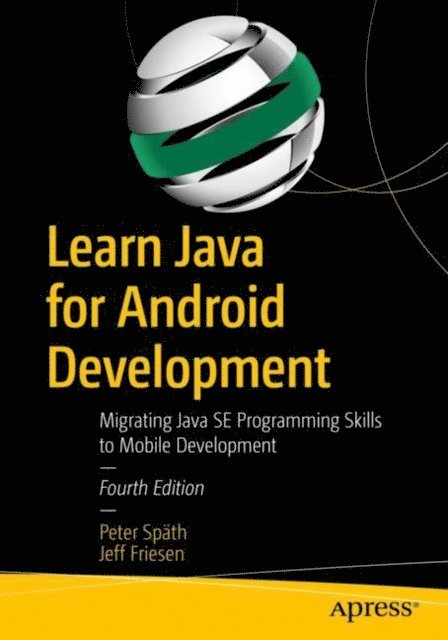
Learn Java for Android Development
Migrating Java SE Programming Skills to Mobile Development
Häftad, Engelska, 2020
956 kr
Skickas inom 3-6 vardagar
Gain the essential Java language skills necessary for using the Android SDK platform to build Java-based Android apps. This book includes the latest Java SE releases that Android supports, and is geared towards the Android SDK version 10. It includes new content including JSON documents, functional programming, and lambdas as well as other language features important for migrating Java skills to Android development. Android is still the world's most popular mobile platform and because this technology is still mostly based on Java, you should first obtain a solid grasp of the Java language and its APIs in order to improve your chances of succeeding as an effective Android apps developer. Learn Java for Android Development, 4th Edition helps you do that. Each of the book’s chapters provides an exercise section that gives you the opportunity to reinforce your understanding of the chapter’s material. Answers to the book’s more than 500 exercises are provided in an appendix. Once you finish, you will be ready to begin your Android app development journey using Java. What You Will LearnDiscover the latest Java programming language features relevant to Android SDK developmentApply inheritance, polymorphism, and interfaces to Android developmentUse Java collections, concurrency, I/O, networks, persistence, functional programming, and data access in Android appsParse, create, and transform XML and JSON documentsMigrate your Java skills for mobile development using the Android platformWho This Book Is For Programmers with at least some prior Java programming experience looking to get into mobile Java development with the Android platform.
456 kr
Skickas inom 10-15 vardagar
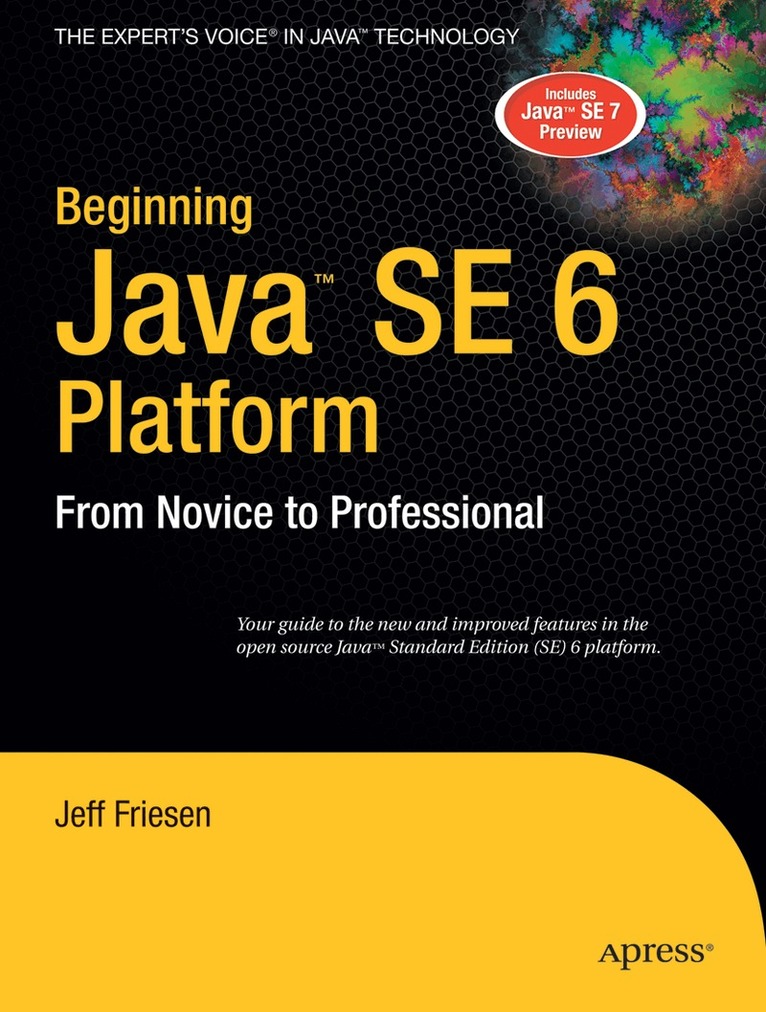
Beginning Java SE 6 Platform: From Novice to Professional steers you through the maze of Java Standard Edition (SE) 6 features. The first chapter sets the stage by introducing Java SE 6 in terms of its name change, themes, an overview, and a sampling of new features. It also briefly discusses the first two Java SE 6 updates.The remaining nine chapters organize features into the following categories: core libraries, GUI toolkits: AWT, GUI toolkits: Swing, internationalization, Java Database Connectivity, monitoring and management, networking, scripting, and security and web services. While exploring these chapters, you will encounter a variety of useful and interesting topics: introducing a new locale with its own currency, creating a new JConsole plugin, creating a scripted JEditorPane component, invoking and communicating with JavaFX Script and JRuby scripts from a Java application that interacts with the Scripting API, signing an arbitrary XML document and validating a signed documents XML signature, and accessing an existing web service are examples.With a few exceptions, each of chapters 2 through 10 alphabetically organizes its topics for convenient access. Furthermore, all 10 chapters end with a Test Your Understanding section that provides questions and exercises to help you reinforce your understanding of what you have read.Additional features are covered in the first three appendices. The first appendix introduces you to annotation types for annotation processors, Common Annotations 1.0, and several tables that conveniently organize additional annotation types that are new to Java SE 6. The second appendix explores changes made to various Java tools. For example, the Java compiler tool now supports annotation processingyou'll learn how to take advantage of this capability by writing your own annotation processor. Another example: you'll learn how to interact with the commandline script shell. The third appendix looks at a variety of performance enhancements, ranging from a fix for the grayrect problem to singlethreaded rendering.The second-to-last appendix provides answers and code to all of the questions and exercises in the various Test Your Understanding sections. The final appendix anticipates Java SE 7 by looking at features most likely to make the cut, including closures, the Java Module System, and the Swing Application Framework.By the time you finish this book, you will have mastered most of whats new and improved in Java SE 6. Although a few features, such as multiple gradient paints and an indepth look at StAX are not covered, you will find a growing list of articles devoted to these additional topics on the authors website (JavaJeff.mb.ca). Follow the links at the bottom of the websites Articles page.
249 kr
Skickas inom 3-6 vardagar
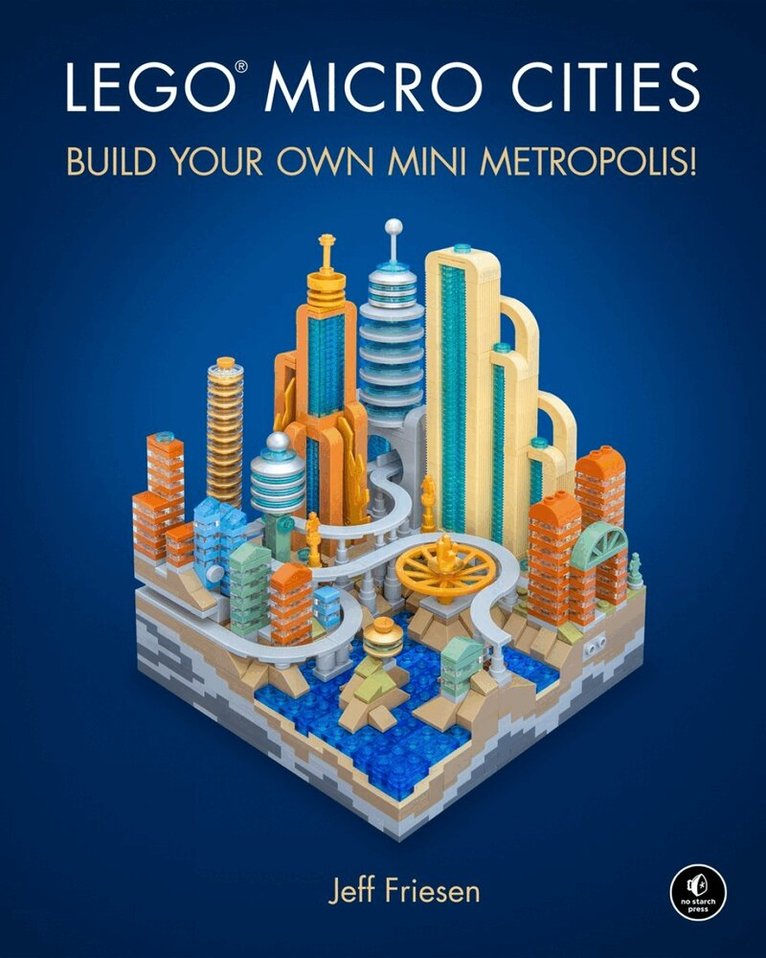
LEGO Micro Cities is a full colour guide to creating intricate LEGO micro cities. Readers learn how to recreate classic architectural styles using only LEGO bricks. In addition to creating entire buildings, LEGO model-building expert Jeff Friesen shows how to create interesting architectural features like bridges and skyscrapers, and will offer suggestions on how to customise your cities and make the models your own.
264 kr
Skickas inom 3-6 vardagar
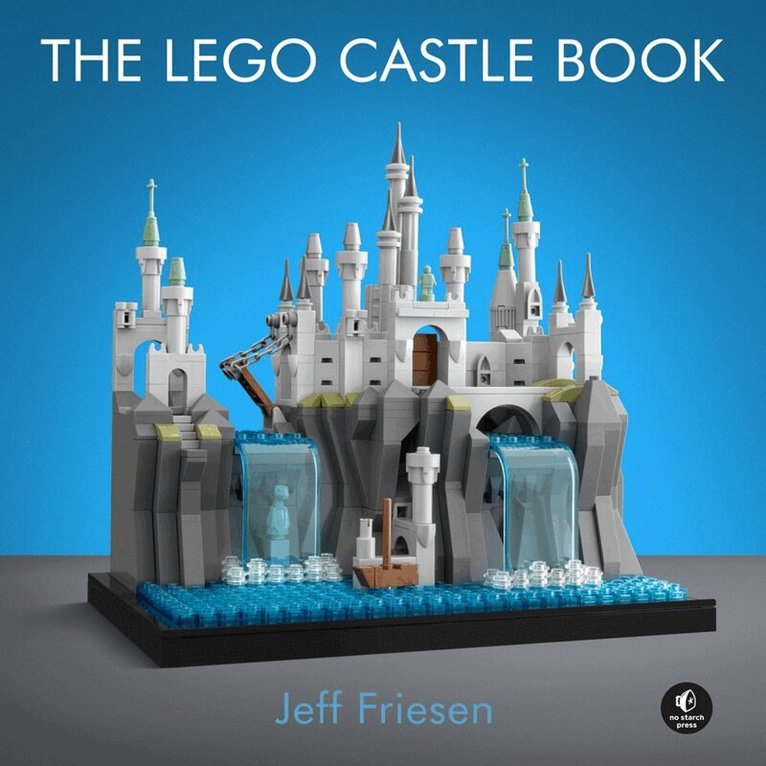
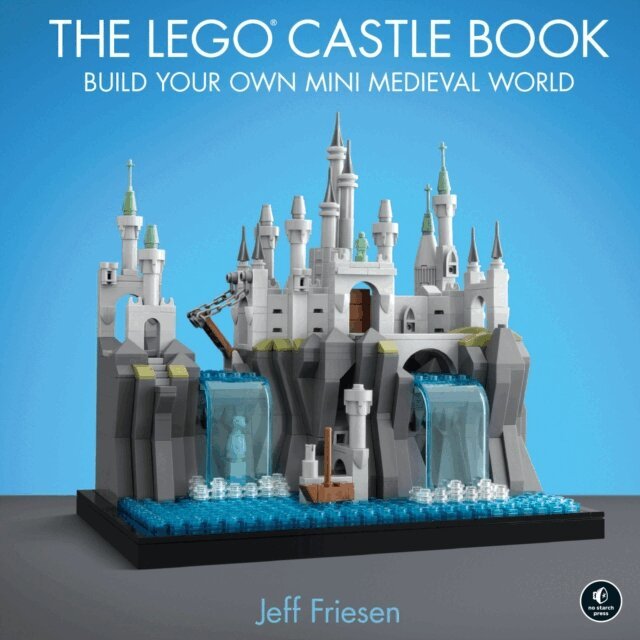
The LEGO Castle Book will show you how to build microscale-sized castles and miniature medieval realms. You'll learn a range of LEGO castle construction techniques, from basic to advanced, featuring designs from both real-world and fantasy castles. Jeff Friesen, author of the best-selling LEGO Micro Cities will show you how to customize your castles with towers and keeps, build landscapes featuring rolling hills and rivers, and bring villages to life with windmills, festival tents, and taverns.
202 kr
Skickas inom 7-10 vardagar
Build a starship fleet to launch from your kitchen table! Follow the photos, step-by-step instructions, and comprehensive parts lists in this book to build dozens of galaxy-hopping spacecraft that can fit in the palm of your hand! Puzzle out how to build propulsion systems, heat shields, and solar collectors, or take a page from science fiction and make warp drives, self-healing hulls, and photon beams. Why bother to leave your house (or the planet) when you can explore the universe with the LEGOs you already own and your imagination. Your intergalactic journey starts in 10, 9, 8, 7, 6
253 kr
Kommande
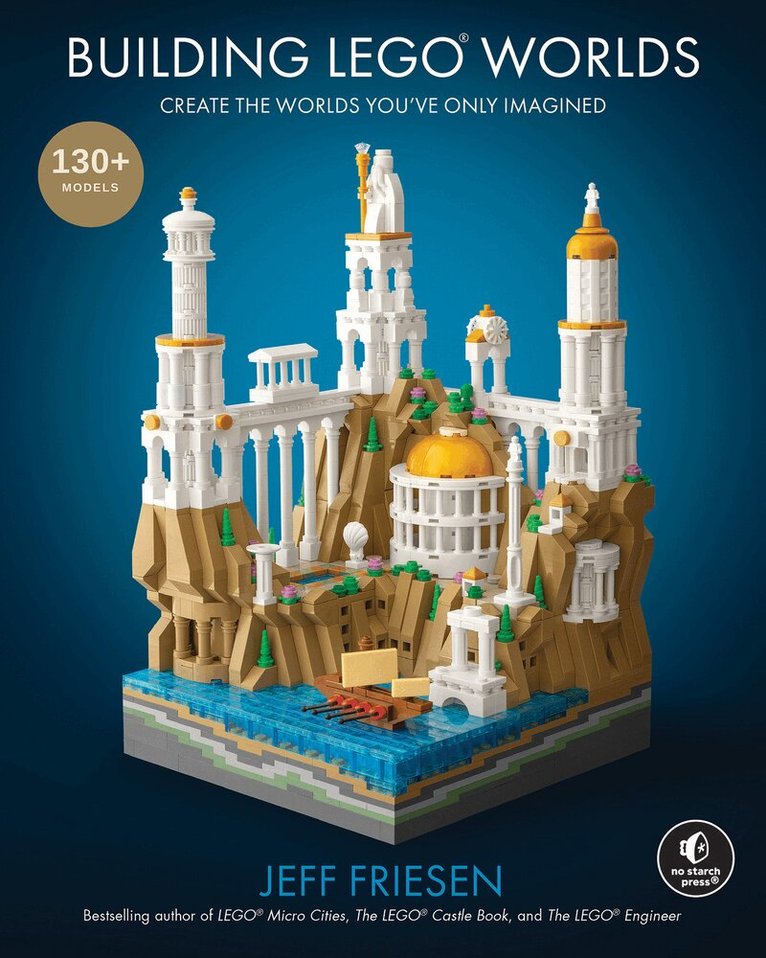
Jeff Friesen - master microscale builder, photographer, and LEGO artist - teaches readers how to build entire worlds, not just models. With stunning visuals and clear step-by-step instructions, this book reveals the techniques, architectural styles, and creative principles behind his most imaginative scenes. Across more than a dozen fully realized themed worlds, readers learn how to combine landscape, architecture, transportation, and atmosphere into cohesive miniature universes. They'll construct everything from waterfalls, cliffs, and ancient temples to futuristic skylines, ring-based skyscrapers, fairground rides, and steampunk clockworks. This beautifully photographed, full-color book is both a creativity workshop and an art piece - a guided journey for anyone who wants to design LEGO creations with story, style, and a sense of place.
328 kr
Skickas inom 3-6 vardagar
607 kr
Skickas inom 3-6 vardagar
Sharpen your Java skills and boost your potential as an IT specialist. This book introduces you to the basic Java features and APIs needed to prepare for a career in programming and development.You’ll first receive an introduction to Java and then explore language features ranging from comments though exception/error handling, focusing mainly on language syntax and a few select syntax-related APIs. This constitutes the heart of the book, and you’ll use these building blocks to construct simple Java programs, and learn where Java’s implementations of expressions (and operators), and statements diverge from other languages. The final few chapters tour some additional APIs such as the Math class, related types, String and StringBuffer, and System.Along the way you’ll discover some interesting programs, such as Graph (a sine/cosine wave-plotting application) and WC (a word-counting application). Two appendixes provide quick references to Java’s supported reserved words, and to Java’s supported operators. Equipped with this knowledge, Learn Java Fundamentals will provide you the pathway to explore additional APIs on your own, and increase your Java awareness.What You’ll LearnUnderstand the basics of Java applications and APIsStudy language features such as comments, identifiers, variables, types, and literals.Explore operators, expressions, statements, and other key features such as classes, objects, class extension, and class abstraction.Who This Book Is ForDevelopers, programmers, and students with little or no Java experience